
MY WISHLIST
MY WISHLIST

Designer clothing sourced from Milan delivers sharper craftsmanship, stronger supply-chain advantages, and design leadership that most other fashion hubs simply cannot match on all three fronts at once. That combination shows up directly in how a garment fits, how long it lasts, and what it holds in resale value. The benefits break down in a clear order of impact:
Each of these deserves its own look. Here is where the advantage actually comes from and how to confirm it before you buy.
Milan’s cluster of skilled artisans, premium mills, and tight logistics produces designer clothing with measurably better construction, material quality, and long-term value than mass-market alternatives.
| Point | Details |
|---|---|
| Cluster advantage is structural | Design schools, textile mills, and logistics infrastructure sit close together, shortening lead times and tightening quality control. |
| Materials drive longevity | Como silk, Tuscan leather, and fine wool mills produce fabrics that age well and hold shape over years of wear. |
| Design favors timelessness | Milan’s pared-back silhouettes resist trend fatigue better than statement-driven design from other hubs. |
| Verify before you buy | Check labels, authentication cards, stitching photos, and shipping origin to confirm genuine Milan sourcing. |
| Urbalenti™ NYC ships direct from Milan | Every order moves through DHL Express with authenticity verification already completed before it reaches you. |
Milan’s advantage starts before a single stitch gets sewn. The city concentrates design schools, textile mills, ateliers, and logistics infrastructure inside one region, and that density changes what a brand can produce and how fast.
Politecnico di Milano and other design institutions feed a steady stream of trained pattern makers and textile specialists into the local industry, which keeps technical skill from thinning out as older ateliers retire their master tailors. Nearby, the mills of Como still supply much of the world’s fine silk, while Tuscan tanneries feed the leather goods that Milan’s houses turn into bags and footwear. Malpensa airport and Italy’s high-speed rail network mean a finished order can move from an atelier to an export dock in a fraction of the time it takes from more fragmented supply chains elsewhere. Michael Porter’s cluster theory explains why this works: when suppliers, schools, and buyers sit close together, quality control and innovation both improve because feedback loops shrink.
Lombardy, the region surrounding Milan, generates roughly 23% of Italy’s GDP, with fashion and luxury manufacturing as a central pillar of that output. That scale is not an accident of geography. It reflects decades of institutional investment that keeps the cluster resilient even when global luxury demand softens elsewhere.
What buyers actually get from this:
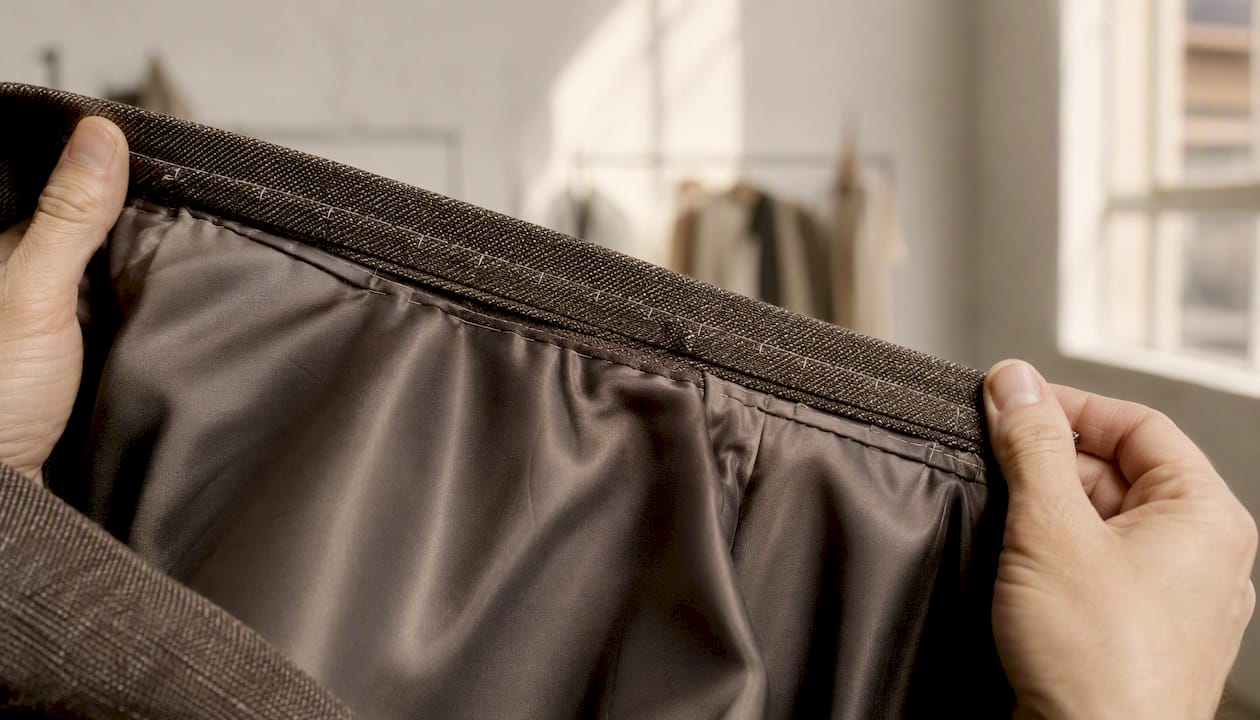
Milan-sourced garments tend to show their quality in details you can feel with your hands, not just see in a photo. Precision tailoring means seam allowances are generous enough to survive alterations, linings are chosen to match the outer fabric’s drape rather than just its color, and hand-finished details like pick stitching hold up through repeated wear where machine-only construction tends to fray.
Material sourcing backs this up. Como silk carries a weight and sheen that synthetic blends cannot replicate, full-grain Tuscan leather ages into a patina rather than cracking, and fine wool from regional mills holds a tailored shape season after season. These aren’t just marketing terms. They translate directly into:
Buying without seeing a piece in person is a real concern, and it’s worth doing a few extra checks before committing.
Pro Tip: Ask for close-up photos of the interior seams, the lining attachment points, and any stitch detailing before buying remotely. Uneven stitch spacing or a cheap-feeling lining are the first signs of rushed construction, even on an otherwise convincing exterior.
Milan’s design signature leans toward precision over spectacle. Where some hubs chase dramatic runway statements, Milanese design tends toward pared-back silhouettes, clean proportions, and material-forward details that don’t rely on a logo or a trend cycle to read as expensive.
Milan Fashion Week and the city’s design schools continue to shape global direction, and that influence has been growing rather than shrinking. Reporting from The Guardian has documented designers relocating production and even entire show calendars to Milan specifically for its manufacturing infrastructure and cultural weight, reinforcing the city’s grip on commercial silhouette trends like trouser shapes and jacket proportions.
For a buyer, this matters beyond aesthetics:
The Milan price premium is real, but it’s driven by identifiable costs rather than markup for its own sake. Made-in-Italy labor, small-batch atelier production, and premium raw material sourcing all push base prices higher than mass-market alternatives.
That said, the premium narrows more than most shoppers expect. Reports on Italian retail pricing note that certain Italian brands are genuinely cheaper to buy in or from Italy than through international retailers, and non-EU visitors shopping in person can claim VAT refunds that meaningfully offset the sticker price. US buyers shopping online should expect fair, transparent Milan-based pricing without needing to travel to claim any refund advantage, since that benefit applies to in-person EU purchases rather than international online orders.
Milan’s shopping landscape backs this up on the ground. Condé Nast Traveller’s shopping guide notes that the city’s mix of flagship houses, independent boutiques, and outlets gives buyers real routes to value alongside exclusive finds, a mix that matters just as much when shopping through a Milan-fulfilled retailer online.
Confirming provenance before you buy takes only a few minutes if you know what to check. Follow this sequence:
Urbalenti™ NYC’s Milan fulfillment model is built around exactly this kind of transparency: every order ships directly from Milan and moves through DHL Express, giving buyers a traceable path from atelier to doorstep rather than a black box. Private-shopping services in Milan, which give clients direct access to ateliers and workshop visits, follow a similar logic in person: proximity to the source is what makes verification possible at all.
Pro Tip: If a seller can’t produce clear interior photos or a matching authentication card within a day of asking, treat that as a warning sign rather than a delay.
Milan’s cluster faces real pressure from EU Green Deal regulation, and the response has been a mix of genuine progress and marketing noise, highlighting why ethical manufacturing matters in kids’ clothing. Brands and outlets across the region are testing circular production projects, recycling programs, and more transparent sourcing as part of a broader repositioning toward ethical recognition and accessible luxury.
Buyers should verify specific claims rather than take labels at face value:
The dense supplier network that makes Milan efficient can also make full transparency harder to verify from outside, since a single garment may pass through several small ateliers before reaching a retailer.
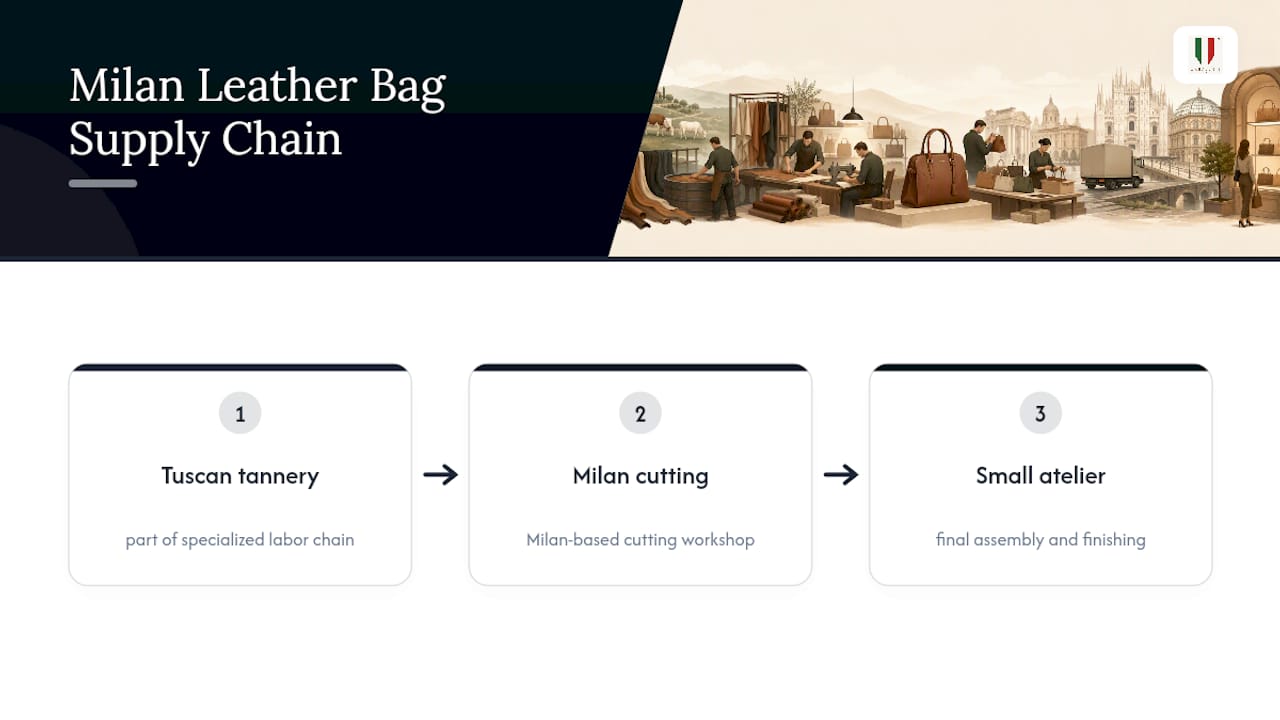
Every Milan-sourced purchase moves money through a chain of specialized labor that exists almost nowhere else at this scale. A single leather bag might involve a Tuscan tannery, a Milan-based cutting workshop, and a small atelier that handles final assembly and finishing, each employing skilled workers whose trade has been passed down across generations.
This structure keeps smaller ateliers economically viable in a way that mass-production models don’t. When demand holds steady for Milan-made goods, it sustains apprenticeship programs and keeps technical knowledge, like hand-stitched leatherwork or silk weaving, from disappearing as older artisans retire. Lombardy’s fashion and luxury output remains a defining share of the region’s economy, and that output depends on thousands of small, specialized workshops rather than a handful of massive factories.
Buyers rarely think about this connection when checking out online, but it’s a real one. Choosing Milan-sourced pieces over mass-market alternatives, even at a higher price point, directs spending toward a production model built on skilled labor rather than volume manufacturing. That’s a meaningfully different economic footprint, and it’s part of why the craftsmanship holds up the way it does.
Each major fashion hub has a distinct strength, and Milan’s is manufacturing depth rather than editorial spectacle. Paris tends to lead on conceptual design and maison heritage, London on experimental cuts and emerging talent, and New York on commercial ready-to-wear speed. Milan’s edge is the density of production infrastructure sitting right behind the design studios.
That difference matters most in the finished product. A Parisian house might design a striking silhouette, but the actual construction, fabric sourcing, and finishing may happen anywhere in a globalized supply chain. Milan-based production keeps design and manufacturing closer together, which is part of why Milanese pieces so often show tighter tolerances between the design intent and the physical garment.
This isn’t a claim that other hubs produce worse clothing. It’s a claim that Milan’s specific combination of textile mills, ateliers, and logistics inside one region creates fewer handoffs between concept and finished piece, and fewer handoffs generally mean fewer quality inconsistencies. For a buyer comparing options, that’s the practical distinction worth understanding: Milan’s advantage is structural, not just reputational.
Milan’s reputation rests on heritage craftsmanship, but the cluster has been investing steadily in production technology that makes that craftsmanship more consistent, not less relevant. Digital pattern-cutting tools now sit alongside hand-finishing stages in many ateliers, reducing material waste while preserving the manual steps that actually affect fit and feel.
Fabric mills around Como have also adopted more precise dyeing and finishing technology, which improves colorfastness and reduces the batch-to-batch inconsistency that once plagued smaller-run production. None of this replaces the hand-stitching or tailoring judgment that defines Milanese quality. It supports it, catching errors earlier and freeing skilled labor to focus on the details machines still cannot replicate.
The result for buyers is a production system that pairs old-world skill with modern efficiency, a combination increasingly rare as more of the fashion industry consolidates around fully automated manufacturing. That marriage of heritage and current production technology is part of what keeps Milan’s cluster competitive against hubs that prioritize speed over technical depth.
When we select pieces for Milan fulfillment, we look for the same details covered here: clean interior construction, verified material sourcing, and documentation that matches the brand’s own authentication standards. Every order we ship moves from Milan through DHL Express with that verification already done.
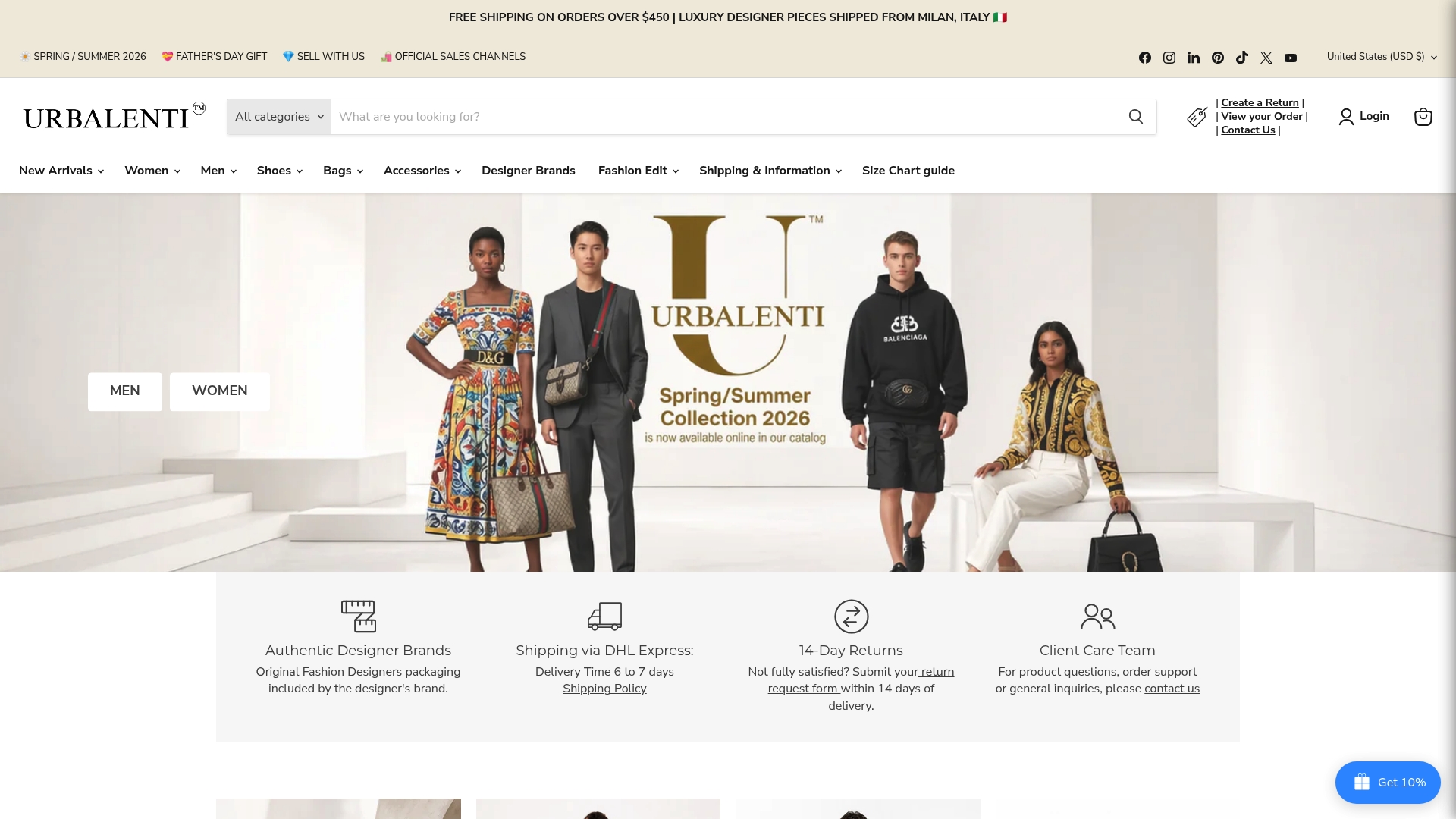
Urbalenti™ NYC exists to remove the guesswork this article just walked through. Every order ships direct from Milan, arrives through DHL Express worldwide delivery, and comes backed by full authenticity verification, so you get the craftsmanship and provenance benefits covered above without needing to run your own inspection checklist.
That’s a meaningful difference from piecing together verification on your own across scattered listings. Browse pieces like the Kiton Fitb sneakers, the Fendi Baguette pouch, or the Marni Tribeca shopping bag to see the construction quality and Milan provenance firsthand. Each product page lists the details that matter, from materials to shipping origin, so you can check the same signals covered in this guide before you check out. Visit the current Milan-fulfilled collection and place an order today to see the difference direct Milan fulfillment makes.
Milan isn’t universally cheap, but certain Italian brands carry lower base prices there than abroad, and non-EU visitors shopping in person can claim VAT refunds that reduce the effective cost further.
“Milano” isn’t a single brand. It’s the city whose fashion cluster produces and fulfills pieces for many high-end labels, which is why Milan sourcing itself functions as a quality signal rather than a brand name.
Yes. Milan’s concentration of skilled ateliers, premium mills, and design institutions consistently produces stronger construction and material quality than mass-market production models.
Leather goods and tailored pieces tend to show Milan’s craftsmanship advantage most clearly, since full-grain leather and precision tailoring are two of the cluster’s strongest specialties.
Check the shipping origin, request an authentication card or serial number, and ask for interior construction photos. Retailers like Urbalenti™ NYC that ship direct from Milan build this verification into the order itself.
Leave a comment