
MY WISHLIST
MY WISHLIST

Designer brand heritage is the combination of documented provenance, continuous craft or design practice, and consistent symbolic assets — logos, silhouettes, materials — that a fashion house builds over decades and actively maintains. Age alone does not create it. A 2025 systematic review of 79 academic articles on brand heritage frames it as a multi-dimensional construct, not a marketing slogan. Fendi’s centenary, built on family stewardship and archived product lines, shows what that looks like in practice.
Why it matters, in three points:
Designer brand heritage combines verifiable provenance, continuous craft, and consistent symbolic codes, and none of those three can be faked with marketing copy alone.
| Point | Details |
|---|---|
| Heritage is not age | A century-old house can still lack documented provenance for specific claims. |
| Provenance beats narrative | Archives, maker’s marks, and in-house craft evidence separate inherited heritage from invented heritage. |
| Creative succession is the risk point | Leadership or family transitions are when heritage brands most often dilute or break continuity. |
| Perception shifts by market | Buyers in Europe weigh craft proximity; buyers elsewhere often weigh prestige and narrative more heavily. |
| Verify before you buy | Urbalenti™ NYC curates and authenticates every heritage piece before Milan fulfillment and DHL Express shipping. |
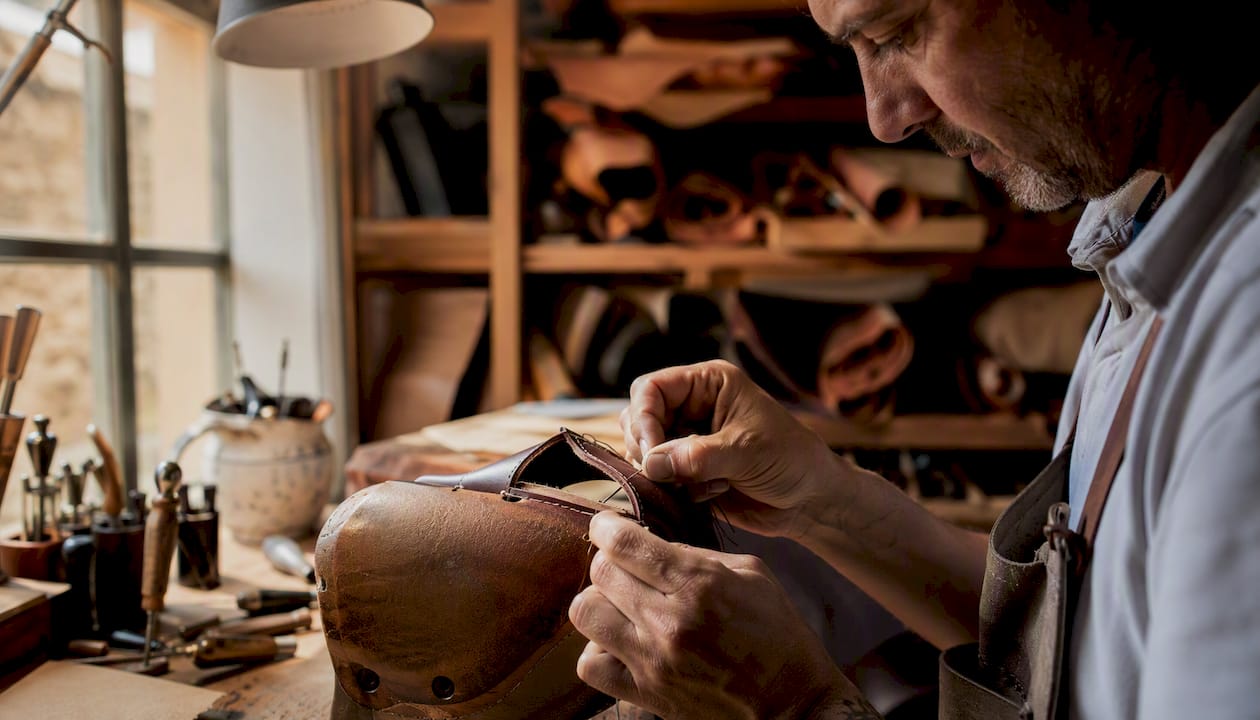
Heritage rarely starts as a strategy. It starts as a workshop.
Most heritage houses trace back to a single atelier producing goods for a local or regional clientele, long before “heritage” was a business term. The pattern tends to run:
Fendi’s centenary reflections from Silvia Venturini Fendi trace exactly this arc, from a Roman leather workshop to a house with a documented, exhibited archive. Heritage became a deliberate strategic asset largely in the late 20th century, when luxury conglomerates began acquiring family houses and needed a way to justify premium pricing beyond current design output. Regional craft archives, like the embroidery record kept by Forster Willi, show how far back that documentation habit can run outside the biggest names.
Genuine heritage leaves evidence. Invented heritage leaves adjectives.
Look for defensible provenance: named workshops, maker’s marks, documented production techniques that predate the current marketing team. Look for continuity of craft or archival record, meaning catalogued designs and legacy codes a house can actually produce on request, not just reference in a press release. Consistent visual codes matter too, the recurring motifs, silhouettes, and signature products that appear across decades rather than a single campaign cycle.
Academic definitions treat heritage as a dimension of brand identity tied to track record, longevity, core values, and organizational memory, measured through historical continuity and how consumers actually perceive it. That distinction, between designer brands built on creative direction and trend response versus luxury brands built on exclusivity and heritage, explains why some labels chase heritage aesthetically without the underlying structure.
Organizational signals round it out:
Pro Tip: If a brand’s “heritage story” only exists in ad copy and not in an archive, exhibition, or documented catalog, treat it as marketing, not provenance.
Heritage is a balance sheet item as much as a story. It supports premium pricing, deepens customer loyalty, and opens licensing and collaboration revenue that non-heritage labels can’t access at the same margin. The 2025 systematic review ties heritage to measurable effects on brand attachment and perceived authenticity, which is a large part of why heritage houses can command a price premium a newer label simply cannot.
But heritage cuts both ways. Over-licensing dilutes it fast, and succession moments, when a house changes creative directors or family control, are the highest-risk points for a brand’s identity. Cultural backlash can hit a heritage house harder than a newer one, since the gap between claimed values and current behavior gets scrutinized more closely.
| Factor | Advantage when managed well | Risk when mismanaged |
|---|---|---|
| Pricing power | Sustains premium positioning over decades | Erodes if perceived as unjustified markup |
| Licensing | Extends revenue into new categories | Dilutes brand codes through overexposure |
| Creative succession | Refreshes relevance for new audiences | Breaks continuity if poorly handled |
| Consumer loyalty | Builds multi-generational customer base | Alienates buyers if heritage feels performative |
Preserving heritage today is an active job, not a static claim. Houses lean on a recurring set of tools.
Vogue’s reporting on how heritage functions inside fashion houses today notes that creative directors often “reconstruct” archival values rather than simply repeat them, a curatorial skill more than a copy-paste exercise. Digital media accelerates all of this. Social platforms let a house show an atelier process or an archive find to a global audience in a single post, reaching demographics that would never visit a house museum. The trade-off is pace: digital storytelling rewards frequency, and frequent archive mining risks flattening a story that took decades to build.
Before treating a brand’s heritage claim as fact, run it through a short diagnostic.
Pro Tip: Ask two questions before buying into a heritage claim: “Where is this documented outside the brand’s own materials?” and “What happened the last time creative leadership changed?” The answers separate inherited heritage from invented heritage.
That distinction, inherited versus invented heritage, is the single most useful lens a buyer or collector can apply. Inherited heritage ties to defensible craft lineage. Invented heritage is a narrative a brand authored itself, valuable but structurally different in its long-term risk profile.
Each major heritage house builds its story on a different mechanism.
Each model balances continuity and modern relevance differently, but all five depend on the same underlying discipline: protecting what’s provable while still evolving.
Age alone does not equal authenticity. A house can be a century old and still lack documented provenance for a specific claim.
Marketing storytelling can construct a convincing “invented” heritage that feels real without archival backing, which matters because it changes how defensible the claim is over time. And heritage doesn’t guarantee quality across an entire product line. Diffusion lines and heavy licensing can dilute a heritage house’s core credibility even while its flagship items remain excellent.
Heritage doesn’t read the same way everywhere, and that gap matters for anyone buying, curating, or studying designer labels internationally.
In Western European markets, particularly France and Italy, heritage often gets evaluated through proximity to craft, meaning buyers care whether production genuinely happens near the house’s origin city. A Florentine or Roman workshop carries specific weight that a relocated production line does not. American buyers, by contrast, more often respond to heritage as narrative and status signaling, valuing the story and recognizability of a house’s icons as much as where the item was physically made.
East Asian markets, especially Japan and South Korea, tend to place heavy weight on archival precision and documented technique, which is part of why Japanese collectors are known for scrutinizing maker’s marks and production details more closely than casual buyers elsewhere. In fast-growing luxury markets across the Middle East and parts of Southeast Asia, heritage functions more as a signal of global prestige and exclusivity than a story about regional craft roots, since the emotional connection to the house’s founding geography is naturally weaker for a first-generation luxury buyer.

None of these readings is more “correct” than another. They just mean a house’s heritage messaging has to flex by market, emphasizing craft proximity in one region and global prestige in another, without contradicting the underlying facts in either.
We source pieces because provenance is verifiable, not because a house’s marketing says so. Every heritage claim we stand behind traces back to documented craft, catalogued designs, or an authenticated production history, curated in New York and fulfilled through our Milan network.
Reading about heritage is one thing. Holding a piece with real provenance behind it is another. Urbalenti™ NYC exists for buyers who want the second version: designer and lifestyle items that are 100% authenticated before they ever leave our Milan fulfillment network, not sourced through gray-market resellers with murky paper trails.
Every item listed, from statement designer sneakers to everyday premium essentials, goes through the same authenticity checks we describe throughout this piece: verifiable provenance, consistent brand codes, and documentation that holds up to scrutiny. Curated in New York, shipped direct from Milan via DHL Express, orders typically move faster than the multi-week timelines common with boutique resale platforms. If you’re building a collection around houses with real archival weight, browse the current designer fashion selection and check availability on pieces that match the heritage criteria covered here before they sell through.
Brand heritage refers to a house’s documented provenance, continuous craft or design practice, and consistent symbolic assets built and maintained over time, not simply how old the brand is.
A heritage brand has verifiable history, an active archive, and consistent design codes it can point to across decades, distinguishing it from a brand that only markets an old founding date.
Fendi is a clear example, with multi-generational family stewardship, a documented centenary archive, and signature products like the Baguette and Peekaboo bags that anchor its identity.
Heritage brands offer buyers a verifiable story and consistent quality signals that newer labels can’t replicate quickly, which supports the premium pricing and loyalty research on brand heritage consistently documents.
Leave a comment