
MY WISHLIST
MY WISHLIST

TL;DR:
- Designer pieces that combine timeless design, premium craftsmanship, and strong brand heritage tend to appreciate or hold value over time. Handbags, jewelry, and fine footwear from established luxury houses are among the most reliable investment categories.
Designer pieces worth investment are fashion items that retain or appreciate in monetary value over time due to timeless appeal, exceptional craftsmanship, and sustained cultural desirability. Not every luxury purchase qualifies. A Gucci structured tote, a Saint Laurent leather jacket, or a Balenciaga sneaker built on a heritage silhouette each carry attributes that transcend seasonal trends. The distinction between a high-value fashion piece and a costly impulse buy comes down to a specific set of measurable criteria. This guide breaks those criteria down, compares categories, and gives you a practical framework for building a collection that holds its worth.
The strongest investment-worthy luxury brands share four traits: a defined design heritage, consistent material standards, controlled distribution, and enduring demand. Pieces from houses like Hermès, Chanel, Gucci, and Saint Laurent check all four boxes. That combination is what separates a collectible designer accessory from a trend item with a luxury price tag.
Several factors determine whether a piece qualifies as a long-term hold:
Strategic splurging focuses on foundational, high-use pieces while minimizing spend on trend-driven, replaceable items. That principle applies directly to luxury fashion portfolio building.
Pro Tip: Before purchasing, search the piece’s resale history on secondary market platforms. A consistent upward price trend over three or more years is the clearest signal of genuine investment potential.

Understanding what defines luxury fashion at its core helps you apply these criteria with confidence rather than relying on brand name alone.
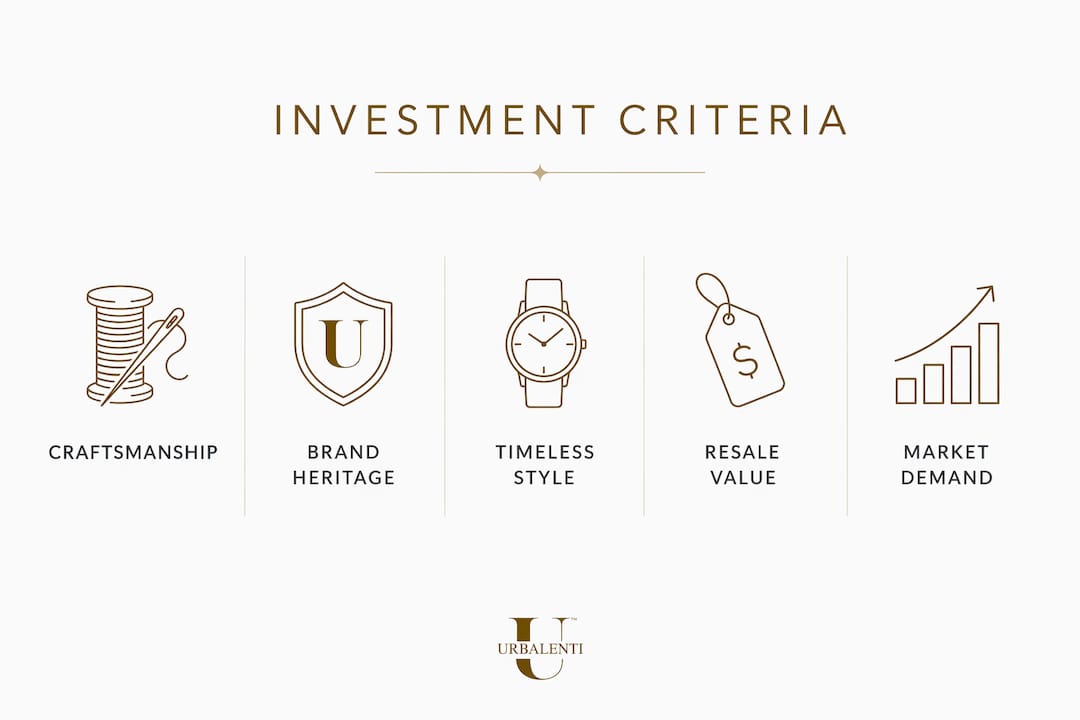
Not all categories perform equally as long-lasting designer pieces. Handbags, watches, and fine jewelry often hold strong resale value or appreciate over time, making them the most reliable entry points for fashion investors.
Structured handbags from Hermès, Chanel, Gucci, and Saint Laurent consistently outperform other categories in resale markets. The Hermès Birkin and Chanel Classic Flap are the most cited examples of price appreciation over time. The Gucci Horsebit 1955 and the Saint Laurent Gaby Vanity bag carry similar logic: iconic silhouette, controlled production, and strong brand association. A Saint Laurent Gaby Vanity represents exactly this category of structured, heritage-driven investment.
Iconic sneakers and heritage dress shoes from Balenciaga, Jimmy Choo, and Dolce & Gabbana hold value when the silhouette is tied to the brand’s design identity. The Jimmy Choo Diamond Light Flex is a strong example of luxury footwear with both practical wearability and collector appeal. Trend-driven silhouettes from the same houses depreciate faster. The distinction is whether the shoe is a signature design or a seasonal experiment.
Classic tailoring, trench coats, and leather outerwear from houses like Max Mara, Gucci, and Balenciaga retain value when construction quality is high and the silhouette is clean. Heavily embellished or logo-saturated pieces from recent seasons tend to date quickly. The best apparel investments are pieces that read as refined regardless of the year.
Fine jewelry from established houses and mechanical watches from Swiss manufacturers represent the most liquid category in luxury fashion investment. These items carry intrinsic material value in addition to brand premium, which creates a floor on depreciation.
These offer moderate investment potential. A Gucci or Balenciaga belt in a classic hardware finish holds value better than a seasonal print. Collectible designer accessories in this category are best treated as portfolio diversifiers rather than primary investments.
| Category | Price appreciation potential | Durability | Collectability |
|---|---|---|---|
| Structured handbags | High | High | Very high |
| Luxury footwear | Moderate to high | Moderate | High |
| Ready-to-wear apparel | Moderate | Moderate to high | Moderate |
| Fine jewelry and watches | High | Very high | High |
| Scarves, belts, small leather goods | Low to moderate | High | Moderate |
Pro Tip: Handbags in neutral colorways (black, tan, navy) consistently outperform bold or seasonal colors in resale markets. Buy the color you will wear, but weight your investment pieces toward classics.
Luxury in 2026 focuses on wearable pieces with relaxed simplicity, soft textures, and practicality alongside elevated detailing. This shift matters for investors. Pieces that align with both current desirability and long-term wearability carry the strongest near-term and long-term value.
The key 2026 trends shaping investment decisions are:
The 2026 luxury fashion season reinforces one consistent signal: the most investment-worthy pieces are those that a buyer would still want to own and wear five years from now. If the answer is uncertain, the piece belongs in the trend category, not the investment category.
Italian craftsmanship remains the global benchmark for construction quality in luxury fashion. That standard directly supports the long-term value of pieces sourced from Italian production.
Building a portfolio of high-value fashion pieces requires the same discipline as any other asset class: clear criteria, verified sourcing, and consistent maintenance.
Define your investment thesis. Decide whether you are prioritizing resale appreciation, long-term wearability, or collectability. Each goal favors different categories. Resale appreciation points toward handbags and fine jewelry. Long-term wearability points toward classic apparel and footwear. Collectability points toward limited editions and archival pieces.
Source from verified retailers. Authenticity verification is the single most critical step in protecting investment value. Counterfeit pieces carry zero resale value and expose buyers to financial loss. Purchase from retailers with documented authentication processes and direct brand relationships. Urbalenti™ NYC sources directly from Milan and provides authenticity assurance on every piece.
Prioritize foundational pieces first. Differentiating between foundational investment pieces and quickly replaceable trend pieces ensures portfolio stability and long-term satisfaction. A Gucci Shopping Bag or a Balenciaga tote in a classic finish is a foundation piece. A seasonal embellished sandal is not.
Store and maintain pieces correctly. Leather goods require dust bags, cedar inserts for shoes, and climate-controlled storage away from direct sunlight. Hardware tarnishes without regular care. Condition directly affects resale price.
Monitor resale market pricing. Track secondary market prices for pieces you own at least twice per year. Price movements signal when to hold, sell, or add to a position.
Diversify across categories. A portfolio weighted entirely toward handbags carries concentration risk. Mixing handbags, footwear, and fine jewelry creates stability. Managing a luxury fashion portfolio across categories reduces exposure to any single market segment’s volatility.
Pro Tip: Keep original packaging, dust bags, and purchase receipts for every investment piece. Complete provenance documentation can increase resale value by a meaningful margin, particularly for Hermès, Chanel, and Gucci.
The most reliable designer pieces worth investment combine timeless silhouette, verified craftsmanship, brand heritage, and documented resale demand across multiple market cycles.
| Point | Details |
|---|---|
| Craftsmanship is the foundation | Precise stitching, quality hardware, and premium materials are the primary markers of investment-grade pieces. |
| Handbags lead all categories | Structured bags from Hermès, Chanel, Gucci, and Saint Laurent show the strongest and most consistent resale appreciation. |
| 2026 favors practical luxury | Wearable, refined pieces with elevated textures outperform purely decorative items in both current demand and long-term value. |
| Authentication protects value | Counterfeit pieces carry no resale value; always purchase from verified sources with documented authenticity processes. |
| Diversify your portfolio | Mixing handbags, footwear, jewelry, and classic apparel reduces risk and supports long-term collection stability. |
The most common mistake I see is conflating price with investment quality. A $4,000 piece from a house with no resale market history is not an investment. A $1,500 piece from Gucci or Saint Laurent with a documented secondary market is. Price is not the criterion. Provenance, craftsmanship, and demand are.
The second misconception is that trends and investments are compatible. They are not. A piece that defines a single season is a trend purchase. A piece that defines a house’s identity across decades is an investment. The Balenciaga Triple S generated enormous initial demand. Its resale trajectory tells a more complicated story. The Gucci Horsebit loafer, by contrast, has been in continuous production since 1953. That longevity is not accidental.
What actually sustains value is the combination of craft integrity and cultural permanence. Italian fashion’s global leadership is built on exactly this: construction standards that hold up under scrutiny and design vocabularies that remain relevant without chasing trends.
My practical advice is to build slowly and deliberately. Start with one foundational handbag from a house with a proven resale record. Add a classic footwear piece. Then diversify. Resist the pressure to accumulate quickly. A curated collection of ten verified, well-maintained investment pieces outperforms a closet of thirty trend purchases every time.
The fashion investment space rewards patience, specificity, and knowledge. It does not reward impulse or volume.
— Admin Urbalenti
Urbalenti™ NYC curates authentic designer fashion in New York and fulfills every order directly from Milan, Italy. Every piece carries full authenticity assurance and ships worldwide via DHL Express.
The current collection includes investment-grade pieces from Gucci, Saint Laurent, Balenciaga, and Dolce & Gabbana. The Gucci Shopping Bag is a structured classic with strong secondary market recognition. The Balenciaga Small Duty Free Tote represents the house’s current design vocabulary in a practical, collectible format. Every client receives personalized VIP support from selection through delivery, regardless of order size.
Structured handbags from Hermès, Chanel, Gucci, and Saint Laurent are the most consistently reliable investment category. Fine jewelry and classic footwear from heritage houses follow closely in resale performance.
Purchase exclusively from retailers with documented authentication processes and direct brand sourcing. Authentic designer clothing carries verifiable hallmarks including serial numbers, branded hardware, and provenance documentation.
Sneakers tied to a house’s core design identity, such as Balenciaga archival silhouettes or Jimmy Choo signature styles, hold value better than seasonal collaborations. Trend-driven sneaker releases depreciate faster once the cultural moment passes.
Luxury in 2026 favors wearable, practical pieces with refined textures over purely decorative items. Pieces that align with this shift carry both current desirability and stronger long-term demand.
One foundational piece from a house with a proven resale record outperforms multiple mid-range purchases with no secondary market. Strategic splurging on high-use foundational pieces maximizes both financial and aesthetic return over time.
Leave a comment