
MY WISHLIST
MY WISHLIST

Buying a designer bag from another country sometimes saves money, but landed cost usually erases most of that saving once shipping, import VAT, and courier handling fees enter the math. The purchase price you see at checkout is rarely the number you actually pay. Before you commit to an overseas order, check five things: purchase price versus your home market, shipping method and cost, import VAT or duties at the destination, courier handling or clearance fees, and the seller’s returns policy for international orders.
The next section walks through seven real-world examples of cross-border designer purchases, each with its own price math, so you can see exactly where the savings hold up and where they disappear.
Cross-border designer bag purchases can cost less than buying locally, but only when the buyer accounts for VAT, courier fees, and currency conversion before checkout, not after.
| Point | Details |
|---|---|
| Check landed cost, not price | Add shipping, import VAT or duty, and courier handling fees before comparing to a local price. |
| Italy’s 22% VAT example | A $950 item-plus-shipping total incurs roughly $209 in import VAT alone at Italy’s standard rate. |
| Insure high-value shipments | Standard courier coverage rarely matches an exotic-skin or limited-edition bag’s full replacement value. |
| Keep documentation ready | Save receipts, serial numbers, and provenance certificates to speed customs clearance and support resale. |
| Buy from Milan-fulfilled sellers | Urbalenti™ NYC ships Burberry crossbody bags and other designer pieces from Milan via DHL Express, with authenticity verified before dispatch. |
Every one of these scenarios follows the same pattern: a lower sticker price abroad, followed by a landed cost that tells a different story. Here are seven examples worth studying before you place an order from outside your home market.
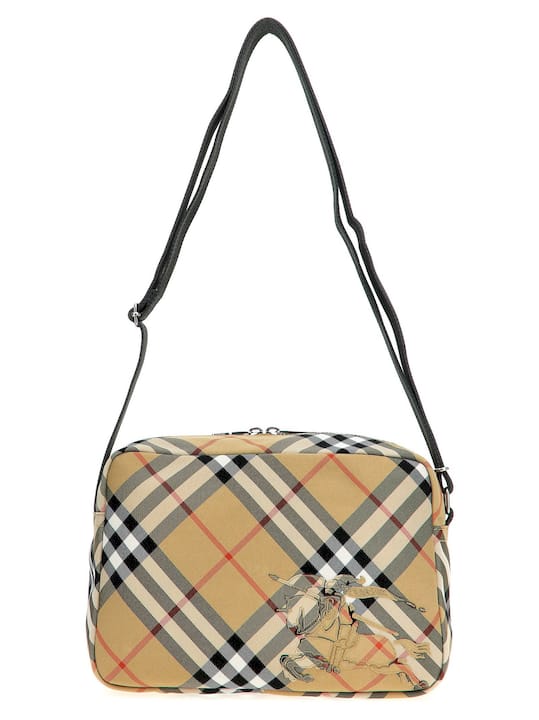
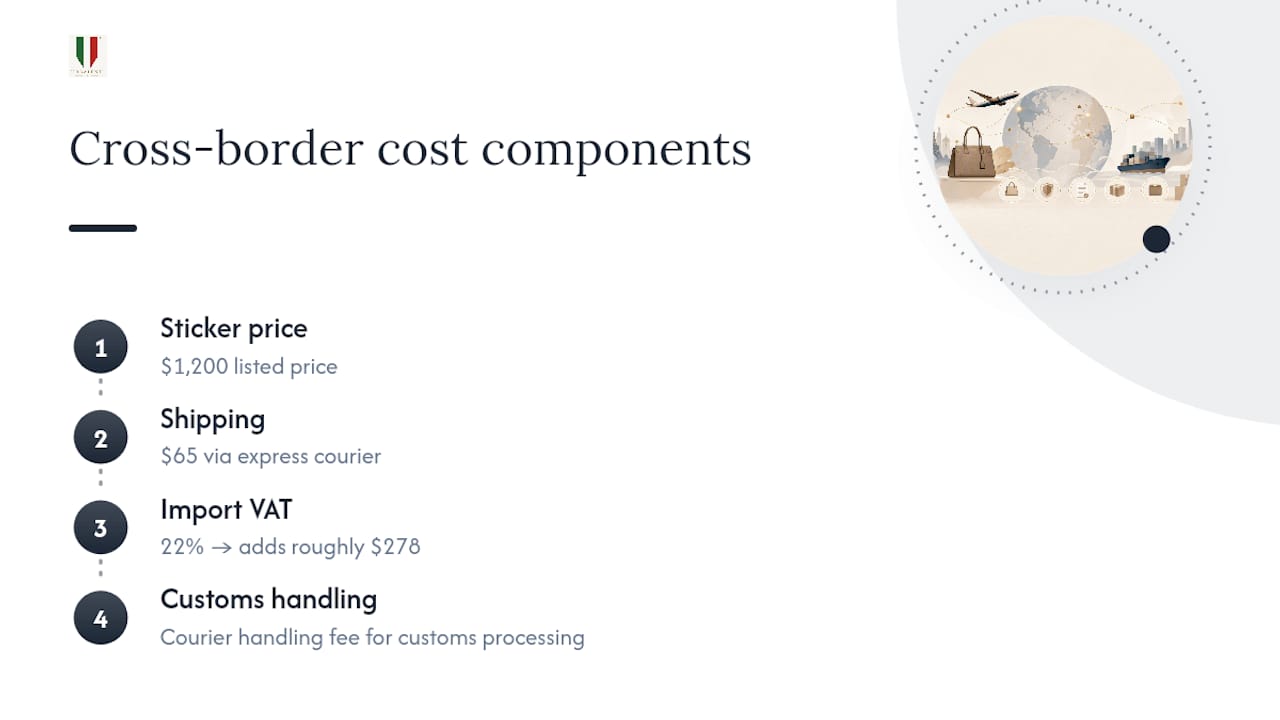
1. A US-listed crossbody shipped to an EU address. A shopper in Milan finds a designer crossbody bag listed for $1,200 by a US retailer. Shipping runs $65 via express courier. On arrival in Italy, import VAT of 22% applies to the combined value of the item and shipping, adding roughly $278 to the bill, and the courier tacks on a handling fee for processing the customs entry. The $1,200 bag’s final cost increases significantly once everything clears. That gap is exactly why headline price and landed cost are two different numbers, a point cross-border shopping guides repeat constantly.
2. Boutique VAT refunds versus a straight import. A traveler buying in a French boutique in person can often reclaim VAT on export through the country’s tax-refund scheme, effectively dropping the local VAT-inclusive price back toward a pretax figure. Compare that to having the same bag shipped internationally after the trip: no refund applies, and the destination country charges its own import VAT on arrival. The in-store, in-person purchase with a refund claim frequently beats the mail-order route on the same bag.
3. A US-exclusive drop consolidated through a freight forwarder. Limited releases sold only through US retailers push some shoppers toward freight forwarders: a domestic US address receives the package, sidesteps the seller’s country-specific sales tax, and consolidates it with other purchases before one international shipment goes out. Buyer accounts describing this method for items like the Stanley x LoveShackFancy Quencher shipped to Italy show it can produce net savings when the item is priced much lower domestically or is unavailable elsewhere, but forwarding and consolidation fees need to be weighed against those savings item by item.
4. Assisted purchase for a geo-blocked release. When a retailer’s checkout rejects foreign-issued cards for a limited drop, shoppers turn to assisted-purchase or “BuyForMe” services. A buyer wanting a bag from a US-only capsule collection pays an agent to complete the order domestically, then has it forwarded internationally. This works, but it adds a service fee on top of shipping and introduces a trust layer: the agent, not the original retailer, holds your money until the order ships.
5. Intra-EU shipping versus shipping outside the EU. A European boutique shipping a bag to another EU country typically involves no import duty at the border, since goods move freely within the bloc. The same boutique shipping that identical bag to a non-EU country triggers import VAT and possibly duty on arrival. Two buyers, same bag, same seller, different final cost purely because of where the package crosses a border.
6. A high-value bag requiring specialized insurance. Once a single item’s value climbs into exotic-skin or limited-edition territory, standard courier insurance limits stop covering the full replacement value. Buyers of these pieces typically pay for supplemental insurance and request signature-on-delivery, a cost that luxury-shopping guides treat as a fixed part of the landed cost rather than an optional extra.
7. Buying direct from a Milan-fulfilled seller. Compare the scenarios above to ordering a bag like the Burberry Multicolor Polyamide Crossbody Bag directly from a seller that ships from Milan with DHL Express. The paperwork, customs classification, and courier relationship are already established on the seller’s side, which removes several of the variables that complicate the other six examples.
Landed cost reality check: Guides on cross-border shopping consistently find that shoppers underestimate the gap between purchase price and final cost. Verifying tax language, carrier fees, and return terms before buying prevents the most common source of sticker shock.
Landed cost is the full price of getting a bag into your hands, not the number on the product page. It has five components, and skipping any one of them is how a “deal” turns into an overpayment.
Here’s the math worked through with an actual rate. Say a bag costs $900 and shipping to Italy costs $50. Italy applies a standard 22% VAT rate on the combined value of the item and shipping, which comes to $209 on that $950 base. Add a courier clearance fee, commonly charged on top of the VAT itself, and the landed cost lands somewhere around $1,180 to $1,220 depending on the courier’s specific fee schedule. This gap above the sticker price makes an apparently cheaper overseas listing a wash once everything clears customs.
De minimis thresholds, the value below which a country waives import tax entirely, exist in many markets but vary widely and change periodically. A bag that clears duty-free in one country may trigger full VAT in another at the same price point. Check the specific threshold for your destination before assuming a purchase will slide through untaxed. Our international luxury shopping guide walks through where to verify these figures by country.
Pro Tip: Ask the seller, before you pay, whether their checkout collects destination taxes upfront (“tax included”) or leaves them to be billed on delivery (“duties unpaid”). That single detail determines whether your landed-cost math is finished at checkout or still has a surprise waiting at your door.
A designer bag moving across a border needs handling that matches its value, not the treatment a $40 sweater gets. Expert cross-border luxury-shopping guides point to a consistent set of features worth confirming before you ship or buy:
On the authenticity side, keep the original receipt or commercial invoice, note the bag’s serial number, and request a digital certificate or provenance document where the seller offers one. Documentation like this speeds customs clearance and gives you something concrete if you ever need to prove authenticity for resale or insurance purposes.
Industry logistics specialists increasingly treat climate control, signature confirmation, and live tracking as baseline expectations for luxury shipments rather than premium add ons. That shift matters for buyers: a courier still relying on standard international mail for a five-figure handbag is a mismatch between the item’s value and the risk you’re accepting.

Pro Tip: Standard international mail offers minimal insurance and no real-time tracking. For anything over a few hundred dollars, an insured express courier service is worth the extra cost every time.
Four tactics come up again and again among shoppers who buy across borders regularly. Each one trades some effort or fee for a specific advantage.
Every example above hinges on documentation, courier reliability, and confidence in what you’re actually buying. Urbalenti™ NYC addresses all three from the seller’s side, not the buyer’s.
Because Urbalenti™ NYC manages sourcing and paperwork centrally, buyers skip the guesswork around provenance documents and customs classification that complicates several of the examples above.
Cross-border buying earns its place when a bag is genuinely exclusive to one market, when a price gap survives the full landed-cost math, or when a domestic retailer simply doesn’t carry the piece you want. Outside those cases, the calculation rarely favors the international route once VAT, courier fees, and currency conversion stack up.
What buyers underestimate most is the returns question. A bag that doesn’t fit or doesn’t match its photos is a different problem entirely when the seller is on another continent. That’s where buying from a merchant with established international fulfillment, clear authenticity guarantees, and a real returns process changes the equation back in your favor, regardless of where the warehouse sits.
If the math above has you leaning toward a direct, hassle-free purchase instead of piecing together forwarders and assisted-purchase agents, Urbalenti™ NYC carries two Burberry crossbody options built for exactly that.
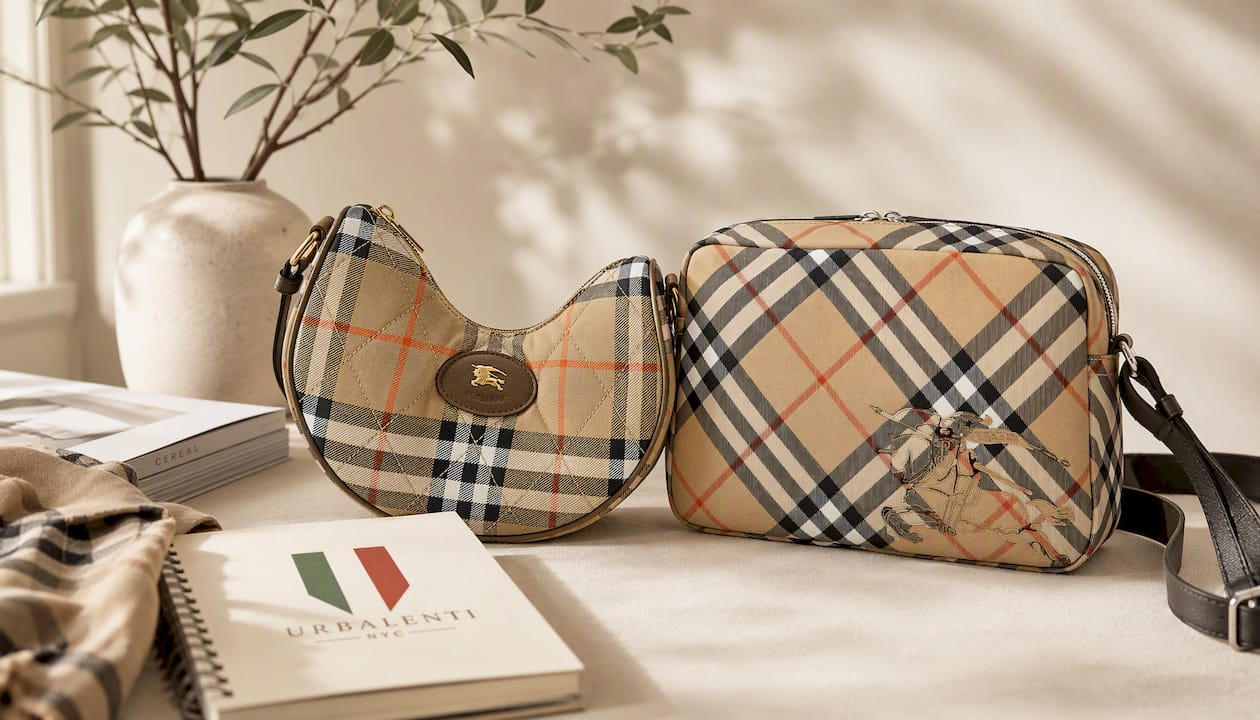
The Burberry Multicolor Polyamide Crossbody Bag and the Burberry Beige Polyester Crossbody Bag are both sourced and verified through Urbalenti™ NYC’s Milan-based network, with authenticity checks completed before the item ever ships. There’s no freight forwarder to coordinate, no foreign checkout to navigate, and no separate agent to trust with your payment. Every order ships worldwide via DHL Express, arriving with the tracking and handling a designer bag actually needs. If a piece doesn’t work out, Urbalenti™ NYC’s return process is built around the same transparency that guides its sourcing. Browse the current designer bag collection to see current availability, or go straight to either product page to check sizing and place an order today.
Yes. Any bag purchased abroad and shipped or carried across a border must be declared, and the destination country’s import VAT or duty applies based on its declared value, per standard cross-border customs guidance.
Compact, structured crossbody bags in polyamide and leather blends remain a leading category among designer shoppers, with brands like Burberry offering versions in multiple colorways, including the Multicolor Polyamide and Beige Polyester styles.
There’s no single best country; the answer depends on local VAT-refund schemes for travelers, exclusive market releases, and whether you’re buying in person or shipping internationally, since each factor shifts the final landed cost differently.
This article focuses on authentic designer purchases and landed-cost math rather than replica or dupe products, since buying non-authentic goods carries its own legal and quality risks that fall outside genuine cross-border shopping.
Confirm before purchase whether the seller’s checkout collects destination taxes upfront or bills them separately at delivery, and factor in the courier’s handling fee alongside shipping and VAT.
Leave a comment