
MY WISHLIST
MY WISHLIST

Italy is a boot-shaped peninsula in southern Europe, a founding member of the European Union, and one of the world’s most visited countries, drawing travelers with its Roman ruins, Renaissance art, regional cuisine, and fashion heritage.
Before anything else: check your passport validity is advised beyond your return date by the U.S. State Department and enroll in STEP at travel.state.gov.
Italy is a founding EU member, a Schengen participant, and one of the world’s most culturally and historically significant countries, with Rome as its capital, the euro as its currency, and UNESCO-recognized cuisine as part of its living cultural heritage.
| Point | Details |
|---|---|
| Capital and currency | Rome is the capital; the euro (€) is the currency across all 20 regions. |
| EU and Schengen membership | Italy has been an EU member since 1958 and a Schengen participant since 1997. |
| Travel essentials for U.S. visitors | Passport valid six months beyond return date, two blank pages, and STEP enrollment at travel.state.gov. |
| UNESCO-recognized cuisine | Italian cooking is recognized by UNESCO as intangible cultural heritage for its communal, seasonal, and regional traditions. |
| Milan and fashion | Milan is Italy’s fashion capital and the fulfillment hub for Urbalenti™ NYC’s authentic designer collections. |
Italy sits at the center of the Mediterranean, bordered by France, Switzerland, Austria, and Slovenia to the north, with the Tyrrhenian Sea to the west and the Adriatic Sea to the east. The country includes two major islands, Sicily and Sardinia, plus dozens of smaller ones.
Population and area figures are published by ISTAT, Italy’s official statistics agency, and updated regularly on their portal.
The Italian peninsula stretches roughly 1,000 kilometers from the Alps in the north to the tip of Calabria in the south. Two major mountain ranges define the country’s terrain: the Alps form the northern border, and the Apennines run like a spine down the length of the peninsula. This geography creates sharp climate contrasts across a relatively compact country.
Regional climate overview:
Italia that Italy’s climate ranges from Alpine conditions in the north to full Mediterranean conditions in the south, which means packing and timing decisions vary significantly depending on which region you plan to visit.
Seasonal travel tip: Sicily and the Amalfi Coast are best visited in May, June, or September. July and August bring extreme heat and peak tourist volume. The Dolomites and Lake Como are at their most accessible from June through September.
Italy’s history spans more than 2,700 years of continuous civilization. Understanding the major eras helps travelers read the landscape: a Roman arch here, a Renaissance fresco there, a Baroque piazza somewhere else.
Key dates for travelers and students:
Italy is a parliamentary republic. The president serves as head of state, a largely ceremonial role with important constitutional functions including appointing the prime minister and dissolving Parliament. The prime minister heads the government and holds executive power.
Parliament is bicameral with the Chamber of Deputies and the Senate of the Republic composed of elected members and a small number of senators for life
Italy’s 20 regions each have elected councils and varying degrees of legislative authority. Five regions hold special autonomous status: Sicily, Sardinia, Trentino-Alto Adige, Friuli-Venezia Giulia, and Aosta Valley. These regions have broader self-governing powers, often reflecting distinct linguistic or cultural identities.
Italy’s role in the European Union:
EU membership shapes daily life in practical ways: U.S. visitors use euros throughout the country, cross into neighboring EU countries without border formalities, and benefit from EU consumer protection standards.
Italy ranks among the largest economies in the European Union. The country’s economic strength is concentrated in the north, particularly in the industrial triangle formed by Milan, Turin, and Genoa, while the south (the Mezzogiorno) has historically lagged in GDP per capita and employment rates.
Major industries:
Demographics and everyday life:
Italy’s population is concentrated in major urban centers: Rome, Milan, Naples, Turin, and Palermo. The country has one of the lowest birth rates in Europe, and an aging population is a recognized long-term policy challenge. Urban life in northern cities like Milan moves at a fast, professional pace; southern cities and rural areas maintain a slower rhythm, with long lunch breaks and strong family ties still common.
Cost-of-living touchpoints vary sharply by region. Milan and Rome are the most expensive cities for accommodation and dining. A sit-down lunch at a local trattoria outside tourist centers typically costs €12 to €20 per person. Public transportation in major cities is reliable and affordable.
Italian is the official language, but regional dialects remain strong. Venetian, Neapolitan, Sicilian, and Sardinian are distinct enough that speakers from different regions sometimes struggle to understand each other. In tourist areas, English is widely spoken. Outside major cities, basic Italian phrases go a long way.
Useful phrases for travelers:
Italy is predominantly Catholic, and the Church’s calendar shapes the rhythm of public life. Major festivals include:
Italy’s contribution to Western art is unmatched in scope. The Uffizi in Florence, the Vatican Museums in Rome, and the Brera in Milan hold collections that define art history. Opera originated in Italy; La Scala in Milan and the Arena di Verona remain active performance venues. Design and architecture are living traditions, not museum pieces. Milan’s Salone del Mobile, held annually in April, is the world’s largest furniture and design fair.
The connection between Italian culture and fashion is direct and deep. Understanding how Italian culture shapes Milan’s fashion scene helps explain why provenance matters when buying Italian designer goods.
Italian cuisine is not one thing. It is a collection of distinct regional traditions, each tied to local geography, climate, and history. Risotto is a staple in Lombardy, pesto originates in Liguria, arancini are Sicilian, and cured meats like prosciutto di Parma and mortadella di Bologna carry protected status tied to their place of origin.
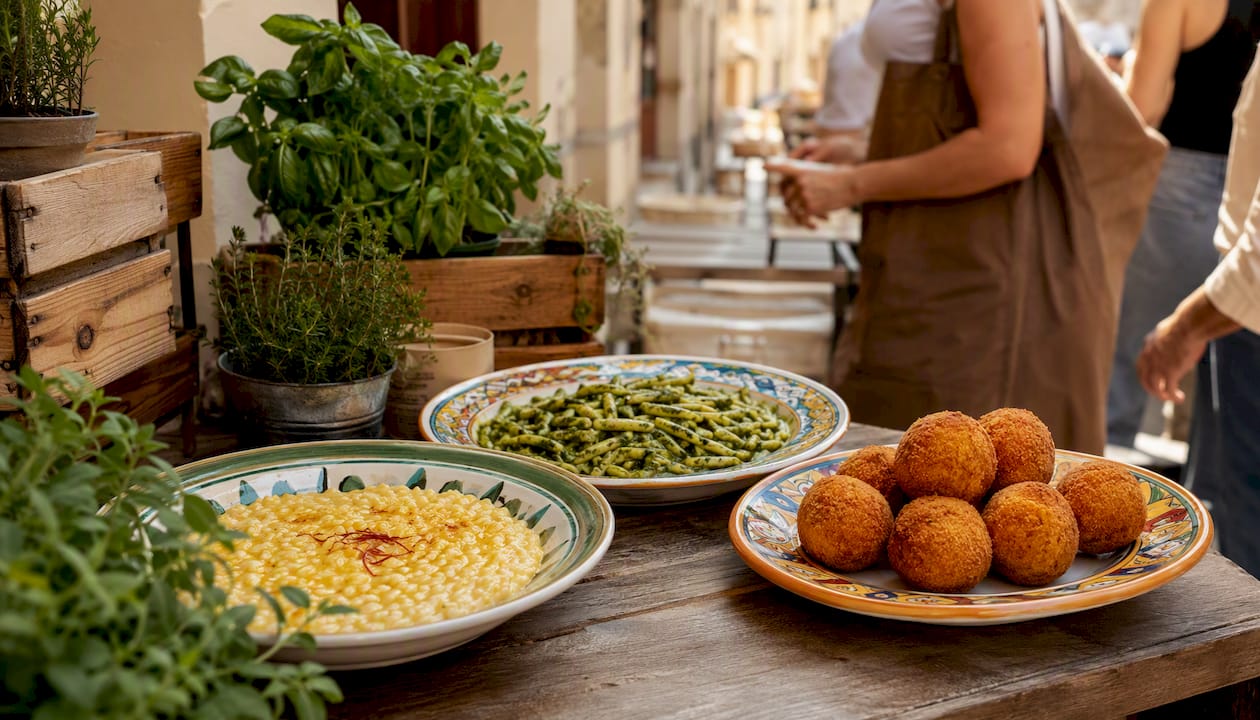
UNESCO recognizes Italian cooking as an intangible cultural heritage, specifically for its role in sustainability, biocultural diversity, and social cohesion. The recognition frames Italian cooking as a communal, intergenerational practice built around local, seasonal ingredients, not simply a set of recipes.
Pro Tip: Avoid restaurants with picture menus directly on tourist-heavy streets. Walk one or two blocks away and look for a handwritten daily menu (menù del giorno) — this signals fresh, local cooking. Order what the region is known for, not what you recognize from home.
For food-focused travelers who want to bring a piece of Italy’s edible culture home, Italian artisan chocolate and confectionery make excellent gifts. BAM Cioccolato’s gift selection offers Italian-style edible gifts that reflect the country’s food traditions.
Rome holds more UNESCO World Heritage Sites within its city limits than almost any other city on earth. The Colosseum, the Roman Forum, the Pantheon, Vatican City (an independent state within Rome), and the Sistine Chapel are the headline attractions. Book timed entry tickets for the Colosseum and Vatican Museums well in advance, especially between April and October. The best time to visit Rome is March through May or September through November.
Florence is the capital of the Renaissance. The Uffizi Gallery holds Botticelli’s Birth of Venus and works by Leonardo, Raphael, and Michelangelo. The Duomo (Cathedral of Santa Maria del Fiore) dominates the skyline. The Accademia houses Michelangelo’s David. Florence is compact and walkable; most major sites are within 20 minutes on foot from the city center.
Venice is built on 118 small islands connected by canals and bridges. St. Mark’s Basilica, the Doge’s Palace, and the Rialto Bridge are the primary landmarks. Crowds are heaviest in summer and during Carnevale. Vaporetto (water bus) is the main public transport option; private water taxis are significantly more expensive. Day-trippers from cruise ships arrive mid-morning and leave by late afternoon, so early mornings and evenings offer a noticeably different experience.
Milan is Italy’s financial and fashion capital. The Duomo di Milano, one of the largest Gothic cathedrals in the world, anchors the city center. Leonardo da Vinci’s The Last Supper (Santa Maria delle Grazie) requires advance booking months ahead. The Quadrilatero della Moda, Milan’s luxury fashion district, is where the city’s design identity is most visible. Milan is also where Urbalenti™ NYC’s fulfillment network is based, connecting U.S. shoppers directly to authentic Italian designer fashion.
The Amalfi Coast runs along the southern edge of the Sorrentine Peninsula in Campania. Positano, Amalfi, and Ravello are the main towns. The coastal road is narrow and traffic-heavy in summer; ferries between towns are often faster and more practical. Visit in May, June, or September for the best combination of weather and manageable crowds.
Five villages (Monterosso, Vernazza, Corniglia, Manarola, and Riomaggiore) cling to cliffs above the Ligurian Sea. Hiking trails connect them, though some sections close seasonally for maintenance. The Cinque Terre Card covers train travel between villages and trail access. Arrive early or stay overnight to avoid the worst of the day-trip crowds.
Pompeii, buried by the eruption of Mount Vesuvius in 79 CE, is one of the best-preserved archaeological sites in the world. The site is large; a full visit takes three to four hours. Combine with a visit to Herculaneum (smaller, better-preserved) or a hike up Vesuvius for a full day. Located 30 minutes by train from Naples.
Sicily is Italy’s largest island and one of its most culturally layered. Palermo, Catania, Syracuse, and Agrigento (Valley of the Temples) are the main cultural centers. Sicilian cuisine is distinct from mainland Italian cooking, with Arab, Norman, and Greek influences. The best travel months are April through June and September through October.
U.S. citizens can enter Italy and the Schengen Area visa-free for stays up to 90 days within any 180-day period. No visa is required for tourism or short business trips. The U.S. Department of State recommends that your passport be valid for at least six months beyond your planned return date and that you have at least two blank pages available. The Schengen rule technically requires only three months’ validity beyond departure, but airlines and border officers sometimes apply the stricter standard.
Italy’s high-speed rail network connects Rome, Florence, Milan, Venice, Naples, and Turin with frequent, fast service. The Frecciarossa trains (Trenitalia) and Italo trains are the two main operators on high-speed routes. Rome to Florence takes approximately 1.5 hours; Rome to Milan takes approximately 3 hours.
For driving:
Major airports: Rome Fiumicino (FCO) is Italy’s largest international hub. Milan Malpensa (MXP) is the primary gateway for northern Italy.
Italy uses the euro (€). Credit and debit cards are widely accepted in cities and tourist areas; carry some cash for smaller towns, markets, and local restaurants. ATMs (called bancomat) are widely available.
Sample daily budget ranges for U.S. travelers:
Tipping is not obligatory in Italy. A service charge (coperto) is often included in restaurant bills. Rounding up or leaving €1 to €2 for good service is appreciated but not expected.
The United States and Italy maintain strong diplomatic relations. Italy is a NATO ally and a key EU partner. Trade, tourism, and cultural exchange between the two countries are substantial and longstanding.
U.S. Embassy and consular services in Italy:
When to contact the Embassy or a Consulate: lost or stolen passport, arrest or detention, serious medical emergency, or death of a U.S. citizen abroad. For non-emergency services, appointments are required.
STEP reminder: Enrolling at travel.state.gov takes five minutes and connects you to the nearest consular office automatically. It is the single most practical pre-travel step a U.S. citizen can take.
Cultural and fashion ties:
The Milan-New York fashion axis is one of the most active in the global luxury industry. Milan Fashion Week and New York Fashion Week are two of the four major fashion weeks, and designers, buyers, and press move between both cities regularly. This exchange shapes what appears in stores worldwide, including the curated selection at Urbalenti™ NYC. The brand’s Milan fulfillment model reflects a direct operational link between the two cities, not just a cultural one. For a closer look at Italian luxury shopping trends, the Urbalenti™ NYC editorial covers current market dynamics in detail.
Direct flights connect New York (JFK, EWR) to Rome Fiumicino and Milan Malpensa year-round, with additional seasonal routes from other U.S. hubs.
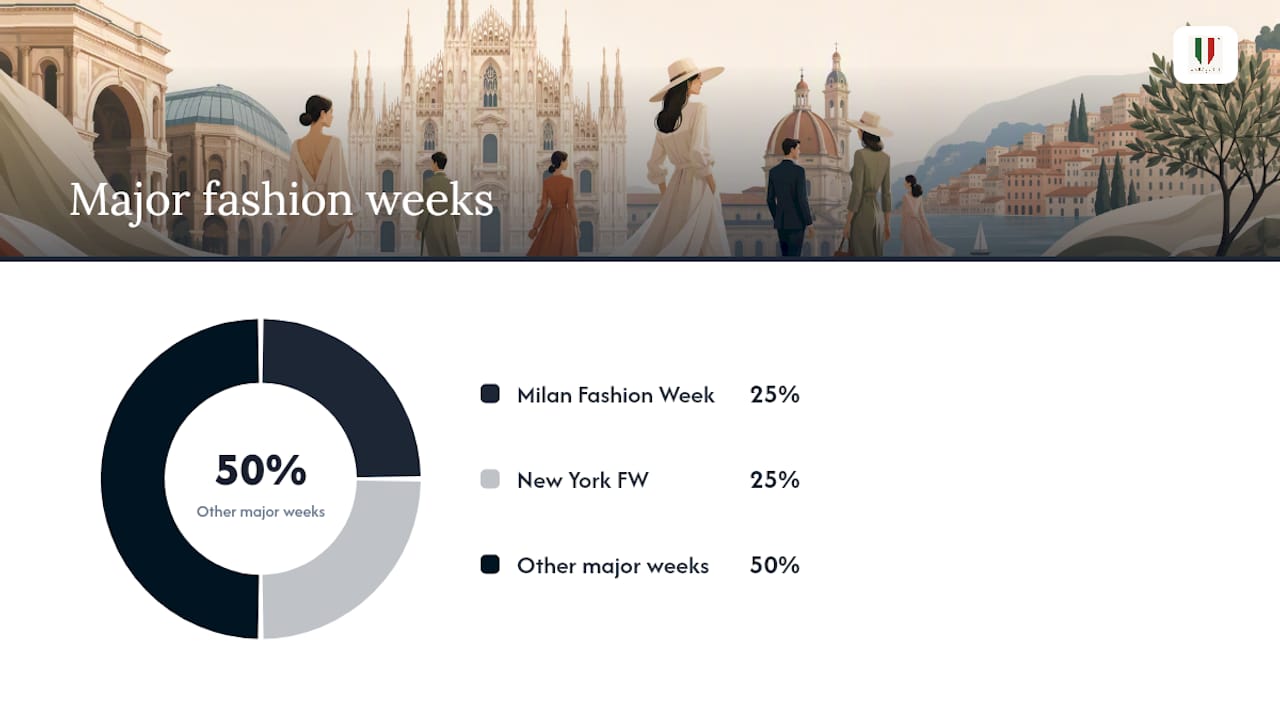
Italy is not background context for Urbalenti™ NYC. It is the operational foundation.
Every order fulfilled through Urbalenti™ NYC ships from Milan via DHL Express. That means the Kiton Fitb Sneakers or the Marni Tribeca Shopping Bag a customer orders from New York leaves Italy within the same supply chain that feeds the global luxury market. The provenance is real, not a marketing claim.
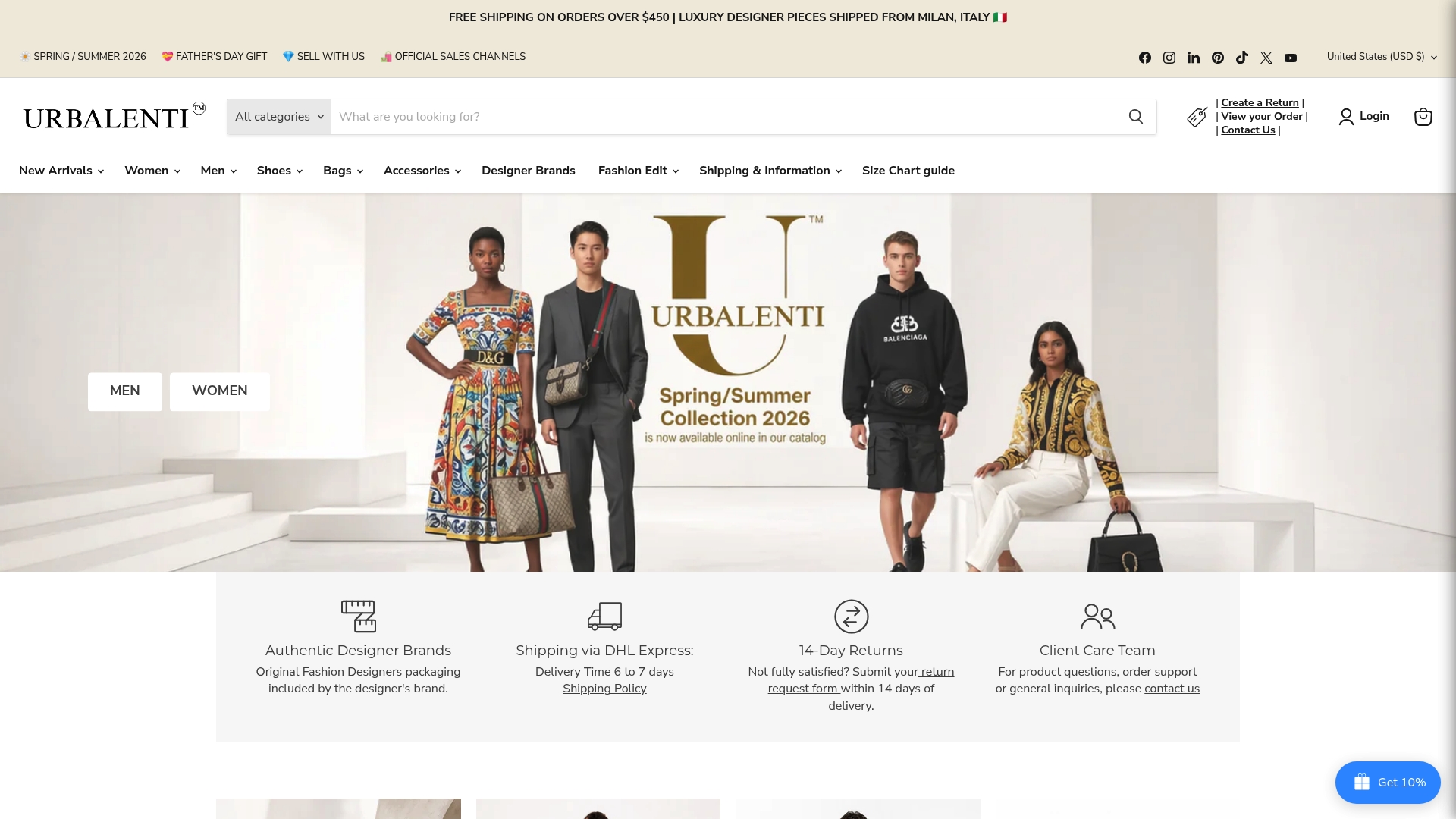
Understanding Italy’s regional craft traditions, its fashion infrastructure, and its quality standards helps explain why Italian-made goods carry the weight they do. A bag made in Tuscany, sneakers assembled in the Veneto, a leather accessory from a Milanese atelier: each reflects a specific production culture with centuries of accumulated skill. Urbalenti™ NYC’s curation is built around that specificity. Authenticity, competitive pricing, and DHL Express worldwide delivery are the three pillars, and Milan’s supply network is what makes all three possible simultaneously.
Readers who want to connect cultural knowledge to purchasing decisions can explore the designer edit for editorial context on Italian labels, seasonal collections, and what to look for when buying Italian designer goods online.
Official sources for planning travel to Italy and researching the country:
Check travel advisories and official tourism pages immediately before travel. Conditions, entry requirements, and safety ratings can change.
Rome is the most visited city in Italy, offering the Colosseum, Vatican City, and the Roman Forum within a compact historic center. Florence and Venice are close rivals depending on whether your priority is Renaissance art or canal-side architecture.
Yes, for most itineraries. A mid-range two-week trip for one person, covering flights, accommodation, meals, transport, and museum entry, typically varies depending on the season and choices. Budgeting extra funds allows comfortable upgrades, longer stays, or visits to multiple regions.
U.S. citizens can stay in Italy and the broader Schengen Area for up to 90 days within any 180-day period without a visa, as confirmed by the U.S. Department of State. Longer stays require a visa or residency permit.
112 is the universal emergency number across Italy and the entire European Union, covering police, fire, and medical emergencies.
Yes. Non-EU drivers, including U.S. citizens, are required to carry an International Driving Permit (IDP) alongside their domestic license when driving in Italy, as noted by Italia.it.
Leave a comment