
MY WISHLIST
MY WISHLIST

Leather bag care comes down to three habits: a weekly dry wipe, spot-cleaning with a barely damp cloth and a pH-neutral cleaner whenever needed, and conditioning at regular intervals depending on usage frequency and climate humidity. If you spill something, blot it immediately and let it air-dry away from heat. Never wipe leather with baby oil, olive oil, or a hair dryer. Both remove the leather’s natural moisture balance and speed up cracking.
This guide, from Admin Urbalenti™ NYC, follows the same conservative approach professional leather care specialists recommend: patch-test any product first, and favor prevention over aggressive fixes.
Conditioning at regular intervals is the single habit worth remembering. Everything else in this guide supports that one habit, whether it’s how you store the bag between wears or what you reach for the moment coffee lands on the flap.
Leather bag care succeeds when owners combine weekly dry maintenance, pH-neutral spot cleaning, and conditioning every three to six months while avoiding heat and household oils entirely.
| Point | Details |
|---|---|
| Weekly maintenance | Dry-wipe with a microfiber cloth and check flex points, handles, and seams for early wear. |
| Clean with the right tools | Use a barely damp cloth and pH-neutral cleaner, and always patch-test first on a hidden area. |
| Condition on a schedule | Apply beeswax-based or pH-balanced cream conditioners every 3 to 6 months, buffing off excess after 10 to 20 minutes. |
| Avoid heat and oils | Skip hair dryers, mink oil, and kitchen oils, which crack or darken leather permanently. |
| Store upright and breathable | Use cotton dust bags and acid-free tissue, never plastic or newspaper, and never hang by the handles. |
| Shop care-friendly leather | Urbalenti™ NYC’s calf leather pieces, including the Burberry Backet Bag and Ferragamo wallet, follow the same maintenance routine. |
Most leather damage happens slowly, not from one dramatic spill but from years of small habits: lotion residue on your hands, an overstuffed tote left slumped on its side, a bag hung on a hook by its handles for months at a time. The five-minute routine below stops most of that before it starts.
Handle your bag with clean, dry hands. Lotion, sunscreen, and hand sanitizer all leave oily residue that leather absorbs, and that residue attracts dust and can darken the surface unevenly over time. Empty your bag every night rather than leaving keys, water bottles, and makeup bags inside. The weight stretches seams and pulls handles out of shape in ways that are often permanent.
Once a week, wipe the entire bag down with a dry microfiber cloth. This isn’t decorative. It lifts surface dust before it grinds into the grain, and it gives you a chance to check flex points, the base, and stitching for early wear. Handling leather like you would treat skin is the mental model that keeps this habit consistent, since leather responds to daily contact the same way skin does.
Rotate your bags instead of running one into the ground, and keep them off floors and damp surfaces where moisture wicks upward into the base. A few concrete habits carry most of the weight here:
Pro Tip: Run your thumb along the flex points, where the handle meets the body and along the base corners. If the leather feels stiff or slightly crunchy under light pressure, that’s your cue to condition early rather than wait for the calendar.
A safe at-home clean follows a fixed order: empty, dust, patch-test, spot-clean, dry, condition. Skipping the patch test is the most common mistake, and it’s the one that turns a small stain into a visible blotch.
Start by emptying the bag completely and brushing out interior dust and crumbs with a soft cloth. Gather two clean microfiber cloths and a pH-neutral leather cleaner. Avoid baby wipes, glass cleaner, or dish soap. All three strip the leather’s finish or leave a residue that attracts dirt faster than before.
Before touching visible areas, test the cleaner on a hidden spot, like the underside of a strap or an interior seam, and wait a few minutes to watch for darkening or color shift. If the leather looks unchanged, you’re clear to proceed.
Follow the same conservative rule workshops use: apply product to the cloth, never directly onto the leather, and buff off any excess so nothing sits and turns sticky.
Conditioning keeps leather fibers pliable, which is what prevents the fine surface cracking that shows up first at flex points and corners. Skipping it doesn’t just dull the shine. It shortens the bag’s usable life, since dried-out leather cracks under the same stress that supple leather absorbs without a mark.
Condition leather every three to six months, leaning toward the shorter end if you carry the bag daily or live somewhere with dry winters or strong air conditioning. A bag that sits in a closet most of the year can often go closer to six months between treatments.
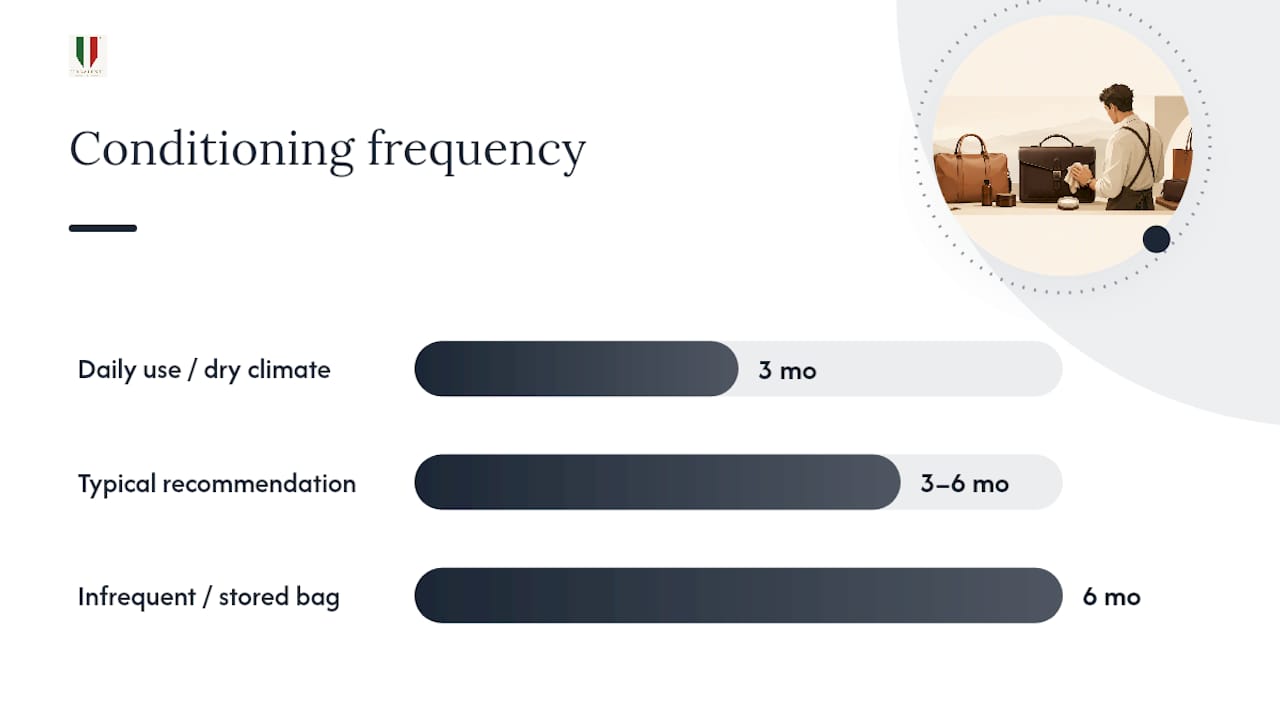
Reach for a beeswax-based or pH-balanced cream conditioner made specifically for fine leather goods. Skip mink oil, neatsfoot oil, petroleum jelly, and any cooking oil from your kitchen. These darken calfskin and can oxidize or harden the fibers over time, which is the opposite of what conditioning is supposed to do.
Application is simple:
Watch for the signals that conditioning is overdue: a matte, dry-looking surface, faint white creasing at fold points, or leather that feels stiff rather than supple when you flex it gently.
Store every leather bag upright, in a breathable cotton dust bag, stuffed with acid-free tissue paper to hold its shape. Never substitute newspaper, since the ink can migrate onto light-colored leather and leave a stain that’s genuinely difficult to remove. Plastic bags are just as risky in the other direction, since they trap moisture and encourage mold growth on leather stored for weeks at a time.
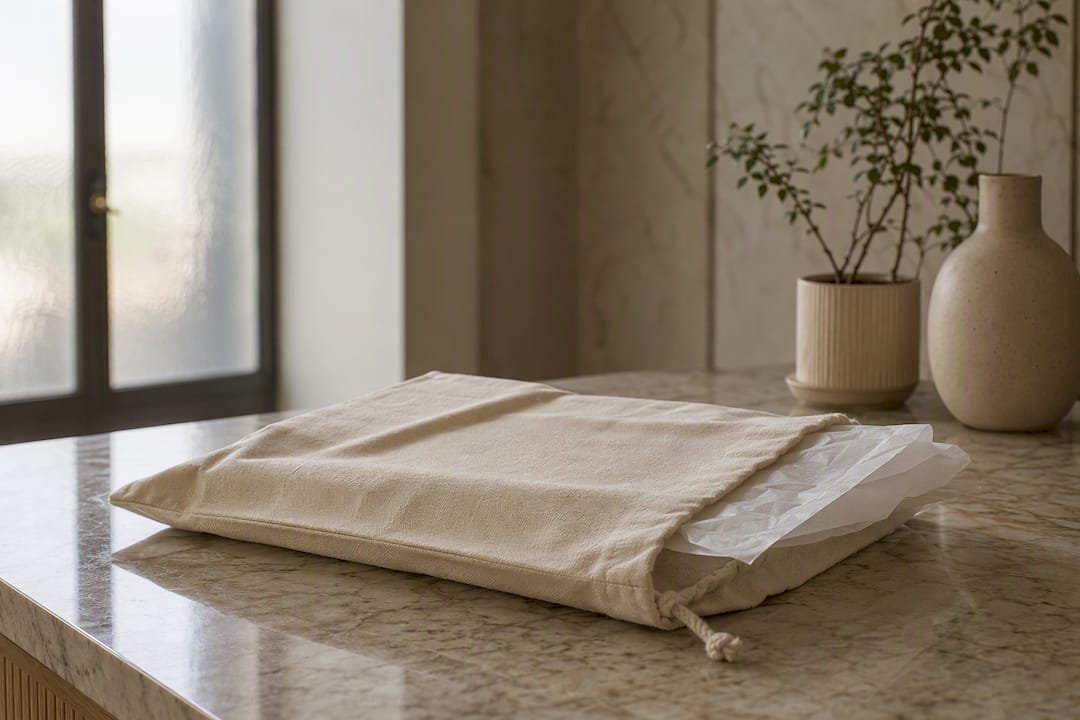
If you’re storing bags through a humid season, tuck a silica gel packet inside the dust bag and aim for relative humidity somewhere between 40% and 60% in the storage space. A basic hygrometer in a closet helps flag humidity swings before they turn into a mildew problem or, on the dry end, brittle straps.
Never hang a leather bag by its handles for storage. The strain stretches the leather permanently, and there’s no conditioner that reverses it once it happens. Wrap metal hardware, buckles, clasps, zipper pulls, in a small piece of tissue so it doesn’t imprint on the leather during months of storage.
Pro Tip: If you’re rotating seasonal bags, check on stored pieces every six to eight weeks rather than leaving them untouched for a full season. Catching a musty smell or a stiff patch early is far easier to fix than discovering it months later.
Different stains call for different first moves, and reaching for the wrong one, especially heat, can turn a fixable mark into permanent damage.
For water spots, blot the area immediately with a dry cloth and stuff the bag with tissue to help it hold its shape while drying. Let it air-dry at room temperature. Never use a hair dryer or place it near a heat vent, since heat pulls natural oils out of the leather and causes the cracking you’re trying to avoid in the first place.
For oil or grease marks, sprinkle an absorbent powder, cornstarch or plain talc, directly onto the spot and let it sit overnight. Brush it away gently in the morning. Repeat once if a faint mark remains, and call a professional if the stain has soaked in deeper than the surface.
Ink is the trickiest of the common stains. Blot it right away without rubbing, then patch-test a mild solvent on a hidden area before going near the visible mark. Ink and dye-transfer problems frequently require professional treatment, because a DIY attempt can spread the stain or lift color from the surrounding leather, leaving a pale patch that’s worse than the original mark.
Denim dye transfer, that blue cast light-colored bags pick up from jeans, responds reasonably well to gentle, even dampening of the entire panel rather than spot-treating just the stained section. Working the whole area helps the color equalize instead of leaving a visible line. Severe or set-in transfer calls for a professional.
Some problems are outside the safe range for at-home fixes, and pushing forward anyway usually costs more to repair afterward than calling a specialist from the start.
Professional leather services use material-specific solvents, re-dyeing techniques matched to the original pigment, hand-stitching for structural repairs, and anti-fungal treatments strong enough to stop mold without damaging the leather. For a designer bag, the cost of professional cleaning is almost always lower than the cost of replacing a piece you damaged trying to save on a service fee.
Urbalenti™ NYC curates designer bags in calfskin, saffiano, and other fine leathers, sourced with authenticity as the baseline requirement, not an add-on. That means the team handles these materials directly, from intake through packaging, and follows the same conservative philosophy outlined throughout this guide.
Prevention beats aggressive remediation every time. The goal with any fine leather piece is to never need the dramatic fix in the first place.
Curious how construction affects care needs? Our guide on choosing designer handbags breaks down material differences before you buy, and the same logic applies to protecting suede sneakers, a different material with its own rules worth knowing if your collection includes both.
Every leather piece that comes through our Milan fulfillment gets a routine check before it ships, corners, hardware, and seams included. We keep conditioning minimal at the intake stage since most pieces arrive in excellent condition, and we wrap hardware and stuff bags for transit the same way we’d recommend you store them at home. If you’re unsure how to care for a specific bag you’ve bought from us, reach out to customer support. We can speak to that exact material and finish.
Not every leather piece needs guesswork. Several items in the Urbalenti™ NYC catalog use calf leather that responds well to the exact routine covered in this guide, weekly dry wipes, occasional conditioning, and careful storage between wears. The Burberry Brown Calf Leather Bos Taurus Backet Bag, the Brunello Cucinelli Gray Calf Leather Bos Taurus Other Accessories, and the Ferragamo Brown Calf Leather Bos Taurus Wallet all fall into that category, alongside footwear like the Golden Goose Bicolor Polyester Athletic Sneakers for readers building out a full wardrobe.
Every item ships from Milan via DHL Express, arriving with the authenticity documentation that matters when you’re investing in a piece meant to last years, not seasons. If you own a bag with a specific finish or exotic leather trim not covered here, our customer support team can walk you through care steps particular to that material. Browse the full accessories collection to see what’s currently available, or reach out directly with questions about a piece you already own.
Wipe it weekly with a dry microfiber cloth, spot-clean with a pH-neutral cleaner when needed, and condition every three to six months depending on use and climate. Store it upright in a breathable dust bag with acid-free tissue rather than plastic.
No. Household oils, mink oil, and neatsfoot oil darken calfskin unevenly and can oxidize or harden the fibers over time. Use a beeswax-based or pH-balanced cream conditioners conditioner instead, applied sparingly with a cloth.
Avoid heat sources like hair dryers, household oils, glass cleaner, baby wipes, and dish soap. All of these strip natural oils, leave residue, or cause discoloration and cracking.
Consistent daily habits protect leather more than any single product: clean hands, breathable storage, and conditioning on a three to six month cycle. Several calf leather pieces at Urbalenti™ NYC, including the Burberry Backet Bag and Brunello Cucinelli accessory, hold up well under exactly this routine.
Suede needs dry brushing and a dedicated suede protector spray rather than cream conditioners, which can stain and flatten the nap. Smooth leather tolerates cream conditioners and damp-cloth cleaning that suede cannot handle.
Leave a comment