
MY WISHLIST
MY WISHLIST

Eight signals separate a trustworthy Italian fashion retailer from a risky one: an explicit authenticity or money-back guarantee, documented provenance (invoice, serial numbers, brand tags), fulfillment from Milan or elsewhere in Italy via a tracked carrier like DHL Express, insured shipping, a clear returns and RMA process, PCI-compliant checkout security, transparent duties and fees, and a customer service team that answers in hours, not weeks.
Miss one item and ask questions before you pay. Miss three or more and treat the purchase as high risk, regardless of how good the photos look. This trusted Italian fashion retailer checklist works because it targets the parts of a transaction a counterfeit or fly-by-night operation can’t easily fake: paperwork trails, carrier accountability, and a written dispute process.
Pro Tip: Screenshot the retailer’s returns policy and authenticity guarantee before you buy. Policies get quietly edited after a dispute goes public, and you want a timestamped copy.
A retailer that puts its authenticity promise, shipping carrier, and return window in writing, before you ask, signals transparency. One that dodges those questions is telling you something too.
An Italian fashion retailer earns trust through documented provenance, Milan or Italy fulfillment with a named insured carrier, a written authenticity guarantee, and secure, chargeback-friendly payments.
| Point | Details |
|---|---|
| Authenticity guarantee in writing | Confirm the retailer states a money-back promise and dispute process before you buy. |
| Provenance beats promises | Ask for invoice SKU matches, serial numbers, or brand verification codes like Certilogo. |
| Fulfillment origin matters | A named carrier such as DHL Express and a disclosed dispatch country signal real infrastructure. |
| Payment method is your safety net | Use credit cards or PayPal for chargeback protection; avoid crypto-only or wire-only checkout. |
| Urbalenti™ NYC applies this checklist directly | Milan fulfillment, DHL Express shipping, itemized invoices, and a written authenticity guarantee on every order. |
You don’t need thirty minutes of research to vet a retailer. Five focused checks catch most problems before you enter a card number.
Pro Tip: Domain age matters more than most shoppers realize. A quick WHOIS lookup showing a domain registered eight months ago, paired with claims of “since 1998,” is a mismatch worth investigating further before you buy.
If any single item fails, don’t cancel the checkout in a panic. Pause it. Email the retailer and ask for the specific missing detail, such as the invoice’s declared value or the carrier’s tracking format. A retailer confident in its own supply chain answers that question directly.
Provenance isn’t a single document. It’s a set of details that corroborate each other: the invoice, the serial number, the physical tags, and often a brand-issued verification code.
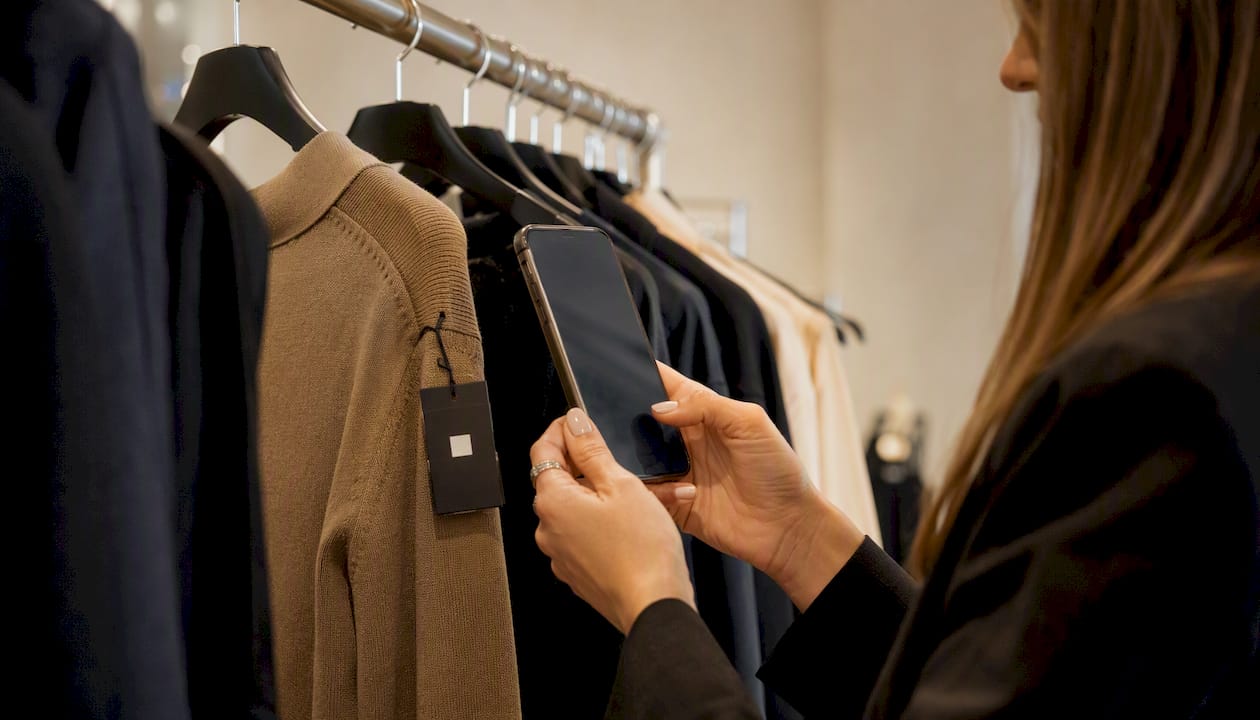
An itemized invoice should name the seller, list the item’s declared value, and match the SKU or style code on the physical garment tag. Serial numbers, Certilogo (CLG) codes, NFC tags, or QR codes let you cross-check an item directly against the brand. Armani’s authenticity portal lets buyers enter a CLG code to confirm an item’s origin, and Versace runs a comparable NFC and QR-based system. Trussardi offers a similar public verification page where a code entered online returns a match. These systems exist because major houses want counterfeiting easy to disprove, and a retailer that photographs and discloses these codes upfront is working with that system rather than against it.
| Evidence Type | What It Confirms | How to Verify |
|---|---|---|
| Itemized invoice | Seller identity, declared value, SKU match | Compare SKU on invoice to tag |
| Serial number / CLG code | Brand-level authenticity | Enter code on brand’s official portal |
| NFC or QR tag | Item-specific origin data | Scan with phone, check brand response |
| Tag and packaging photos | Physical consistency with brand standards | Compare against brand’s official product images |
A generic “certificate of authenticity” PDF with no serial number, no invoice reference, and no way to verify it against the brand is close to worthless. Any print shop can produce that document in minutes.
Pro Tip: Ask the retailer to photograph the serial number or CLG code before shipment, not just the outside of the box. A legitimate seller will do this without hesitation.
A written authenticity guarantee is only as good as the process behind it. The strongest policies spell out three things: how to submit a dispute, how long authentication takes, and who pays if you’re right.
Look for an explicit money-back promise that names a specific timeline for acknowledgment, a defined authentication window, and a refund window that starts once authenticity is disproven. Retailers that publish this level of detail tend to have more mature fulfillment operations, since the process only works if someone on staff actually owns it.
| Policy Element | Trustworthy Standard | Warning Sign |
|---|---|---|
| Dispute acknowledgment | Within 1 to 2 business days | No confirmation, no ticket number |
| Authentication step | Brand portal or named third party | “We’ll get back to you” with no process |
| Refund timing | Defined window post-verification | Open-ended, “case by case” |
| Return shipping cost | Retailer-insured or reimbursed if item is fake | Buyer pays regardless of outcome |
Pro Tip: Photograph everything with a visible timestamp, including original packaging, before you open sealed compartments or remove tags. If a dispute happens, this evidence is your leverage.
Where an item ships from tells you almost as much as what’s in the box. Vague shipping timelines and unclear origin are recurring signs of a shaky luxury retailer, while a stated country of dispatch and a named carrier are signs of an operation with real fulfillment infrastructure behind it.
Shipping and returns are logistics-heavy operations that expose a company’s real infrastructure. A retailer that names its carrier, states insurance coverage, and clarifies who handles customs clearance is showing you it has the operational backbone to support a dispute if one arises. Vague answers on any of these points usually mean the fulfillment side is thinner than the storefront suggests.
Statistic Callout: DHL Express and comparable premium carriers typically move international express shipments within a few business days once an order is dispatched, though authentication checks on high-value items can add time before the item ships.
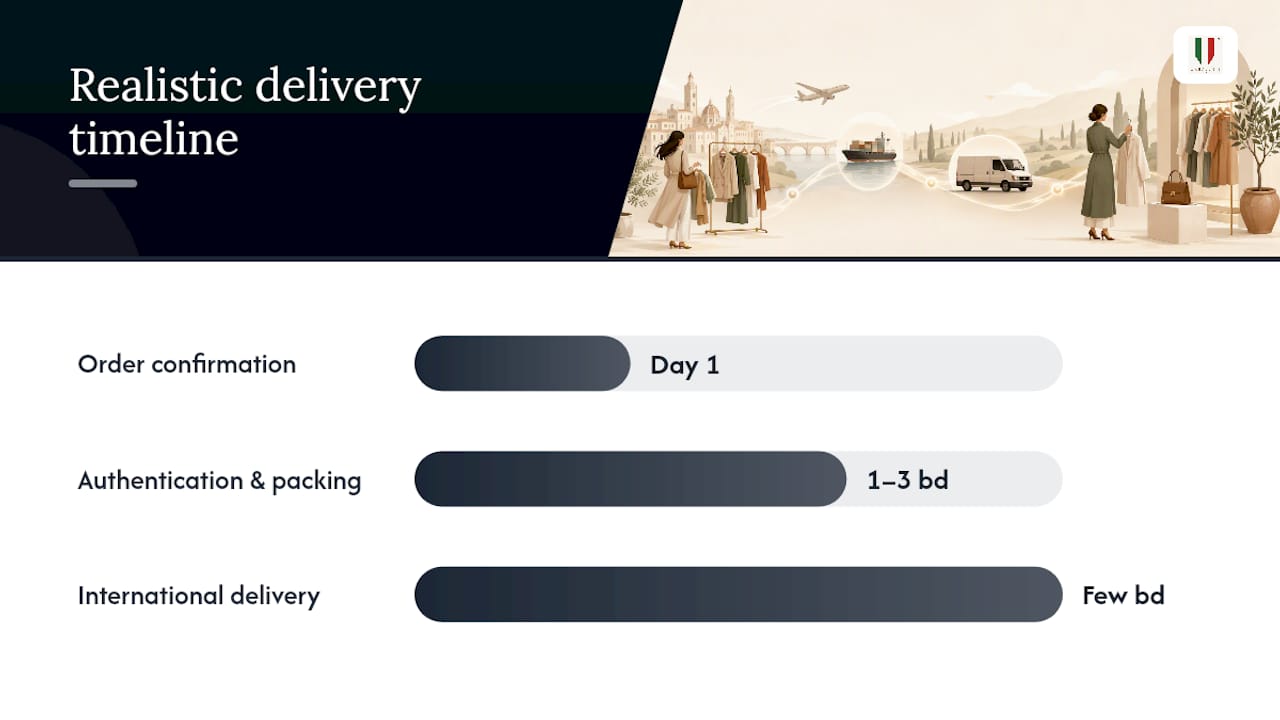
For Milan-fulfilled orders, a realistic window looks like: order confirmation on day one, authentication and packing over the next one to three business days, dispatch with tracking issued, then international delivery in a handful of business days depending on destination and customs processing. If a retailer can’t give you any timeline breakdown, at minimum ask when tracking will be issued.
Pro Tip: Ask specifically whether shipping insurance covers the full declared value of the item, not a flat capped amount. Some policies cap insured value well below what you paid.
The padlock icon is a starting point, not a verdict. HTTPS is achievable with a free certificate, so a secure-looking checkout page can still sit in front of a fake storefront. Check for PCI DSS compliance language, recognized card network logos, and a checkout domain that matches the retailer’s actual site.
Payment method choice matters as much as the padlock. Credit cards and PayPal both offer chargeback protection, which gives you recourse if an item never arrives or turns out to be inauthentic. Treat any request for a bank wire to a personal account, gift cards, or crypto-only payment on a purchase over a few hundred dollars as a serious warning sign.
The number on the product page rarely matches what you actually pay. A transparent retailer shows the declared item value, states its duties and VAT policy, and either includes those costs or estimates them clearly before you commit.
Common hidden costs on international designer purchases include customs duties, import VAT, broker handling fees charged by the carrier, and currency conversion charges if you’re paying in a currency other than the one displayed. Ask directly: is duty prepaid (DDP) or collected on delivery (DDU)? That single answer changes your total cost significantly.
Statistic Callout: On an item with international shipping charges, unpaid import duties and VAT can add a significant additional cost depending on destination country and product category, potentially surprising buyers at delivery.
Pro Tip: If a retailer’s checkout page doesn’t mention duties at all, assume you’ll owe them on delivery and budget accordingly rather than finding out from a courier invoice.
Send one specific pre-purchase question before you spend a significant amount of money. Ask about the SKU on a particular item, the exact carrier used for your country, or the authentication step for a specific product. A vague, copy-pasted answer tells you the support team can’t actually speak to their own inventory.
A reasonable service level for a premium retailer looks like a same-day or next-business-day reply to email, and immediate or same-day response through live chat or phone. If a “contact us” form produces silence for a week, that’s your answer about post-sale support quality too.
Pro Tip: Ask your test question on a weekday morning, not a Sunday night, to get a fair read on response time before drawing conclusions.
Reviews and press coverage corroborate what the retailer says about itself, and they’re harder to fake at scale than a single homepage badge.
Statistic Callout: A cluster of many five-star reviews posted within a short span, especially with near-identical phrasing, is a pattern often linked to manufactured review activity rather than organic customer feedback.
Watch for repeated complaints about non-delivery, slow refunds, or “item never arrived” threads that repeat across multiple platforms. One or two negative reviews are normal for any retailer; a pattern of the same complaint is not.
Run through this list before you enter payment details. Mark each item pass or fail.
Any single failed item earns a follow-up question. Two or more failed items, especially a missing authenticity guarantee paired with a crypto-only payment request, are immediate disqualifiers. Pause the purchase, ask for documented provenance, and use a payment method that gives you a dispute path if things go wrong.
We built our policies around this exact checklist because we designed the business to withstand it, not to dodge it.
| Checklist Item | URBALENTI™ NYC Policy |
|---|---|
| Authenticity guarantee | Explicit authenticity or money-back guarantee |
| Fulfillment origin | Shipped direct from Milan, Italy |
| Carrier and insurance | DHL Express worldwide, tracked and insured |
| Provenance documentation | Itemized invoice with brand and item details on request |
| Payment security | HTTPS checkout, PCI-compliant processing |
| Returns process | Clear RMA process with stated timelines |
| Customer service | Responsive support for pre- and post-sale questions |
Browse curated pieces like the Golden Goose cotton joggers, the Y-3 logo T-shirt, Kiton Fitb sneakers, Kiton Running sneakers, or Veja V-90 sneakers to see this documentation in practice on real product pages.
Pro Tip: If you want to see an invoice sample or ask about a specific item’s provenance before buying, reach out to customer service first. A retailer confident in its supply chain will answer before you commit, not just after.
Buyers rarely lose money to obviously fake websites.
The gap between a trustworthy retailer and a risky one usually isn’t dramatic. It’s a missing invoice line, a shipping origin nobody names, a returns policy that reads vaguely on purpose. Buyers who ask specific questions, the SKU, the carrier, the authentication timeline, get specific answers from legitimate sellers and vague deflections from everyone else.
At Urbalenti™ NYC, this checklist isn’t marketing copy. It reflects how we built our fulfillment out of Milan, why we work with DHL Express rather than an unnamed courier, and why our authenticity guarantee is written down rather than implied. [Author professional background and credentials related to the fashion industry to be added.] If you have a pre-purchase question about a specific item’s provenance, our support team will answer it before you buy, not after. [Proprietary data on customer satisfaction and service quality to be added.]
Independent verification only gets you so far when a retailer’s actual inventory is thin or its documentation is an afterthought. Urbalenti™ NYC was built around the opposite approach: every piece is curated first, then backed by an explicit authenticity guarantee, an itemized invoice, and shipment direct from Milan via DHL Express, so the provenance checks in this article aren’t a hurdle you have to clear. They’re standard practice on every order.
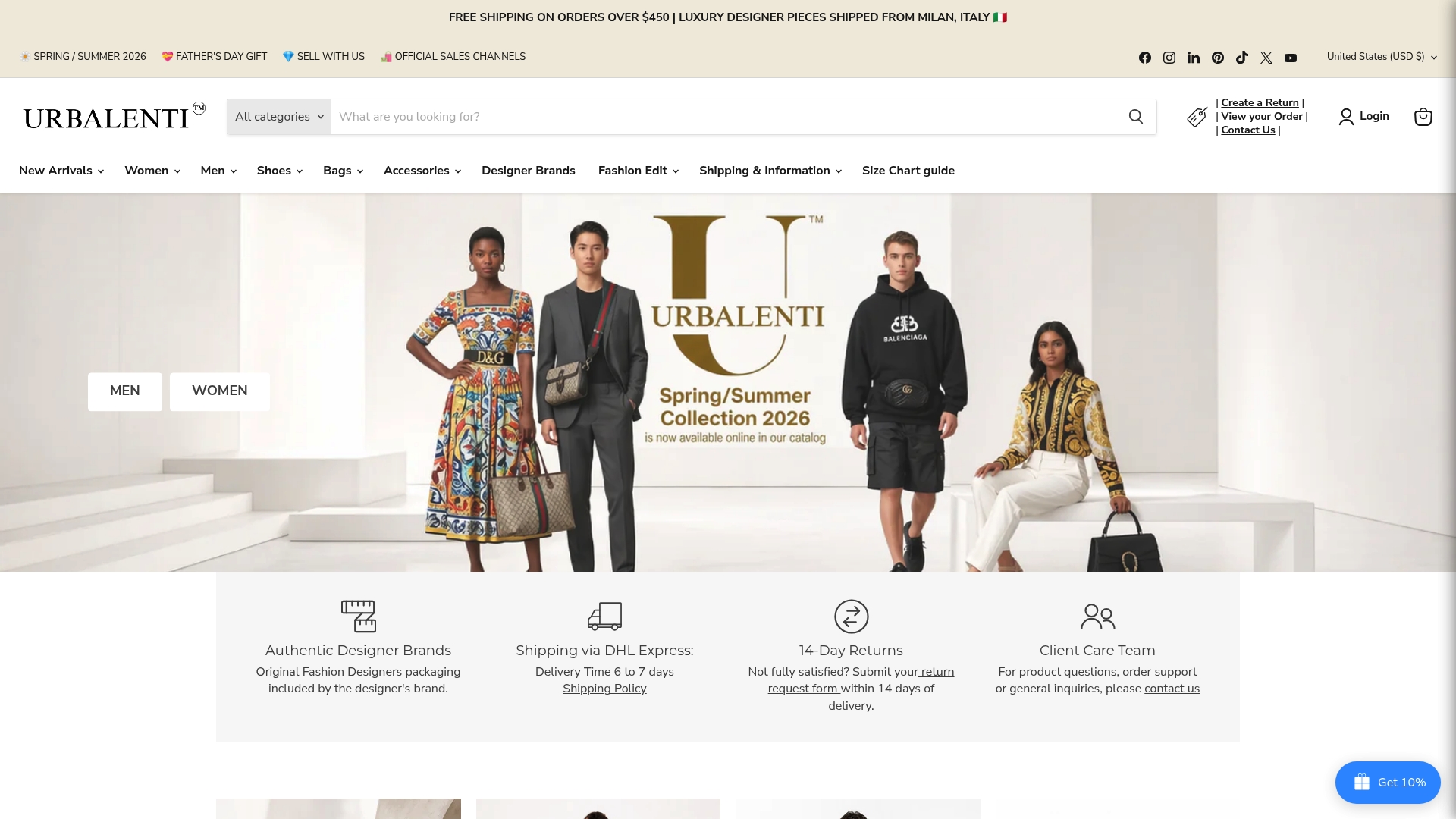
That’s the practical difference for a buyer who just read this checklist: you’re not hoping a retailer happens to meet these standards, you’re confirming it upfront. Explore designer sneakers, apparel, and accessories from brands like Golden Goose, Kiton, Y-3, and Veja, and if you want documentation on a specific piece before you buy, whether that’s a serial number, a tag photo, or a shipping estimate to your country, message our customer service team first. Getting that answer before checkout is the whole point of this checklist, and it’s how we’ve built the shopping experience from the start.
A handful of references back the verification steps in this checklist and are worth keeping on hand for future purchases.
A written authenticity or money-back guarantee matters most, since it defines what happens if an item’s origin is ever disputed.
Check for a disclosed country of dispatch, a named carrier like DHL Express, and a tracking number that shows an Italian origin scan.
Yes. Systems used by brands such as Armani and Versace let you enter a code or scan an NFC tag directly through the brand’s own portal, independent of the retailer.
Credit cards and PayPal both provide chargeback protection, which gives you recourse if an item is inauthentic or never arrives.
Yes. Urbalenti™ NYC ships from Milan via DHL Express and provides itemized invoices and product documentation, and customer service can answer specific provenance questions before you buy.
Leave a comment