
MY WISHLIST
MY WISHLIST

Vegetable tanned leather is hide stabilized with tannins pulled from plants like oak, chestnut, and quebracho, rather than the chromium salts used in modern mass production. The tannins bind to collagen fibers in the hide, converting raw skin into a firm, stable material that ages instead of just wearing out.
This matters because veg-tan behaves differently from almost anything else on a shelf of leather goods:
The rest of this guide walks through how that process actually works, how veg-tan stacks up against chrome tanning, and how to care for it once it’s in your closet or on your desk.
Vegetable tanned leather earns its price and patience through slow, plant-based tanning that builds structure, character, and longevity chrome tanning can’t replicate.
| Point | Details |
|---|---|
| Definition | Plant tannins bind to collagen fibers, converting hide into firm, stable leather. |
| Process length | Traditional pit tanning can run several weeks, while chrome tanning takes 1 to 3 days. |
| Core strengths | Holds shape, accepts tooling, burnishes cleanly, and develops a genuine patina over time. |
| Real limitations | Stiff at first, water-sensitive, and limited in bright color options. |
| Verification | Check edge color, smell, flex, and a water-drop reaction before trusting a “veg-tan” label. |
| Care routine | Dust regularly, condition sparingly, seal before water exposure, and avoid harsh solvents. |
The technical answer: vegetable tanning uses tannins), which are astringent plant compounds found in bark, wood, and fruit, and it works by bonding those tannin molecules to the collagen proteins inside animal hide. That bond is what stops the hide from decomposing and gives it the strength and body you feel when you pick up a piece.
In plain terms, it’s leather tanned the slow way, with plants instead of chemicals. The tannins fill in the gaps between collagen fibers, which is why veg-tan feels denser and firmer in your hands than most leather you’d find in a fast-fashion handbag.
Grade matters just as much as tannage. Full-grain veg-tan keeps the outer layer of the hide intact, including natural markings, and it’s what develops the richest patina. Corrected-grain veg-tan has been sanded and refinished to hide imperfections, so it looks more uniform but loses some of that raw character. When a product description just says “vegetable tanned,” ask which grade you’re actually getting.
Tanning with plant materials isn’t a modern invention. The rough timeline looks like this:
Most of the world’s leather now goes through chrome tanning. Veg-tan persists because saddlers, tool-leather makers, and heritage goods brands still want a material that can be carved, molded, and burnished, qualities chrome-tanned leather generally can’t match.
The process is unglamorous and slow, which is exactly why it produces such a distinctive material. A tannery generally works through these stages:
Timeline depends heavily on method. Traditional pit tanning can run several weeks, while drum-based veg tanning compresses that into a shorter, more controlled cycle, though still nothing close to the 1 to 3 days a chrome tannery needs for the same hide.
A handful of factors drive what you pay for the finished leather:
Small craft tanneries tend to produce more character and variation, hide to hide, batch to batch. Large industrial operations trade some of that individuality for consistency and volume, which is part of why two products both labeled “veg-tan” can still feel noticeably different in your hands.
The tannin source shapes the final color, speed of tanning, and overall feel of the hide. Common sources include:
Historically, tanners also blended in oils and, in some regional traditions, alum, to adjust softness or speed up the process. Those additives shift the character of the finished hide, which is part of why “vegetable tanned” isn’t a single fixed recipe so much as a family of related methods.
Makers gravitate toward veg-tan for a specific set of properties that chrome-tanned leather simply doesn’t offer:
Statistic Callout: Noticeable surface darkening on veg-tan often begins within the first few weeks of regular handling, with a deeper, richer patina building over months to years depending on light exposure and use.
That combination is why belts, wallets, and holsters are so often built from veg-tan. They need to hold their shape and take daily abuse without looking worse for it.
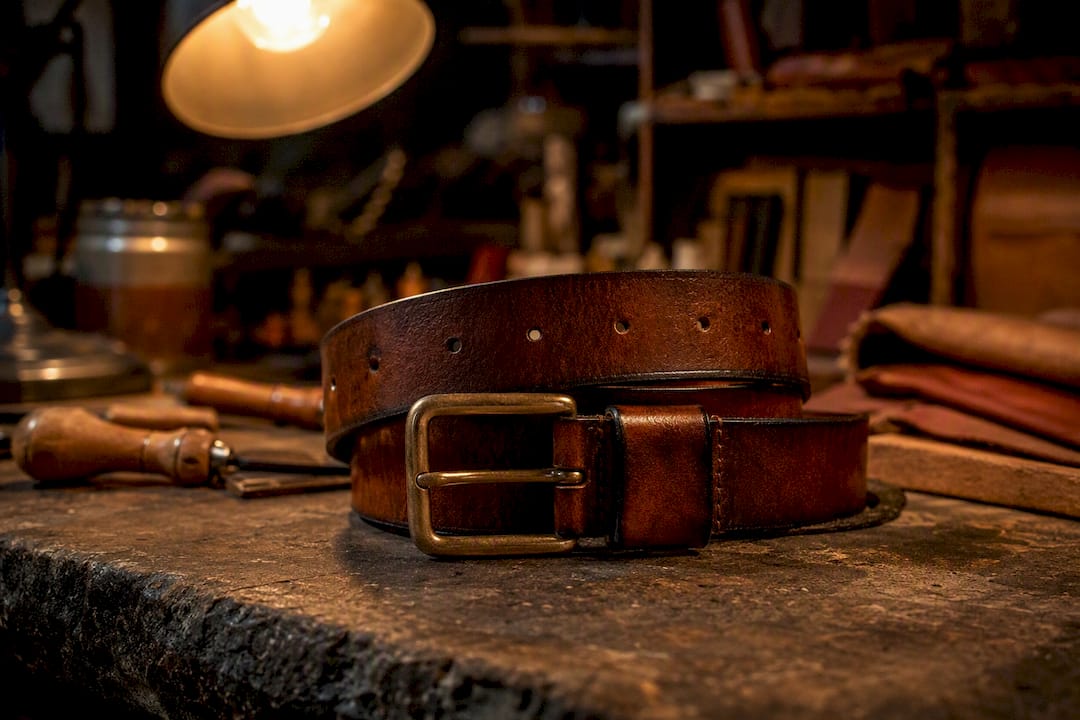
No material is right for every job, and veg-tan has real trade-offs worth knowing before you buy or build with it:
If you need something that drapes softly, survives daily rain, or comes in a vivid color, veg-tan is probably the wrong call. That’s exactly the gap chrome tanning was built to fill.
The two tannages solve different problems, and the useful question is which set of properties actually fits what you’re making or buying, not which one is universally superior.
| Dimension | Vegetable Tanned | Chrome Tanned |
|---|---|---|
| Feel/firmness | Firm, structured, holds shape | Soft, pliable, drapes easily |
| Patina/aging | Develops pronounced, warm patina over time | Minimal visible aging or color shift |
| Water resistance | Lower; stains and stiffens if soaked | Generally more water-resistant |
| Production time & cost | Weeks; higher cost | Hours to a couple days; lower cost |
| Color range/dyes | Narrower, earthier tones; dyes penetrate | Wide color range; dyes and pigments coat surface |
| Environmental impact | Renewable tannins, but longer process and more water use | Faster process, but chromium byproducts require careful handling |
| Typical end uses | Belts, holsters, tooled goods, saddlery | Jackets, gloves, upholstery, soft bags |
Pick veg-tan when you want structure, a burnishable edge, or a piece that ages into something better than it started. Pick chrome-tan when softness, color variety, or moisture resistance matter more than shape retention. Some makers split the difference with hybrid or retanned leathers, sometimes called combination tannage, which run a hide through both processes to borrow chrome’s softness while keeping some of veg-tan’s body.
A few checks, done without damaging the piece, tell you most of what you need to know:
Skip burn tests. They’re destructive and unreliable, and a reputable seller shouldn’t need you to torch a corner to prove anything. For anything expensive or mission critical, ask the supplier for tannery details, hide grade, and a physical sample before committing.
Veg-tan shows up wherever a product needs to hold its shape or take a beating without falling apart:
Many bags actually combine the two tannages, using veg-tan for straps and edges while relying on softer chrome-tanned panels for the body, giving you both structure and drape in one piece.
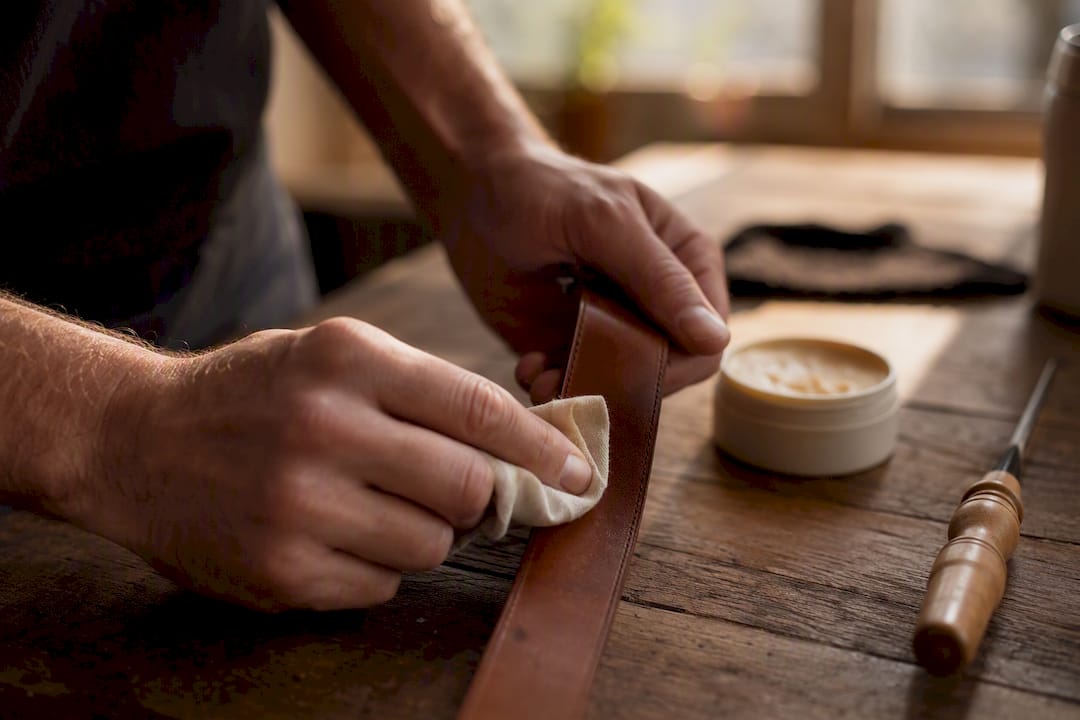
Veg-tan rewards a light, consistent routine far more than heavy product application. Follow this sequence:
A few things to avoid: harsh solvents, direct high heat like a hair dryer, and over-oiling, which can darken the leather unevenly and attract dirt. Measured conditioning and occasional greasing protect against water damage without masking the natural patina you’ve spent months building.
For minor damage, light edge scuffs often buff out with a bit of conditioner and a soft cloth, and small color fading can sometimes be evened out with a matching leather dye. Deep gouges or torn stitching are best handed to a professional leather repair shop rather than fixed at home.
Pro Tip: Test any new conditioner on a hidden spot, like the underside of a strap, before applying it to the whole piece. Veg-tan reacts differently batch to batch, and a little product goes a long way.
The honest answer is that it depends on the tannery, not the chemistry alone. Plant tannins are renewable, but the tradeoffs are real:
Before trusting a sustainability claim, ask about effluent treatment, where the tannins are sourced, and whether the tannery publishes any certification or transparency data. There’s no blanket rule that veg-tan beats chrome tanning environmentally. It comes down to how responsibly each specific tannery runs its operation.
Vegetable tanned pieces reward patience. A well-made veg-tan wallet or belt looks better in three years than it did the day you bought it, which is rare in a category full of goods built to be replaced. When you’re shopping, ask for hide grade and finish details, choose thickness based on how hard the piece will work, and look for sellers who can actually answer those questions.
Yes. It’s genuine animal hide stabilized with plant-based tannins instead of chromium salts, making it one of the oldest true leather-making methods still in use.
Leather is generally graded as full-grain, top-grain, genuine leather, and bonded leather, ranked from the most natural and durable to the most processed and least durable.
Louis Vuitton’s signature trim leather is vegetable tanned, which is why it develops the deep honey patina collectors associate with the brand’s older bags.
It’s widely regarded as a premium material because of its density, repairability, and ability to age well, though quality still varies by hide grade and the specific tannery’s process.
Leave a comment