
MY WISHLIST
MY WISHLIST

For authenticated designer purchases and real styling guidance, hire a human-led virtual personal shopper. For fast price research on everyday items, an AI shopping assistant works fine. The trade-off is simple: human shoppers cost more per session, typically $75 an hour and up, but they verify condition, confirm authenticity, and can act on limited-run pieces in real time. AI tools are free or cheap but cannot inspect a handbag’s stitching or a sneaker’s box code before you buy.
Quick signal: Urbalenti™ NYC combines curated designer sourcing with Milan fulfillment and DHL Express shipping, which positions it as a trust-first option when authenticity matters more than speed.
Choosing between a human-led virtual personal shopper and an AI assistant comes down to one trade-off: authentication and styling depth versus speed and cost.
| Point | Details |
|---|---|
| Match service to need | Use human-led shoppers for designer authenticity, AI tools for fast price research. |
| Vet before you book | Ask about authentication, returns, and shipping insurance before committing. |
| Expect a real timeline | Live sessions resolve same day; curated sourcing typically takes three to five days. |
| Pricing shapes total cost | Hourly, per-item, and subscription models each suit different buying frequencies. |
| Urbalenti™ NYC for designer buys | Offers curated New York sourcing, Milan fulfillment, 100% authenticity, and DHL Express shipping for verified designer purchases. |
Three service types dominate the online shopping assistant market, and each solves a different problem.
Each model has a clear ceiling. AI assistants are strong for research but weak on authentication and fit confidence for luxury goods. Retailer-tied stylists are economical but boxed in by inventory. Human-led shoppers cost more but close the gap between “looks right in a photo” and “verified in hand.”
Pro Tip: Book a live video session for any purchase over a few hundred dollars in a category you don’t buy often, sneakers, handbags, fine leather goods. The cost of the session is trivial next to the cost of a counterfeit or a return you can’t make.
Vetting a digital shopper consultant takes five minutes if you ask the right questions. Skip this step and you’re trusting a stranger with your checkout.
Pricing models shape your total cost more than most buyers expect. Hourly rates favor quick, decisive sessions. Flat per-item fees favor buyers who want price certainty upfront. Subscription models make sense only if you shop frequently enough to offset the recurring cost. A one-time buyer chasing a single handbag rarely benefits from a subscription; a wardrobe overhaul might.
Watch for three red flags: a shopper who won’t name their authentication process, a fee structure that isn’t disclosed before you commit, and no clear return path if the item arrives different from what was described. A legitimate provider answers all of these without hesitation.
The workflow follows a consistent shape across most providers, whether you’re booking a live session or commissioning a curated sourcing run.
Turnaround varies by service type. Live sessions resolve the same day. Curated sourcing, the kind independent stylists offer, generally takes three to five days to deliver a shortlist with sizing notes and outfit pairings. Complex international orders take longer once customs and duties enter the picture.
Cost ranges widely too. Session-based human shopping starts around $75 an hour. Forwarding-only services that simply purchase and ship report 24 to 48 business hours to process a request, plus per-item and commission fees. Add insurance and authenticity checks for anything over a few hundred dollars, and expect that step to extend delivery by a few days rather than shrink it.
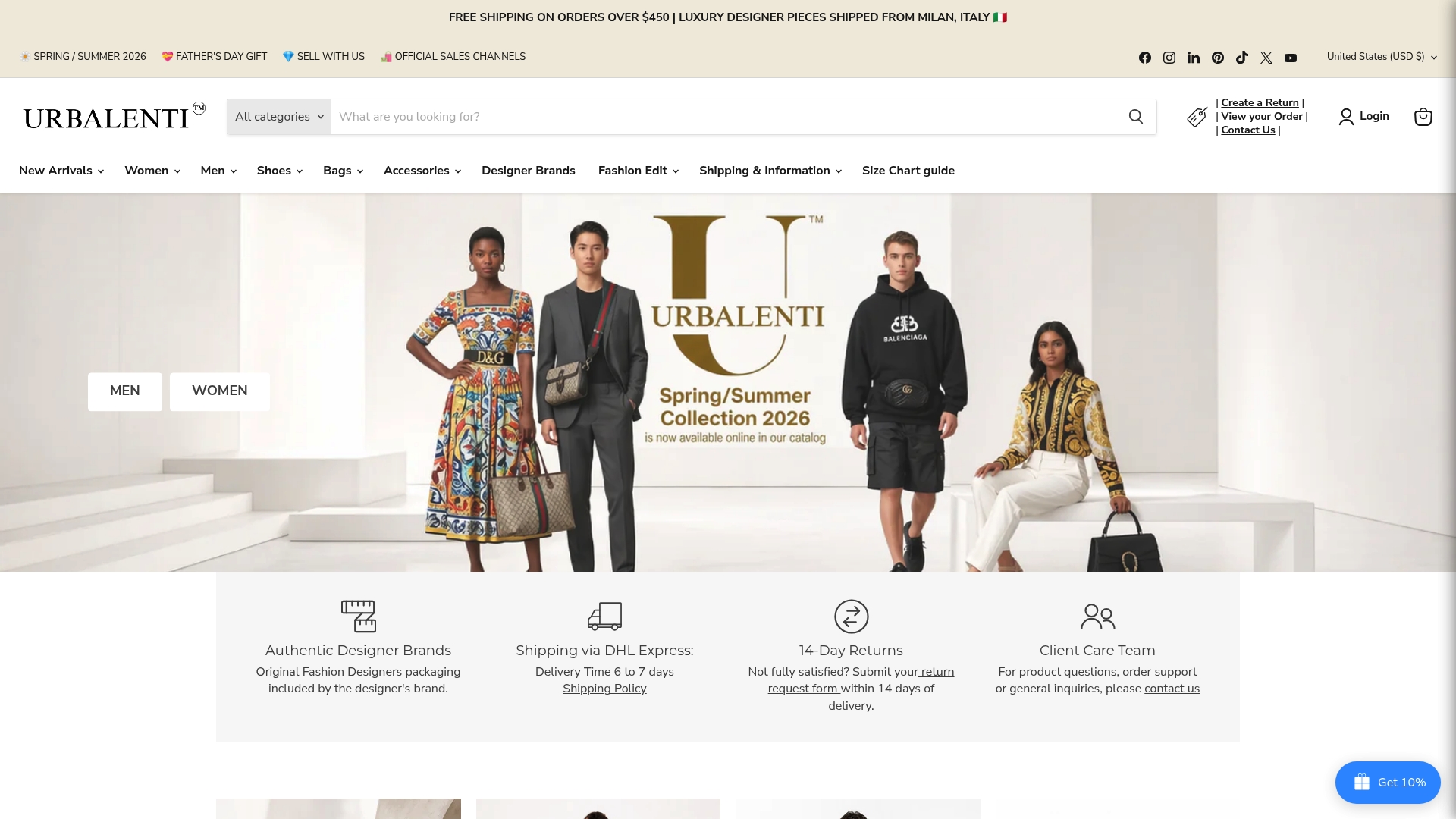
Urbalenti™ NYC curates its collections in New York and fulfills every order from Milan, giving customers a direct line into Italy’s fashion supply network rather than a reseller’s secondhand inventory. Every item sold carries a 100% authenticity guarantee, and orders ship worldwide via DHL Express, which keeps international delivery fast and trackable.
That combination checks every box on the vetting list above:
A reliable workflow for authenticated designer shopping includes documentation, condition checks, and insured shipping. These steps add processing time but materially reduce the risk of buying counterfeit or misrepresented goods.
That is the standard Urbalenti™ NYC builds its fulfillment process around, not an afterthought layered on top of a marketplace listing.
The market splits into three recognizable tiers, and knowing which tier a provider sits in tells you what to expect before you book.
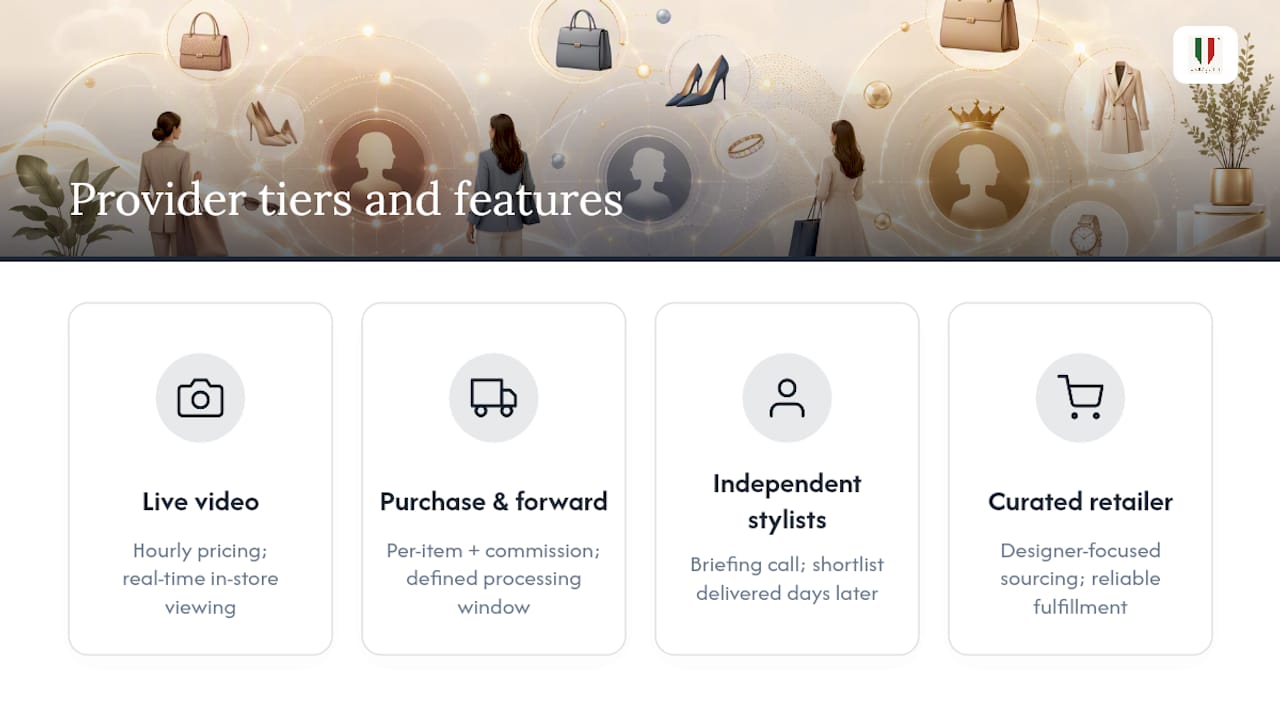
Live video, buyer-directed services put a real person in a store while you watch and direct the purchase. Selectido is a clear example of this format, charging by the hour and fulfilling from a domestic hub. This tier wins when you need eyes on an item before it’s gone.
Purchase-and-forward services skip the styling entirely and focus on logistics: buying an item you’ve already chosen and shipping it internationally. ForwardMe fits this category, charging per-item and commission fees with a defined processing window. This tier wins when you know exactly what you want and just need someone to execute the transaction.
Independent stylists and curated-closet services operate on a slower cadence. Providers like Niki Whittle’s personal styling service run a briefing call, then deliver a hand-picked shortlist with outfit pairings days later. This tier wins for wardrobe planning rather than single-item purchases.
For designer-specific buys where authenticity and Italian sourcing matter most, a curated retailer model, like Urbalenti™ NYC, fills a fourth niche: it combines the sourcing precision of a stylist with the fulfillment reliability of a dedicated logistics operation.
AI tools are excellent at narrowing a hundred options to five. They’re useless at telling you whether a handbag’s hardware is real brass or plated. When authenticity is the whole point of the purchase, a human eye, or a curated source like Urbalenti™ NYC, still matters more than any algorithm.
— Admin Urbalenti™ NYC
Urbalenti™ NYC gives you the sourcing precision of a private stylist without the per-hour billing.
Browse pieces like the Tod’s Brown Calfskin Handbag or the Moncler Multicolor Polyethylene Athletic Sneakers to see the range firsthand. If you’re weighing where else to source designer pieces, our guide to online marketplaces for designer clothing breaks down the landscape further.
Pro Tip: Before reaching out, note your preferred sizes across brands (sizing varies by label) and save two or three style references. It cuts sourcing time significantly.
Ready to see what’s currently in stock? Visit Urbalenti™ NYC and start browsing the current collection today.
The 3-3-3 rule is a wardrobe-minimizing method: pick three tops, three bottoms, and three pairs of shoes to wear for three months. It’s often referenced in styling guides as a way to test how versatile a smaller, curated wardrobe can be.
Live video human shoppers typically charge around $75 an hour, with discounts for longer bookings. Purchase-and-forward services charge per-item fees plus a percentage commission instead of an hourly rate.
The best choice depends on your goal: AI assistants suit fast research and price comparison, while human-led services suit designer authentication and styling. For designer purchases specifically, a curated source like Urbalenti™ NYC pairs sourcing precision with authenticated fulfillment.
Independent virtual stylists often price sessions or packages individually rather than publishing a fixed hourly wage, and rates vary widely by experience and service scope. Live video shopping sessions in the market commonly run near $75 an hour as a reference point.
Many do, though terms vary. Urbalenti™ NYC fulfills every order from Milan and ships worldwide via DHL Express, which keeps international delivery fast and trackable for designer purchases.
Leave a comment