
MY WISHLIST
MY WISHLIST

TL;DR:
- Italian fashion is rooted in centuries of artisan expertise, regional material knowledge, and a cultural commitment to quality.
- Buying directly from Italy or curated Milan-fulfilled platforms ensures authenticity, provenance, and superior craftsmanship.
Italian fashion is defined by a manufacturing tradition that no other country has replicated at scale: centuries of artisan knowledge, regional material expertise, and a cultural commitment to quality over volume. For shoppers asking why buy fashion from Italy, the answer goes beyond brand names. It reaches into how garments are constructed, where materials originate, and what a purchase actually represents. Brands like Gucci, Valentino, Saint Laurent, and Brunello Cucinelli are not simply Italian by registration. They are Italian by method, by region, and by a production philosophy that treats every piece as a long-term investment rather than a seasonal commodity. This article breaks down the specific reasons Italian fashion commands its position at the top of the global market.
Italian fashion’s global authority rests on three pillars: specialized manufacturing districts, a deeply embedded artisan culture, and a label that consumers worldwide treat as a proxy for quality. These are not marketing constructs. They are structural features of how Italy produces clothing and accessories, and they directly affect what you receive when you buy.
The Made in Italy label represents a global hallmark of perceived value, emphasizing quality, authenticity, and luxury in ways that other origin labels do not match. This matters because it shapes not just how a product is made, but how it holds value over time. A Valentino coat or a Gucci leather bag purchased today retains cultural and material relevance years from now. That durability, both physical and symbolic, is the foundation of the Italian fashion investment case.
Italy’s manufacturing centers are geographically concentrated in ways that reinforce this quality. Milan anchors the luxury fashion industry. Florence and Tuscany are synonymous with leather goods. Como produces some of the world’s finest silk. Biella in Piedmont is the center of premium wool and cashmere production. These regions are not interchangeable. Each carries specific technical knowledge that took generations to develop and cannot be relocated to a lower-cost market without losing the quality that defines the product.
The structural advantage of Italian fashion production is the Distretto Industriale model: a network of tightly clustered, specialized artisan workshops where tanneries, mills, embroiderers, and finishing houses operate within close proximity. This density enables tacit knowledge transfer, meaning skills passed down verbally and through direct observation rather than written manuals or automated systems. No factory in Vietnam or Bangladesh can replicate this, because the knowledge does not exist in documentation. It exists in people and in place.
This model produces specific advantages that show up directly in the finished product:
Italian manufacturing prioritizes long-term brand equity and quality, producing superior fit, durability, and consistency over mass-production hubs. This quality-first mindset means Italian producers accept slower output and higher per-unit costs in exchange for a product that lasts and retains its value.
Pro Tip: When evaluating an Italian designer piece, check the lining, the seam finishing, and the hardware weight. These details are where Italian workshops invest time that mass manufacturers skip. A well-finished interior is a reliable indicator of authentic Italian production standards.
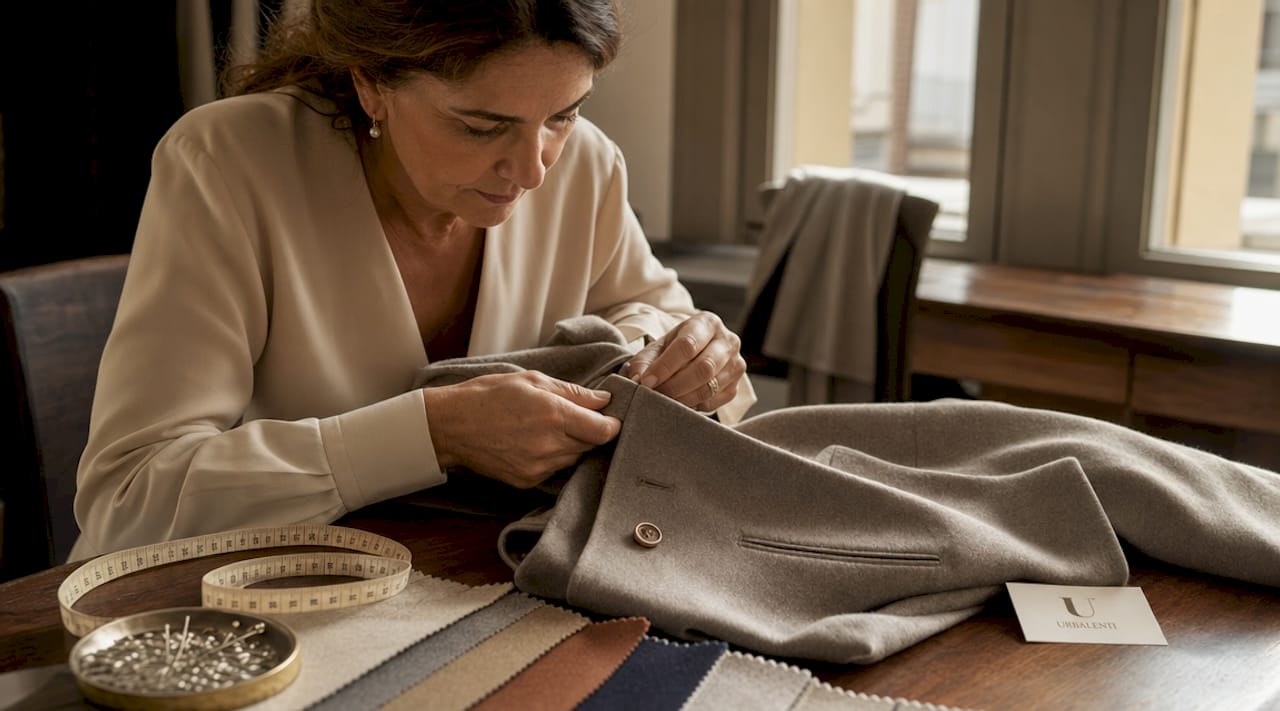
“Made in Italy” operates as a psychological shortcut for consumers who associate Italian origin with superior quality, authenticity, and the pleasure of owning something genuinely well-made. This is origin marketing at its most effective, and it is grounded in real production differences rather than pure narrative.
“The ‘Made in Italy’ label is not simply a geographic designation. It is a promise about the conditions under which a product was made, the materials used, and the cultural values embedded in its construction.”
Consumers worldwide pay a 10 to 30% price premium for products labeled Made in Italy, with 70% of global consumers willing to accept this premium even when functional quality appears identical. This willingness reflects something important: buyers are not just purchasing a garment. They are purchasing a relationship with a tradition. Compare this to “Made in Germany,” which signals engineering precision, or “Made in Japan,” which signals meticulous attention to detail. “Made in Italy” signals something different: aesthetic authority, cultural heritage, and a craft-based approach to production that places beauty and quality above efficiency.
The traceability dimension of Italian fashion is also strengthening. Brands and curated platforms are increasingly using provenance storytelling and digital verification to connect buyers with the specific workshops and regions where their pieces were made. This transparency reinforces brand authenticity in luxury fashion and gives buyers confidence that the premium they pay reflects genuine production standards rather than marketing alone.
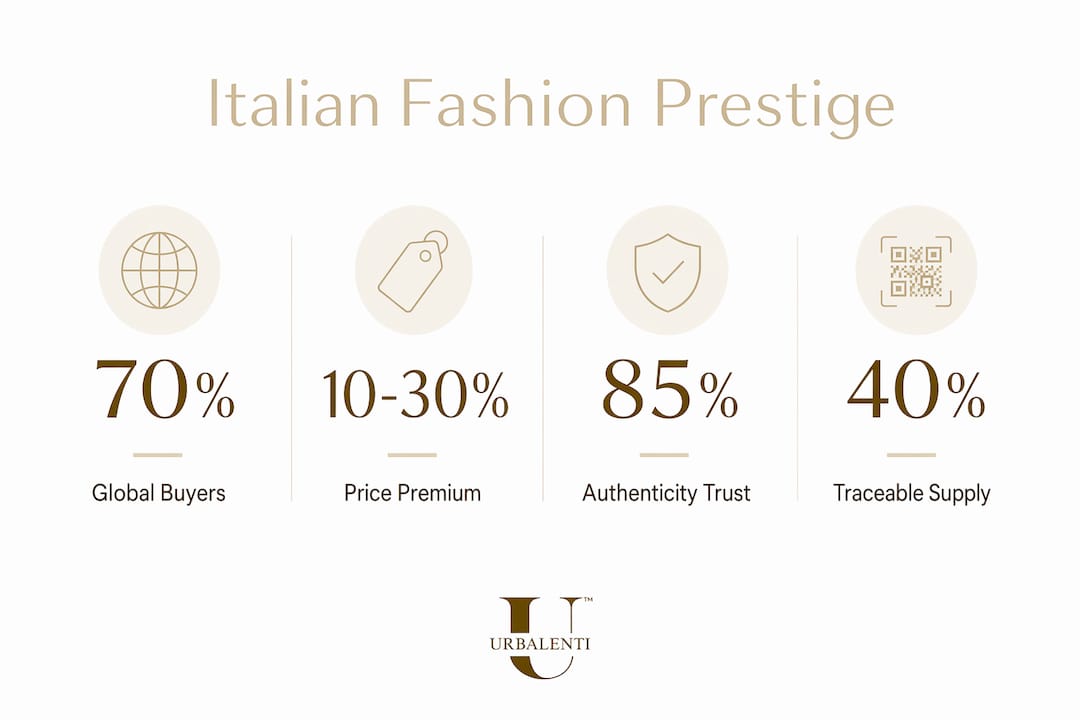
Moncler, for example, publishes detailed supply chain information connecting its down outerwear to specific Italian and European production partners. Bottega Veneta’s intrecciato weave is a regional craft signature so specific that it functions as its own authentication marker. These are not accidental features. They are deliberate investments in provenance that protect both the brand and the buyer.
Purchasing Italian designer fashion through trusted Italian sources, whether curated online platforms or direct artisan channels, delivers concrete advantages beyond the product itself.
Pro Tip: When shopping Italian designer fashion internationally, confirm that your retailer fulfills directly from Italy rather than from a third-party warehouse. Milan-based fulfillment is a reliable indicator that the inventory is sourced and verified at origin.
The channel you choose for buying Italian luxury fashion internationally affects authenticity, pricing, selection, and the overall experience. Each option carries distinct trade-offs.
| Channel | Authenticity guarantee | Pricing | Selection | Shipping |
|---|---|---|---|---|
| Local Italian boutiques | High, direct from brand | Full retail, VAT refund eligible | Limited to regional stock | Carry or ship personally |
| Curated online platforms (e.g., Urbalenti™ NYC) | High, verified sourcing | Competitive, Milan-fulfilled | Broad, multi-brand | DHL Express worldwide |
| General online marketplaces | Variable, risk of counterfeits | Discounted but unreliable | Wide but unverified | Varies by seller |
| Direct from artisan workshops | Very high, maker-direct | Often lower, no retail markup | Narrow, specialist only | Limited international options |
Curated platforms fulfilled from Milan occupy the strongest position for international buyers. They combine the authenticity of direct Italian sourcing with the logistical infrastructure to deliver worldwide. Urbalenti™ NYC, for example, curates collections from Gucci, Valentino, Saint Laurent, Emporio Armani, Golden Goose, and Givenchy, fulfills every order from Milan, and ships globally via DHL Express. This model eliminates the authenticity risk of general marketplaces while providing the selection breadth that a single boutique cannot match.
The risks of general online marketplaces are specific and documented. Counterfeit Italian fashion is a significant global problem, with luxury goods among the most frequently faked categories. Buying through an unverified channel, regardless of price, exposes you to the possibility of receiving a product that carries none of the craftsmanship, materials, or heritage that justify the investment. Trusted Italian designer retailers with international shipping and clear authenticity policies are the only reliable alternative to buying in-store in Italy.
For buyers exploring curated marketplace alternatives, the key criteria are: Milan or Italy-based fulfillment, named brand partnerships, clear return and authenticity policies, and verifiable customer service.
Authenticity in Italian fashion is verifiable beyond the label. Regional craft signatures such as Tuscan leather tannery methods or Como silk textiles act as authentication markers that reinforce credibility in ways a counterfeit cannot replicate. Knowing what to look for protects your investment.
Key markers of genuine Italian designer fashion include:
The artisanal craftsmanship embedded in Italian fashion is not just an aesthetic quality. It is a structural feature that makes genuine pieces identifiable to anyone who knows what to examine.
Italian fashion justifies its premium because the craftsmanship, materials, and production model are structurally superior to mass-market alternatives, and buying directly from Italy or through Milan-fulfilled curated platforms is the most reliable way to access that quality.
| Point | Details |
|---|---|
| Distretto Industriale advantage | Italy’s clustered artisan workshops produce tacit skills no offshore factory can replicate. |
| Made in Italy premium | Consumers pay 10 to 30% more for Italian-origin products, reflecting genuine production differences. |
| Direct sourcing benefits | Milan-fulfilled platforms combine provenance verification, small-batch exclusivity, and global shipping. |
| Authenticity markers | Regional signatures like Tuscan leather and Como silk are verifiable beyond the label. |
| Tax and sustainability value | VAT refunds of 10 to 15% and EU-regulated production make Italian fashion a responsible investment. |
I have spent years working with Italian designer fashion, and the single most consistent observation is this: the quality gap between genuine Italian production and everything else is not subtle. It is immediate and physical. You feel it in the weight of a Dolce & Gabbana leather bag, in the way a Max Mara coat holds its structure after years of wear, in the drape of a Valentino silk blouse that does not shift or pull.
What I find underappreciated in most discussions of Italian fashion is the role of the Distretto Industriale in creating quality that cannot simply be purchased by a brand with a large budget. A luxury conglomerate cannot buy the knowledge that exists in a Tuscan tannery or a Biella wool mill. That knowledge is embedded in the people who work there and the generations before them. When you buy a piece made in these regions, you are buying the output of that accumulated expertise. No amount of marketing spend creates a substitute for it.
The other point worth stating plainly: the reasons to buy Italian designer fashion online through a curated, Milan-fulfilled platform are stronger now than they were five years ago. Provenance transparency has improved. Shipping infrastructure is reliable. And the counterfeit risk, which is real and significant in unverified channels, is effectively eliminated when you buy through a platform that sources directly from Italy and stands behind every piece it sells. That combination of access, authenticity, and accountability is what makes platforms like Urbalenti™ NYC the right choice for serious buyers.
— Admin Urbalenti
Urbalenti™ NYC curates authentic designer fashion from Italy’s most respected houses, including Dolce & Gabbana, Saint Laurent, Valentino, and Emporio Armani. Every order is fulfilled from Milan and shipped worldwide via DHL Express, with personalized support from selection through delivery.
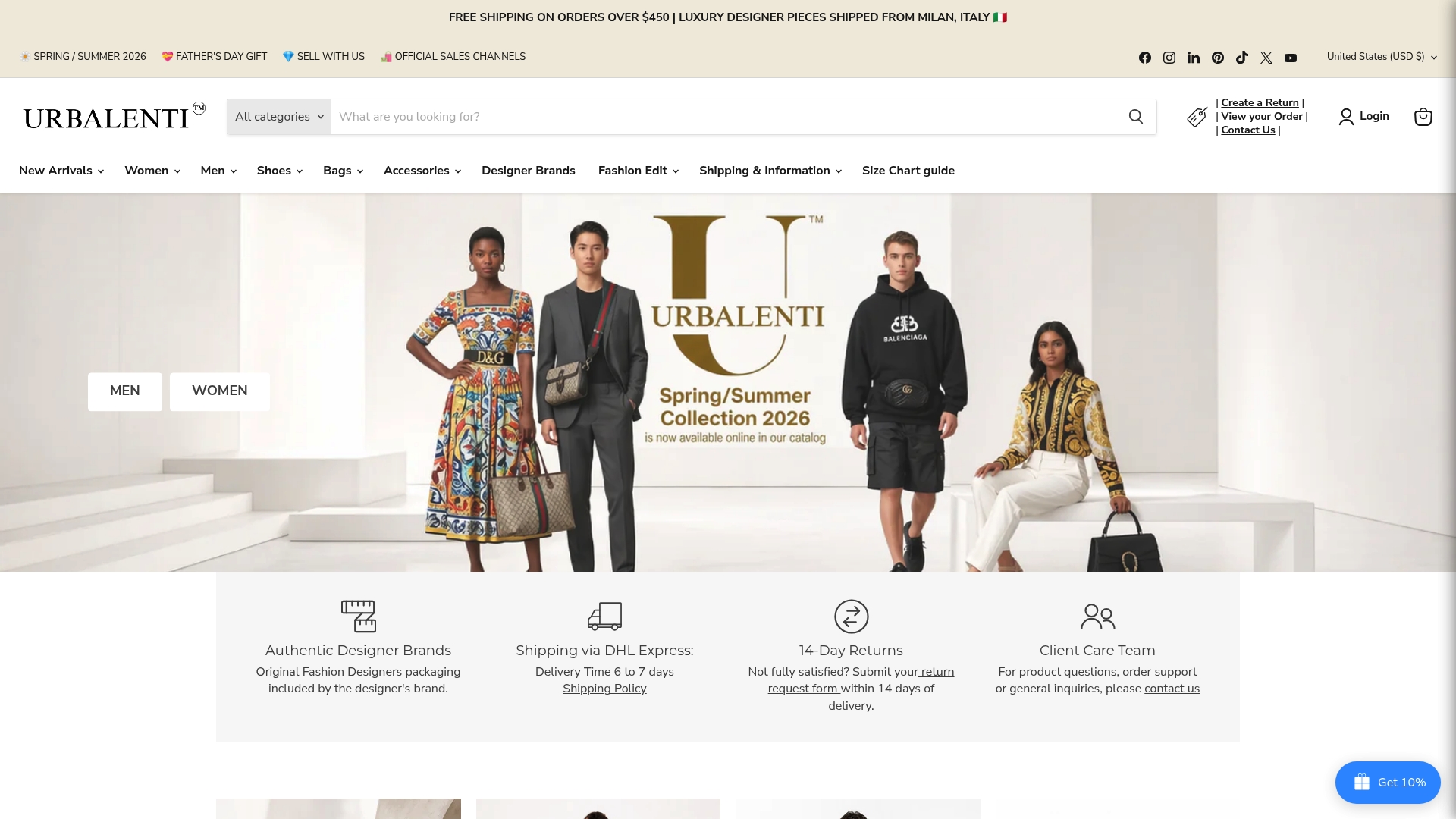
Explore pieces like the Dolce & Gabbana Logo Crossbody Bag in genuine Italian leather, or the Dolce & Gabbana Lolita Sandals crafted in Italy with the regional precision the brand is known for. Every client at Urbalenti™ NYC receives VIP-level attention regardless of purchase size. Authentic provenance, transparent sourcing, and direct Milan fulfillment are standard, not optional.
Italian fashion commands a premium because of the Distretto Industriale production model, which clusters specialized artisan workshops that transfer skills across generations. The result is superior fit, material quality, and construction consistency that mass-market alternatives cannot replicate.
Buying Italian luxury fashion internationally is safe when you purchase through a curated platform that fulfills directly from Italy, provides authenticity documentation, and offers clear return policies. Urbalenti™ NYC fulfills from Milan and verifies every piece it carries.
Non-EU visitors purchasing in Italy can claim VAT refunds starting from a €70 minimum single-store purchase, with typical refunds of 10 to 15% after fees. Since 2024, this benefit applies to a broader range of purchases beyond luxury goods.
Check for regional material provenance, maker marks, serial numbers, and construction quality including stitch density, hardware weight, and seam finishing. Purchasing from a Milan-fulfilled platform with documented authenticity policies is the most reliable verification method.
Brands including Gucci, Valentino, Saint Laurent, Dolce & Gabbana, Emporio Armani, Moncler, and Golden Goose are examples of Italian luxury brands shipped globally through curated platforms like Urbalenti™ NYC via DHL Express worldwide delivery.
Leave a comment