
MY WISHLIST
MY WISHLIST

Past season designer meaning comes down to this: it’s boutique-quality merchandise from a recent, no-longer-current collection, not the brand’s outlet line and not vintage. It’s typically first-quality, often available at a lower price than current-season stock, and worth understanding before you compare it against outlet, vintage, or pre-owned alternatives. The details below show you how to spot the real thing and buy with confidence.
TL;DR:
Past-season designer items are first-quality pieces from recent collections, typically from the last one to four seasons, not outlet or vintage stock.
Authenticity signals include matching SKU or season codes to lookbooks, consistent hardware and stitching, correct tags, and provenance documentation.
Discounts on past-season boutique stock follow a predictable pattern, with deeper markdowns over time, and do not reflect quality declines.
Verifying items online requires careful comparison of hardware, tags, and serial numbers, and professional authentication is advised if provenance is unclear.
Retailers’ return policies and customer service responsiveness help determine confidence in purchasing past-season items, with established European distribution providing added security.
How the Fashion Calendar Explains Past Season Designer Meaning
Warranty, Returns, and Customer Service on Past-Season Items
How Designers Use Past-Season Collections in Marketing and Inventory
The Perspective That Gets Lost in Past-Season Shopping Advice
Fashion runs on a two-season backbone: Spring/Summer (SS) and Autumn/Winter (AW, often written FW in North America). Each main season lasts a maximum of about six months, which is why designer inventory turns over twice a year on the sales floor no matter the brand. Layered between those two anchor drops sit Resort (also called Cruise) and Pre-Fall, intermediate collections that started as filler and have grown into full commercial seasons in their own right.
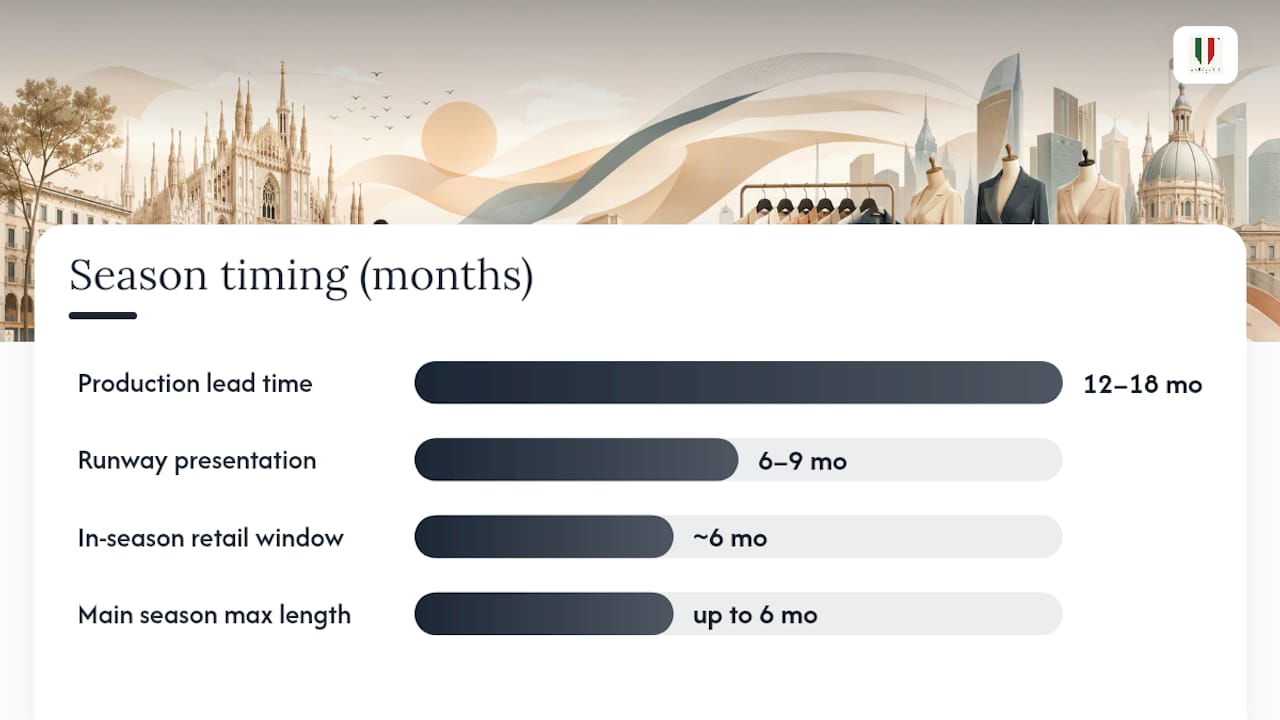
Every collection also carries a season code, and this is where a lot of shoppers get lost. A code like SS27 means Spring/Summer 2027; AW26 or FW26 means Autumn/Winter reaching stores in late 2026 into early 2027. The letters name the season, the number names the retail year, and production timelines run 12 to 18 months before that gear ever hits a shop floor. That lag matters, because it explains why a “new” collection you see in an ad was actually locked in design terms well over a year earlier.
The lifecycle looks like this in practice:
Runway presentation, usually six to nine months ahead of retail.
Boutique launch, when the collection actually ships to stores.
The in-season retail window, roughly the six months the collection is the brand’s current push.
Past season status, which begins the moment the next main collection replaces it as the flagship offering.
That last step is the whole definition. A garment doesn’t become “past season” because it aged poorly or dropped in quality. It becomes past season because the calendar moved on and a newer collection took its place at the front of the store. For a closer look at how the main and intermediate seasons line up across a full year, our guide to luxury fashion seasons breaks down the full cycle.
These four categories get lumped together constantly, and the confusion costs shoppers money. Here’s the actual distinction.
A past-season designer item is first-quality boutique merchandise from a recent but no-longer-current collection, often from the last one to four seasons. It was designed for the mainline collection, made with the same materials and construction as anything sold at full price when it launched, and simply aged out of “current” status.
Outlet pieces are a different animal entirely. Many luxury houses manufacture goods specifically for outlet channels, sometimes using different leather grades, simplified hardware, or construction shortcuts not found in the boutique line. An outlet stamp or a serial number that doesn’t match any boutique-season code is a signal you’re looking at outlet-made production, not a discounted boutique piece.
Vintage and pre-owned aren’t synonyms either, even though people use them interchangeably.
Vintage typically means archival, generally 20 years old or older, and often collected for historical or design significance rather than everyday wear. Archival institutions draw a hard line between recent seasonal commerce and long-term historical material, and collectors apply the same logic to fashion.
Pre-owned simply means someone owned it before you. It could be a season old or a decade old, and condition varies wildly by seller.
Past season sits apart from both. It usually describes unworn or lightly handled boutique stock that never left the brand’s own distribution chain before reaching a reseller.
The practical authentication signals worth checking: SKU or season codes that match a specific lookbook, serial numbers consistent with the brand’s boutique format, original hangtags, dust bags, and hardware that matches known boutique specs for that collection. Mismatched trims, unusually light hardware, or an outlet stamp on the interior lining are red flags worth walking away from.
Pro Tip: Cross-reference the item’s SKU or season code against the brand’s original lookbook or press release for that season. If the hardware finish or lining doesn’t match documented boutique photos from that collection, treat it as a warning sign rather than a coincidence.
Markdowns on past-season boutique stock tend to follow a predictable rhythm: early reductions when the next collection arrives, deeper cuts as the season ages further, and the steepest discounts once a piece has been past season for two or more cycles. Outlet discounts often look similar on paper but apply to a different product entirely, since outlet-made goods were priced to be discounted from the start.
What makes past-season boutique pieces worth considering is that the design and build quality don’t change. A coat cut for last season’s collection uses the same fabric, the same tailoring standard, and the same quality control as anything sold at full price when it launched. Buying past season can be an effective way to get genuine designer quality at a lower cost without touching outlet-grade production.
Value trajectory splits into two camps. Limited runs, collaboration pieces, and instantly recognizable icon styles sometimes hold their price or climb over time as they become harder to find. Everyday seasonal basics, by contrast, depreciate the way most clothing does: steadily, and mostly tied to condition.
Three quick frameworks help sort a smart buy from a regretful one:
Cost-per-wear. Divide the price by realistic number of wears; a $400 sweater worn 80 times beats a $150 piece worn six times.
Rarity. Limited production runs and collaboration drops tend to hold value better than mass seasonal staples.
Condition. Boutique-sourced past-season stock in unworn or lightly worn condition carries more resale weight than anything with visible wear.
Our guide to designer pieces worth the investment walks through these frameworks in more depth, and the cost-per-wear formula from Fora Leonara is a useful companion calculation if you want to run the numbers on a specific piece.
Verification doesn’t require an expert eye, just a methodical process. Work through these steps before you commit to a purchase, online or in person.
Match the season code. Confirm the SKU or season code against the brand’s original lookbook or press materials for that specific collection.
Compare product photos. Look for consistent hardware, stitching pattern, and lining finish against verified boutique images from the same season.
Inspect tags and serial numbers. Boutique past-season items should carry the brand’s standard tagging format, not an outlet-specific stamp or a serial that doesn’t correspond to any known collection.
Check hardware and lining closely. Simplified clasps, lighter-weight lining, or mismatched trims usually point to outlet production rather than boutique stock.
Ask for provenance. A reputable seller should be able to speak to sourcing, whether that’s an original receipt, boutique documentation, or a clear chain of custody through established distribution channels.
Buying online adds a few extra checks. Request detailed, unedited photos of hardware, interior tags, and any serial numbers before you buy. Confirm the seller keeps original packaging, since a missing dust bag or box on an item that should have one is worth asking about. And check the return policy before checkout, not after, since a seller confident in authenticity will typically offer a real return window rather than a final-sale-only policy.
Pro Tip: When a seller can’t produce boutique-consistent tagging or a serial number that maps to a real season, professional authentication is worth the fee. It’s cheaper than discovering the problem after the return window closes.
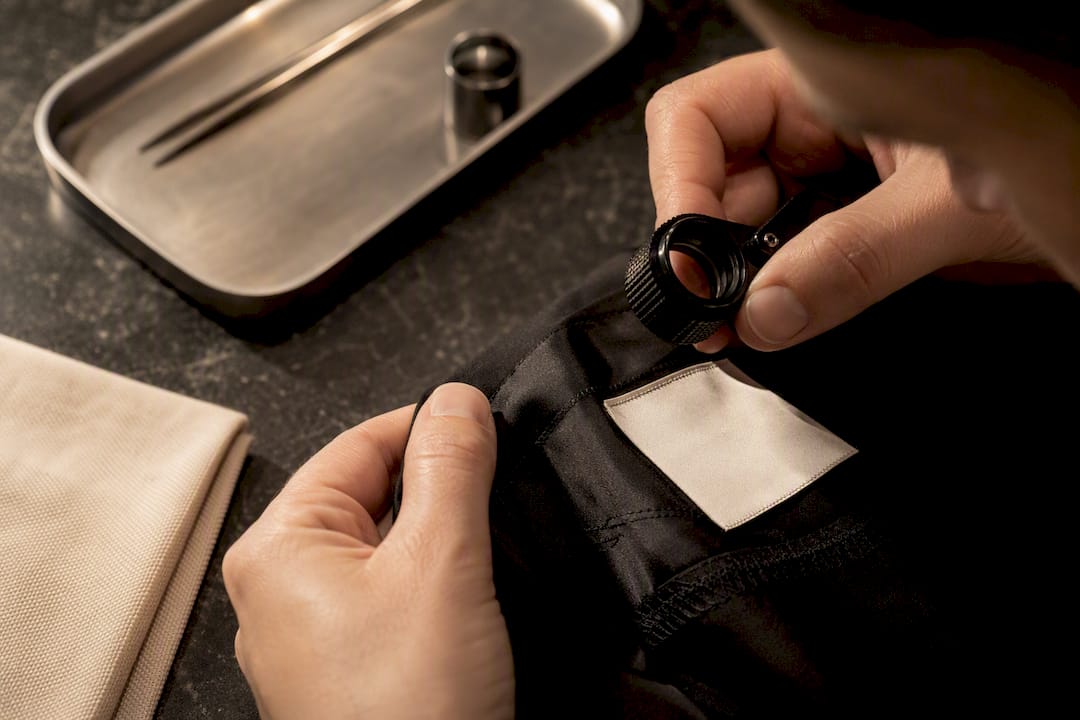
If a listing raises red flags you can’t resolve on your own, third-party designer resale platforms with documented authentication protocols are a reasonable fallback for a second opinion, though a boutique-sourced retailer with its own verification process should rarely put you in that position to begin with.
Past-season status doesn’t erase a designer brand’s craftsmanship warranty in most cases, since these are first-quality boutique goods rather than factory-seconds. What does vary is the retailer’s own return policy, and that’s where shoppers get burned. Some resellers mark past-season stock as final sale specifically because it’s discounted, which shifts all the risk onto the buyer if the item doesn’t match its description.
A retailer that stands behind its authentication should offer the same return window on past-season pieces as it does on anything else in the catalog. If a seller treats discounted stock differently from full-price stock when it comes to returns, that’s worth noticing before you buy, not after. Customer service responsiveness is another tell: a seller who can quickly answer questions about a specific SKU, season code, or condition detail is generally sourcing directly and confidently, while vague or slow answers often mean the seller doesn’t actually know the item’s history.
Warranty coverage from the original brand, when it applies, typically follows the product rather than the sale channel, but always confirm this with the retailer directly rather than assuming. Buying from a seller with clear return and authentication policies removes most of the guesswork that makes past-season shopping intimidating for first-time buyers.
Brands treat the shift from current to past season as a deliberate lever, not an afterthought. Marketing teams build entire campaigns around the “newness” of the current collection precisely because it creates urgency, and that urgency is what pushes last season’s stock into markdown and clearance channels. The seasonal calendar itself functions as both a creative framework and a commercial engine, and the transition between seasons is where inventory strategy and marketing calendar meet.
Inventory teams plan for this transition well in advance. Since production and trend planning happen 12 to 18 months ahead of retail, brands know months before a collection even reaches stores approximately how it will move into past-season status and at what pace. That’s why markdown timing on past-season goods tends to be predictable rather than random: brands stagger the discount schedule to clear space for the next drop without flooding the market all at once.
This is also why boutique past-season stock, sourced through legitimate distribution rather than made specifically for clearance, retains its design integrity. Brands aren’t cutting corners on the product to move it faster; they’re simply reducing price to make room on the sales floor for the next season’s flagship pieces.
Most guides to buying past-season designer pieces treat the category as a hunt for a bargain, and that framing misses the real value. A boutique-sourced past-season item isn’t a discount version of the “real” product. It is the real product, made to the same standard, that simply arrived at the wrong moment on the retail calendar.
The bigger issue in this market isn’t quality. It’s provenance. Outlet-made goods dressed up as boutique past-season stock, mismatched serial numbers, and vague seller documentation cause more buyer regret than any genuine flaw in a first-quality garment ever will. Shoppers who focus their diligence on season codes and hardware details rather than price alone consistently end up with better purchases.
At Urbalenti™ NYC, sourcing runs through established European distribution rather than outlet-specific production lines, which is the distinction that actually protects you as a buyer. Curated past-season pieces from Italy fulfillment carry the same construction standards as anything sold at full price when the collection launched. That’s the piece of this conversation worth remembering the next time a listing looks too good to check twice.
— Admin Urbalenti™ NYC
Urbalenti™ NYC gives you a direct path to boutique-quality past-season stock without the guesswork of unverified resale listings. Every piece is 100% authentic, sourced through established European distribution, and fulfilled from Italy, so what you’re buying matches the construction standard of the season it came from, not a simplified outlet version of it.
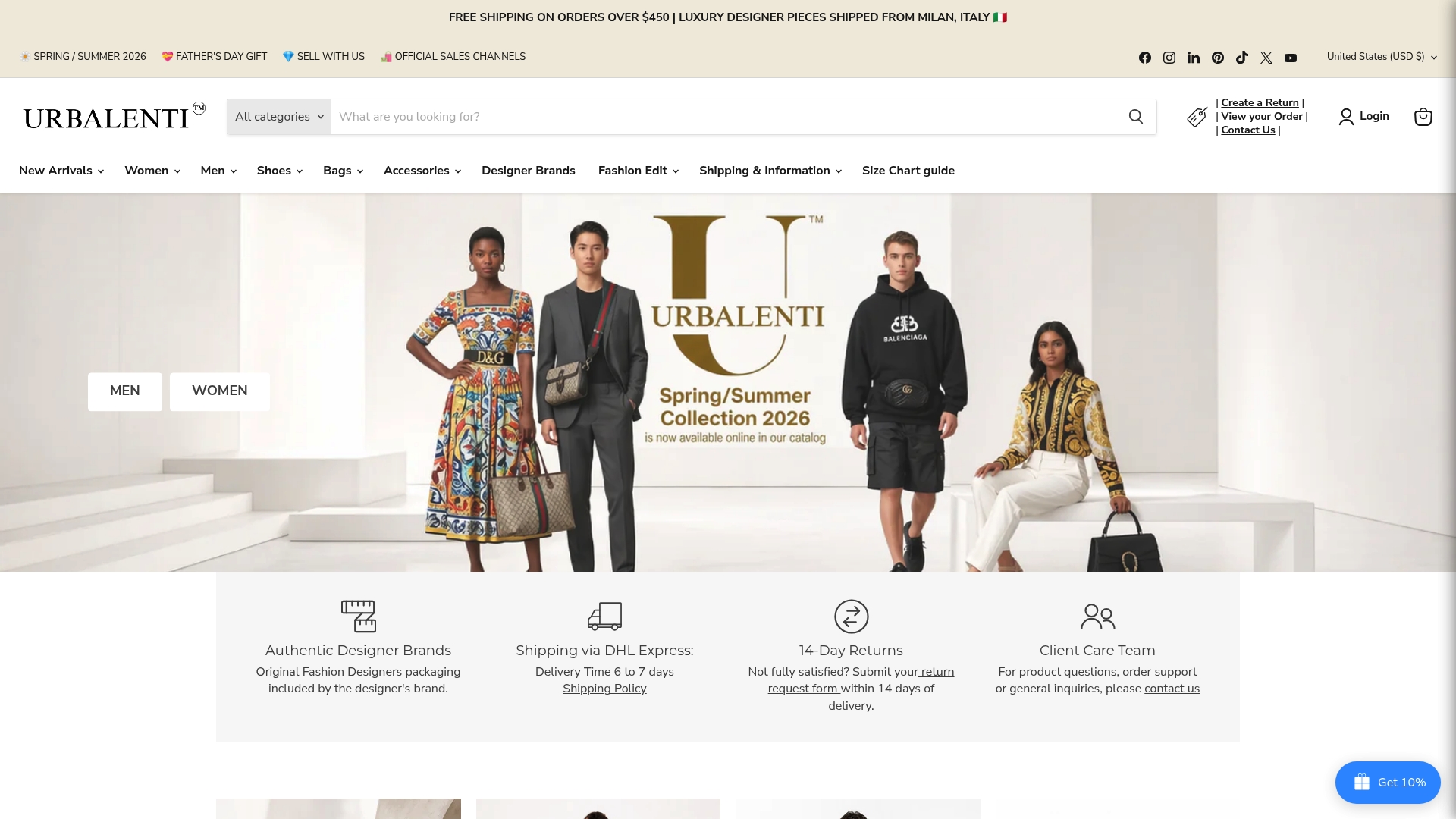
Start by browsing by season or collection to see what’s currently available past its main retail window. A Stone Island gray cotton sweatshirt or its bicolor counterpart illustrates the kind of boutique-grade cotton piece that holds its construction quality regardless of season status. For accessories, a Brunello Cucinelli bordeaux silk piece or the brand’s gray calf leather accessory shows the material quality you’d expect from full-price boutique stock. Jewelry shoppers can look at Dolce & Gabbana gold brass earrings, and for accessories with a cleaner, modern silhouette, Prada’s black polyamide line is worth a look.
If a listing’s provenance isn’t clear enough for your comfort, reach out before you buy. Every order ships with fast DHL Express worldwide delivery, and a transparent return policy backs every purchase, so you’re never stuck with a piece that doesn’t match its description. Explore the current catalog and shop with the confidence that what arrives is exactly what was described.
The fashion system: The fashion seasons explained — FashionUnited
What Does SS27 Mean? Fashion Season Codes & Trim Terms Explained — ECI Group
What is a Fashion Season? Everything You Need to Know — Fashnfly
Season clothing refers to garments tied to a specific fashion calendar drop, usually Spring/Summer or Autumn/Winter, plus intermediate Resort and Pre-Fall releases. A piece becomes “past season” once the next main collection replaces it as the brand’s current offering.
It means boutique-quality, first-quality merchandise from a recent but no-longer-current collection, distinct from outlet-made goods. Urbalenti™ NYC sources these pieces through established European distribution channels rather than outlet-specific production.
Fit, fabric quality, and consistency matter far more than logos or trend chasing; well-tailored pieces in quality materials read as put-together regardless of price point. Buying boutique past-season designer pieces is one practical way to access that fabric and construction quality at a lower cost than current-season pricing.
Fashion designers are commonly grouped into haute couture designers (custom, made-to-order pieces), ready-to-wear designers (seasonal collections sold in standard sizes), and mass-market designers (larger-scale production for broader retail). Each group follows a version of the same seasonal calendar, though timing and exclusivity vary.
Definitions of the 3-3-3 rule vary across sources, and there isn’t one settled version tied specifically to designer past-season shopping. Most commonly it refers to capsule wardrobe planning rather than a rule about seasonal designer collections.
Leave a comment