Authentic Luxury Designer Fashion from Italy | URBALENTI NYC

What Is Quiet Luxury Fashion Style? A 2026 Guide — Urbalenti NYC Skip to content
SAVE UP TO 60% OFF RETAIL ✦ ALWAYS NEW WITH TAGS ✦ ALWAYS AUTHENTIC ✦ SHIPPED WORLDWIDE FROM ITALY

Country

What Is Quiet Luxury Fashion Style? A 2026 Guide

What Is Quiet Luxury Fashion Style? A 2026 Guide

Table of Contents

Last Updated: September 21, 2026

Quiet Luxury Defined: The Rise of Understated Elegance

Quiet luxury is a fashion philosophy built on understated elegance, where quality, cut, and fabric do the talking instead of logos. This guide from URBALENTI breaks down what is quiet luxury fashion style, why it went mainstream, and how to build it without overspending. The core idea: if a garment is well made and fits properly, it does not need a label to announce itself.

How Quiet Luxury Differs From Minimalism

Minimalism is about subtraction: fewer colors, pieces, and details. Quiet luxury shares that restraint but adds a material standard minimalism does not require. A minimalist outfit can be inexpensive and still work; a quiet luxury outfit falls apart if the fabric is thin or the stitching loose. Minimalism is a look; quiet luxury is a look plus a construction benchmark, which is why the two overlap but are not interchangeable.

Key Characteristics and Aesthetic Principles

The defining traits of quiet luxury are a muted color range, logo-free surfaces, and construction quality you can feel rather than see: a wool coat with clean lines, a silk blouse with no visible hardware, trousers that hold their shape all day. Intentional dressing replaces trend-chasing, buy one piece that lasts and let fit and fabric carry the outfit.

Neutral Color Palettes and Muted Tones

Neutral color palettes do the heavy lifting. Camel, cream, charcoal, navy, taupe, and soft gray combine easily, so fewer pieces create more outfits. A monochromatic look in one tone reads as deliberate and expensive without a single logo, and muted tones layer and photograph better than brights, stretching a small collection across seasons.

Why Logos Are Avoided

Visible branding turns an outfit into an advertisement for the label rather than a statement about the wearer. Quiet luxury reverses that: value sits in fabric composition, tailoring, and how the piece moves. Logo-free pieces age better, a plain trench coat looks current in five years; a heavily branded piece dates to its launch season.

The Importance of High-Quality Materials and Craftsmanship

Materials decide whether a garment earns its place. Cashmere, silk, fine wool, and quality cotton drape differently, hold color longer, and resist pilling better than synthetic blends. Craftsmanship shows in details shoppers overlook: seam density, lining quality, sewn rather than glued buttons, consistent lapel stitching. A common mistake is paying for a name while ignoring the fabric tag, flip the garment inside out before you buy.

Pro Tip Check the fabric composition label before anything else. A cashmere blend that is mostly synthetic will pill within weeks, while a higher wool content holds its shape for years. If the tag is vague, treat that as a warning.

How to Build a Capsule Wardrobe for Quiet Luxury

A quiet luxury capsule wardrobe is a small, curated collection of neutral, well-made pieces that mix without effort. Every item should work with at least three others already in your closet. Most people start with 10 to 15 core pieces and add slowly, buying one investment piece at a time and letting it prove itself before the next.
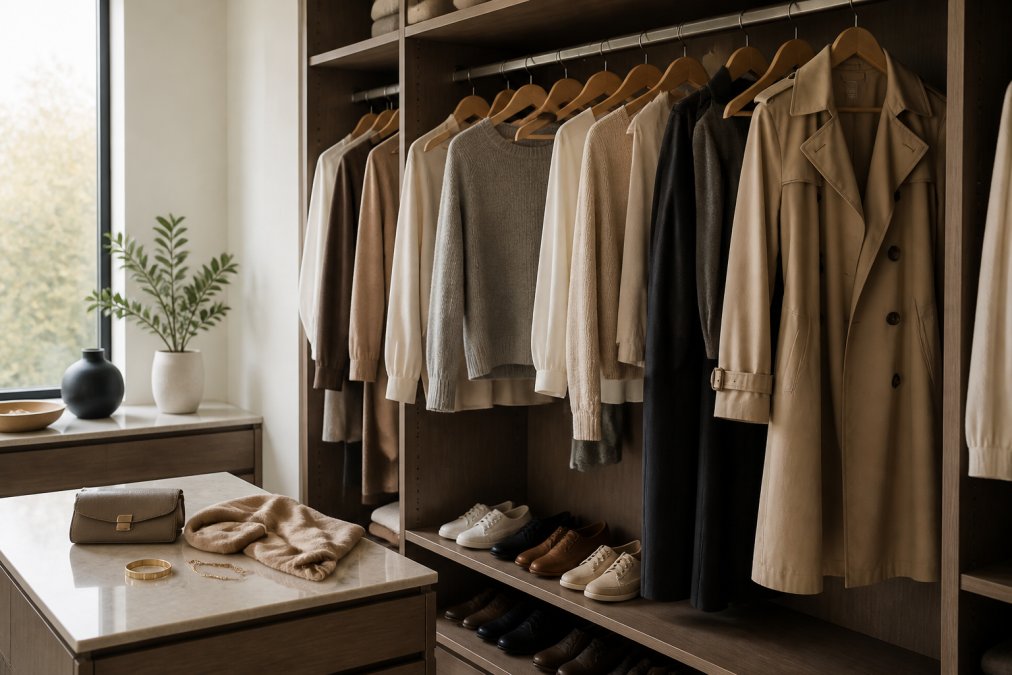
Neutral-toned clothing including cashmere and silk hanging in a quiet luxury walk-in closet with natural light.

Essential Quiet Luxury Staples

  • A wool or cashmere coat in camel, charcoal, or navy
  • A tailored blazer that fits at the shoulder, not just the waist
  • A silk or fine cotton blouse with no visible hardware
  • Dark wool trousers with a clean, straight or slightly tapered leg
  • A trench coat in a classic silhouette for transitional weather
  • Quality leather footwear in a neutral tone
  • One structured leather bag with no prominent branding

Six to eight well-chosen staples cover most of a week. That is the whole point of a capsule wardrobe: fewer decisions, better outcomes.

Quiet Luxury Brands List: What to Look For

A quiet luxury brands list is less about fixed names and more about signals you can apply to any label at any price point. The houses most often cited, Loro Piana, Brunello Cucinelli, The Row, Bottega Veneta, and heritage tailoring houses like Zegna, share a profile: fabric-first production, minimal external branding, and construction built to last decades.

The Four Signals of a Quiet Luxury Brand

  1. Fabric composition is stated clearly and specifically. "100% cashmere" or "virgin wool" is a signal; "cashmere blend" with no percentages is a warning. Fabric-first brands print the full composition on the tag and product page.
  2. Construction is finished on the inside. Turn the garment inside out: bound seams, a full or half lining, sewn buttons, and consistent stitch density along lapels and hems. Interior finishing is the most reliable tell.
  3. The design does not depend on a logo to feel complete. If removing the branding makes the piece look ordinary, the branding is doing the design's job.
  4. The silhouette is classic, not seasonal. Quiet luxury pieces are cut to look current for years; if the proportions only work against this season's runway, it is trend dressing in neutral colors.

Price Tiers, Honestly

Quiet luxury spans a wider price range than the trend coverage suggests:

  • Heritage luxury (highest tier): Loro Piana, Brunello Cucinelli, The Row. Genuine fabric and construction, priced accordingly; resale is often the only realistic entry point.
  • Accessible luxury: Mid-tier labels and tailoring houses using good wool, silk, and leather without the campaign markup, where most people actually build a quiet luxury wardrobe.
  • Mass-market quality basics: Unbranded or minimally branded pieces in real natural fibers, a wool coat, silk blouse, leather loafer. Not luxury, but they meet the standards that matter.

Budget-Friendly Quiet Luxury Alternatives

You do not need a designer budget to dress this way, and the strategy is more specific than "buy fewer pieces."

Skip to content →

  • Prioritize fabric over name. A well-made wool coat from a mid-tier label often outperforms a thin designer piece at several times the cost. Read the tag before the label.
  • Shop authenticated resale. Resale platforms and consignment shops offer genuine designer craftsmanship at a fraction of retail, and secondhand buying keeps quality garments in use instead of in landfills.
  • Buy end-of-season, not mid-season. Tailoring and outerwear in classic colors are the safest end-of-season buys because they do not date.
  • Invest in tailoring, not labels. A $40 alteration on a moderately priced blazer does more for how you look than a $400 upgrade to a designer version of the same cut.
  • Build slowly. One investment piece at a time, worn and proven before the next purchase, produces a wardrobe you actually keep.
Watch Out The biggest trap in budget quiet luxury is buying "dupes" that mimic the look but not the materials. A coat that copies a silhouette in a polyester blend will look tired after one season, and you will end up replacing it, which costs more than buying the real thing once.

Care and Maintenance of Luxury Fabrics

Most quiet luxury guides stop at "buy better fabrics" and never explain how to keep them looking expensive past the first season. That is a problem, because the premise of the style, fewer, better pieces worn for years, collapses the moment a cashmere sweater pills, a silk blouse water-stains, or a wool coat loses its shape.

Cashmere

Cashmere is the fabric most people ruin fastest: its short, delicate fibers respond badly to heat, agitation, and friction.

  • Washing: Hand wash in cool water with a pH-neutral wool detergent, or use a mesh bag on a delicate cycle if your machine has a true wool setting. Never use regular detergent, its enzymes break down protein fibers.
  • Drying: Never wring. Press water out against the sink, roll the garment in a clean towel, then lay flat to dry on a mesh rack. Hanging wet cashmere stretches it permanently.
  • Pilling: Some pilling in the first few wears is normal as short fibers surface. Remove pills with a fabric shaver or cashmere comb rather than pulling them off, which drags more fiber loose.
  • Storage: Fold, never hang. Use cedar blocks or lavender sachets rather than mothballs, and store in a breathable cotton bag, not plastic.

Silk

Silk is stronger than its reputation suggests, but it stains permanently if treated like cotton.

  • Washing: Hand wash in cool water with a drop of gentle detergent, or dry clean if structured or lined. Test any spot treatment on an inside seam first.
  • Stains: Blot immediately with a clean cloth. Water-based stains can leave rings if you wet only part of the fabric, dampen the entire panel so it dries evenly.
  • Heat: Silk scorches at low iron temperatures. Press on the lowest setting with a pressing cloth between iron and fabric, and never spray water directly onto silk.
  • Sunlight: Prolonged direct sun fades silk dyes. Store silk away from windows.

Wool and Wool Blends

Wool is self-cleaning to a degree, which is why "dry clean only" is often overkill.

  • Rest days: Wool needs 24 hours between wears to recover its shape. Rotating two or three wool pieces extends their life more than any cleaning method.
  • Brushing: A soft garment brush after each wear lifts surface dust before it works into the fibers.
  • Washing: Many fine wools can be hand washed in cool water and laid flat to dry. Structured tailoring, blazers, coats, creased trousers, should go sparingly to a dry cleaner that understands wool.
  • Moths: Moths attack protein fibers and are the biggest threat to a wool wardrobe. Clean garments before storing, because moths are attracted to food and sweat residue, not the wool itself.

Leather

  • Conditioning: Leather dries out and cracks without periodic conditioning. A neutral cream conditioner applied twice a year keeps shoes and bags supple.
  • Water: Blot, do not rub, and let leather dry at room temperature. Never use a radiator or hair dryer.
  • Storage: Stuff bags and shoes with acid-free tissue or shoe trees to hold their shape, and store in dust bags rather than sealed plastic.

The Routine That Actually Works

People who keep quality pieces for a decade share an unglamorous pattern: they clean less often than you would expect, store carefully, rotate, and repair early. A loose button, small moth hole, or pulled thread costs a few dollars at a tailor and becomes a replacement cost if ignored. Garment longevity is not luck or a product you buy, it is a routine you keep.

Pro Tip Buy a fabric shaver, a soft garment brush, and a bottle of pH-neutral wool wash once. Together they cost less than a single dry-cleaning run and will extend the life of every knit and wool piece you own.

Body Type and Silhouette Tailoring

Quiet luxury only works when the fit is right, which is why tailoring matters more than the label. A blazer that pulls at the shoulder looks cheap no matter what it cost. The fix is usually small: hem the trousers, take in the waist, shorten the sleeve to the wrist bone. A good tailor can make an off-the-rack piece fit like it was made for you, and that adjustment separates a polished outfit from an expensive one.

Key Takeaway Fit beats price every time. A moderately priced garment altered to your measurements will always read as more refined than a designer piece worn straight off the rack.

Cultural and Socioeconomic Critique of the Trend

Quiet luxury has a critique worth naming. The style markets itself as unpretentious and tasteful, but the price of entry is often high, which turns restraint into another status signal, a quiet way of saying you can afford to avoid logos. The practical response is to focus on what the style actually rewards: good fabric, good fit, and pieces you keep.


Frequently Asked Questions

How to dress like quiet luxury?

Focus on fit, fabric, and a restrained color palette. Choose tailored blazers, cashmere knits, silk shirts, and wool trousers in neutral tones like beige, gray, navy, and cream. Avoid visible logos and prioritize garments that fit your body well. Layering textures such as silk under wool adds depth without loud patterns. The goal is refined simplicity that looks intentional rather than flashy.

Which brands are considered quiet luxury?

A quiet luxury brands list typically includes heritage houses known for understated craftsmanship, such as Brunello Cucinelli, Loro Piana, The Row, and Zegna. These brands focus on high-quality materials like cashmere, silk, and fine wool rather than prominent branding. Emerging labels and Italian ateliers also fit the category when they prioritize fabric composition and bespoke tailoring over logo-driven design.

Is quiet luxury just for the rich?

No. While investment pieces from luxury houses carry higher price points, the principles of quiet luxury, such as neutral color palettes, quality fabrics, and timeless styling, can be applied at any budget. Focus on fewer, well-made garments in classic silhouettes. Look for sales, pre-owned options, or mid-range brands that use natural fibers. The aesthetic is about intentional dressing, not the price tag.

Is quiet luxury still in style?

Yes. The trend toward understated elegance and logo-free dressing continues to shape fashion in 2026. Consumers increasingly prioritize garment longevity, sustainable fashion, and investment pieces over fast-changing trends. While the term itself may evolve, the core principles of refined simplicity, muted tones, and high-quality materials remain relevant for wardrobe staples and everyday versatility.

Next article Designer Fashion from Italy

Leave a comment

* Required fields