
MY WISHLIST
MY WISHLIST

Curated boutiques remain the strongest END Clothing alternatives for shoppers who want authenticated streetwear and contemporary menswear without gambling on marketplace listings. Urbalenti NYC fits that category directly, pairing Italian sourcing with transparent duties and shipping. The categories below break down where to look next, depending on whether you’re chasing a drop, a discount, or a wardrobe staple.
TL;DR:
- Most curated boutiques like Urbalenti NYC source directly from brands and include transparent duties, reducing authentication and customs risks.
- Retailers that focus on drop releases or resale marketplaces often have less transparent costs and more unpredictable inventory turnover.
- Confirming authenticity, understanding shipping and duties, and reviewing detailed product photography are key steps before purchasing from any retailer.
- Outlet and discount stores provide the lowest prices but have less predictable selections and limited new-season options.
- Prioritizing sourcing transparency and customer support over price alone offers a safer, more consistent shopping experience.
Not every retailer plays the same role. Some specialize in limited-run sneaker drops, while others exist purely for resale hunting. Knowing which lane a site occupies before you shop saves time and protects your money.
Curated boutiques. These operate the way END. does: an in-house buying team selects each brand and each piece, seasons are edited rather than dumped online in bulk, and product pages typically include multiple angles, fabric details, and fit notes. The trade-off is that inventory turns over on the retailer’s schedule, not yours. You won’t find every SKU a brand makes, but what’s there has usually been vetted.
Specialist sneaker and drop shops. Platforms built specifically around sneaker culture frequently carry exclusive collaborations and limited-edition releases that broader luxury retailers never stock. Style press consistently points younger shoppers hunting exclusives toward this category first, since raffle mechanics and release calendars are the entire business model. Expect registration windows, waitlists, and a real chance of missing out even when you follow the rules.
Resale and consignment marketplaces. Peer-to-peer platforms are the better bet for discontinued or out-of-production pieces, though finding rare items requires more active searching than a curated storefront demands. Pricing swings with demand, and authentication depends entirely on the platform’s verification process rather than a direct brand relationship. Some marketplaces authenticate every item before it ships; others rely on seller ratings alone, and that distinction matters more than the sticker price.
High-fashion aggregators. These sites pull inventory from multiple boutiques or brands into one search interface, prioritizing breadth over a single point of view. Editorial commentary has noted a broader shift toward specialized curation over one-stop shopping, as shoppers increasingly favor retailers with a clear aesthetic point of view. Aggregators still have a place when you’re comparing prices across sellers, but they rarely offer the styling context a boutique provides.
Outlet and discount specialists. These focus on past-season inventory at reduced prices, which suits wardrobe builders more than drop chasers. Selection is unpredictable by design. What’s available this month may vanish the next.
Here’s how those five types stack up on the factors that matter most:
Competitive intelligence trackers that map the space around END. consistently surface this same taxonomy: curated boutiques, aggregators, resale marketplaces, and specialized sneaker shops competing for the same shopper attention, just from different angles.
Pro Tip: Before trusting a “limited release” claim, check whether the retailer publishes a specific drop time and quantity. Vague language like “while supplies last” with no countdown or allocation number is a common sign the release isn’t genuinely limited, just marketed that way.
A five-step checklist keeps you from judging a retailer on price alone, which is the single most common mistake shoppers make when comparing unfamiliar sites.
Retail analysts tracking premium shopping experiences consistently flag return policies, shipping transparency, and product photography as the factors that separate genuinely premium retailers from those that just look premium. Price is easy to compare. Experience is where retailers actually differentiate themselves, and it’s the harder thing to fake.
Red flags worth walking away from: a checkout that doesn’t disclose duties until the final screen, product images limited to a single studio shot, sizing charts that contradict brand-standard measurements, and support inboxes that take more than 48 hours to answer a simple question.
Matching goals to retailer type also saves frustration. Drop chasers belong on specialist sneaker platforms and should expect raffles over guaranteed purchases. Discount hunters do better on outlet specialists and off-season boutique sales. Wardrobe builders get the most consistent experience from curated boutiques, since the selection is edited for cohesion rather than volume. Brand discovery tools that let you search by aesthetic or brand match can also help you find retailers carrying a comparable look at a different price point, which is useful when you know the silhouette you want but not who sells it.
A quick workflow: open a product page, check for at least three photo angles, scroll to the returns section, note whether duties are itemized at checkout, then send one support question before adding anything to your cart.
Urbalenti NYC sources inventory directly from Italian boutiques, ships from Italy, and covers U.S. import duties and taxes on U.S. orders rather than leaving them for checkout surprises. That combination addresses the exact trust gaps that separate a dependable retailer from a risky one: verified sourcing, disclosed costs, and a curated rather than crowdsourced catalog.
The Designer Fashion from Italy collection reflects that sourcing model directly, built from partnerships with boutiques rather than a mixed marketplace feed. Two current catalog examples show what that curation looks like in practice:
Both entries live inside a catalog described as new with tags, which reflects a commitment to authenticity beyond a general promise. Worldwide shipping and clear handling of U.S. import duties round out the checkout experience, supported by attentive customer service.
Where the experience still has room to grow: Urbalenti NYC doesn’t publish third-party authentication certificates the way some resale marketplaces do, and the catalog is curated rather than exhaustive, so shoppers hunting a specific discontinued colorway may need to look elsewhere. That’s the honest trade-off of curation: fewer SKUs, tighter vetting.
The retailer types outlined above translate into real options across the market, each occupying a different niche. Curated boutiques like Urbalenti NYC sit at one end, prioritizing sourcing transparency and a tighter, seasonally edited catalog over sheer volume. Specialist sneaker platforms occupy the opposite end, built around release calendars and raffle mechanics rather than steady inventory.
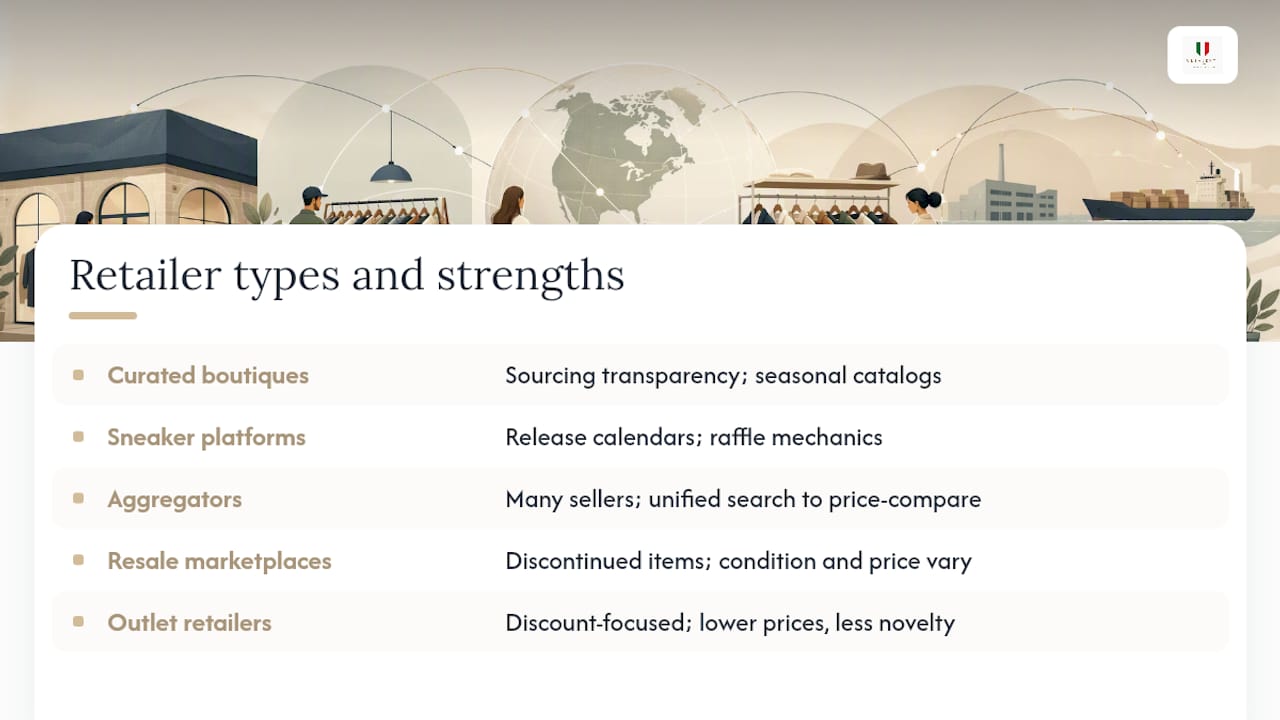
In between sit the aggregators and resale marketplaces. Aggregators pull from many sellers into a single search experience, useful when you’re price-comparing a specific item across the market. Resale and consignment marketplaces fill the gap for discontinued pieces, though pricing and condition vary listing to listing. Outlet-focused retailers round out the field for shoppers optimizing for discount rather than novelty.
Industry guides comparing high-end streetwear and designer retailers tend to separate these roles clearly, because conflating them leads to disappointment. A shopper expecting drop-site exclusivity from a curated boutique, or boutique-level curation from an open marketplace, is measuring the wrong retailer against the wrong expectation. Matching your goal to the right category first is what makes any of these alternatives actually useful.
Breadth and depth pull in opposite directions across these retailer types. Aggregators and open marketplaces typically carry the widest brand range, since they aggregate multiple sellers or sources into one listing feed. That breadth comes at the cost of consistency: quality control, photography standards, and sizing accuracy vary by whichever seller supplied that particular listing.
Curated boutiques take the opposite approach, narrowing the brand list to what a buying team has personally vetted. Urbalenti NYC’s catalog spans women’s, men’s, and unisex categories, along with dedicated designer shoes, designer bags, and accessories collections. That structure trades sheer SKU count for a catalog where every piece has already cleared a sourcing check.
Specialist sneaker shops narrow the range even further, focusing almost entirely on footwear and the occasional apparel drop tied to a release. If your wardrobe goal spans categories, from outerwear to bags to footwear, a boutique with cross-category curation typically serves you better than a single-category specialist ever will.
Reviews on any single retailer only tell part of the story, especially on marketplaces where the “seller” behind a listing changes from one purchase to the next. A five-star average on an aggregator can mask wildly inconsistent experiences depending on which third-party account fulfilled your specific order.
Curated boutiques generally produce more consistent review patterns, since one team controls sourcing, packaging, and support across every order. That consistency is exactly why end-to-end experience factors like shipping speed and return handling show up so often in retail trust analysis. It’s easier to hold a single retailer accountable than to average out a marketplace’s worth of independent sellers.
When reading reviews, weight recency heavily. A retailer’s shipping times, duty handling, and support quality can shift within a single year as volume grows or logistics partners change. A glowing review from three years ago says little about this month’s experience. Look for reviews that mention specific details, actual delivery timelines, how a return was handled, whether packaging matched the price point, over vague five-star ratings with no context.
Authentication risk isn’t evenly distributed across alternatives. It concentrates wherever a retailer doesn’t control its own supply chain.
On resale and consignment marketplaces, the burden usually falls on the platform’s own verification step. Some inspect every item physically before it ships to the buyer; others rely on seller reputation scores alone, which is a meaningfully weaker safeguard. Always confirm which model a marketplace uses before trusting a “verified” badge at face value.
On aggregators, the risk shifts to whichever third-party seller actually fulfills the order behind the scenes. Read the fine print on who ships the item, not just who lists it.
Curated boutiques carry the lowest structural risk, since sourcing happens directly from boutiques or brand-authorized channels rather than an open seller network. That’s the model Urbalenti NYC runs on, with inventory described as verified new with tags and sourced directly from Italy rather than aggregated from unknown third parties. Regardless of retailer type, cross-check stitching, hardware weight, and packaging against official brand imagery, and be wary of any price that sits dramatically below the rest of the market for the same item.
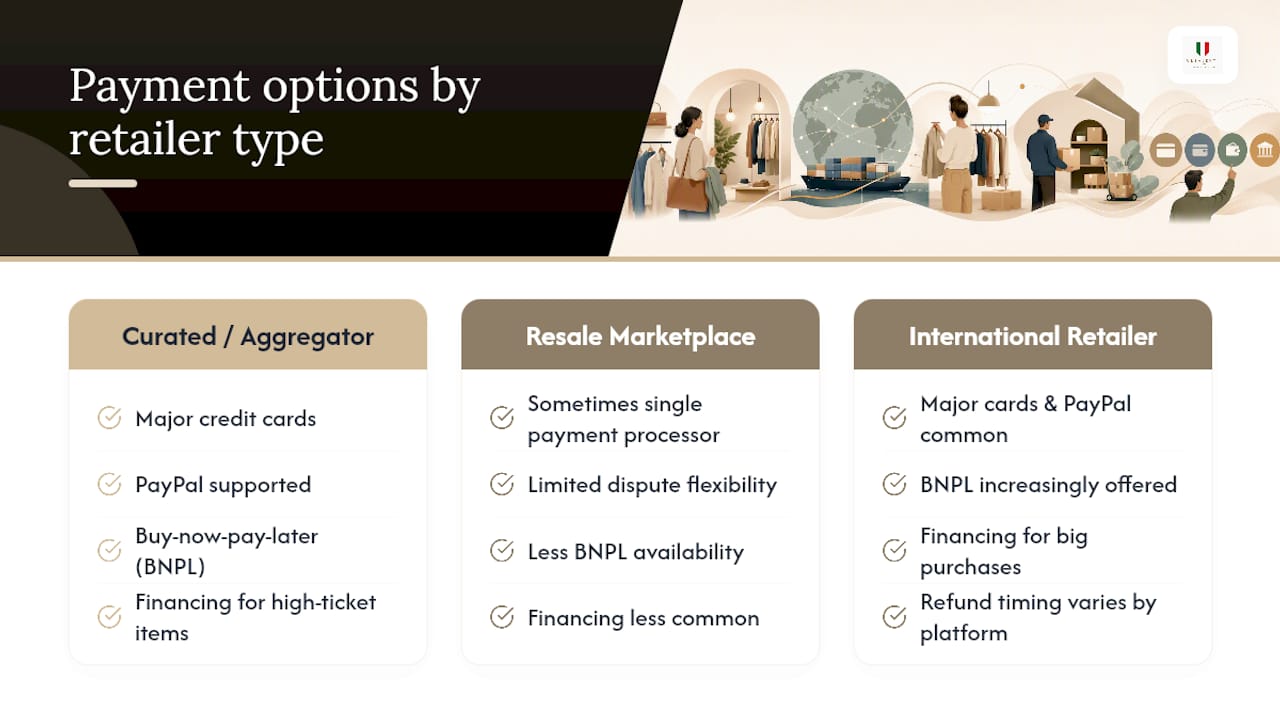
Payment flexibility varies more by retailer maturity than by category. Established curated boutiques and aggregators typically support major credit cards, PayPal, and increasingly buy-now-pay-later services for higher-ticket items like designer bags or outerwear. Smaller resale marketplaces sometimes limit options to a single processor, which can complicate disputes if an item arrives misrepresented.
Financing availability matters most on higher-priced categories. A designer bag or a premium sneaker collaboration often costs enough that installment options change the buying decision entirely. Before committing to a retailer for a big-ticket purchase, confirm what happens if a financed item needs to be returned. Some platforms refund the full amount immediately; others require the installment plan to run its course while a refund processes separately, which can tie up funds longer than expected.
Currency handling deserves the same scrutiny. International retailers shipping from Europe, for instance, should state clearly whether prices include VAT and whether U.S. duties are handled at checkout or billed separately on delivery. That single line item, duties included or duties on you, is often the biggest hidden cost difference between two retailers quoting similar sticker prices.
Most roundups comparing END Clothing to other retailers stop at listing names and price points, treating every alternative as interchangeable once it stocks similar brands. That’s the wrong lens. Two retailers can carry the same sneaker collaboration and deliver completely different ownership experiences depending on how they source it, what they disclose at checkout, and how they respond when something goes wrong.
The conventional advice, “just compare prices,” ignores duties, return friction, and authentication risk, three factors that quietly cost shoppers more than a price difference ever does. A slightly higher sticker price with duties included and a real return window often beats a lower price that surprises you with a customs bill three weeks later.
Prioritize sourcing transparency first, then experience signals like photography and support responsiveness, and treat price as the tiebreaker, not the headline. That order protects you far better than chasing the lowest number on the page.
— Admin Urbalenti™ NYC
Urbalenti NYC gives you a direct alternative to hunting across marketplaces and drop sites: one curated catalog, sourced from Italy, with U.S. import duties and taxes already handled and free worldwide shipping built into every order.
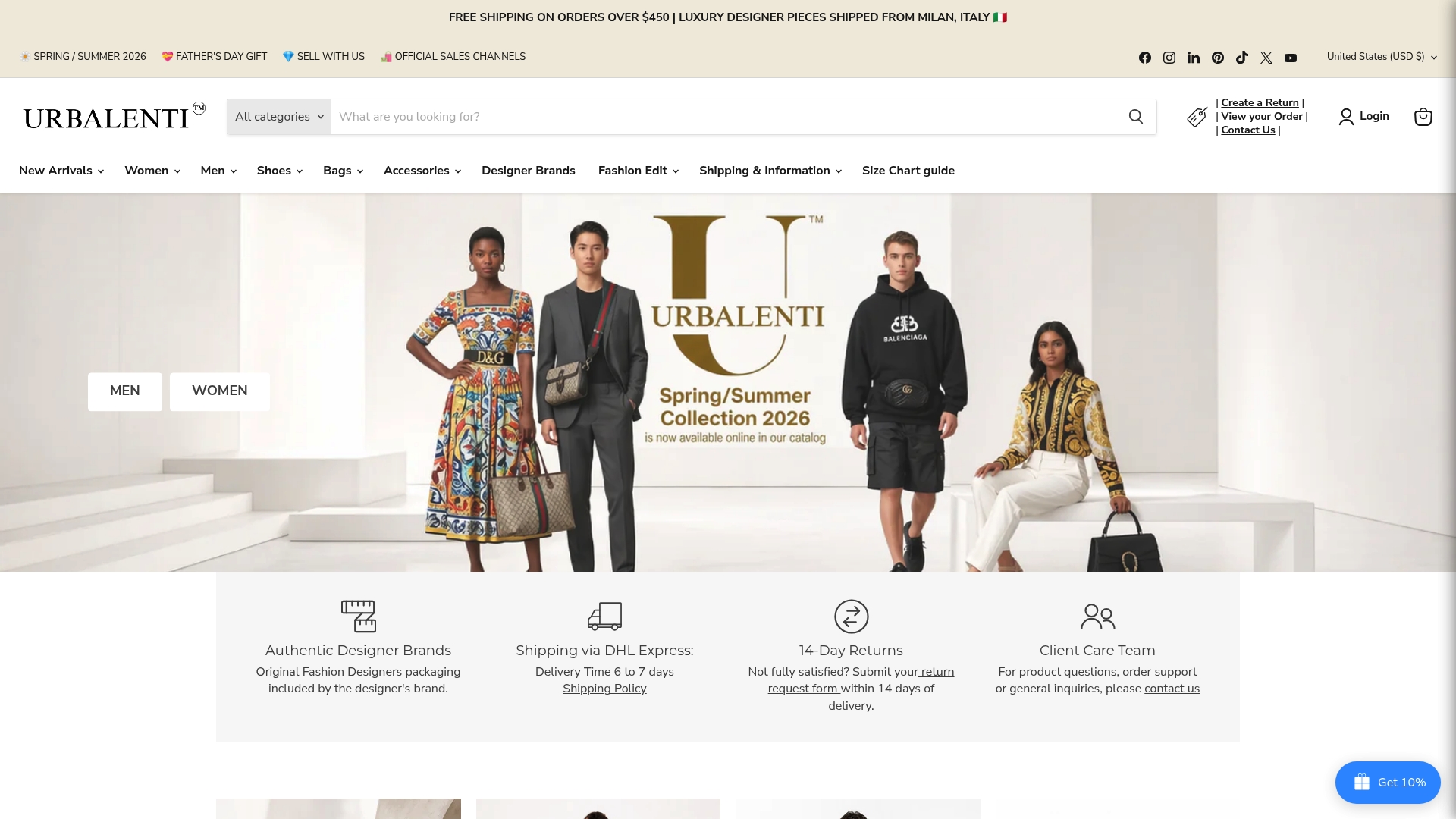
Start in the men’s collection for a full view of curated menswear, or head straight to designer shoes if footwear is what brought you here. The Off-White Multicolor Nylon Athletic Sneakers offer a concrete look at the kind of streetwear piece typically reserved for specialist drop sites, now sitting inside a catalog verified new with tags. At checkout, expect duties and shipping costs already factored in for U.S. orders, plus direct access to personalized customer support if you have a question about fit, sizing, or delivery timing before you commit. Browse the current edit and see what’s landed from Italy this season.
The retailer comparisons and shopper-experience standards in this guide draw on editorial and industry sources covering streetwear, resale, and premium retail:
The 3-3-3 rule is a minimalist styling challenge where you wear just three tops, three bottoms, and three pairs of shoes for three months, mixing and matching to build outfits. It’s a wardrobe-editing exercise rather than a shopping rule, and it works well alongside curated retailers since fewer, better-chosen pieces are easier to rotate than a large, mismatched closet.
END. is a legitimate, long-running retailer known for stocking authentic designer and streetwear brands. Concerns shoppers raise online typically involve counterfeit risk on unrelated third-party marketplaces or resale sites, not END. itself, which is why comparing sourcing transparency across any retailer matters before you buy.
Reputable alternatives fall into a few categories: curated boutiques such as Urbalenti NYC, specialist sneaker and drop platforms, resale and consignment marketplaces, and high-fashion aggregators. Each serves a different shopping goal, from drop chasing to wardrobe building, so the “best” option depends on what you’re hunting for.
Preferences vary widely and shift quickly, but streetwear-driven labels and sneaker collaborations consistently dominate style press coverage aimed at younger shoppers. Specialist drop platforms are frequently cited as the go-to source for the exclusive releases this audience chases most.
Urbalenti NYC offers free worldwide shipping on orders, with U.S. import duties and taxes already included rather than billed separately at delivery. Current pricing on individual products is listed directly on the site.
Editorial Note: Product availability, pricing, and shipping conditions may change. All products featured by URBALENTI™ NYC are 100% authentic and original. Please refer to the applicable product page and store policies for current details.
Leave a comment