
MY WISHLIST
MY WISHLIST

You can reach high confidence in a Gucci item’s authenticity by running three checks first: the interior serial tag, Gucci app NFC or Controllato card verification where present, and craftsmanship details like stitching and hardware. No single check proves anything on its own, but the combination of a correct serial tag, a passing app scan, and clean construction is the closest thing to definitive proof outside a professional lab. If any one of those checks fails outright, escalate to a professional authenticator before buying.
TL;DR:
- Combines serial tag checks, Gucci app NFC scans, and craftsmanship inspection for the highest confidence in authenticity.
- Serial tags should have even, serif font with correct style and batch numbers matching the actual product.
- NFC Controllato cards provide a direct response from Gucci’s system, but absence or failure does not necessarily indicate a fake.
- Construction details like stitching density of six to seven stitches per centimeter and heavy, crisp hardware are key physical indicators.
- Buying from curated retailers with verified inventory reduces the need for self-conducted checks and minimizes the risk of counterfeit items.
Work through these checks in order. Each one narrows the odds; skipping ahead is how counterfeits slip through.
A few red flags should stop a purchase immediately:
Pro Tip: Photograph the serial tag straight on, in natural light, before you buy. A crooked or shadowed photo hides exactly the stamping details that separate real from fake.
Gucci’s digital verification has changed format over the past decade, and knowing which era you’re looking at matters. Bags carrying a small black woven QR tag generally date to roughly 2016 through 2021, when that tag was built for internal factory tracking, not customer use. From around 2021 onward, Gucci shifted to NFC Controllato cards, which are the current standard.
To verify an NFC card, open the Gucci app, go to My Gucci, select Gucci Tag, and hold your phone against the designated NFC spot on the card or tag. A genuine NFC response in the app confirms the item’s identity directly through Gucci’s own system, which makes it one of the strongest tie-breakers available to a buyer.
A few things to keep in mind:
Controllato cards were originally quality-control slips, and official guidance and independent experts agree they were never meant to stand alone as certificates. The NFC chip inside is what actually carries verification weight.
The serial tag sits inside the bag, typically along an interior seam or inside a pocket, and it carries two rows of numbers heat stamped directly into the leather. The top row is the style or model number, usually six digits, and it identifies the specific design. The bottom row is a supplier or batch code, running four to six digits. Combined, modern Gucci tags typically total around 10 to 13 digits across both rows.
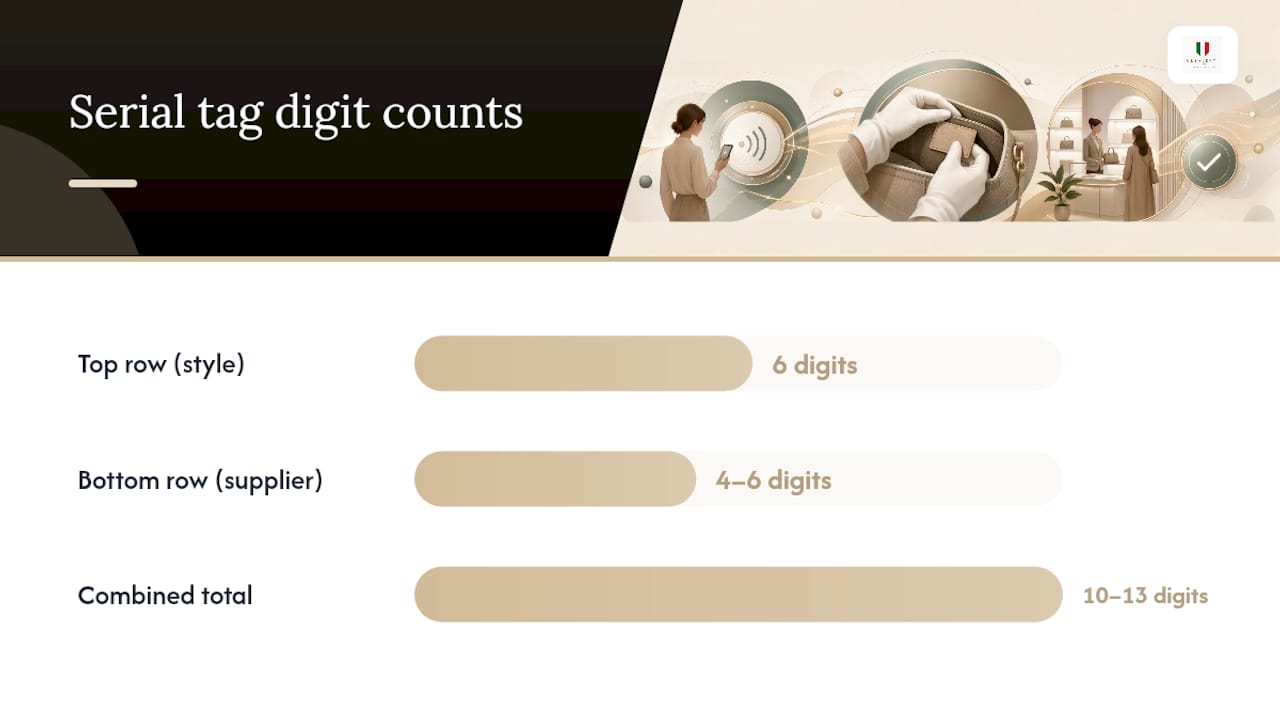
The top row is more useful than most buyers realize. Search the exact style number online and see whether it matches the bag in front of you. Counterfeiters sometimes lift a genuine tag from a damaged authentic piece and stitch it into a fake, so a serial number that looks perfectly correct but describes a completely different model is a fast way to catch the substitution.
A few format checks worth running:
Construction details are where counterfeits most often fail, because they’re expensive to replicate and easy to rush. Stitch density is a reliable starting point: genuine Gucci leather goods generally run around six to seven stitches per centimeter, with interior seams held to the same standard as the exterior. Loose, uneven, or widely spaced stitching, especially inside pockets where buyers rarely look closely, is a common shortcut counterfeiters take.
Hardware tells its own story. Authentic buckles, zipper pulls, and feet should feel dense rather than hollow, move smoothly without catching, and carry engraving that’s crisp under light rather than soft or blurred. Stitch density and hardware heft together are among the strongest physical indicators independent authenticators rely on, precisely because they’re hard to fake convincingly at scale.
Beyond stitching and hardware, look at the GG canvas itself:
Pro Tip: Run your finger along an interior seam before checking the exterior. Interior stitching gets less attention from counterfeiters and is often where quality gaps show up first.
No single one of these details is conclusive on its own. A slightly heavy zipper on an otherwise clean bag isn’t automatically damning, but stitching, hardware, and canvas all failing together is close to decisive.
Photo-only listings, especially for high-value bags or well-made forgeries, sometimes require a professional set of eyes no matter how careful your own inspection is. Here’s how to move forward when something feels off, or when you simply want a second opinion before a large purchase.
Buying pre-authenticated stock from a curated retailer removes most of this burden entirely, which is worth weighing against the time and risk of verifying a stranger’s listing yourself.
Placement varies slightly by style, but the serial tag is almost always sewn into an interior seam, a hidden pocket, or a fabric panel along the lining. On totes and shoulder bags, check inside the main compartment near a side seam. On smaller items like crossbody bags or wallets, look inside the primary pocket flap, sometimes tucked behind a card slot.
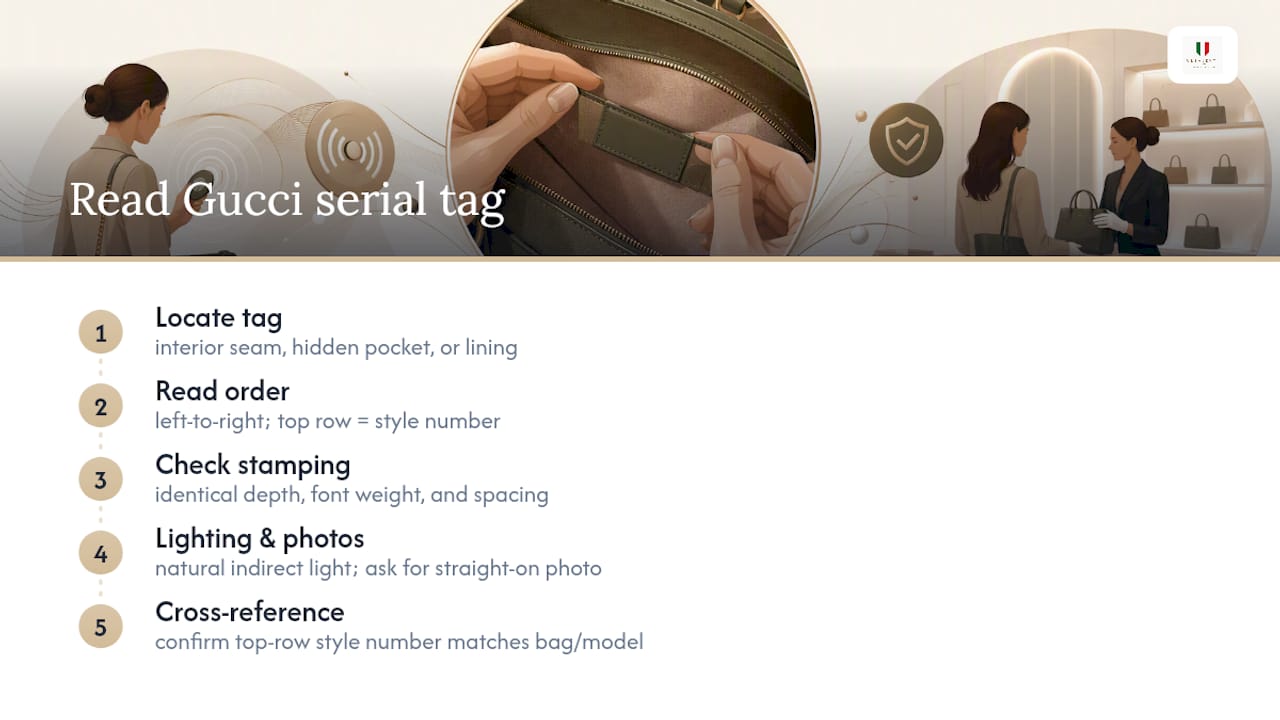
The tag itself is a small rectangular leather patch with two rows of heat-stamped numbers. Read it left to right, top row first. The top row identifies the style or model number, the bottom row the supplier and batch. Both rows should share the same stamping depth, font weight, and spacing, since a mismatch in how the two rows were applied often signals the tag was reattached or altered.
Lighting matters more than most buyers expect. Natural, indirect light reveals stamping depth far better than a flash, which tends to wash out the subtle shadow that heat-stamped digits cast. If you’re buying from photos rather than in person, ask the seller for a straight-on, well-lit image of the tag specifically, not just a general interior shot. A seller who hesitates to provide one is itself a signal worth noting.
Cross-reference the top-row style number against the model in front of you. A correct-looking serial tag on the wrong bag is one of the more common tricks counterfeiters and dishonest resellers rely on, since most buyers check that a tag exists without checking that it matches.
Urbalenti NYC sources its Gucci selection through direct partnerships with Italian boutiques, with every piece curated in New York before it reaches a customer. That sourcing structure is the same reason retailer-verified inventory reduces buyer risk compared with photo-only marketplace purchases: the verification work happens before the listing goes live, not after a buyer raises a concern.
Every order ships with U.S. import duties and taxes included and EU VAT included, with free worldwide shipping and no hidden costs added at checkout. For buyers who want to understand how retail-grade verification differs from a private resale transaction, Urbalenti NYC’s designer authenticity resources walk through what that process actually involves.
Every check outlined above exists because photo-only listings put the entire authentication burden on you. Urbalenti NYC removes that burden by curating Gucci pieces directly through Italian boutique partnerships before they’re ever listed, so the serial tag, hardware, and stitching checks have already been done.
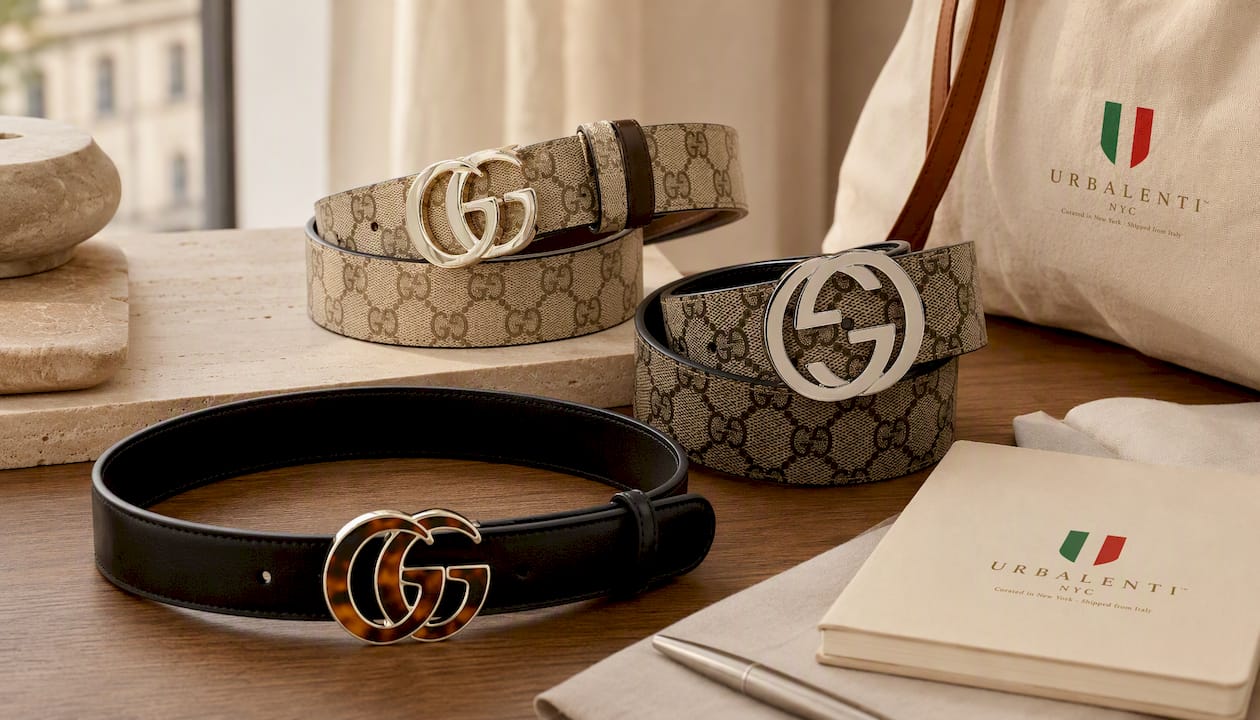
Three current examples show what pre-vetted inventory looks like in practice. The Gucci Beige Calf Leather Bos Taurus Regular Belt pairs classic tonal leather with the brand’s signature buckle hardware. The Gucci Brown Cotton Regular Belt offers a more casual, canvas-forward alternative for everyday styling. The Gucci Black Calfskin Regular Belt rounds out the trio with a versatile, formal-leaning finish.
Each one ships from Italy with U.S. import duties and taxes included, EU VAT included, and free worldwide shipping, so the price you see at checkout is the price you pay. If you’d rather browse a full curated selection than run every check yourself, start with Urbalenti NYC’s current Gucci offerings and shop with the verification work already behind you.
Every checklist in this guide exists to compensate for one thing: uncertainty about who handled an item before it reached you. That uncertainty is exactly what a curated retailer relationship is built to remove, and it’s worth being honest about why the DIY approach, however thorough, still leaves gaps a determined counterfeiter can exploit.
Serial tags can be transplanted. Stitching can be replicated closely enough to fool an untrained eye in photos. Even hardware weight, the most physical of all these checks, only tells you something when you’re holding the item, not scrolling through a listing. The checklist in this article gets a careful buyer most of the way there, but “most of the way” is a real gap when the purchase runs into the thousands.
What doesn’t get talked about enough is that authentication isn’t really about catching liars. Most sellers on peer-to-peer platforms genuinely believe what they’re selling is real, because they were fooled too, further up the chain. That’s a structural problem no amount of buyer vigilance fully solves. The fix isn’t a better checklist; it’s shortening the chain of custody between the boutique and the buyer, which is the actual value a direct sourcing relationship provides that a marketplace listing can’t.
— Admin Urbalenti™ NYC
Find the heat-stamped tag inside a seam or pocket, then read the top row as the style number and the bottom row as the supplier code. Modern tags typically total 10 to 13 digits combined, stamped in even, serif-style font.
Combine three checks: a correctly formatted, cleanly stamped serial tag, a passing NFC or Controllato scan through the Gucci app where applicable, and construction details like stitch density and hardware weight. Agreement across all three is what gives real confidence.
Look for stitching around six to seven stitches per centimeter, hardware that feels heavy with crisp engraving, and a GG canvas pattern that stays symmetrical across seams. Any single failing detail deserves a closer look; multiple failures together are a strong signal of a counterfeit.
Identify whether the tag is a woven QR fabric tag from roughly 2016 to 2021, which was built for internal tracking and should not open a public website when scanned. If it does resolve to a consumer site, treat that as a serious counterfeit indicator rather than a verification tool.
Yes. Retailers that source directly through boutique partnerships, like Urbalenti NYC’s curated Gucci selection, complete verification before listing an item, which removes most of the risk inherent in photo-only peer-to-peer purchases.
Editorial Note: Product availability, pricing, and shipping conditions may change. All products featured by URBALENTI™ NYC are 100% authentic and original. Please refer to the applicable product page and store policies for current details.
Leave a comment