
MY WISHLIST
MY WISHLIST

TL;DR:
- Milan’s fashion culture is grounded in Italian values of quality, craft, and daily elegance. Its industrial infrastructure and specialized workshops enable high-quality production that sustains long-lasting trends and luxury markets. This disciplined approach positions Milan as the world’s leading fashion capital through a cultural system of excellence.
Italian culture is the structural foundation of Milan’s fashion identity, not a backdrop to it. The role of Italian culture in Milan fashion runs from the silk mills of Como to the tailoring ateliers of the Quadrilatero della Moda, shaping every silhouette, fabric choice, and retail philosophy the city produces. Milan does not simply host fashion. It generates it from a specific cultural logic: that quality is non-negotiable, that craft is inherited, and that elegance belongs in daily life. Understanding this logic is what separates a casual observer of Milanese style from someone who truly reads it.
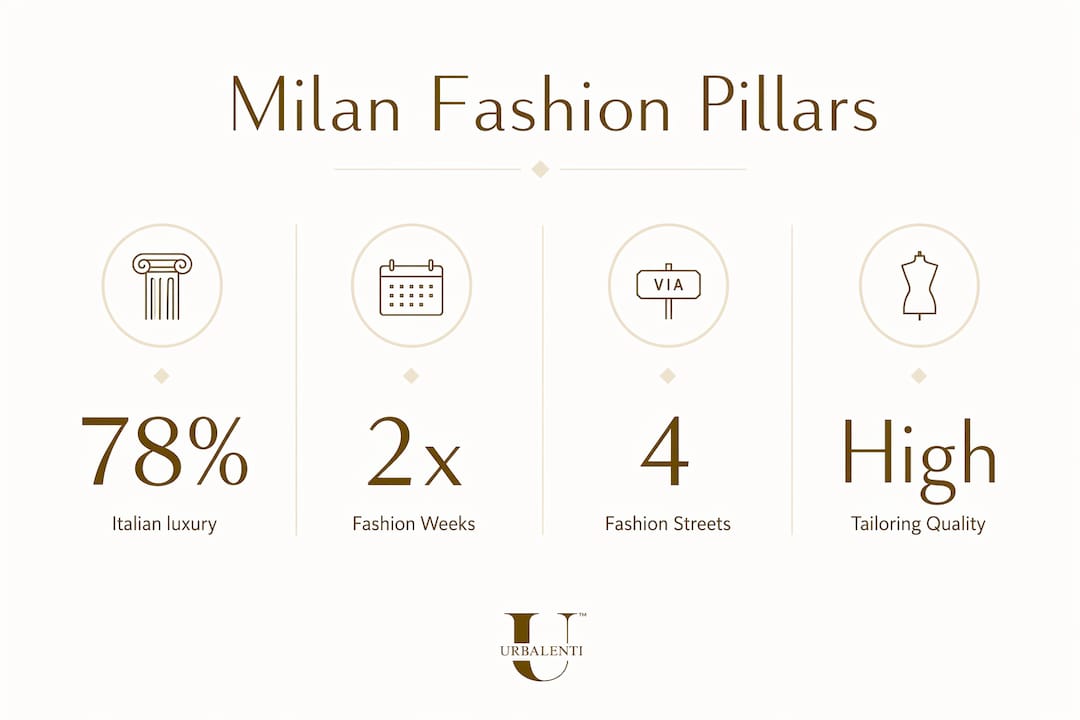
Milan became Italy’s primary fashion capital in the 1970s, overtaking Florence because of one decisive advantage: industrial readiness. Fashion exports grew more than 150% between 1950 and 1956, and Milan’s manufacturing infrastructure was positioned to absorb that growth. Florence had artisanal prestige. Milan had factories, logistics, and a commercial network that could scale ready-to-wear production for global markets.
That industrial foundation did not replace craft. It organized it. Milan’s design studios sit within reach of specialized workshops across Northern Italy, creating a production geography that is almost impossible to replicate elsewhere. Vertical integration is the core mechanism of Milan’s dominance. Designers can iterate quickly because the workshops that produce their fabrics, hardware, and finished goods are geographically close and culturally aligned with the same quality standards.
The specialized infrastructure behind this system is not visible on any runway. Como’s silk mills and Biella’s wool mills supply raw materials with a level of consistency and refinement that enables unmatched quality in finished goods. These workshops are not subcontractors in the transactional sense. They are cultural institutions, passing techniques across generations. That continuity is what gives Milanese fashion its depth.
Milan Fashion Week occurs twice yearly, in february and september, and functions as the public face of this ecosystem. It attracts buyers, press, and cultural observers from every major market. The event is not simply a showcase. It is a commercial mechanism that sets production cycles, confirms trend directions, and signals to the global industry what Italian craftsmanship will deliver in the coming season.
Pro Tip: When evaluating a Milanese designer collection, look at the fabric credits before the silhouette. The mill or tannery listed often tells you more about the garment’s quality than the design itself.
Italianità is the term Italian cultural scholars use to describe the national devotion to quality, tradition, and aesthetic discipline. In Milan, this concept is not abstract. It shows up in how residents dress for a Tuesday morning, not just a Saturday gala. Fashion in Milan is a daily cultural discipline, not an event-driven performance. That distinction is what separates Milanese style from fashion cultures in other global capitals.
This daily discipline produces a specific aesthetic logic. Milanese style prioritizes precision, quality, and longevity over theatrical experimentation. A well-cut coat worn for ten years carries more cultural value in Milan than a trend piece worn for one season. That preference is not conservatism. It is a cultural investment model applied to clothing.
The practical outcomes of this philosophy are visible across several dimensions of Milanese dress:
Tailoring and fabric quality are expected in daily life rather than reserved for special occasions. This expectation sustains the luxury market’s longevity because it creates a consumer base that genuinely understands and demands quality. Brands like Bottega Veneta and Ferragamo do not need to explain their value proposition to a Milanese customer. The culture already teaches it.
Pro Tip: Build a Milanese-influenced wardrobe by starting with fabric, not silhouette. Choose one well-made wool coat or structured blazer over three trend-driven pieces. The cost-per-wear math always favors quality.
Milan’s Quadrilatero della Moda is the most concentrated luxury retail corridor in the world. It occupies four streets: Via Montenapoleone, Via della Spiga, Via Manzoni, and Corso Venezia. Each street carries a distinct commercial and cultural character, but together they form a single architectural argument for the relationship between urban design and fashion identity.
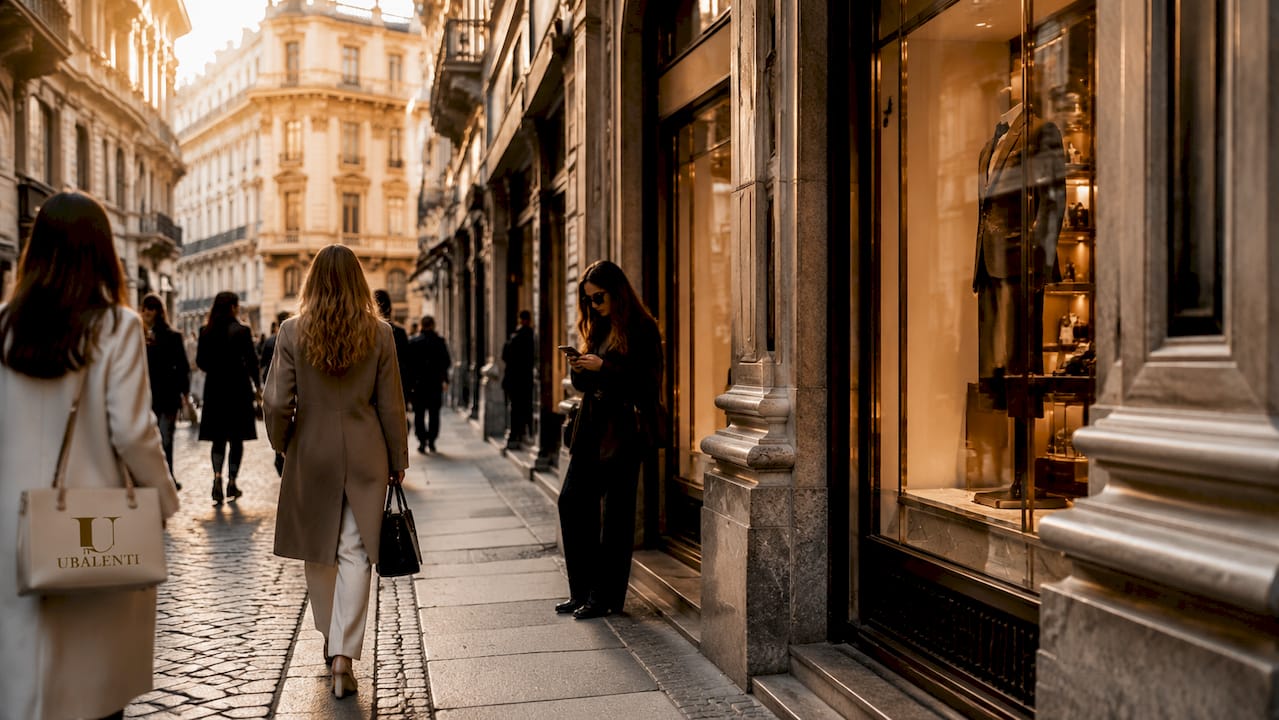
The district’s origins are not commercial. The Quadrilatero evolved from 19th-century noble palaces into a luxury retail hub, with the architectural bones of aristocratic Milan still visible in the facades, courtyards, and proportions of the buildings that now house flagship stores. That history is not incidental. It gives the district a physical authority that purpose-built retail environments cannot manufacture.
The table below outlines the four streets of the Quadrilatero and their distinct roles within Milan’s fashion culture.
| Street | Character | Notable presence |
|---|---|---|
| Via Montenapoleone | Highest-prestige retail, global flagship stores | Saint Laurent, Valentino, Givenchy |
| Via della Spiga | Refined, quieter luxury with boutique character | Bottega Veneta, Moncler |
| Via Manzoni | Transitional corridor connecting fashion and culture | Armani flagship, design institutions |
| Corso Venezia | Architectural grandeur, broader luxury and lifestyle | Mixed luxury and cultural venues |
Walking the Quadrilatero is a cultural act, not just a shopping trip. The architecture communicates prestige through scale and material. The window displays are curated as carefully as gallery exhibitions. Flagship stores for houses like Gucci and Valentino function as brand museums as much as retail spaces, with interior design that reflects each house’s cultural identity.
The district also contains fashion museums and cultural institutions that reinforce Milan’s position as a city where fashion is treated as a serious cultural discipline. The presence of these institutions alongside retail confirms that Milanese fashion culture is not purely commercial. It is also archival, educational, and civic.
Milan’s approach to trend-setting is defined by refinement, not disruption. Where other fashion capitals favor conceptual experimentation or street-culture absorption, Milan balances tradition with forward-looking refinement as its primary creative mode. This is not a limitation. It is a deliberate cultural position that produces trends with longer commercial lives and broader global appeal.
Fashion education in Milan reflects this philosophy directly. Programs at institutions across the city emphasize portfolio development and real project work over theoretical abstraction. Students learn by producing, and they produce within a cultural context that demands quality from the first draft. That educational model feeds directly into the industry, creating designers who understand craft before they develop a signature.
The global influence of Milanese fashion trends operates across several channels:
Milan is an ecosystem where design, industry, and culture interact constantly. That interaction is what legitimizes Milan’s global fashion leadership year after year. The city does not rely on a single designer or a single moment. It relies on a system that produces quality consistently, and that system is cultural before it is commercial.
The global fashion industry recognizes this. 78% of global luxury fashion is produced within Italy, a figure that reflects not just manufacturing capacity but the depth of craft knowledge embedded in the country’s production culture. Milan sits at the center of that production network, coordinating and curating what Italy makes for the world.
Italian culture is the operating system of Milan’s fashion industry, and every element of Milanese style, from fabric sourcing to daily dress standards, runs on that cultural logic.
| Point | Details |
|---|---|
| Industrial infrastructure drives quality | Milan’s proximity to Como, Biella, and Tuscany workshops enables rapid, high-quality production at scale. |
| Daily elegance sustains the luxury market | Milanese consumers treat tailoring and fabric quality as everyday standards, not occasional indulgences. |
| The Quadrilatero is a cultural institution | Via Montenapoleone and its surrounding streets function as architectural proof of Milan’s fashion authority. |
| Refinement defines Milan’s trend signature | Milan refines silhouettes and materials rather than chasing disruption, producing trends with global longevity. |
| Italy produces 78% of global luxury fashion | That figure reflects craft knowledge embedded across generations of Northern Italian workshops and ateliers. |
People often describe Milan as glamorous. That word misses the point. What I observe in Milanese fashion culture is discipline. The glamour is a byproduct. The actual work is in the sourcing decisions, the construction standards, and the cultural expectation that clothing should last.
What strikes me most, working at the intersection of New York curation and Milan fulfillment, is how little waste exists in the Milanese fashion logic. A well-made garment from a house like Brunello Cucinelli or Ferragamo is not purchased for a season. It is purchased for a decade. The cultural framework that produces that purchasing behavior is the same one that produces the garment in the first place. Supply and demand are culturally aligned in a way that does not exist in most other fashion markets.
The brands Urbalenti™ NYC carries reflect this alignment. Saint Laurent, Valentino, Givenchy, Moncler. These are not trend vehicles. They are expressions of Italian fashion craftsmanship built on the same cultural foundations this article describes. When you understand the culture, you understand why these houses endure while others disappear after a few seasons.
For fashion enthusiasts who want to engage with Milanese style seriously, the entry point is not the runway. It is the fabric. Start there, and the rest of the culture becomes legible.
— Admin Urbalenti
Urbalenti™ NYC curates designer fashion directly from Milan, fulfilling every order through DHL Express worldwide. The collections span clothing, shoes, bags, and accessories from houses including Gucci, Valentino, Saint Laurent, Emporio Armani, and Golden Goose, all authenticated and sourced from Italy.
Every client receives VIP-level support from selection through delivery, with no minimum purchase required. For fashion enthusiasts who want to experience the cultural depth of Milanese style firsthand, the Urbalenti™ NYC catalog offers a curated entry point. Specific pieces worth exploring include the Alexander McQueen logo scarf and the Dolce & Gabbana Sicily holder, both fulfilled directly from Milan with full authenticity assurance.
Milan’s position rests on a combination of industrial infrastructure, specialized craft workshops, and a cultural philosophy that treats quality as a daily standard. Vertical integration between design studios and Northern Italian workshops gives Milanese fashion a production advantage no other city fully replicates.
Italian cultural values, particularly Italianità, prioritize longevity, tailoring, and material quality over seasonal experimentation. These values produce trends that refine silhouettes and material choices rather than discard them, giving Milanese trends a longer commercial life globally.
The Quadrilatero della Moda is Milan’s luxury fashion district, comprising Via Montenapoleone, Via della Spiga, Via Manzoni, and Corso Venezia. It evolved from 19th-century noble palaces into the most concentrated luxury retail corridor in the world.
Italy produces 78% of global luxury fashion, a figure driven by generations of craft knowledge embedded in Northern Italian workshops. Milan coordinates this production network, connecting designers with specialized mills and ateliers across Como, Biella, Tuscany, and Emilia Romagna.
Milanese style is defined by daily elegance rather than event-driven dressing. Tailoring and fabric quality are cultural baselines, not formal requirements. That distinction produces a consumer culture that sustains luxury market longevity in ways that trend-driven markets cannot match.
Leave a comment