
MY WISHLIST
MY WISHLIST

TL;DR:
- Luxury fashion functions as a status symbol through scarcity, high price, and shared social recognition. Inconspicuous luxury, relying on subtle craft codes, has gained ground among discerning consumers in 2026. Recognizing authentic signals involves assessing material quality, craftsmanship, and brand heritage to understand their social meaning.
Luxury fashion as a status symbol is the practice of using designer clothing and accessories to visually communicate social standing, wealth, and cultural identity. Brands like Hermès, Gucci, and Balenciaga have built entire business models around this principle, turning scarcity and price into social signals that observers decode instantly. The academic term for this behavior is conspicuous consumption, a concept first described by economist Thorstein Veblen in 1899 and still central to how sociologists and marketers study high-end fashion today. What has changed in 2026 is the sophistication of those signals. Loud logos still carry weight in some circles, but a quieter, more knowledge-intensive form of luxury signaling has gained ground among the most discerning consumers.
Scarcity is the foundation of designer clothing prestige. Hermès limits its Birkin bag production to around 120,000 units annually, and that constraint drives a 40.5% operating margin while reinforcing the bag’s status as a social barrier. When supply is deliberately capped, ownership becomes proof of access, not just purchasing power.
Pricing works the same way through a mechanism economists call the Veblen effect. Higher prices increase desirability in luxury markets because the price itself functions as the signal. A Balenciaga piece at $1,200 communicates something a $120 item cannot, regardless of material cost. This is why luxury brands rarely discount and why price increases often strengthen, rather than weaken, demand.
Logo strategy is the third lever. Logo prominence inversely correlates with price: lower-priced entry items carry larger, more visible logos targeting aspirational buyers, while top-tier goods display minimal branding for an audience that already knows the codes. This segmentation is deliberate and precise.
| Brand | Price tier | Logo visibility | Primary target |
|---|---|---|---|
| Gucci (GG monogram canvas) | Entry to mid | High | Aspirational buyers |
| Saint Laurent (leather goods) | Mid to high | Moderate | Fashion-literate consumers |
| Hermès (Birkin, Kelly) | Ultra-high | Minimal | Connoisseur audience |
| Balenciaga (logo tees) | Entry to mid | High | Trend-driven buyers |
| Bottega Veneta (intrecciato) | High | None | Elite insiders |
Pro Tip: If you want your luxury purchase to signal status to the widest audience, choose a piece with recognizable brand codes. If you want to signal status to a more selective group, choose a house known for craft and restraint over logo repetition.
Luxury status also depends on what researchers call common knowledge manufacturing. For a status signal to work, both the owner and the observer must share the understanding that the item is rare and costly. This shared social language is what separates a genuine status symbol from an expensive item that nobody recognizes.
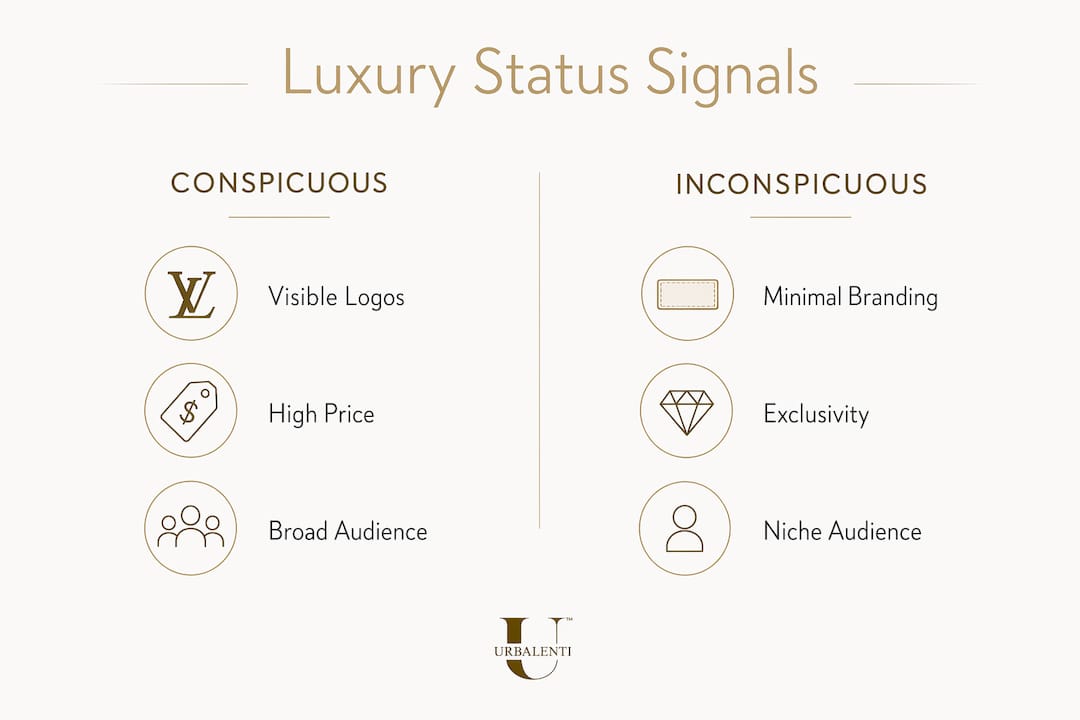
Conspicuous consumption is the visible, logo-forward display of wealth through fashion. Inconspicuous consumption is its opposite: subtle, unbranded luxury understood only by those with sufficient cultural knowledge. Both are status strategies, and both are active in 2026.
Research from Kellogg School of Management shows that directly promoting status symbols reduces perceived warmth by about 0.5 points on a 7-point scale. Third-party recognition, meaning someone else pointing out your Hermès or your Brunello Cucinelli, delivers the status benefit without the social cost. This finding has real implications for how people choose to wear and present luxury items.
The rise of the aspirational class has accelerated the shift toward inconspicuous luxury. Subtle, unbranded items understood only by those with cultural capital have become the preferred signal among high-income, highly educated consumers. A Bottega Veneta bag with no visible logo reads as nothing to an uninformed observer and reads as serious money to someone who knows the house.
Conspicuous consumption (loud logos, visible branding):
Inconspicuous consumption (quiet luxury, minimal branding):
Pro Tip: The most effective status signals in 2026 combine both strategies. A minimal Jacquemus necklace or a pair of designer accessories for executives can communicate fluency to insiders while remaining understated to everyone else.
The tension between these two strategies is not new, but it has sharpened. Social media has made conspicuous consumption more visible and, paradoxically, less exclusive. When a logo appears on millions of feeds, its scarcity signal weakens. This is one reason why houses like Bottega Veneta and Max Mara have gained ground among consumers who want their fashion choices to reflect genuine knowledge rather than trend participation.
Luxury fashion is not only a wealth indicator. It functions as personal storytelling, cultural belonging, and emotional investment. A Saint Laurent leather jacket does not just signal money. It signals a specific aesthetic position, a relationship with French fashion history, and a preference for a particular kind of cool. These layers of meaning are what separate luxury from mere expense.
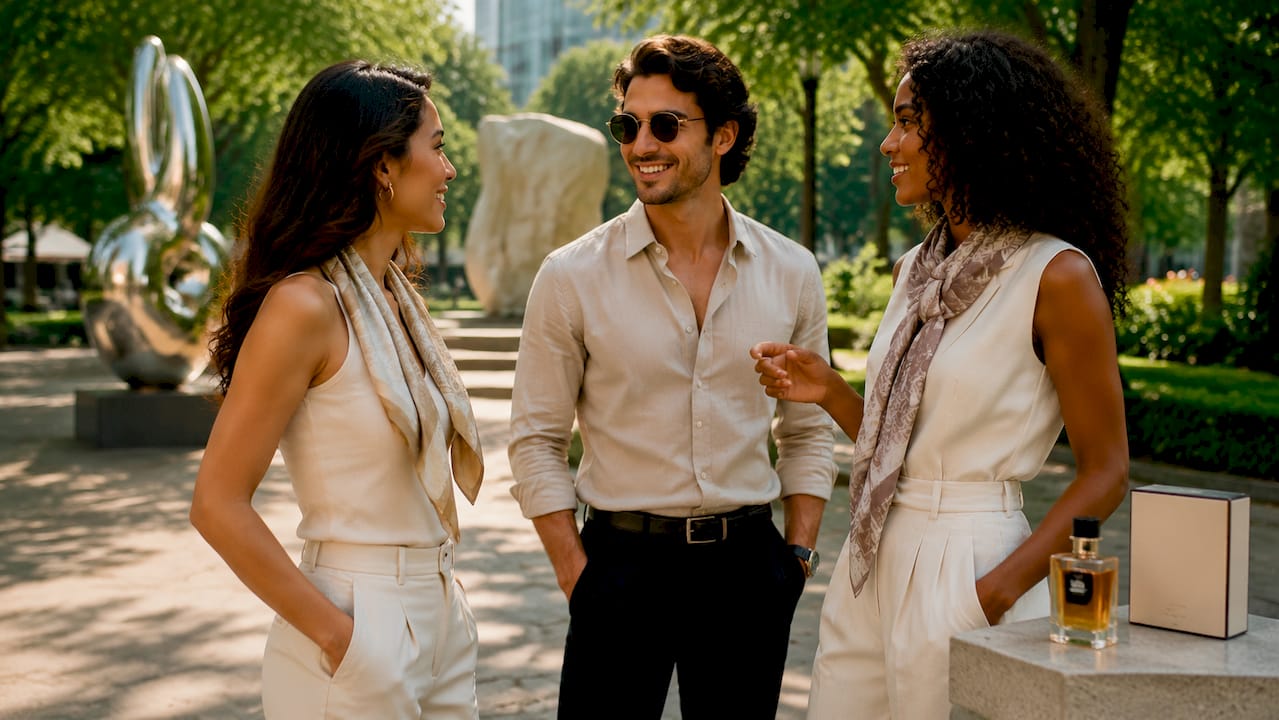
The luxury market has matured significantly. Brands now maintain relevance by aligning with consumer identity and values within niche communities rather than broadcasting to the widest possible audience. Gucci under Alessandro Michele built a devoted community around maximalism and gender fluidity. Jacquemus built one around Mediterranean lightness and architectural minimalism. Neither strategy works for every consumer, and that specificity is the point.
Entry-level luxury accessories play a distinct role in this identity system. Perfumes, belts, and small leather goods allow aspirational middle-class consumers to connect with elite brand identities without the price barrier of a full ready-to-wear purchase. A Valentino belt or a Givenchy fragrance carries the house’s codes at a fraction of the cost of a runway piece. This is not a compromise. It is a deliberate entry point that luxury brands design and price intentionally.
Heritage brands carry additional layers of identity weight. Saint Laurent, founded in 1961, carries decades of cultural reference. Wearing it communicates awareness of that history. Newer houses like Golden Goose have built identity signals around deliberate imperfection, the pre-distressed sneaker as a rejection of pristine luxury norms. Both approaches work because they give the wearer a clear cultural position to occupy.
The shift from mass exclusivity to niche community resonance means that the most effective luxury purchases in 2026 are those that align with a specific community’s values. Buying a Moncler jacket in a city where outdoor culture is central communicates something different than buying it in a context where it reads purely as a price signal. Context shapes meaning, and the most culturally fluent consumers understand this.
Cultural capital determines how well a consumer can both send and receive luxury signals. A person who recognizes Brunello Cucinelli’s cashmere by touch, or who knows that a Bottega Veneta intrecciato weave requires hours of hand labor, reads the signal at full strength. A person without that knowledge misses it entirely. This is why knowledge-intensive luxury consumption has become a status signal in itself.
The trend toward minimal branding has created a two-tier signal system. The first tier is accessible: a Gucci GG belt or a Dolce & Gabbana logo tee communicates to anyone who has seen a fashion magazine. The second tier requires investment in fashion literacy: a Jil Sander collaboration, a Maison Margiela Tabi boot, or a Ferragamo Vara pump signals to a narrower but more selective audience. Neither tier is superior. They serve different social functions.
| Signal type | Logo prominence | Price range | Audience reached |
|---|---|---|---|
| Entry-level conspicuous | High | $200–$800 | Broad, aspirational |
| Mid-tier branded | Moderate | $800–$3,000 | Fashion-aware consumers |
| High-tier minimal | Low to none | $3,000+ | Connoisseur, insider |
| Craft-coded (no logo) | None | $2,000+ | Elite, knowledge-based |
Recognizing authentic luxury signals requires attention to three factors: material quality, construction detail, and brand heritage. Authentic luxury handbags, for example, carry weight, stitching consistency, and hardware finish that imitations cannot replicate at scale. These physical codes are as much a part of the status signal as the brand name.
Consumers navigating the luxury market in 2026 face one specific risk: overexposed brands. When a logo becomes too widely imitated or too broadly distributed, its status signal degrades. The most informed buyers track which houses are tightening distribution and which are expanding it. Tighter distribution almost always strengthens the signal.
Luxury fashion functions as a status symbol through a combination of scarcity, price, cultural knowledge, and community identity, with signal strength determined by both the item and the audience reading it.
| Point | Details |
|---|---|
| Scarcity drives prestige | Hermès caps Birkin production at 120,000 units annually, making ownership a social barrier. |
| Price signals status | The Veblen effect means higher prices increase desirability in luxury markets. |
| Logo strategy segments consumers | High logo visibility targets aspirational buyers; minimal branding targets connoisseurs. |
| Third-party recognition is more effective | Letting others identify your luxury items delivers status without reducing perceived warmth. |
| Cultural capital determines signal legibility | Inconspicuous luxury only works when observers have the knowledge to decode it. |
The most common mistake I see is treating luxury fashion as a single category with one set of rules. It is not. A Balenciaga logo tee and a Brunello Cucinelli cashmere sweater are both luxury items. They send completely different signals to completely different audiences. Conflating them leads to purchases that miss their intended mark.
What I have found consistently true is that the clients who wear luxury most effectively are the ones who buy with intention rather than urgency. They understand which house aligns with their identity, which pieces carry long-term signal strength, and which items are trend-driven and will read as dated within two seasons. A Saint Laurent leather good bought in 2018 still reads as authoritative today. A logo-heavy piece from a house that over-distributed in the same period does not.
The shift toward quiet luxury is real, but it is not universal. In certain professional environments, a visible Gucci or Givenchy piece communicates exactly what the wearer intends. In others, the same piece reads as trying too hard. The skill is knowing your audience before you dress for them.
Authenticity is the factor that most clients underestimate. A genuine piece from a house with real craft heritage carries a physical quality that observers register even without consciously identifying the brand. That quality is what Urbalenti™ NYC sources from Milan: not just the label, but the construction, the material, and the provenance that make the signal credible.
— Admin Urbalenti
Urbalenti™ NYC carries pieces that cover the full range of luxury signaling, from bold and recognizable to quietly authoritative. Every item ships directly from Milan with DHL Express, and every client receives the same attentive, personalized support regardless of order size.
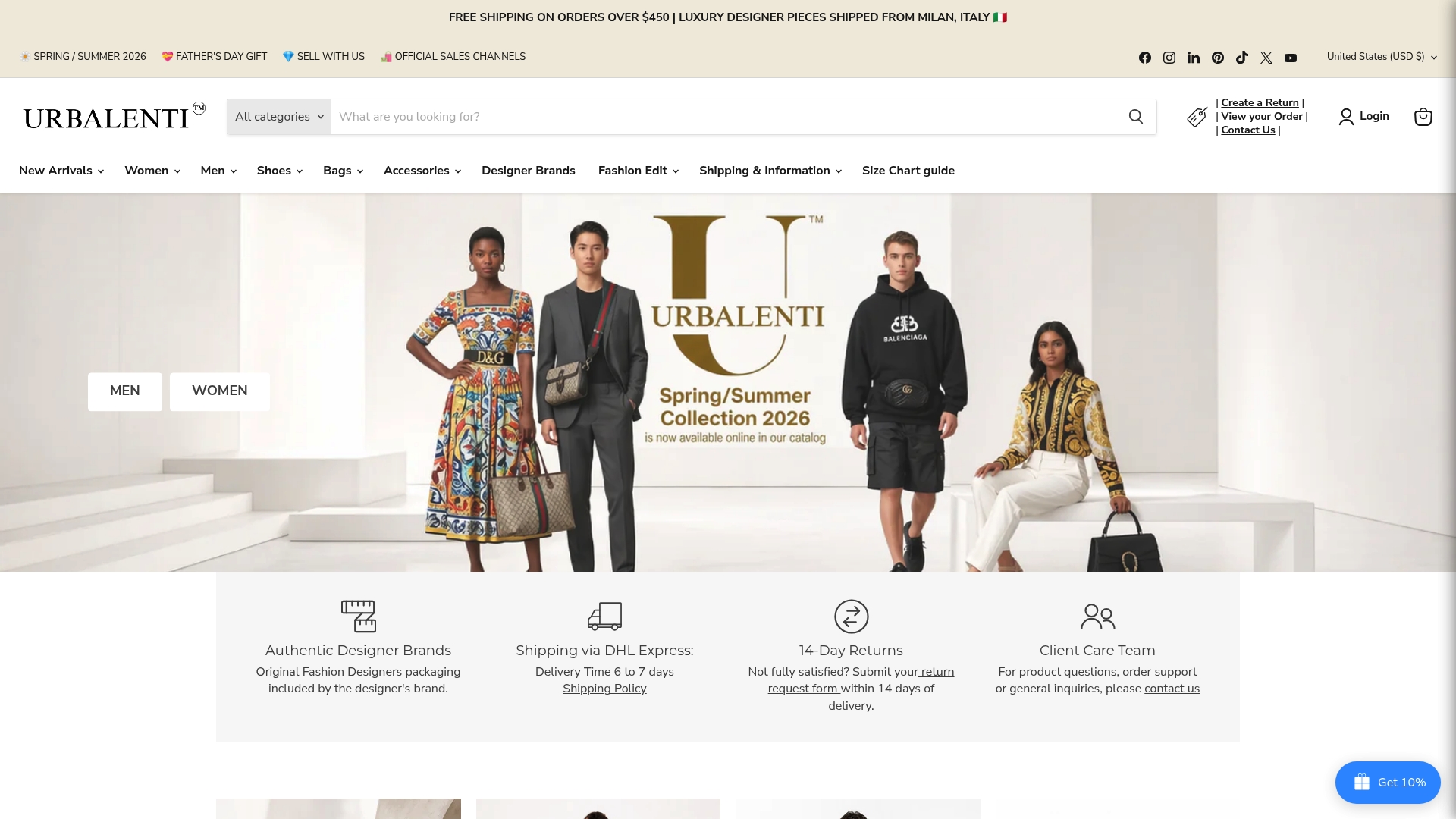
The Balenciaga designer t-shirt is a direct example of entry-level conspicuous luxury done well: clear brand coding, authentic construction, and immediate signal legibility. For clients who prefer craft over logo, the Dolce & Gabbana Sicily handbag delivers heritage and material quality that speaks to a more selective audience. Both are sourced from Italy, authenticated, and fulfilled with the care that genuine luxury requires.
Luxury fashion signals status through a combination of scarcity, high price, and shared social recognition. Both the owner and observer must understand that the item is rare and costly for the signal to function.
Conspicuous luxury uses visible logos and branding to signal status to a broad audience. Inconspicuous luxury relies on subtle craft codes and minimal branding, readable only by those with sufficient cultural knowledge.
Research shows that directly drawing attention to your own status symbols reduces perceived warmth by about 0.5 points on a 7-point scale. Letting others recognize and mention your luxury items delivers the status benefit without that social cost.
Production limits create scarcity, which reinforces exclusivity and drives the Veblen effect. Hermès, for example, caps Birkin production at around 120,000 units annually, which sustains both demand and a 40.5% operating margin.
Entry-level accessories like belts, perfumes, and small leather goods allow aspirational consumers to connect with elite brand identities at accessible price points. These items carry the house’s codes and signal cultural awareness even without a full ready-to-wear investment.
Leave a comment