
MY WISHLIST
MY WISHLIST

TL;DR:
- Luxury fashion brands with consistent resale appreciation and strong heritage offer superior long-term investment value. Hermès, Chanel, and Louis Vuitton exemplify brands that maintain brand prestige and appreciation through scarcity and quality. Investors should focus on heritage brands with proven demand, controlled supply, and resilience across economic cycles.
Luxury fashion brands worth investing in are defined by three measurable qualities: consistent resale appreciation, pricing power independent of economic cycles, and brand prestige built over decades. Hermès, Chanel, and Louis Vuitton are the clearest examples of this category, each demonstrating that the right piece of designer fashion functions as a genuine store of value. LVMH and Kering offer a parallel route through equity markets. This guide covers both paths, with specific brand profiles, product-level guidance, and a clear distinction between true luxury and premium fashion, so you can make decisions grounded in data rather than desire.
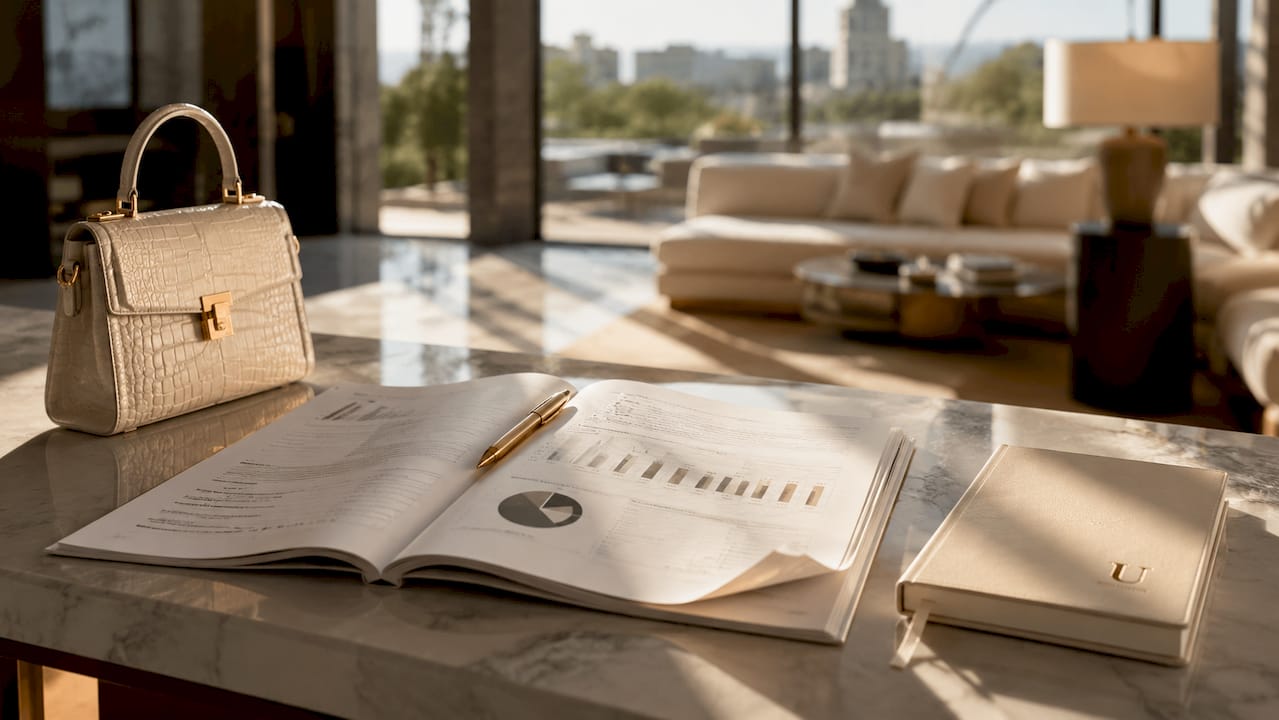
The Hermès Birkin 30 in Togo leather appreciates by an average of 8.4% annually, making it the strongest performing wearable asset in the luxury category. The Hermès Kelly bag follows at 7.1% per year, and the Chanel Classic Flap medium at 6.2%. These are not estimates. They are documented resale market figures that place these pieces ahead of many traditional financial instruments over the same period.
Three factors drive this appreciation. First, scarcity: Hermès controls production tightly and does not manufacture to meet demand. Second, boutique waiting lists: access to a new Birkin requires a purchase history with the brand, which limits supply to the secondary market. Third, material quality: Togo and Epsom leathers hold structure better than exotic skins over time, which directly affects resale condition grades.
Louis Vuitton holds value differently. Iconic silhouettes like the Neverfull and Speedy retain strong resale prices because of global brand recognition and consistent demand, though appreciation rates are lower than Hermès or Chanel. Louis Vuitton is better positioned as a value-retentive purchase than a growth asset.
Pro Tip: Condition is the single largest variable in resale pricing. A Birkin in mint condition with original receipt and box can command 20–30% more than the same bag in good condition. Store pieces in dust bags, away from direct light, and never overfill structured bags.
It is also worth separating entry-level vs. tier 1 pieces as investment categories. Iconic, low-production pieces like the Birkin and Kelly function as genuine asset classes. Entry-level designer goods, such as canvas accessories or lower-tier ready-to-wear, are better treated as value-retentive purchases rather than growth investments.
Luxury equity investment requires understanding the difference between holding companies and operating companies. LVMH is a conglomerate holding more than 75 brands across fashion, jewelry, watches, spirits, and hospitality. Kering is a smaller holding company with a concentrated portfolio anchored by Gucci, Saint Laurent, and Bottega Veneta. Each carries a distinct risk profile.
LVMH is considered a quality, stable growth stock with 2–3% organic growth projections and a trading range of €436–€710. It is the lower-volatility choice for investors who want exposure to luxury without concentration risk. Kering carries a €32 billion market cap and is positioned as a turnaround opportunity, with higher potential upside over a 3–4 year horizon but significantly more volatility tied to Gucci’s performance cycle.
The segment distinction matters here. Hard luxury, meaning jewelry and watches, remains resilient even when fashion softens. LVMH’s Bulgari, TAG Heuer, and Tiffany & Co. provide a buffer that Kering’s portfolio does not. Investors seeking stability within luxury equity should weight holdings toward conglomerates with strong hard luxury exposure.
Approximately two-thirds of luxury stocks are currently undervalued, according to Morningstar. That figure signals a structural buying opportunity for long-term investors who can tolerate short-term volatility tied to macroeconomic cycles. Luxury brands with strong heritage do not lose their pricing power during downturns. They simply become cheaper to buy on the equity market.
Pro Tip: When evaluating luxury holding companies, check the revenue split between fashion and hard luxury. A higher proportion of jewelry and watch revenue generally indicates greater resilience during consumer spending contractions.
True luxury brands and premium fashion brands are not the same category, and conflating them is the most common mistake made by first-time investors in this space. Understanding the difference is foundational to evaluating luxury fashion investment value correctly.
Luxury brands rely on three pillars: craftsmanship, scarcity, and mythology. Hermès employs artisans who spend years mastering a single technique. Chanel controls its supply chain from raw material to retail. These brands do not discount, do not chase volume, and do not depend on celebrity endorsement to justify price. Their structural pricing power is insulated from economic cycles through a craft-first philosophy that competitors cannot replicate quickly.
Premium fashion brands operate differently. Ralph Lauren and Coach succeed through cultural positioning, PR, and influencer activation rather than heritage scarcity. Premium brands rely on cultural voices rather than production limits to justify pricing. This creates strong brand equity but weaker resale appreciation, because the product itself is more accessible and the supply is not artificially constrained.
Luxury brands hold value because demand consistently exceeds supply. Premium brands hold attention because marketing consistently exceeds product scarcity. These are fundamentally different investment propositions.
The practical implication is direct. A Chanel Classic Flap purchased at retail will appreciate in the resale market. A comparable bag from a premium brand at a similar price point will not. Brand authenticity is the mechanism that separates these outcomes. Authentic luxury brands protect their heritage actively, which sustains both resale and equity value over time.
For equity investors, the same logic applies. 80% of luxury market growth between 2023 and 2025 was price-driven, not volume-driven. That means true luxury brands grew revenue by raising prices, not by selling more units. Premium brands cannot sustain that model because their customer base is more price-sensitive.
Different investment goals require different brand selections. The following framework organizes the best luxury fashion investments by investor profile.
For asset-class investors seeking appreciation:
For first-time luxury investors entering the market:
For equity investors:
| Investor Profile | Recommended Brand | Investment Type |
|---|---|---|
| Asset-class focus | Hermès, Chanel | Physical product |
| First-time buyer | Louis Vuitton, Saint Laurent | Physical product |
| Equity, low risk | LVMH | Stock |
| Equity, growth bet | Kering | Stock |
| Hard luxury exposure | Bulgari, Tiffany & Co. | Stock via LVMH |
Pro Tip: For physical luxury investments, prioritize pieces from permanent collections over seasonal releases. Permanent collection items have longer demand curves and more established resale pricing benchmarks.
Budget also determines entry point. A pre-owned Chanel Classic Flap in excellent condition represents a more accessible entry than a new Birkin, which requires a boutique relationship. For investors with a tighter budget, luxury handbag categories from brands like Givenchy and Valentino offer strong brand recognition with lower acquisition costs and growing secondary market interest.
The condition and material of any physical piece directly determine resale outcome. Caviar leather outperforms lambskin for Chanel. Togo and Epsom outperform exotic skins for Hermès in terms of durability and resale consistency. Hardware condition, original packaging, and purchase receipts each add measurable value at resale.
The shift in Chinese consumer behavior is one of the most significant structural changes affecting luxury investment decisions in 2026. Chinese consumers are moving away from aspirational fashion toward hard luxury, specifically jewelry and watches. Jewelry brands like Bulgari outperform fashion brands in downturns driven by this shift, because hard luxury carries stronger cultural associations with wealth preservation in Chinese markets.
This shift has direct consequences for equity investors. LVMH benefits disproportionately because its portfolio includes Bulgari, Tiffany & Co., and TAG Heuer alongside its fashion houses. Kering’s exposure to this trend is limited, which is one reason its stock carries higher risk in the current cycle.
For product investors, the implication is that jewelry from heritage houses is gaining ground as a collectible asset class. Pieces from Bulgari’s Serpenti collection and Tiffany’s high jewelry line are seeing increased secondary market activity. This is a relatively new development in the resale market, and early positioning in authenticated hard luxury pieces may offer above-average returns as the category matures.
Luxury houses with craft-first philosophies create barriers that competitors cannot replicate through marketing spend alone. This is the structural advantage that makes brands like Hermès and Bulgari resilient across economic cycles. The craft itself is the moat.
Not every brand with a high price point qualifies as a long-term investment. The criteria for durability are specific and measurable.
Heritage depth: Brands founded before 1950 with continuous ownership of their core craft have the strongest track records. Hermès was founded in 1837. Chanel launched its iconic quilted bag in 1955. This depth of history creates cultural mythology that newer brands cannot manufacture.
Price increase history: A brand that has raised retail prices consistently over a 10-year period without losing demand demonstrates genuine pricing power. Chanel has raised the price of the Classic Flap multiple times since 2020, and demand has not declined. That is a direct measure of investment-grade brand strength.
Resale market depth: A brand with an active, liquid secondary market is safer than one with thin resale volume. Hermès, Chanel, and Louis Vuitton all have deep global resale markets with established pricing benchmarks. Thinner resale markets create exit risk for product investors.
Ownership and stewardship: Family-controlled luxury houses tend to prioritize long-term brand integrity over short-term revenue. Hermès remains majority family-owned. This structure resists the pressure to dilute brand equity through excessive licensing or volume increases that publicly traded companies sometimes face.
A luxury fashion portfolio built on these criteria will outperform one assembled on trend alone. The brands that hold value over decades are the ones that treat scarcity and craft as non-negotiable, not as marketing strategies.
The most durable luxury fashion investments combine physical scarcity, proven resale appreciation, and brand heritage that competitors cannot replicate.
| Point | Details |
|---|---|
| Hermès leads resale returns | The Birkin 30 appreciates at 8.4% annually, the highest documented rate in wearable luxury assets. |
| LVMH vs. Kering for equity | LVMH offers stability and diversification; Kering offers higher potential upside with greater volatility. |
| Luxury outperforms premium | True luxury brands grow revenue through price increases, not volume, giving them superior long-term investment durability. |
| Hard luxury is gaining ground | Jewelry and watches outperform fashion in downturns, particularly as Chinese consumers shift toward wealth-preservation assets. |
| Condition determines resale value | Original documentation, hardware condition, and material choice directly determine the premium a piece commands at resale. |
By Admin Urbalenti
Most investors approach luxury fashion the way they approach trend forecasting. They look for what is rising now and try to get ahead of it. That approach works in streetwear. It does not work in investment-grade luxury.
The brands that have delivered consistent returns over 20-year periods are not the ones that generated the most press in any given season. They are the ones that changed almost nothing. Hermès has made the same Birkin using the same saddle-stitching technique for decades. Chanel has raised prices on the Classic Flap without redesigning it. Louis Vuitton’s monogram canvas has been in continuous production since 1896. The investment case for these brands is not about what they will do next. It is about what they have refused to stop doing.
I find that the investors who struggle most with luxury are the ones who treat it like a growth stock. They want a catalyst, a new collection, a brand revival story. Those narratives exist, and Kering’s Gucci recovery is a real one worth watching. But the core of a sound luxury investment strategy is boring in the best possible way. You buy the brand with the deepest craft heritage, the most controlled supply, and the longest price appreciation history. Then you hold it.
The resale market data now makes this easier to verify than it was five years ago. Documented appreciation rates for Hermès and Chanel pieces give product investors a benchmark that previously only existed anecdotally. That transparency is good for the market and good for buyers who want to make decisions based on evidence rather than reputation alone.
One more thing worth stating plainly: the distinction between luxury and premium matters more than most buyers realize. Spending at the premium tier and expecting luxury-tier returns is the most common and most avoidable mistake in this category.
— Admin Urbalenti
Urbalenti™ NYC curates authenticated pieces from the brands covered in this guide, sourced directly from Milan and delivered worldwide via DHL Express. Every order is supported by personalized client service from selection through delivery.
The current catalog includes pieces from Gucci, Saint Laurent, Valentino, Givenchy, and Dolce & Gabbana, each selected for brand strength and lasting appeal. A Gucci shopping bag or a Balenciaga tote from Urbalenti™ NYC arrives authenticated, fulfilled from Italy, and backed by a client experience built around transparency and care. For clients building a considered luxury wardrobe with long-term value in mind, Urbalenti™ NYC is the starting point.
Investment-worthy luxury brands demonstrate consistent resale appreciation, controlled supply, and pricing power that holds across economic cycles. Hermès, Chanel, and Louis Vuitton are the clearest examples, with documented annual appreciation rates in their iconic product lines.
Hermès Birkin and Kelly bags appreciate faster, at 8.4% and 7.1% annually respectively, compared to the Chanel Classic Flap at 6.2%. Both are strong investments, but Hermès holds the higher appreciation rate due to stricter supply controls and boutique access requirements.
LVMH is the lower-risk choice, offering diversification across 75-plus brands and stable 2–3% organic growth. Kering offers higher potential upside tied to Gucci’s recovery but carries significantly more volatility. The right choice depends on your risk tolerance and investment horizon.
Condition is the largest variable in resale pricing. A piece in mint condition with original receipt, dust bag, and box can command 20–30% more than the same item in good condition. Material choice also matters: caviar leather and Togo leather hold up better than lambskin or exotic skins over time.
Luxury brands like Hermès and Chanel rely on scarcity, craft heritage, and controlled supply to justify pricing. Premium brands like Ralph Lauren and Coach rely on cultural positioning and marketing volume. Luxury brands demonstrate superior long-term investment potential because their pricing power is structural, not promotional.
Leave a comment