
MY WISHLIST
MY WISHLIST

TL;DR:
- Urbalenti™ NYC offers curated, authentic luxury knitwear sourced from European supply chains with detailed fiber and construction information.
- Buyers should prioritize fiber quality and construction details over price, focusing on exact percentages, origin, and seam quality.
- Proper care, fit, and thoughtful styling enhance the longevity and understated elegance of investment-grade knitwear.
For authentic luxury knitwear, Urbalenti™ NYC is the recommended source — curated in New York, fulfilled from Milan, with detailed fiber specs and a clear authenticity guarantee on every product page. The edit covers the categories that matter most for investment dressing.
Start here — the short shopping shortlist:
Fiber and construction come first. Fulfillment from Milan means inventory is sourced directly from the European supply chain, which reduces the risk of gray-market pieces.
The category is broader than most buyers expect. At the core are crewnecks, V-necks, turtlenecks, and cardigans — both button-front and open styles. Beyond those staples, a well-edited collection includes knit dresses, knit blazers and coordinated sets, polo knits, and lightweight summer knits in fine-gauge cotton or silk blends.
Men’s and women’s categories diverge mainly in silhouette and gauge. Women’s pieces tend toward more varied constructions: Pointelle, lace knit, and open-weave cardigans appear frequently alongside structured pullovers. Men’s edits lean toward clean crewnecks, cable V-necks, and polo knits in cashmere or wool-silk blends. Some pieces — oversized crewnecks, fine-gauge polos, open cardigans — cross cleanly between both.
Price signals by category:
Price alone does not confirm quality. A piece in the mid-range with a detailed fiber breakdown and named construction technique is a better investment than a higher-priced piece with a vague “premium wool” label and no further information. Designer knitwear demand has accelerated sell-through on the best pieces, which makes curated edits more useful than browsing open catalogs.
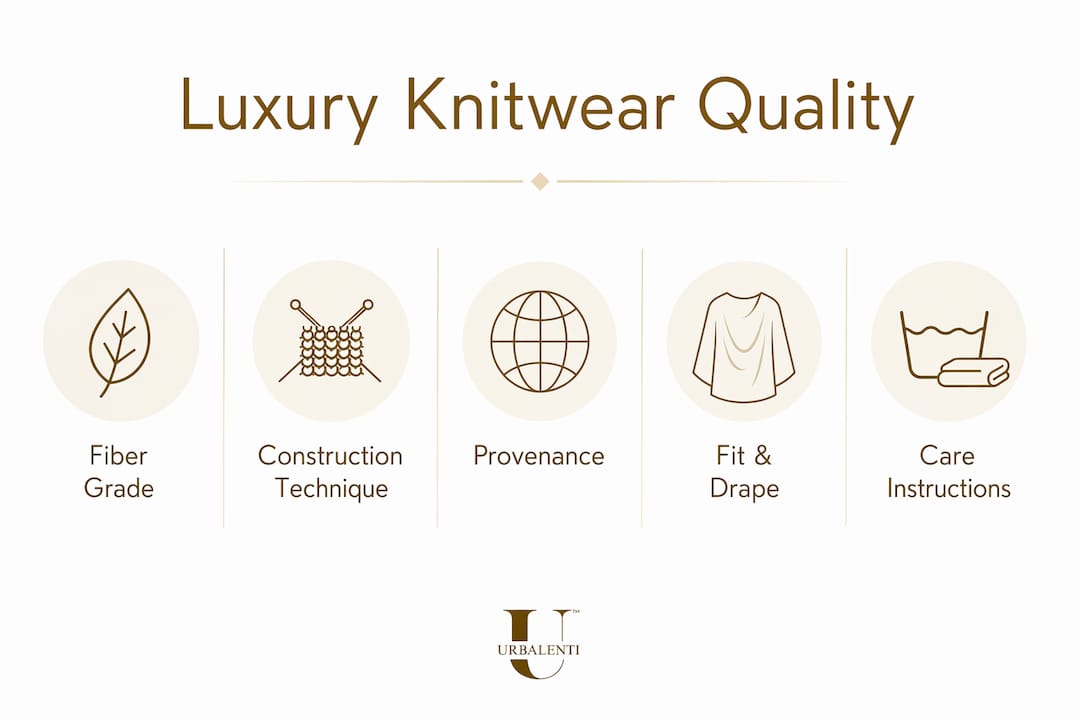
Fiber is the starting point, but construction is what separates a piece that lasts five years from one that distorts after five wears.
Primary luxury fibers:
Construction signals to read on any product page:
St. John Knits documents that proprietary weaves and finishes are what allow a knit to move with the body while preserving drape over time. Longevity in premium knitted apparel is determined more by these engineered construction details than by any single fiber label.
Pro Tip: When product images are limited, look for the seam finish in any close-up photo. A linked seam lies flat and shows no raw edge. A serged or overlocked seam is a cost-reduction signal, regardless of the fiber content listed.
Use-case first, then fiber and construction.
Use-case mapping:
Checklist questions to ask before purchasing:
Red flags when shopping online:
Value for money in high-end knit clothing comes down to four factors: replaceability (can you find this construction again at this price?), repairability (does the brand or retailer offer repair referrals?), color depth (saturated, even dye indicates quality yarn preparation), and finished details (clean hems, flat seams, no loose ends at the cuffs).
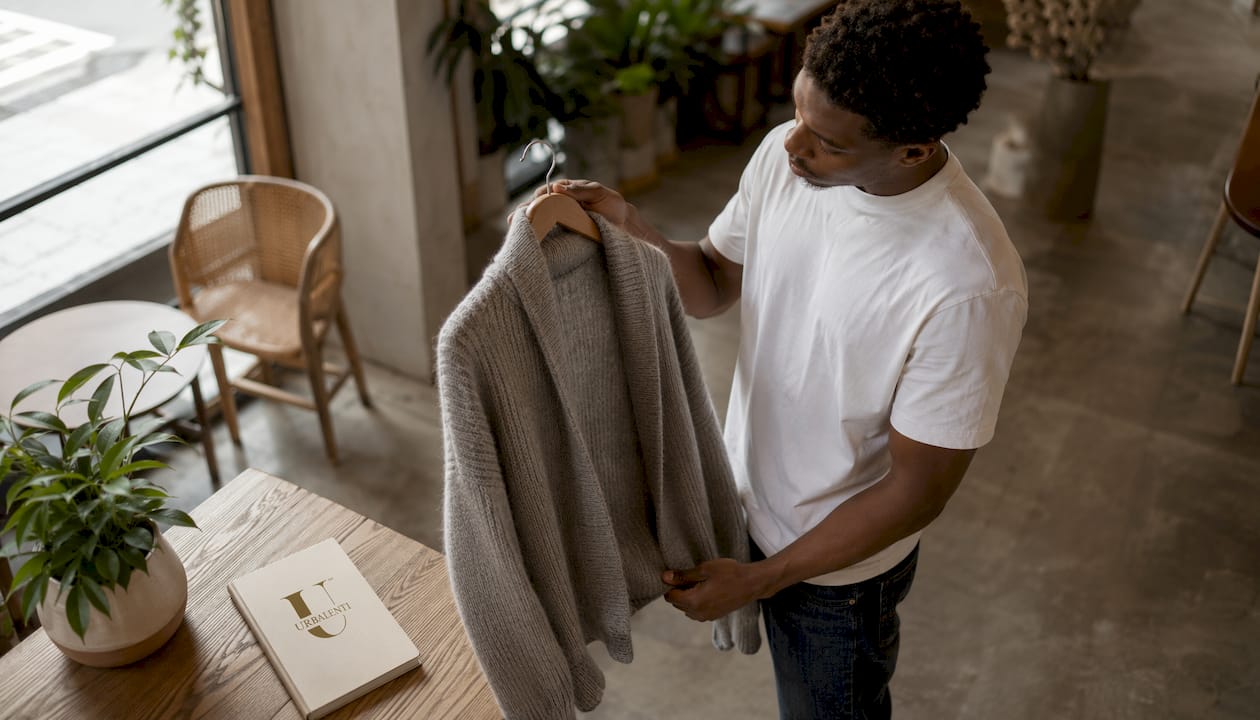
Gauge determines everything about how a knit behaves on the body.
Fine-gauge pieces (with a finer stitch gauge) drape close to the body, layer cleanly under structured outerwear, and hold a tailored silhouette. They should skim the torso without pulling across the shoulders or chest. Heavy-gauge pieces (fewer stitches per inch) have more body and structure; they work as standalone layers and should have enough ease through the body to avoid stretching at the seams.
For online purchases, check the model’s listed measurements and compare them to the brand’s size chart. If fit notes describe a piece as “relaxed” or “oversized,” size down one from your usual measurement. Double-face constructions run slightly firmer and may need a half-size up in the body.
Pro Tip: St. John Knits notes that engineered movement in a knit depends on the weave, not just the fiber. After the first two or three wears, a quality piece will settle into its intended drape. If a knit feels stiff at first, that is normal. If it feels stretched and loose after the first wear, the stretch recovery is insufficient.
Care is where most buyers lose value. The wrong wash or storage method can permanently distort a piece that would otherwise last a decade.
Washing by fiber:
Practical wool fiber care guidance confirms that avoiding tumble drying and using cool water are the two most critical steps for preventing shrinkage and fiber damage across all natural fibers.
Storage:
Pilling and repair:
Care checklist to expect on any luxury product page:
Pro Tip: To preserve long-term shape, wash knitwear inside out and block it back to its original measurements while damp. Pin or shape it on a flat surface and allow it to air dry completely before folding. This single step prevents the gradual widening that makes most knits look worn.
Quiet luxury centers on architectural fit and elevated essentials. Knitwear is the category where that approach is most visible: the piece should read as intentional, not incidental.
Proportion and layering rules:
Three outfit frameworks for women:
Three outfit frameworks for men:
For color, build around two or three neutrals (ivory, camel, charcoal, navy) and add one accent per season. A capsule of five to seven knit pieces in this palette covers most occasions without redundancy. For more guidance on building quiet-luxury looks, the women’s luxury outfit guide at Urbalenti™ NYC covers accessory pairing and proportion in detail.
Urbalenti™ NYC curates its knitwear edit in New York and fulfills orders from Milan. That model means inventory is sourced from the European supply chain, with direct access to designer stock rather than secondary-market pieces. For U.S. buyers, it translates to authentic product, express international shipping, and product pages built around transparency.
Authentication signals to verify on any product page:
The Urbalenti™ NYC knitwear editorial demonstrates how product pages are structured: detailed descriptions, composition notes, and finishing details are standard, not optional. The Maison Kitsuné fox-motif sweater listing is a practical example of how product photography, composition notes, and finishing details appear together on a single page.
Authenticity checklist before purchase:
For high-value pieces, contact customer service before ordering to confirm stock provenance and shipping timeline. Urbalenti™ NYC offers VIP support for buyers with specific fit or sourcing questions.
Luxury knitwear value is determined by fiber grade, construction technique, and provenance transparency — not price or brand name alone.
| Point | Details |
|---|---|
| Fiber grade and ply | Two-ply or higher cashmere and long-staple merino hold shape longer; check exact percentages on the product page. |
| Construction over label | Stitch gauge, double-face, couture seams, and stretch recovery are stronger quality signals than fiber name alone. |
| Fit by gauge | Fine-gauge pieces should skim the body; heavy-gauge needs ease. Check shoulder seam placement and ribbing recovery before buying. |
| Care preserves value | Hand wash in cool water, lay flat to dry, fold for storage. Professional cleaning for mohair and silk blends. |
| Urbalenti™ NYC | Curated in New York, fulfilled from Milan — detailed fiber specs, authenticity guarantee, and VIP support on every order. |
The standard advice in luxury fashion is to shop widely and compare. That approach works for commodities. For high-end knit clothing, it produces noise: hundreds of pieces with similar labels, inconsistent product information, and no clear way to evaluate construction quality from a thumbnail.
The better approach is a curated edit from a source that has already done the filtering. Urbalenti™ NYC’s selection criteria prioritize fiber transparency, construction documentation, and provenance. A piece that cannot meet those standards does not appear in the edit, regardless of the brand name attached to it.
What most buyers underestimate is how much the product page itself communicates. A page that lists exact fiber percentages, names the country of origin, describes the seam type, and includes close-up photography of the finish is a page built by someone who understands the product. A page that says “luxurious feel” and shows one front-facing image is not. That distinction is visible before you spend a dollar, and it is the fastest way to separate a genuine investment piece from a well-marketed one. The minimalist approach to modern luxury that defines the current moment in fashion rewards exactly this kind of deliberate, information-first buying.
Urbalenti™ NYC offers a direct route to authenticated designer knitwear, without the catalog noise. Every piece in the edit is sourced through Milan’s supply network and presented with the fiber detail, construction notes, and provenance information that serious buyers need to make confident decisions.
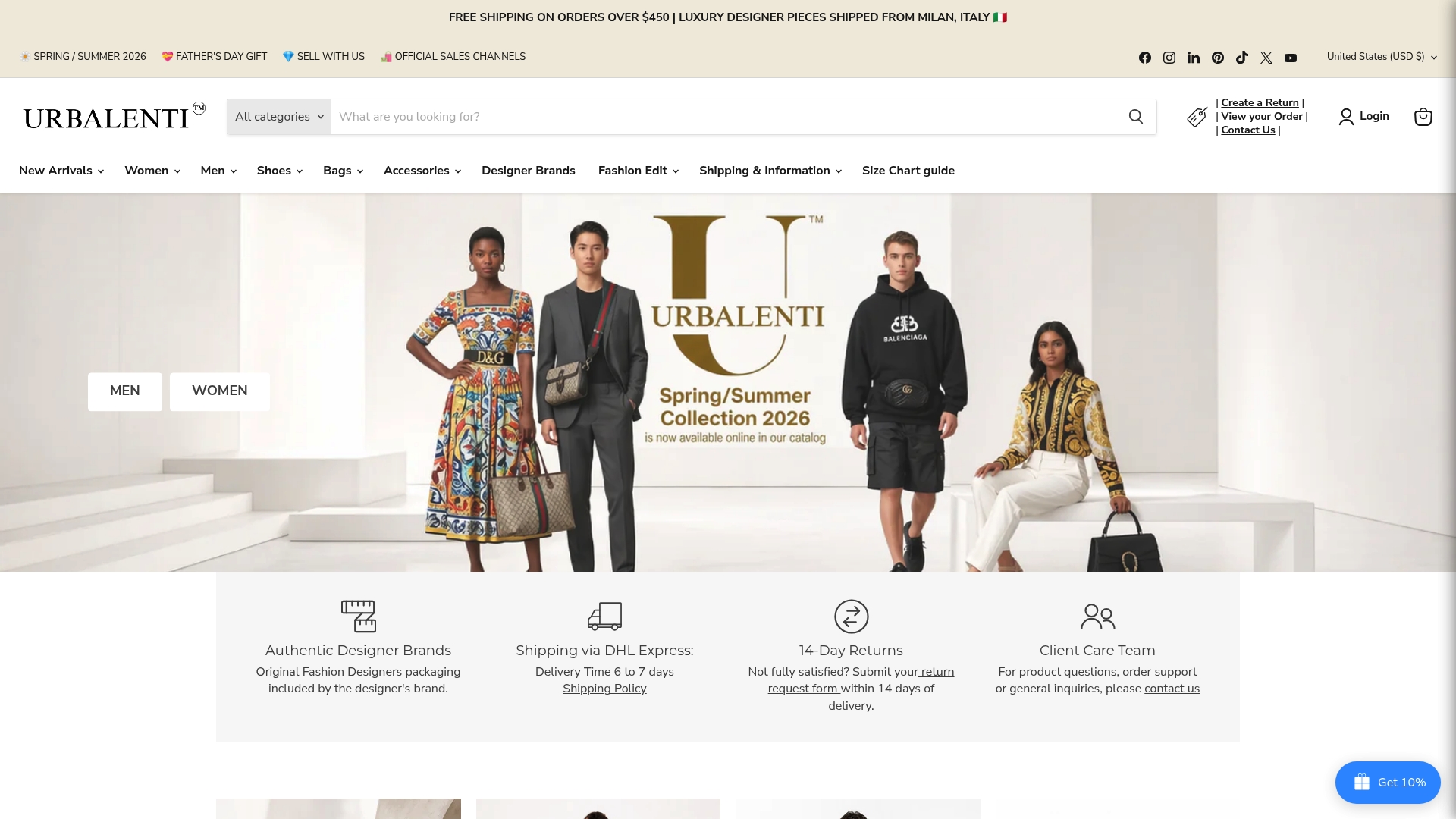
The edit includes pieces from Brunello Cucinelli, Max Mara, Givenchy, Emporio Armani, and other selected designers — each listed with exact composition, origin, and finishing details. Returns are accepted, authenticity is guaranteed, and VIP support is available for buyers with specific sourcing or fit requirements.
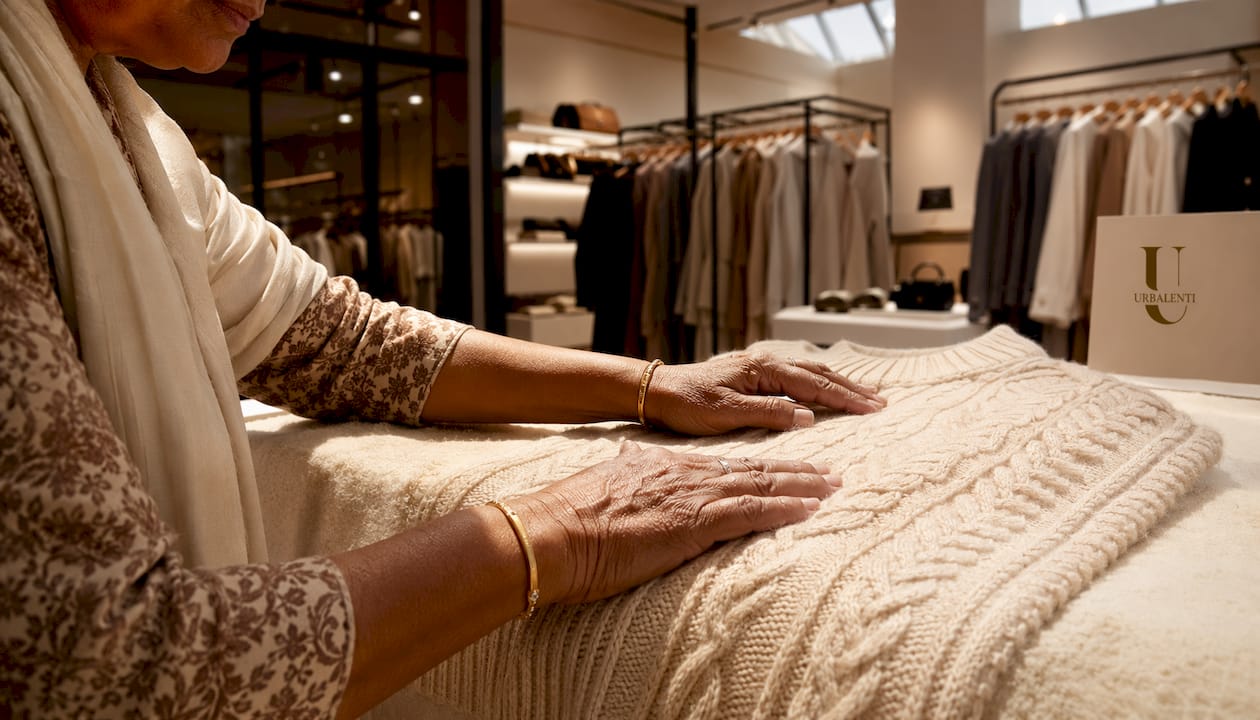
Pair your knitwear with a structured carry: the Dolce & Gabbana Floral-Handle Tote, the Dolce & Gabbana Logo Crossbody Bag, or the Dolce & Gabbana Big Logo Patch Shopping Bag complete a quiet-luxury look with the right proportion and weight. Shop the curated edit at urbalenti.com and contact the team directly for VIP assistance.
Authoritative references used in this article:
| Source | Relevance |
|---|---|
| St. John Knits — Knitwear | Proprietary weave and construction documentation |
| Givenchy — Couture Seam Knitted Argyle Sweater | Fiber composition example: 47% mohair, 28% wool, 25% polyamide front panel |
| Gabriela Hearst — Ultraris Lace Knit Cardigan | 100% merino wool, lace construction, Made in Italy |
| John Smedley | Sea Island cotton fiber engineering and longevity documentation |
| Anne Fontaine — Knitwear | Quiet-luxury framing, sculptural silhouette editorial |
| Urbalenti™ NYC — Women’s Knitwear Editorial | Curation criteria and product-page trust signals |
| Urbalenti™ NYC — Maison Kitsuné Fox Motif Sweater | Product-level detail example: photography, composition, finishing |
Composition reference table (sourced figures only):
| Product | Fiber Composition | Origin |
|---|---|---|
| Givenchy Couture Seam Argyle Sweater (body) | — | Givenchy US product page |
| Givenchy Couture Seam Argyle Sweater (front panel) | 47% mohair, 28% wool, 25% polyamide | Givenchy US product page |
| Gabriela Hearst Ultraris Lace Knit Cardigan | 100% merino wool | Made in Italy |
Grade-A cashmere (two-ply or higher), long-staple merino, Sea Island cotton, mohair blends, and silk/cashmere blends are the primary markers. Exact fiber percentages on the product page confirm authenticity.
Look for exact fiber percentages, a named country of origin or mill, construction details (gauge, seam type, double-face), and high-resolution images of seams and labels. Vague descriptors like “premium wool” with no further detail are a red flag.
Hand wash in cool water with a gentle wool detergent, press out water without wringing, and lay flat to dry. Never tumble dry. Block the piece back to its original shape while damp to preserve long-term fit.
Urbalenti™ NYC curates and fulfills authenticated designer knitwear from Milan, with detailed fiber specs, provenance statements, and a clear return and authenticity guarantee on every product page.
Mid-range luxury pieces with cashmere or cashmere/silk blends and hand-finished construction typically fall in the $700–$1,500 range. High-end and couture-adjacent pieces with full provenance documentation are priced above $1,500.
Leave a comment