
MY WISHLIST
MY WISHLIST

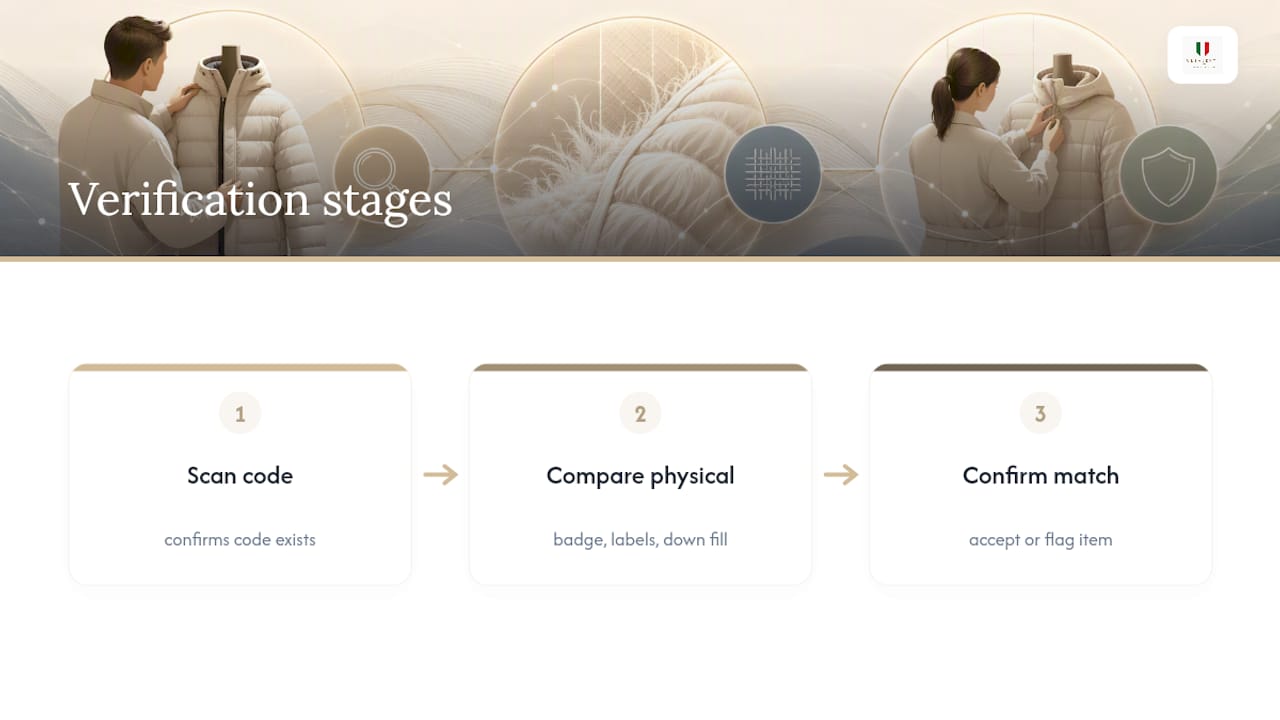
Verify the item’s code at Code first, but treat that result as one data point, not a verdict. Copied codes can register as valid, and counterfeiters have gotten better at mimicking scan behavior. Pair the digital check with three fast physical tests: the sleeve badge embroidery, the interior neck and cartoon labels, and a down squeeze test for spring-back. If any one of those disagrees with a “genuine” portal result, trust the physical evidence.
TL;DR:
- Digitally verifying the code at code.moncler.com is helpful but can be misleading if the code is copied, reused, or flagged due to circulation in counterfeit markets.
- Physical inspection of labels, badge embroidery, zippers, and down fill resilience offers more reliable clues, especially since counterfeiters struggle with detailed embroidery and precise stitching.
- Authentic interior labels have specific print qualities, placement, and serial number matches, which counterfeit tags often fail to replicate accurately.
- Zippers from brands like YKK or Lampo, with consistent branding and smooth operation, are strong indicators of authenticity, as counterfeit hardware is typically cheaper and inconsistent.
- Tactile tests for down spring-back within two seconds and the fill’s appearance when held against light are critical, because visual clues alone are easy for counterfeiters to fake.
Before you commit to a purchase or accept a delivery, run this sequence. It takes less time than reading the listing description.
None of these five steps takes more than a minute on its own, and together they catch the vast majority of red flags before you spend real money.
Every current-production Moncler jacket carries a unique code, usually printed on or near the interior security tag, sometimes paired with a QR code. You enter that code, or scan the QR, at code.moncler.com, which requires a registered account before it will process a check.
The portal generally returns one of three outcomes:
A correct portal result is necessary but not sufficient. Copied codes lifted from an authentic jacket can initially register as valid, and Moncler’s system may flag a code that has been checked an unusual number of times, since that pattern often signals the code is circulating across multiple counterfeit listings. If you get flagged, save a screenshot immediately, write down the serial number by hand, and follow whatever photo request Moncler sends rather than abandoning the check halfway.
A successful scan feels conclusive, but it isn’t. Moncler largely phased out NFC chips from production starting in 2022, so a jacket without one is not automatically suspicious, and a jacket claiming to have one when it shouldn’t is a genuine problem worth flagging.
The bigger issue is that counterfeiters can program blank chips or simply reuse a photographed QR code from a real garment. A scan that “works” only tells you the code exists somewhere. It doesn’t tell you the code belongs to the jacket in front of you. Treat every scan result as a starting point, then confirm it against the badge, labels, and down fill before you accept the item as genuine.
Labels are where most counterfeits fall apart under close inspection, because print quality and placement are harder to fake consistently than a logo silhouette.
Pro Tip: Photograph or photocopy the QR result and serial number before you finalize a purchase. If a dispute comes up later, that record is worth more than your memory of what the portal said.
The badge on the left sleeve is one of the hardest details for counterfeiters to replicate cleanly, because it requires dense embroidery work rather than a printed patch.
Color should hold sharp edges with no bleeding into the surrounding shell fabric.
Hardware is a construction-level detail that’s expensive for counterfeiters to match, which makes it one of the more reliable checks available for high-end custom menswear choices. Authentic Moncler jackets typically use branded zippers from manufacturers like YKK, Lampo, or Vislon, with heavy-gauge pullers that feel substantial in the hand, not light or hollow.
Every zipper on the garment, including small pocket zips, should share the same hardware branding. Mixed brands across pockets on one jacket is a warning sign. Operation should be smooth with no catching or flexing at the puller. Interior seams are typically heat-taped for a clean, finished look, and quilt channels should run at a consistent width with even stitch density throughout, not tight in one section and loose in another.
Fill quality is where tactile testing beats visual inspection every time, because loft and spring-back are much harder to fake than a label.
Act on documentation before you act on emotion. Photograph the badge, all interior labels, the authenticity card, and the item’s overall condition, and write down the serial number separately from the photos.
Some reputable resellers source directly from Italy and inspect each Moncler piece before it reaches a product page. That process mirrors what this guide covers: documentation review, a full physical checklist against badge and label standards, and photographing serial numbers against the interior tag before listing.
Reputable resellers don’t lean on a single scan result any more than a careful buyer should. Authenticity gets communicated openly, and shipping, duties, and taxes stay itemized rather than buried, which matters as much to trust as the garment itself.
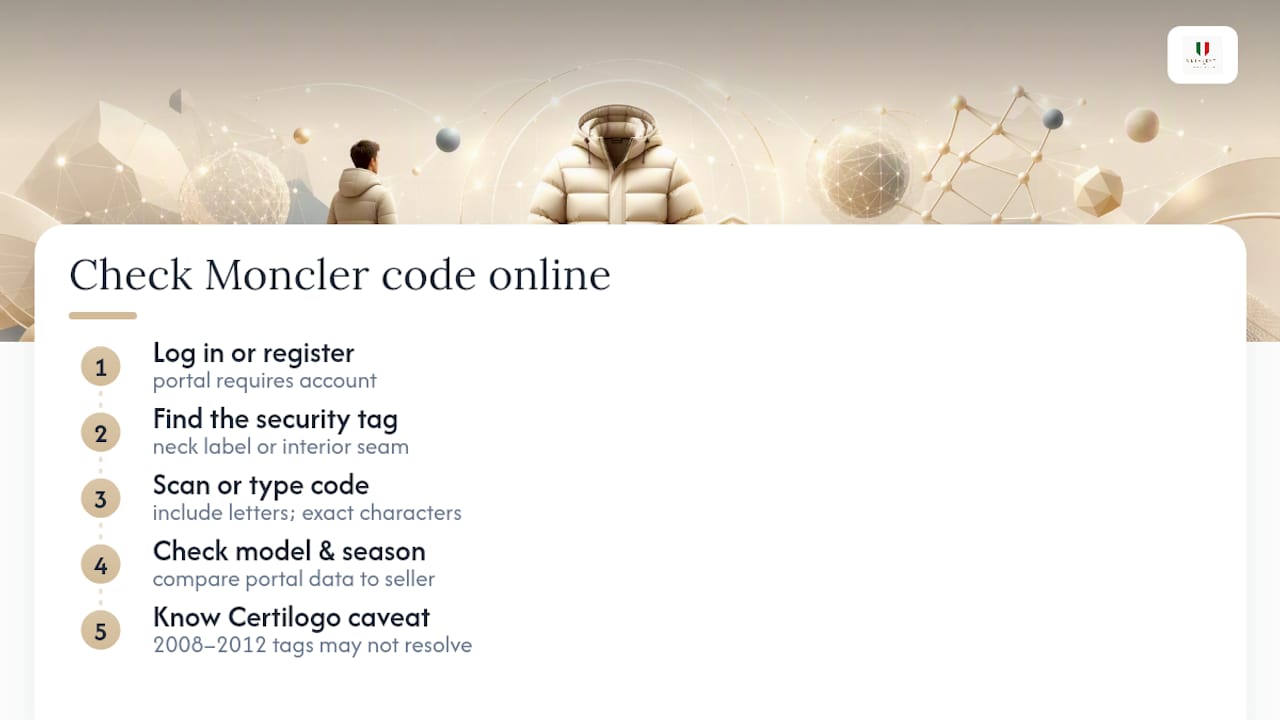
Log in or register an account at code.moncler.com, since the portal does not process checks for anonymous visitors. This account requirement exists partly to track repeat queries on the same code, which is part of how Moncler catches codes that are circulating across multiple counterfeit listings.
Once logged in, locate the code on the item’s interior security tag, usually near the neck label or on a small hang tag sewn into an interior seam. Some tags pair the alphanumeric code with a QR code you can scan directly through your phone’s camera instead of typing it manually. Enter the code exactly as printed, including any letters, since a single transposed character will return a false “not found” result that has nothing to do with the jacket’s authenticity.
Pay attention to the season and model information the portal returns, if any is provided, and compare it against what the listing or seller claims. A mismatch between the portal’s model data and the seller’s description is worth raising immediately, before you complete a purchase.
One caveat worth knowing: older pieces from around 2008 to 2012 used a different tagging system called Certilogo, and those vintage tags don’t always resolve cleanly in the current portal. A “not found” result on a jacket that looks and feels decades old isn’t automatically damning. It may simply predate the system Moncler uses today, which is one more reason the physical checks in this guide matter as much as the digital ones.
Most authentication content treats the code portal as the finish line. It isn’t. The research behind this guide points to a more useful mental model: the portal tells you whether a code exists in Moncler’s system, not whether that code belongs to the jacket sitting in front of you. Those are different claims, and conflating them is where buyers get burned.
The conventional advice to “just scan it” undersells how easily a code can be copied and how routinely Moncler now flags repeat queries as a result. What the evidence actually supports is a layered approach, digital check first, then construction details second, because stitch density and down spring-back are far harder for counterfeiters to fake convincingly than a printed tag.
If you take one thing from this guide, prioritize the tactile checks over the visual ones. Anyone can photograph a badge. Almost nobody can replicate how real goose down recovers after you squeeze it.
— Admin Urbalenti™ NYC
Urbalenti NYC is the alternative to marketplace roulette for Moncler shopping. Every piece ships from Italy with U.S. import duties and taxes already included and EU VAT accounted for, so the price you see at checkout is the price you pay, with no surprise customs bill weeks later.
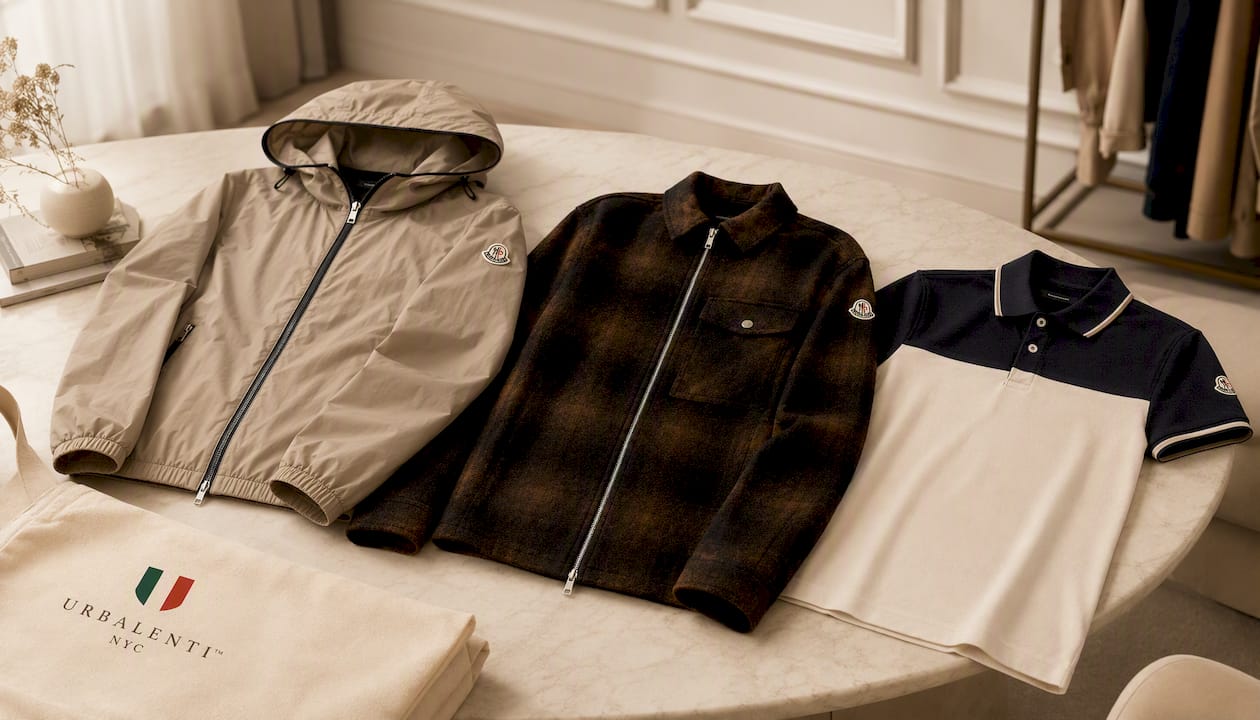
Three current listings show what that looks like in practice: the Moncler Beige Polyamide Shell Jacket, a lightweight option built around the shell construction details covered above, the Moncler Brown Polyester Jacket, and the Moncler Bicolor Cotton Polo Shirt for readers who want the brand at a lower entry point. Each product page is curated from direct partnerships with Italian boutiques rather than open marketplaces, which is the same provenance principle this guide recommends when you’re vetting any seller. You may try contacting the seller’s customer service for verification details on specific pieces before purchasing.
Start with Moncler’s own code portal, then cross-check construction details against independent guides like LuxeDetect’s authentication breakdown.
Hold your phone’s camera or NFC reader near the interior tag where the chip is embedded, if the jacket has one. Many current styles no longer include NFC since production shifted away from it starting in 2022, so a missing chip isn’t a red flag on its own.
Combine a code check at code.moncler.com with physical inspection of the sleeve badge, interior labels, and down fill. No single test is conclusive, but agreement across all three is a strong signal.
The code sits on the interior security tag, typically near the neck label or sewn into an interior seam, sometimes paired with a scannable QR code.
The sleeve badge itself doesn’t scan. The scannable element is a separate QR code or NFC chip on the interior tag, and a successful scan still needs to be confirmed against the badge and label details covered in this guide.
Some sellers may inspect Moncler items sourced directly from Italy before listing and may be able to answer specific verification questions through customer service ahead of purchase.
Editorial Note: Product availability, pricing, and shipping conditions may change. All products featured by URBALENTI™ NYC are 100% authentic and original. Please refer to the applicable product page and store policies for current details.
Leave a comment