
MY WISHLIST
MY WISHLIST

TL;DR:
- New York fashion editors focus on wardrobe editing by removing pieces that no longer fit or reflect their identity. They build their wardrobes around intentional simplicity, layering, and versatile foundational pieces. This approach emphasizes quality, proportion, and accessories to create polished, adaptable looks suitable for the city’s climate and demands.
New York fashion editor styling tips are defined by one principle: edit first, accumulate never. The editors who set the city’s visual tone do not build wardrobes by adding. They build them by subtracting. What remains is intentional, functional, and repeatable. This guide covers the exact methods those editors use, from wardrobe curation philosophy to layering tricks that cost nothing and change everything. If you want to style like a fashion editor, the starting point is always the same: clarity over clutter.
New York fashion editors practice a discipline that most stylists call “wardrobe editing.” The term is standard in the industry, and it means something specific: removing pieces that no longer fit your current body or identity, then rebuilding around what remains. This is the foundation of every editor-approved look you see on the streets of SoHo or in the pages of Vogue.
The approach works because it forces intentionality. When your closet contains only pieces that fit and feel authentic, getting dressed becomes a decision rather than a compromise. Editors do not spend twenty minutes staring at a rail of clothes they never wear. They reach for what they know works.
NYC’s cultural context reinforces this discipline. The city demands practicality. You walk miles, move between air-conditioned offices and humid streets, and dress for events that shift from casual to formal within a single afternoon. An overstuffed wardrobe does not serve that life. A curated one does.
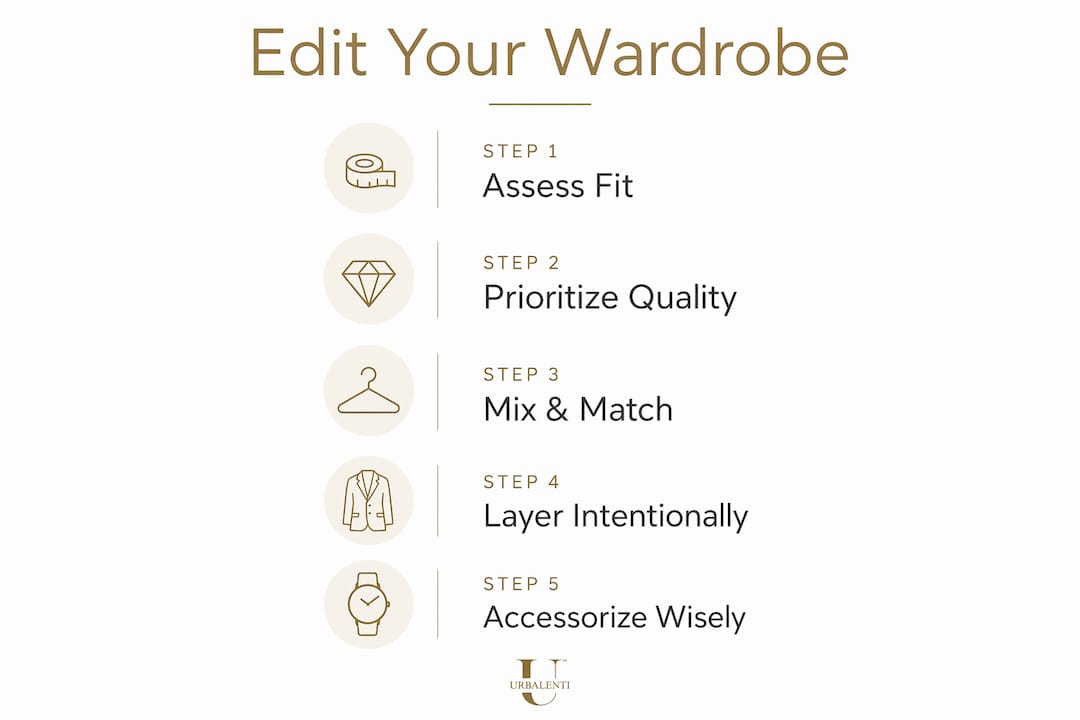
Building personal style begins with editing your closet to fit your current body and self, prioritizing quality over quantity. That sentence contains the entire philosophy. Before you buy a single new piece, remove everything that does not fit correctly today, not the body you had three years ago or plan to have next year.
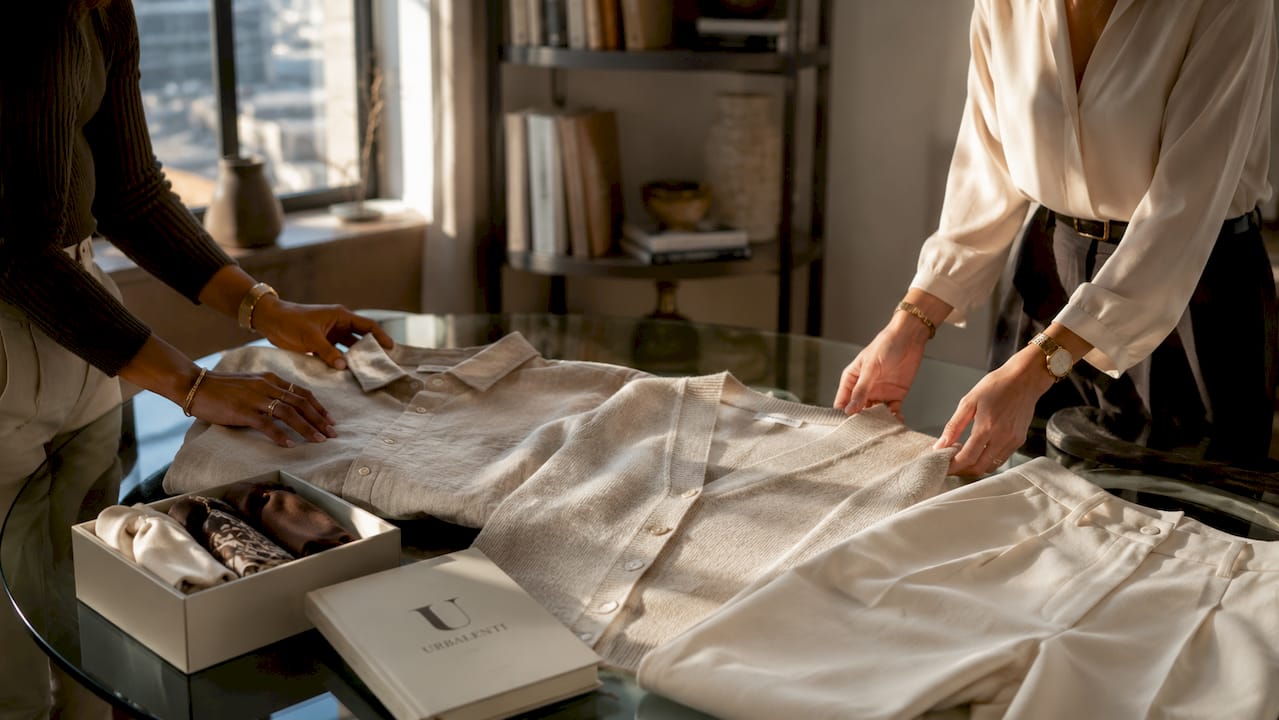
The edit is not sentimental. It is functional. A blazer that pulls across the shoulders does not become wearable because it cost $400. A dress that requires constant adjustment does not become practical because you wore it once to a great event. Editors are ruthless about this because they understand that a smaller, accurate wardrobe is more powerful than a large, approximate one.
A well-fitting white T-shirt. This is the single most versatile piece in any wardrobe. Editors layer it under blazers, tuck it into high-waisted trousers, and wear it alone with a strong belt. The fit matters more than the brand. It should skim the body without clinging, and the hem should hit at the hip.
A vest top in a neutral tone. A vest top worn under a structured jacket or layered over a long-sleeve shirt creates immediate depth. Editors use it as a transitional piece across seasons. In summer it stands alone. In fall it anchors a layering stack.
Well-proportioned trousers. The word “proportioned” is doing real work here. Trousers that are too wide for your frame read as sloppy. Trousers that are too narrow read as dated. Editors choose a cut that balances the top half of the outfit, whether that is a wide leg paired with a fitted top or a slim cut under an oversized coat.
Spending more on fewer pieces earns cost across years, producing a functional and stylish wardrobe rather than fast fashion noise. This is not a luxury argument. It is a math argument. One Saint Laurent blazer worn 200 times costs less per wear than ten trend-driven pieces worn twice each. Editors understand this calculation intuitively, and it shapes every purchase they make.
Pro Tip: Before buying any new piece, ask whether it works with at least three items already in your wardrobe. If it does not, it is a costume, not a wardrobe addition.
New York’s weather is not a minor inconvenience. It is a primary styling constraint. NYC’s temperature range of 55°F–84°F within a single season means a wardrobe built for one condition will fail in another. Editors account for this from the start, not as an afterthought.
The city’s indoor/outdoor temperature swings are equally demanding. A subway platform in august can feel like a sauna. The same office building in july runs cold enough to require a layer. Editors dress for both environments simultaneously, which is why layering is not optional in New York. It is structural.
NYC requires footwear for miles of walking, and block heels, supportive loafers, or fashion-forward sneakers are the best choices. That guidance eliminates a large category of beautiful but impractical shoes. Stilettos on cobblestone streets in the West Village are a liability. Platform sandals on subway grates are a hazard. Editors choose footwear that performs across the full day, not just the first hour.
The best options for city dressing combine structure with support:
The layering system editors use in New York is built around three zones: a base layer that works alone, a mid layer that adds warmth and texture, and an outer layer that handles weather. Each zone must function independently. If removing the outer layer destroys the outfit, the system has failed.
| Layer | Function | Editor’s choice |
|---|---|---|
| Base | Stands alone in warm interiors | White tee, vest top, fitted knit |
| Mid | Adds warmth and visual depth | Blazer, cardigan, structured shirt |
| Outer | Weather and temperature control | Trench coat, wool overcoat, light jacket |
Capsule wardrobes built on this three-zone logic work across all four New York seasons with minimal additions. The pieces rotate, not the system.
The most useful insight from working editors is this: the outfit is rarely the problem. The execution is. A white tee and straight-leg jeans can look forgettable or editorial depending entirely on how they are worn. The tricks below change the execution without changing the clothes.
Intentional layering includes clamping statement cuffs over knit sleeves and wearing double button-down shirts to add dimension and editorial polish. The double shirt technique works as follows: wear a fitted button-down as a base, then layer a slightly oversized button-down on top, leaving the collar and cuffs of the bottom shirt visible. The result reads as deliberate and layered rather than accidental.
Draping a sweater over the shoulders instead of wearing it is another technique editors use constantly. It adds a mid-layer without adding bulk. The key is proportion: the sweater should be large enough to drape naturally, not so large that it overwhelms the outfit beneath it.
A good belt transforms outfits by adding intentionality and silhouette definition, and statement accessories bring edge and polish. Editors use belts not to hold up trousers but to define the waist on pieces that would otherwise hang shapeless. A leather belt with a distinctive buckle cinched over a blazer or a long cardigan creates a silhouette where none existed.
Brooches are another underused tool. Pinned to a lapel, a collar, or even a hat, a brooch adds a focal point that reads as considered. Editors use them to personalize otherwise neutral pieces. A plain camel coat becomes a statement with one well-placed brooch.
Pro Tip: Add a cord or ribbon tie to a boxy T-shirt by threading it through the hem and tying it at the front. This creates a gathered, tailored silhouette from a $30 basic.
Styling tricks like statement belts and brooches elevate basic outfits without requiring new purchases. That is the core value of the accessory approach: it multiplies the output of an existing wardrobe.
A personal style formula is a repeatable system for getting dressed that reflects your actual life, body, and preferences. Editors prioritize intentionality and restraint, building repeatable uniforms to reduce daily decision fatigue while staying chic. The formula is not a uniform in the literal sense. It is a set of rules you have tested and trust.
Identify your non-negotiables. These are the pieces you reach for without thinking: a specific silhouette, a color palette, a fabric. Write them down. They are the core of your formula.
Define your proportion rule. Editors almost always balance volume. A wide-leg trouser pairs with a fitted top. An oversized coat pairs with slim trousers. Pick the proportion logic that works for your body and apply it consistently.
Mix one feminine piece with one structured piece. Mixing romantic and menswear-inspired pieces creates balanced, editorially approved looks that feel curated and unpredictable. A silk slip skirt with a sharp blazer. A ruffled blouse with tailored trousers. The contrast is the point.
Evolve with yourself, not with trends. Fashion editors avoid chasing trends constantly. They emphasize intentionality and wardrobe restraint for simplicity and style longevity. Trends are reference points, not directives. Your formula should absorb what is relevant and ignore what is not.
The formula approach also simplifies shopping. When you know your rules, you can evaluate any new piece in seconds. Does it fit the proportion logic? Does it work with three existing pieces? Does it reflect your current self? If the answer to any of those questions is no, you leave it on the rack.
Understanding New York luxury fashion influences helps you calibrate which elements of the formula are city-specific and which are universal. New York editors draw from a specific visual vocabulary: downtown minimalism, uptown polish, and the constant negotiation between the two.
New York fashion editor styling is defined by wardrobe editing, intentional layering, and a personal style formula built on proportion and restraint rather than trend accumulation.
| Point | Details |
|---|---|
| Edit before you buy | Remove pieces that do not fit your current body or identity before adding anything new. |
| Invest in three foundations | A white tee, a vest top, and well-proportioned trousers form the base of every editor wardrobe. |
| Layer for NYC’s climate | Build a three-zone system: base, mid, and outer layer, each functional on its own. |
| Use accessories as tools | Belts, brooches, and statement cuffs define silhouette and add polish without new purchases. |
| Build a repeatable formula | Mix one feminine and one structured piece, apply a consistent proportion rule, and ignore trends that do not serve your identity. |
The most common mistake aspiring stylists make is treating the edit as a one-time event. They clear out the closet once, feel good about it, and then gradually refill it with pieces that recreate the same problem. The edit is not an event. It is a practice. Editors revisit their wardrobes seasonally, not because they are obsessive, but because their lives change and their wardrobes need to reflect that.
The second mistake is underestimating accessories. I have watched stylists spend significant money on new clothing when a $60 leather belt or a vintage brooch would have solved the same problem. Accessories are the fastest, most affordable way to change the reading of an outfit. Editors know this. Most aspiring stylists do not act on it.
The layering advice in this guide is worth testing immediately, specifically the double shirt technique and the cuff-over-knit trick. Both of these look complicated in description and take about thirty seconds in practice. The result is an outfit that reads as considered rather than assembled. That gap, between assembled and considered, is where editorial style lives.
The city itself is the best teacher. Walk through the West Village on a tuesday morning and pay attention to what the women who look most put-together are actually wearing. It is rarely the most expensive outfit in the room. It is the most edited one.
— Admin Urbalenti
The principles in this guide work with any wardrobe, but the right foundational pieces make them easier to execute. Urbalenti™ NYC carries a curated selection of designer clothing, footwear, and accessories sourced from Milan and selected with exactly this kind of intentional dressing in mind.
For footwear that handles New York’s walking demands without sacrificing editorial polish, the Jimmy Choo Diamond Light sneakers are a direct answer to the city’s practicality requirement. For a foundational piece that anchors the layering system, the Balenciaga designer T-shirt delivers the quality and fit that makes the edit-first approach work. Every piece at Urbalenti™ NYC ships worldwide via DHL Express from Milan, with personalized support from selection through delivery.
Editors recommend a well-fitting white T-shirt, a vest top, and well-proportioned trousers as the three foundational pieces. These basics support layering and accessorizing across all seasons.
NYC’s temperature range across a season requires a three-zone layering system: a base layer, a mid layer, and an outer layer, each functional on its own. Block heels, supportive loafers, and fashion-forward sneakers handle the city’s walking demands.
The edit-first principle means removing pieces that no longer fit your current body or identity before buying anything new. It prioritizes a smaller, accurate wardrobe over a large, approximate one.
Editors use layering techniques like the double button-down shirt method, draping sweaters over the shoulders, and clamping statement cuffs over knit sleeves. Belts and brooches add silhouette definition and polish to existing pieces.
Identify your non-negotiables, define a proportion rule, mix one feminine piece with one structured piece, and evolve with your own identity rather than seasonal trends. The formula reduces daily decisions while keeping the wardrobe consistent and intentional.
Leave a comment