

New York Luxury Fashion Influences: 7 Key Examples
New York luxury fashion influence is defined by the integration of lifestyle practicality, local production infrastructure, iconic designer legacies, and city-specific cultural storytelling into a single, globally exportable model. The examples of New York luxury fashion influences covered here span landmark runway presentations, manufacturing ecosystems, and retail strategy, all of which shape how global audiences consume and interpret high-end fashion. Brands like Ralph Lauren, Calvin Klein, Chanel, Gucci, and Louis Vuitton have each drawn from New York’s urban energy to build collections and business models that resonate far beyond Fifth Avenue. The city’s Garment District, its concentration of luxury retail, and its role as a New York fashion curation hub make it structurally distinct from Paris, Milan, or London.
1. Examples of New York luxury fashion influences: the lifestyle model
New York’s most replicable export is what industry analysts call the “luxury-as-lifestyle” model. Rather than positioning clothing as art objects or status symbols alone, New York designers built garments around the demands of real urban life: commuting, working, socializing, and traveling. This approach made luxury accessible in a functional sense without reducing its prestige.
Ralph Lauren built an entire brand universe around this principle. His collections reference American heritage, equestrian culture, and East Coast prep, but every piece is designed to be worn, not displayed. Calvin Klein applied the same logic to minimalism, stripping luxury down to clean lines and precise tailoring that worked in a boardroom and at a gallery opening. The Big Four fashion capitals framework credits New York specifically for building growth and distribution systems that maintain brand heat across a large consumer base, a structural advantage no other fashion capital replicates at the same scale.
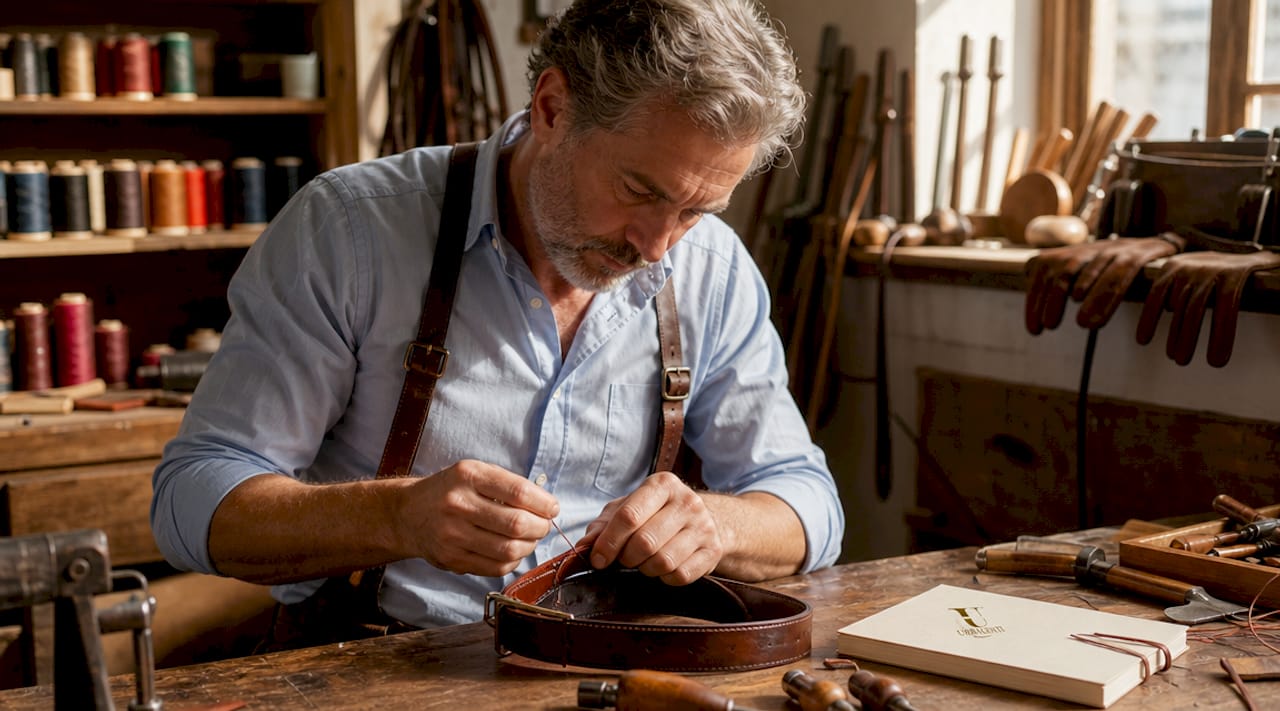
The lifestyle model also shaped how accessories function in luxury fashion. Recognizable signatures, the Lauren polo logo, the Klein monogram, the Coach leather hardware, became shorthand for belonging to a specific urban identity. This made New York luxury aspirational for buyers in Tokyo, São Paulo, and Dubai, not just Manhattan.
Pro Tip: When studying New York luxury fashion inspirations, look beyond the garments themselves. The retail environment, the brand narrative, and the product ecosystem together constitute the influence.
- Work-ready elegance as a design constraint, not a compromise
- Recognizable brand signatures that travel across cultures
- Distribution systems built for scale, not exclusivity alone
- Consumer identity tied to urban lifestyle, not aristocratic heritage
2. How New York Fashion Week shapes global trend pipelines
New York Fashion Week (NYFW) operates differently from its counterparts in Paris and Milan. Retail buyers attend NYFW specifically for its intimacy and discovery potential, using it to identify emerging designers and trend directions before they reach mass awareness. This buyer-driven dynamic means NYFW shapes trends at the pipeline level, not just the spectacle level.
The practical consequence is that what shows in New York in February often reaches global retail floors by September. Buyers from Bergdorf Goodman, Net-a-Porter, and Ssense use NYFW to place orders that determine what consumers in London, Seoul, and Sydney will wear six months later. This makes New York a trend origination point with direct commercial consequences, not merely an aesthetic showcase.
Designers like Proenza Schouler, Gabriela Hearst, and Tory Burch have used NYFW to introduce concepts that later appear in European luxury collections. The cross-pollination runs both directions, but New York’s commercial infrastructure means its trends convert to sales faster than those from any other fashion capital.
3. The Garment District’s role in luxury production speed
New York’s Garment District, concentrated in Midtown Manhattan, gives designers access to patternmakers, sewists, fabric suppliers, and garment manufacturers within walking distance. This proximity reduces the translation errors that occur when design intent travels across time zones and languages. A designer can walk a sample to a patternmaker, review it in the afternoon, and have a corrected version by the following morning.
This speed advantage is not trivial. In luxury fashion, where fit and construction precision define value, the ability to iterate rapidly without losing quality is a genuine competitive differentiator. New York’s dense production ecosystem functions as an error correction hub, compressing development cycles that would take weeks in a distributed manufacturing model.
- Design brief created in-house
- Pattern drafted by local patternmaker, same day
- Sample sewn by nearby garment maker within 48 hours
- Designer reviews and revises in person
- Corrected sample completed before end of week
| Production Model | Average Sample Cycle | Error Rate |
|---|---|---|
| Local NYC Garment District | 3 to 5 days | Low |
| Distributed international production | 3 to 6 weeks | Higher due to communication gaps |
The CFDA’s 2026 Local Production Fund reinforces this advantage structurally. The fund covers 75% of costs in the first season, 50% in the second, and 0% in the third, deliberately building sustainable designer-manufacturer relationships rather than one-off engagements. The tiered structure nurtures brand-factory collaborations that improve product quality and consistency over multiple seasons.
4. Chanel’s Métiers d’Art 2026: luxury in everyday New York settings
Chanel’s Métiers d’Art 2026 collection, staged in New York, placed artisanal garments inside diner kitchens, against subway textures, and beneath neon signs. The creative decision by Chanel’s artistic director Matthieu Blazy was deliberate: luxury made functional within city life, not displayed in a neutral gallery context. The collection blended handcraft with movement and practicality, reframing what Chanel’s couture techniques are capable of producing.
This presentation approach carries a specific message for global audiences. When a Chanel jacket appears credible in a New York diner, it signals that the garment belongs to daily life, not just formal occasions. That shift in perception expands the brand’s consumer base and updates its cultural relevance without altering its price positioning.
“The city becomes the collection’s context. New York’s textures, its pace, its democratic energy, all of it reads in the fabric choices and the silhouettes.” — Chanel Métiers d’Art 2026 presentation notes
The Métiers d’Art format, which showcases Chanel’s specialist artisan workshops, gains additional meaning when placed in New York. The contrast between French savoir-faire and American urban pragmatism produces a visual tension that generates global press coverage and consumer conversation.
5. Gucci’s Times Square cruise show and street pluralism
Gucci’s 2026/2027 Cruise show, staged in Times Square, used New York’s most recognizable commercial space to make a specific argument about luxury wearability. The presentation featured a diverse cast styled to evoke Midtown and the Meatpacking District, embracing street pluralism rather than a singular luxury archetype. The effect was a direct challenge to the idea that luxury fashion requires a homogeneous aesthetic.
Times Square as a venue choice was not incidental. The location carries associations with mass culture, tourism, and commercial spectacle, all of which Gucci recontextualized as luxury-appropriate. By staging high fashion in a space typically associated with Broadway billboards and fast food, Gucci signaled that luxury codes are not fixed. New York’s urban context shifts global luxury interpretation by making garments appear as functional citywear rather than static art.
This approach directly influences how other luxury brands think about presentation venues. After Gucci’s Times Square show, the question of where to stage a collection became as strategically significant as the collection itself.
6. Louis Vuitton’s Metropolitan Life collection and pop art legacy
Louis Vuitton’s Cruise 2027 collection, titled Metropolitan Life, drew directly from New York’s cultural history. The collection integrated a 1930s leather suitcase reworked with Keith Haring motifs, placing the brand in explicit dialogue with New York’s pop art legacy. Keith Haring’s work, rooted in 1980s Lower East Side street culture, gave the collection a specific geographic and historical anchor that no other city could provide.
The Metropolitan Life collection illustrates how New York functions as a cultural archive for luxury brands. French houses like Louis Vuitton return to New York not just for its consumer market but for its artistic history. The city’s pop art movement, its graffiti culture, its jazz and hip-hop heritage, all constitute raw material for luxury collections that need cultural depth to justify their price points.
This cross-cultural dialogue, French savoir-faire meeting New York’s cultural identities, produces collections that resonate with consumers on multiple continents. A buyer in Shanghai or Milan recognizes both the Louis Vuitton craftsmanship and the Keith Haring reference, making the collection legible across cultural contexts.
Pro Tip: For design students, the Metropolitan Life collection is a case study in how luxury brands use city-specific cultural references to build narrative depth without relying on the brand’s own heritage alone.
You can explore how luxury collections incorporate New York cultural references across multiple designers and seasons.
7. Fifth and Madison Avenue retail concentration as a brand strategy
In 2025, luxury store openings in New York rose 23%, with 56% of those openings concentrated on Fifth and Madison Avenues. New York reclaimed its top global ranking for luxury retail after 2019, and North America accounted for 27% of all global luxury store openings. These numbers reflect a deliberate strategic choice by luxury brands: presence in New York signals global relevance.
The concentration on Fifth and Madison is not simply about foot traffic. These avenues combine wealth concentration, international tourism, and cultural prestige in a way that no other retail corridor replicates. A flagship store on Fifth Avenue communicates brand positioning to buyers, press, and competitors simultaneously. It is a statement of intent as much as a sales channel.
| Avenue | Primary Brand Associations | Consumer Profile |
|---|---|---|
| Fifth Avenue | Flagship stores, global tourism, mass prestige | International visitors, aspirational buyers |
| Madison Avenue | Boutique luxury, local wealth, editorial relevance | High-net-worth residents, fashion press |
New York’s luxury retail model favors quality of presence over network scale. Brands open fewer stores but invest more in each location, creating environments that function as brand experiences rather than transactional spaces. This approach influences global luxury retail strategy, with cities from Dubai to Singapore replicating the Fifth Avenue flagship model.
The urban luxe approach to retail, where store design and location carry as much weight as product, connects directly to minimalist streetwear principles that have shaped how luxury brands think about spatial identity.
Key takeaways
New York’s luxury fashion influence operates through seven distinct mechanisms: lifestyle modeling, trend pipeline control, local production speed, landmark presentations, cultural archiving, street pluralism, and strategic retail concentration.
| Point | Details |
|---|---|
| Lifestyle model | New York designers built luxury around urban practicality, making it globally exportable. |
| Garment District advantage | Proximity-driven production reduces errors and compresses sample cycles to under a week. |
| Landmark presentations | Chanel, Gucci, and Louis Vuitton use New York settings to reframe luxury as functional citywear. |
| Retail concentration | A 23% rise in luxury store openings in 2025 confirms New York as the top global luxury retail destination. |
| Cultural archiving | New York’s pop art, street culture, and urban history give luxury brands narrative depth unavailable elsewhere. |
Why New York’s fashion ecosystem is harder to replicate than it looks
New York’s luxury influence is not simply a product of wealth or population density. Having worked closely with the collections and brands that define this city’s fashion identity, I’ve come to see something that most trend analyses miss: the real engine is the friction between commerce and craft.
Paris optimizes for heritage. Milan optimizes for construction. New York optimizes for relevance. That distinction matters because relevance is the hardest quality to manufacture and the easiest to lose. The Garment District, NYFW’s buyer culture, and the Fifth Avenue flagship model all exist within a single ecosystem where commercial pressure and creative ambition are in constant, productive tension.
What I find most underappreciated is the CFDA’s Local Production Fund. Its tiered subsidy structure is not just a financial incentive. It is a relationship-building mechanism that forces designers and manufacturers to commit to each other across multiple seasons. That kind of sustained collaboration is where real quality improvements happen, and it is something that distributed global supply chains structurally cannot replicate.
The future of New York’s influence depends on whether that local ecosystem survives the economics of fast fashion and offshore production. The signs in 2026 are cautiously positive. The Chanel, Gucci, and Louis Vuitton presentations in New York this year were not marketing exercises. They were genuine creative statements that used the city as a collaborator. As long as New York functions as a cultural archive and a production hub simultaneously, its influence on global luxury fashion will remain structural, not merely symbolic.
— Admin Urbalenti
Explore New York-inspired luxury fashion at Urbalenti™ NYC
Urbalenti™ NYC curates authentic designer pieces that reflect the precision, cultural depth, and lifestyle practicality that define New York luxury fashion. Every item is sourced from Italy and shipped worldwide via DHL Express.
The Saint Laurent Cassandre shirt exemplifies the clean, work-ready elegance that New York’s luxury-as-lifestyle model demands. For accessories that carry the same cultural weight, the Dolce & Gabbana Devotion handbag and Dolce & Gabbana Lolita sandals bring Italian craftsmanship into direct conversation with New York’s high-end fashion standards. Browse the full designer edit for collections aligned with the city’s current style direction.
FAQ
What defines New York’s luxury fashion influence?
New York’s luxury fashion influence is defined by the “luxury-as-lifestyle” model, which integrates work-ready elegance, recognizable brand signatures, and urban cultural references into globally exportable collections. Designers like Ralph Lauren and Calvin Klein established this framework, which the Big Four fashion capitals analysis credits as New York’s primary structural advantage.
How does the Garment District affect luxury fashion quality?
The Garment District gives designers access to patternmakers, sewists, and suppliers within walking distance, compressing sample cycles to three to five days and reducing production errors. The CFDA’s 2026 Local Production Fund reinforces this by funding sustained designer-manufacturer collaborations across three seasons.
Why do luxury brands like Chanel and Gucci stage shows in New York?
Luxury brands use New York settings to reframe their garments as functional citywear rather than static art objects, which expands consumer relevance and generates global press coverage. Chanel’s Métiers d’Art 2026 and Gucci’s Times Square Cruise show both used the city’s urban texture to update their brand codes without altering their price positioning.
How does New York’s retail concentration influence global luxury strategy?
Luxury store openings in New York rose 23% in 2025, with 56% concentrated on Fifth and Madison Avenues, confirming New York as the top global destination for luxury retail. Brands prioritize quality of presence over scale, using flagship locations as brand experience environments that other cities then replicate.
What role does New York play in setting global luxury trends?
New York Fashion Week functions as a trend pipeline, with retail buyers from major platforms using it to identify and order collections that reach global retail floors within six months. This buyer-driven dynamic makes New York a commercial trend origination point, not just an aesthetic showcase.
Leave a comment