
MY WISHLIST
MY WISHLIST

Last Updated: November 18, 2026
Quick Summary
The most reliable online sources for authentic designer fashion are authorized retailers that buy stock from brands or approved distributors and publish written authentication policies. Marketplaces and resale platforms can work too, but only when their guarantees name the covered inventory, claim window and remedy. Curated boutiques such as URBALENTI™ source designer pieces through established European channels and ship from Italy, so check who holds the stock before you buy.
Buying authentic designer fashion online means choosing between three kinds of seller. Authorized retailers buy stock from the brands or their approved distribution channels. Marketplaces connect many independent sellers to buyers. Resale platforms sell pre-owned pieces, often through consignment. Each model carries a different level of authenticity assurance, and knowing which one you're dealing with is the first step toward a safe purchase.
URBALENTI™ operates as a curated online boutique, sourcing designer pieces through established European channels and shipping from Italy. Before you buy anywhere, check who actually holds the stock and where it comes from.
Most counterfeit-detection advice stops at stitching and labels. A more reliable approach separates what you can verify about the seller from what you can verify about the item, then documents both before money changes hands.
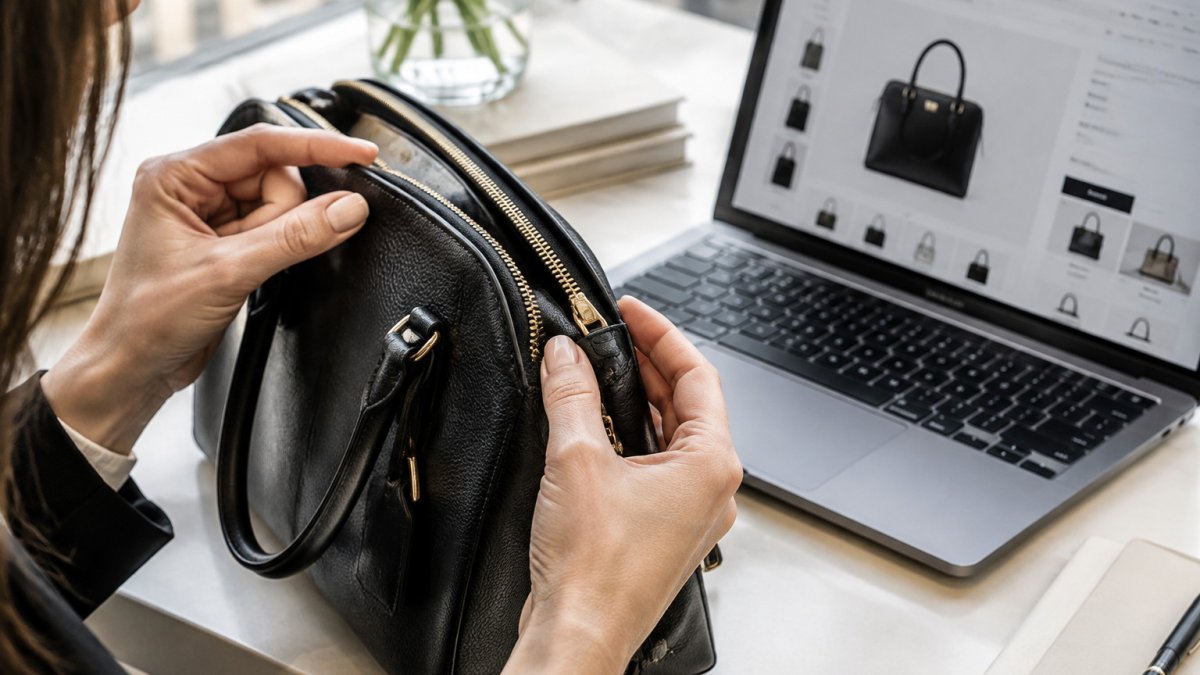
Start with the seller's model. Ask, in writing if possible, who holds the stock and where it ships from. Authorized retailers buy from the brand or its approved distribution channels. Marketplaces connect independent sellers, so authentication policy can vary seller by seller. Resale platforms sell pre-owned pieces, often on consignment, and should state whether they inspect items in-house. A shop that names its supply sources, lists a real business address, and offers clear contact details is easier to assess than one with vague claims. Be cautious when prices sit far below retail for current-season luxury pieces.
Then examine the item against documented specifics. Check stitching for even, consistent lines; hardware for weight and finish; and labels for correct spelling, placement, and font. Compare these details against the brand's official product photography rather than other resale listings, which may themselves be counterfeit. Request additional photos of interior labels, serial or date codes where used, dust bags, boxes, and any authenticity cards before you order.
Ask what the guarantee actually covers. A meaningful authenticity guarantee should state which inventory it applies to, whether it covers every seller on a marketplace or only selected stock, how long a claim can be filed after delivery, and what remedy applies if an item is disputed, refund, replacement, or return. Guarantees that do not name these terms are marketing language, not protection.
Keep a paper trail. Save the product listing, seller name, order confirmation, and all messages. If authenticity becomes uncertain after delivery, that record supports a dispute with the seller, the payment provider, or a consumer protection agency.
Watch out: a certificate or authenticity card shipped with an item is not proof on its own, counterfeiters reproduce them, so treat documentation as one signal among several rather than a verdict.
The article breaks the checks into four areas, each with a question to ask before you buy.
| Check | What to verify | Why it matters |
|---|---|---|
| Seller model | Who holds the stock and where it ships from | Shows who is accountable |
| Item details | Stitching, hardware and labels against official photos | Catches obvious fakes |
| Guarantee terms | Covered inventory, claim window and remedy | Separates protection from marketing |
| Paper trail | Listing, seller name, order confirmation and messages | Supports any later dispute |
Rather than rank stores by reputation alone, compare them on five criteria that determine counterfeit exposure: seller model, authentication policy, returns, buyer protection, and geographic coverage. The same framework works whether you are shopping a multi-brand marketplace, a department store's online arm, a brand's own site, or a curated boutique.
Seller model. Brand-owned sites sell only their own inventory. Authorized multi-brand retailers buy from brands or approved distributors. Marketplaces host independent sellers whose policies can differ from the platform's. Resale platforms sell pre-owned goods, sometimes with in-house inspection and sometimes without. Knowing which model you are buying from tells you who is accountable if something goes wrong.
Authentication policy. Look for a written policy that names the inventory it covers, the inspection process, the claim window, and the remedy. A policy that applies only to selected sellers or categories is narrower than it appears.
Returns and exchanges. Confirm the return window, who pays return shipping, whether returns are accepted on sale items, and whether exchanges are offered. Cross-border returns can carry shipping costs that change the economics of a purchase.
Buyer protection. Card networks and payment providers offer dispute processes, and marketplace escrow or protection programs can add a layer. Understand which applies before you buy.
Geographic coverage and landed cost. For U.S. buyers, confirm whether import duties are included in the displayed price or billed at delivery, and whether shipping is free or calculated at checkout.
A curated boutique such as URBALENTI™ sits at the narrower end of this spectrum: a selected edit of established luxury houses sourced through European channels, with import duties included in the price, free shipping with no minimum purchase, and a free exchange option for U.S. customers. That model suits buyers who prefer a smaller, deliberately chosen catalog over an open marketplace. Shoppers hunting one specific piece across many labels may prefer broader platforms, provided they apply the same five checks.
Read each store's return and authenticity terms before buying, not after.
For US customers, the practical questions are simple. Are import duties included in the price or charged at delivery? Is shipping free? Can you exchange an item if the fit is wrong? URBALENTI™ includes import duties in the price, offers free shipping with no minimum purchase, and provides a free exchange option, so nothing is due when your order arrives.
If you already know which house you want, browse our designer clothing collection directly. For a deeper look at vetting online sellers, read our guide to avoiding counterfeit luxury fashion online or learn how to verify authentic designer clothing before you commit.
US Federal Trade Commission guidance on online shopping and consumer protection
US Customs and Border Protection guidance on importing goods and duties
Consumer guidance on counterfeit goods from the US government
A reputable online retailer should be able to explain where its stock comes from, state whether it is an authorized retailer, and describe its authenticity policy in plain terms. Ask whether the shop buys directly from brands or established European distributors, and whether it has a written policy covering counterfeit items and returns. Be cautious of any retailer that cannot answer these questions clearly. A policy is only as useful as its terms, so read what the guarantee covers, how long it lasts and what the return process involves before you buy.
Check that the store identifies its sourcing, lists real contact details and publishes a clear return policy. Find out where the order ships from and whether import duties are included in the price or charged on delivery, since unexpected fees are a common frustration with international luxury orders. Be wary of current-season luxury pieces priced far below retail. Keeping the original packaging, tags and receipt also helps if you need to return an item or resell it later.

Leave a comment