
MY WISHLIST
MY WISHLIST

TL;DR: Designer branding is a strategic system that aligns every brand touchpoint around a consistent core identity. It relies on distinctive assets like logos, colors, and typography, maintained through long-term coherence and a clear no-list to preserve its uniqueness. Creative independence and strict boundaries ensure that a luxury brand’s true essence remains recognizable and authentic over time.
Designer branding is defined as a strategic system that aligns every brand touchpoint, from logo to packaging to customer experience, around a single, consistent positioning. What makes designer branding distinct is not decoration. It is the deliberate translation of a brand’s core values into visual, verbal, and experiential language that holds across decades. Houses like Saint Laurent, Gucci, and Givenchy do not simply produce beautiful objects. They produce recognizable worlds. Understanding how that recognition is built, and why it is so difficult to replicate, is the foundation of understanding luxury fashion at any level.
Designer branding originates from a strategic foundation phase that ensures every touchpoint reflects a core positioning. Generic branding, by contrast, starts with aesthetics and works backward. That reversal is the root cause of why most brands feel forgettable.
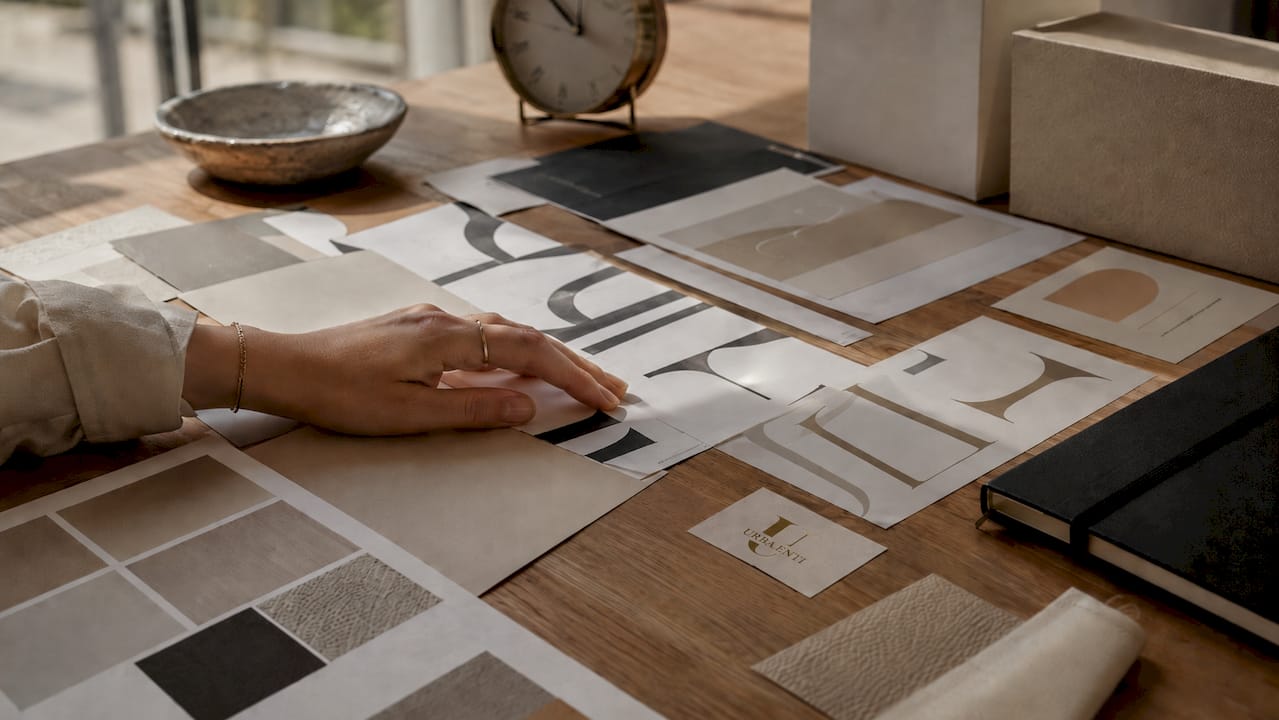
The industry term for this discipline is brand design, which is distinct from graphic design. Graphic design solves visual communication problems. Brand design builds systems. A successful brand design system consists of logos, color palettes, typography, imagery direction, and comprehensive guidelines that govern how all elements interact. The guidelines are not optional. They are the mechanism that keeps a brand coherent across every channel, every season, and every market.
Here are the core elements that separate designer branding from generic alternatives:
The tone of voice element is frequently underestimated. A luxury brand that uses precise, restrained visual language but writes in casual, trend-chasing copy creates a contradiction. That contradiction erodes trust. Every word in a product description, a campaign headline, or a social caption is a branding decision.
Pro Tip: When evaluating a designer brand’s identity, read the copy before you look at the visuals. If the words feel generic, the brand has a gap in its strategic foundation, regardless of how refined the imagery appears.
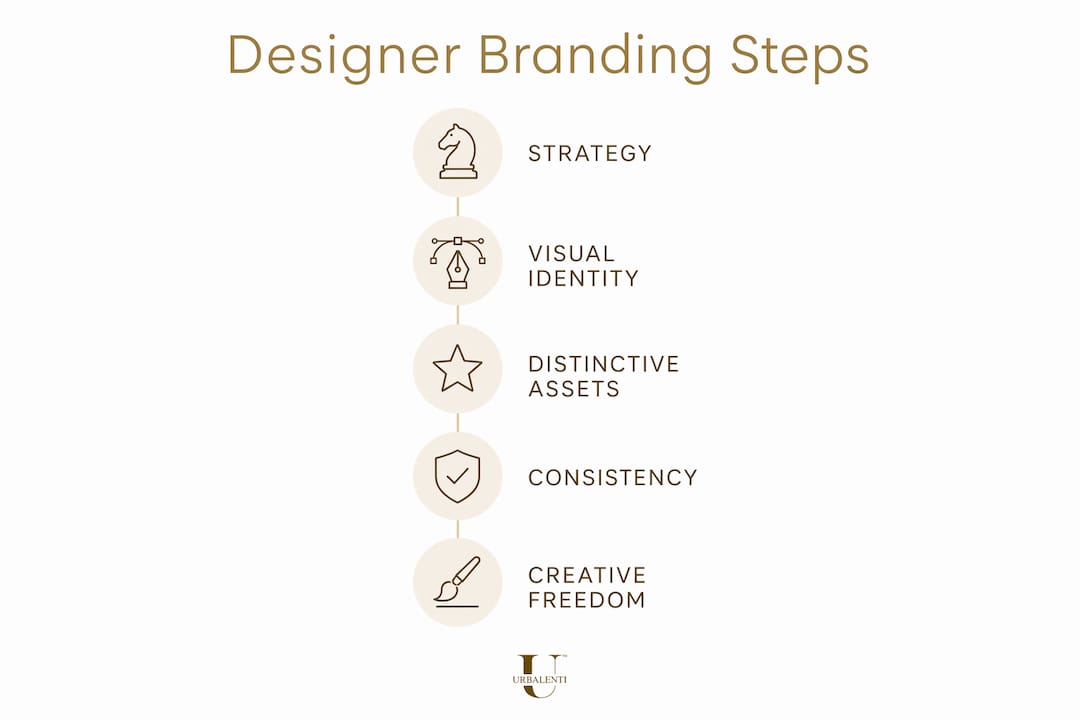
Distinctive brand assets are specific, ownable elements, such as logos, colors, taglines, and packaging, that allow a luxury house to be recognized instantly without the brand name present. That instant recognition is not accidental. It is the result of deliberate asset selection and relentless repetition over time.
The commercial logic is straightforward. Strong assets increase advertising effectiveness and create mental availability, functioning as competitive moats that are nearly impossible for competitors to replicate. When you see the interlocking GG on a Gucci shopping bag, you do not need to read a label. The asset does the identification work. That efficiency has direct value in a market where attention is finite.
The table below shows the practical difference between distinctive and generic brand assets:
| Asset Type | Designer Brand Example | Generic Brand Equivalent |
|---|---|---|
| Logo | Gucci’s interlocking GG monogram | Initials in a standard sans-serif font |
| Color | Valentino’s Rosso Valentino red | A generic red from a standard palette |
| Typography | Saint Laurent’s custom serif wordmark | A licensed commercial typeface |
| Packaging | Bottega Veneta’s signature woven texture | Plain matte black box |
| Tagline | Dolce & Gabbana’s Mediterranean identity language | A generic “quality and style” phrase |
Several principles govern how these assets are built and protected:
The packaging point deserves specific attention. Bottega Veneta’s intrecciato weave appears on leather goods, but the texture has also informed store interiors, campaign imagery, and digital design language. One asset, deployed across multiple dimensions, multiplies its recognition value without requiring new creative investment.
Long-term consistency is the single most reliable predictor of luxury brand recognition. Brands like Dries Van Noten have maintained consistent identities since 1986, even after ownership changes. That continuity is not stubbornness. It is a strategic choice that compounds in value every year.
The risk of trend-chasing is concrete and measurable. When a luxury house pivots its aesthetic to chase a cultural moment, it signals to its core audience that the brand’s identity is negotiable. Staying firm on creative vision is easier for customers to follow than reactive design. Customers who have invested financially and emotionally in a brand need to know that investment will hold its meaning. Inconsistency undermines that confidence.
The concept of brand authenticity in luxury fashion is directly tied to this consistency. You can read more about how brand authenticity functions as a long-term asset in the luxury retail context. The short version: authenticity is not a feeling. It is the visible result of a brand behaving the same way across time, regardless of external pressure.
Pro Tip: Assess a designer brand’s consistency by comparing its campaign imagery from five years ago to today. If the visual language, casting approach, and tone feel continuous, the brand has a strong identity. If they feel like different companies, the brand has a consistency problem.
The practical implications for retail and online brand presence are significant:
Ownership changes present a specific test of consistency. When Dries Van Noten sold a majority stake to Puig in 2018, the brand’s aesthetic did not shift. That outcome was not guaranteed. It required deliberate structural protection of the creative vision. Brands that fail this test, by allowing new owners to dilute the identity for short-term commercial gain, rarely recover their original positioning.
Creative independence is the condition that allows luxury brands to pursue long-term, non-dilutive artistic visions. Independence preserves the unique creative freedom that is foundational to designer brand identity. Without it, commercial pressures from conglomerate ownership tend to push brands toward safer, more broadly appealing choices. Those choices reduce distinctiveness over time.
The concept of a no-list formalizes this independence into a practical tool. Luxury brands enforce a no-list, a documented set of boundaries defining what the brand will not do. This includes categories it will not enter, customer segments it will not pursue, design trends it will not adopt, and words it will not use. The no-list creates what strategists call negative space: the defined absence of certain choices makes the brand’s actual choices more legible and more powerful.
Here is how a no-list functions in practice for a luxury house:
“The rise of AI commoditizes competent creative work, making strategic clarity and editorial discipline a new luxury moat. Brands that say no to obvious AI-generated options retain market edge through human judgment and long-term taste.”
The most powerful luxury branding often results from instinctive design developed in isolation, making products organic extensions of a designer’s personality rather than responses to consumer feedback cycles. This approach resists the pull of market research and trend forecasting. The result is a product language that feels genuinely original because it is. Iris van Herpen’s couture work is a clear example. Her techniques and materials have no mass-market equivalent because they were never designed with mass-market constraints in mind. Creative freedom is the biggest luxury, allowing for unique techniques and materials unmatched by mass-market brands.
The AI era adds a new dimension to this argument. When generative tools can produce competent visual work at scale, the differentiator shifts from technical execution to editorial judgment. A brand that knows precisely what it will not do, and can hold that position under commercial pressure, has an advantage that no algorithm can replicate.
Designer branding is distinct because it builds a strategic system of assets, consistency, and creative discipline that generic branding cannot replicate through aesthetics alone.
| Point | Details |
|---|---|
| Strategy before aesthetics | Designer branding starts with a positioning foundation, not a visual mood board. |
| Distinctive assets compound | Ownable logos, colors, and packaging build recognition that improves advertising efficiency over time. |
| Consistency is the mechanism | Long-term visual and verbal coherence, held across decades, is what converts aesthetics into brand equity. |
| The no-list defines identity | What a luxury brand refuses to do is as important as what it produces. |
| Creative independence protects vision | Freedom from conglomerate pressure allows instinctive, non-dilutive design to develop over time. |
After spending years studying how designer labels build and maintain their identities, one pattern stands out clearly. Most brands focus on the visible outputs, the logo, the campaign, the packaging, and treat those as the brand itself. They are not. They are evidence of the brand. The brand is the decision-making framework that produced them.
What I find most instructive about houses like Saint Laurent or Bottega Veneta is not their visual refinement. It is their restraint. Every season, there are trends they could adopt, collaborations they could pursue, and categories they could enter. They do not. That discipline is invisible to the casual observer, but it is the most important work happening inside those organizations.
The no-list concept is the clearest articulation of this I have encountered. When a brand documents what it will not do, it forces a level of self-knowledge that most organizations avoid. It is much easier to say yes to opportunities than to defend a boundary. The brands that hold those boundaries over decades are the ones that remain recognizable and desirable.
From the perspective of curation at Urbalenti™ NYC, this matters practically. When we select which pieces to carry from houses like Gucci, Givenchy, or Emporio Armani, we are looking for the pieces that most clearly express each brand’s core identity. A product that feels like it could belong to any brand is not a strong representative of that brand’s distinctiveness. The pieces that carry the most identity weight are the ones worth carrying.
The other observation worth sharing: consistency is not the same as repetition. The best designer brands evolve. But they evolve within a defined language, not by abandoning it. That distinction is what separates a brand that grows from a brand that drifts. If you are building or evaluating a brand, the question to ask is not “does this feel fresh?” It is “does this still sound and look like us?”
— Admin Urbalenti
The principles covered in this article are visible in every piece that carries a genuine designer label. The logo placement, the material choices, the construction details: each one reflects the strategic and creative decisions that define a house’s identity.
Urbalenti™ NYC carries authenticated pieces from Gucci, Saint Laurent, Givenchy, Dolce & Gabbana, and more, curated in New York and fulfilled directly from Milan. Every order ships worldwide via DHL Express with dedicated client support from selection to delivery. The Balenciaga Fashion Designer T-shirt is a precise example of how a house’s visual identity translates into a single garment. Browse the full collection at Urbalenti™ NYC and experience what authentic designer branding looks like in practice.
Designer branding is built on a strategic foundation that aligns every touchpoint, from logo to customer experience, around a defined positioning. Generic branding typically starts with visuals and lacks the documented systems that keep a brand consistent over time.
The core elements are logo systems, proprietary color palettes, custom typography, imagery direction, tone of voice, and comprehensive brand guidelines. Each element is governed by rules that prevent inconsistency across channels and markets.
A strong designer brand identity is recognizable without the brand name present. Its visual assets, color, form, and texture, carry enough distinctiveness to identify the house immediately, and its tone of voice matches its visual language precisely.
Luxury brands use a no-list to protect their positioning by defining what they will not do. Refusing trends, categories, and customer segments creates the negative space that makes their actual choices more legible and preserves the scarcity signal that justifies premium pricing.
Creative independence allows designers to develop instinctive, non-dilutive work without commercial pressure from conglomerate ownership. Brands like Iris van Herpen demonstrate that freedom from mass-market constraints produces techniques and materials that have no generic equivalent.
Leave a comment