
MY WISHLIST
MY WISHLIST

Urbalenti NYC stands out among Yoox alternatives because it sources directly from Italian boutiques, verifies every piece as authentic, and includes U.S. import duties in the checkout price. For shoppers who want curated designer pieces without guesswork on landed cost, that combination matters more than a bigger catalog. The categories below cover every other route worth considering, from marketplaces to resale.
TL;DR:
- Urbalenti NYC sources directly from Italian boutiques, verifies every item for authenticity, and includes U.S. import duties in the listed price for full transparency.
- Compared to department stores, it offers smaller curated inventories with clearer sourcing and duties, while providing better authenticity assurance than many marketplaces.
- Timing is crucial; waiting for end-of-season sales or promotional discounts can yield 30 to 70 percent savings, but verify duties and condition before purchase.
- Always check for authenticity proof, clear return policies, duties included at checkout, and detailed condition grading to avoid buyer’s remorse.
- Using vendor relationships and upfront duties, Urbalenti reduces the risk of fakes and hidden costs, making it a trustworthy alternative for shoppers seeking genuine designer pieces.
Shoppers leaving Yoox tend to fall into one of five buying patterns: they want a marketplace with breadth, a department store with reliability, a flash sale for timing, a resale platform for rare pieces, or a boutique reseller for curation. Each route solves a different problem, and none of them solves all five at once.
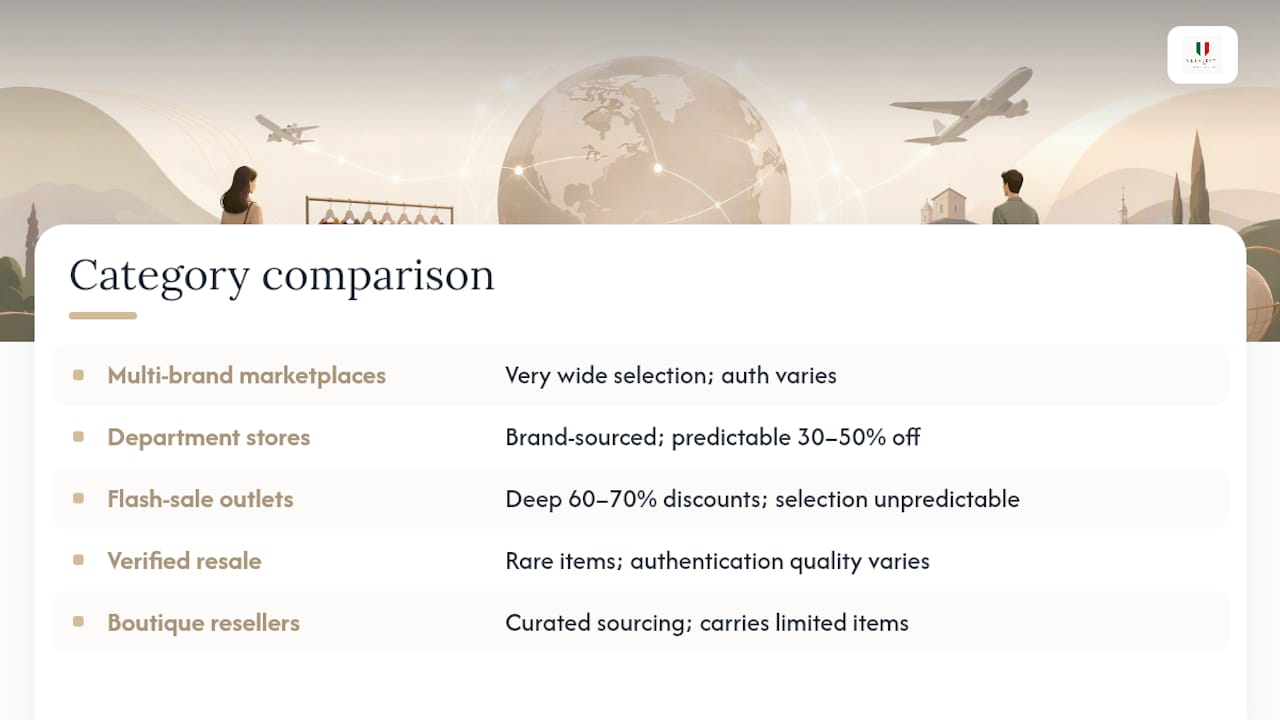
Audience-overlap data from SimilarWeb shows that shoppers who visit Yoox also browse other multi-brand luxury marketplaces at a high rate, confirming that the marketplace format itself, not any single site, is what pulls that traffic. Here’s how the five categories break down:
Brandswitch’s roundup of Yoox alternatives leans heavily on department stores and large multi-brand retailers for past-season and discounted pieces, which tracks with what most casual shoppers actually want: a reliable discount without the uncertainty of a peer-to-peer resale listing. If you’re the kind of shopper who wants both selection and shipping transparency, the category comparison below breaks down what to expect from each type before you commit a card number.
Every category claims some version of “authentic designer goods at a discount.” The differences show up in how that promise gets fulfilled, and those differences are where shoppers get burned.
1. Multi-brand marketplaces. These platforms aggregate inventory from dozens or hundreds of third-party sellers under one storefront. Selection is the strongest argument here. You’ll find past-season runway pieces, current-season overstock, and the occasional pre-order sitting side by side. Discount depth depends entirely on which seller is fulfilling your order, and authentication practices differ from vendor to vendor within the same marketplace. CB Insights groups these alongside private-sale platforms and resale specialists precisely because the underlying sourcing model varies so much even within a single site. Return windows here often run shorter than you’d expect for the price point, sometimes 14 days instead of the 30 you’d get from a department store.
2. Department stores and large luxury retailers. Sourcing comes directly from the brand or an authorized distributor, which makes authentication close to a non-issue. Discounts show up predictably during seasonal clearance, typically 30 to 50 percent off past-season stock, deeper during end-of-season sales. Return policies are usually the most generous of any category, often 30 to 60 days with free return shipping domestically. What you sacrifice is rarity. You won’t find limited sneaker collaborations or archive pieces here.
3. Flash-sale outlets. These run time-boxed sales, often 24 to 72 hours, on inventory that a brand needs to move fast. Discounts can hit 60 to 70 percent off retail, according to roundups tracking designer discount sites, but selection is unpredictable. You might find your exact size in one drop and nothing in the next. Authentication is generally solid because inventory comes from brand overstock rather than third-party consignment, but return policies tend to be stricter, sometimes final-sale only.
4. Verified resale marketplaces. This is the only category built for pieces that no longer exist in first-run retail: discontinued handbags, limited sneaker releases, vintage archive fashion. Authentication quality is the single biggest variable. Some platforms use in-house authentication teams and physical inspection before a listing goes live. Others rely on seller self-reporting with minimal verification. Condition grading (new, excellent, good, fair) becomes critical here in a way it isn’t for new goods, and a vague condition description is a red flag worth walking away from.
5. Boutique direct sellers and curated resellers. Sourcing comes from direct relationships with specific boutiques or distributors rather than an open marketplace model. This is where Urbalenti NYC operates, sourcing through direct partnerships with boutiques in Italy rather than aggregating third-party sellers, similar to the fashion ecommerce case study that highlights boutique and private-sale platform operations. Selection is smaller by design, but every piece has a traceable sourcing path. Discount depth depends on the boutique relationship rather than a sitewide sale calendar, and duties transparency tends to be clearer since there’s one seller to account for, not dozens.
Red flags across every category: no proof of purchase or authentication certificate offered on request, no stated return window anywhere on the product page, pricing that sits dramatically below every comparable listing you’ve seen elsewhere, and condition descriptions that use vague language (“gently used,” “excellent condition”) without photos of wear points, hardware, or interior tags. Any of these on their own isn’t disqualifying. Two or more together should make you close the tab.
A related consideration: aggregated alternative directories consistently show that no single category replicates everything Yoox offered. Shoppers who valued Yoox for both breadth and discount depth typically end up using two categories in parallel, a marketplace for browsing and a boutique reseller or department store for the actual purchase once they’ve confirmed authenticity standards. For a deeper look at how specific marketplaces stack up on shipping and selection, this comparison of designer marketplaces shipped worldwide breaks down the differences further.
Six questions separate a safe purchase from a costly mistake, and you can run through all of them in under five minutes on any product page.
Before you check out, send a short message to the seller with three questions: What’s your return window if the size doesn’t fit? Can you send a photo of the authenticity certificate or tag? Are duties included in this price, or will I owe anything at delivery? A seller who answers all three clearly and quickly is telling you more than any star rating on the page.
Sizing gets trickier with international sellers because European and Italian sizing don’t map one-to-one onto U.S. sizing, especially in shoes and outerwear. Always check for a brand-specific size chart rather than relying on a generic conversion, and when buying pre-owned, ask whether the measurements listed are garment measurements or the size printed on the tag. Those two numbers can differ by a full size on structured pieces like blazers and tailored pants.
Pro Tip: Screenshot the return policy and duties statement at the time of purchase. Policies get updated, and having your own record protects you if a dispute comes up later.
For a broader look at vetting authentic retailers before you commit to a purchase, this guide to authentic fashion retailer alternatives covers additional verification steps worth running through.
Urbalenti NYC sources inventory through direct partnerships with boutiques in Italy, which means every piece has a traceable path from supplier to shopper rather than passing through layers of third-party consignment. That sourcing model is what allows the site to verify each item as authentic before it’s ever listed, and it’s also what keeps duties transparent: U.S. orders arrive with import duties and taxes already factored into the price, not added as a surprise at delivery.
Two current pieces illustrate what that curation actually looks like on the shelf. The Y-3 Black Wool Casual Pants pair Yohji Yamamoto’s tailoring instincts with Adidas performance construction, a combination that’s become one of the more distinctive silhouettes in contemporary menswear right now. Wool construction gives them structure without the stiffness of a traditional trouser, making them work equally well styled with a fitted knit or layered under a longer coat for cooler months. The Y-3 Black Fabric Low Top Sneakers round out the same design language in footwear form, a low-profile silhouette that reads more architectural than athletic, built for shoppers who want a sneaker that holds up against tailored pieces rather than only streetwear.
Beyond the product itself, the trust signals that matter to a designer-goods shopper are built into how Urbalenti NYC operates:
Community discussion on shopper forums, including threads where buyers compare designer-discount strategies, consistently flags returns policy and shipping cost transparency as the two factors that make or break trust in an unfamiliar retailer. Curated sourcing addresses both of those concerns directly, since there’s one supplier relationship to stand behind instead of a marketplace of independent sellers each setting their own terms.
Timing does more work than most shoppers realize. Flash-sale outlets and outlet sections on department store sites tend to release their deepest markdowns at predictable points: end-of-season transitions (late December, early July) and the days immediately following a major fashion week when brands need to clear runway-adjacent inventory. Waiting two to three weeks after a new season launches, rather than buying at full price on day one, is often the difference between paying retail and paying 30 percent less for the exact same piece.
Combining promo codes with outlet pricing sounds obvious, but a lot of shoppers skip it because they assume outlet prices are already final. They rarely are. Check for a sitewide or category-specific code before checking out, even on marked-down inventory, since outlet sections often stack an additional percentage off for email subscribers or first-time buyers.
For resale purchases specifically, run through an authentication checklist every time, regardless of how established the platform seems:
Discovery tools and shopping aggregators, tracked in directories alongside direct marketplaces, can help you compare prices across sellers before committing, though they’re search tools rather than purchase platforms, so always verify the actual seller’s return and authentication policies once you click through.
Landed cost is the number that actually matters, not the sticker price. Add the item price, shipping cost, and any import duties or taxes together before comparing two listings, because a lower list price with duties added at delivery can end up costing more than a higher price with everything included upfront. Sellers who state duties clearly at checkout, rather than leaving them to be settled with a courier at your door, make that math far easier to trust.
Pro Tip: Keep a simple note of the landed cost for anything you’re seriously considering. It takes thirty seconds and stops you from comparing a duty-free sticker price against one that already includes everything.
Most advice on this topic treats alternatives like a single ranked list, as if one platform replaces Yoox entirely. It doesn’t work that way. The shoppers who end up satisfied are the ones who match the category to the specific thing they were buying Yoox for in the first place, whether that was breadth, discount depth, or rare finds.
The bigger blind spot is duties. Shoppers obsess over sticker price and authentication badges but skip the landed-cost math until a customs bill lands after delivery. That single oversight causes more buyer’s remorse than counterfeit risk does.
Prioritize sellers who show their sourcing path and state duties upfront, before you compare discount percentages. A transparent 20 percent off beats an opaque 40 percent off that arrives with a surprise invoice. Curated boutique sourcing, done well, solves that problem structurally rather than asking you to trust a marketplace’s fine print.
— Admin Urbalenti™ NYC
Urbalenti NYC is the alternative to marketplace guesswork: every piece comes from a direct Italian boutique partnership, gets verified before it’s listed, and ships worldwide with U.S. import duties and taxes already included in the price you see.
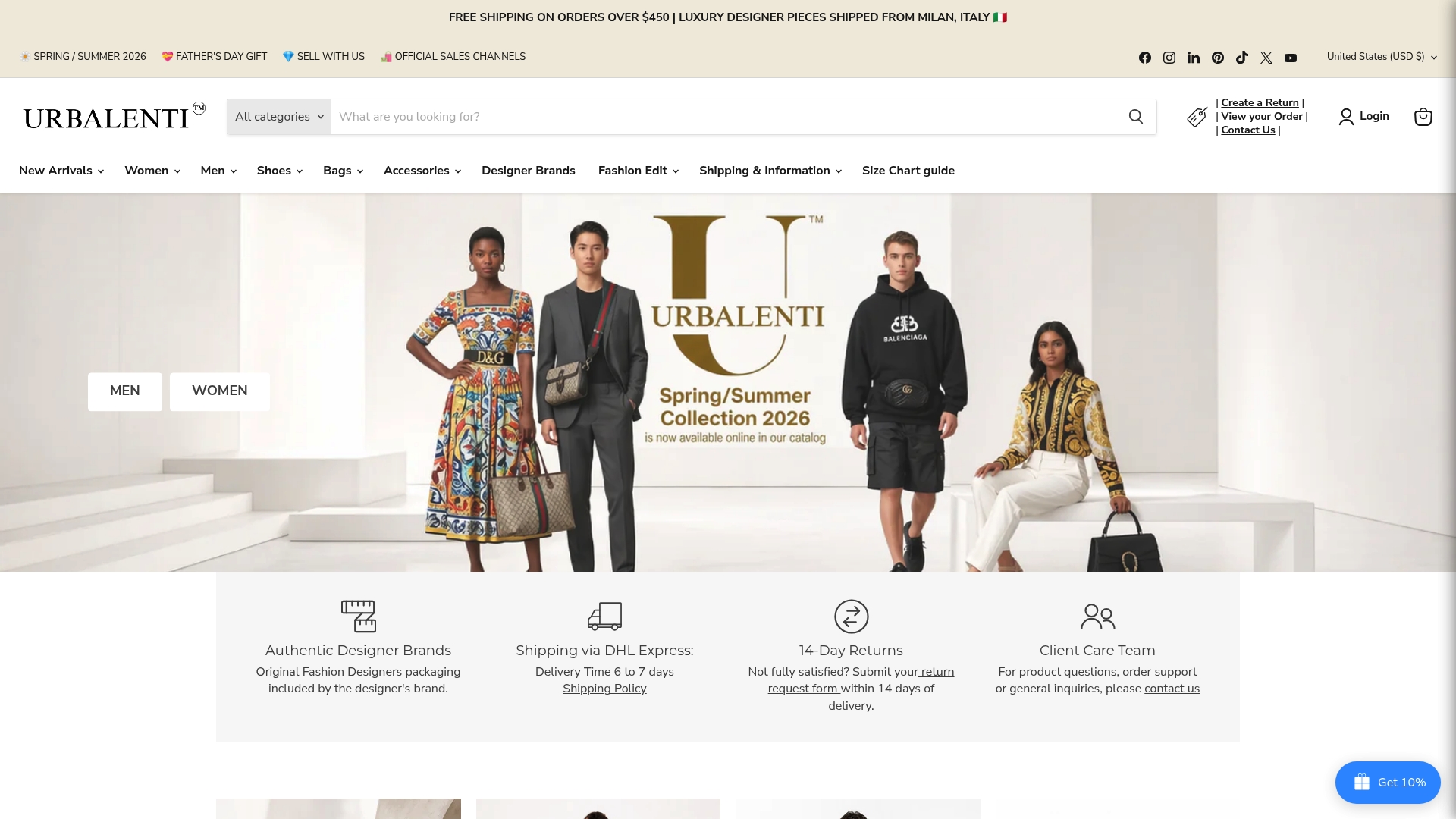
That combination, curated sourcing plus upfront duties, is what most marketplace-style alternatives can’t promise since they’re aggregating dozens of independent sellers rather than standing behind one supply chain. Start with the Designer Fashion from Italy collection for the full current catalog, or go straight to category if you know what you’re after: Women’s, Men’s, or Designer Shoes. If the two Y-3 pieces mentioned earlier caught your eye, both the wool casual pants and the low top sneakers are live now, and Urbalenti’s customer support team can confirm sizing or authentication details before you check out.
Yoox continues to operate as part of the Yoox Net-A-Porter Group’s broader luxury e-commerce portfolio, but shopper interest in alternatives has grown as buyers look for more transparent duties and curated sourcing. That shift is reflected in competitor and alternative listings that now group marketplaces, department stores, and resale platforms as the main substitute categories.
There isn’t one single best resale site since authentication standards and condition grading vary significantly by platform. Look for a resale marketplace that offers in-house authentication and detailed condition photos rather than relying on seller self-reporting alone.
Affluent shoppers typically split purchases between full-price boutique buying for current-season pieces and curated resellers or direct boutique partnerships for value on past-season and rare items. Urbalenti NYC fits the second category, sourcing verified authentic pieces directly from Italian boutiques rather than an open marketplace model.
The strongest discounted fashion options combine flash-sale outlets for deep, time-limited markdowns with department stores for reliable seasonal clearance. Roundups of designer discount destinations note markdowns reaching 60 to 70 percent off during peak clearance windows, though selection and sizing availability shrink as discounts deepen.
Yes. U.S. orders through Urbalenti NYC include import duties and taxes in the checkout price, so there’s no separate customs bill at delivery. Current pricing for individual pieces, including the Y-3 Black Wool Casual Pants, is available directly on the product page.
Editorial Note: Product availability, pricing, and shipping conditions may change. All products featured by URBALENTI™ NYC are 100% authentic and original. Please refer to the applicable product page and store policies for current details.
Leave a comment