
MY WISHLIST
MY WISHLIST
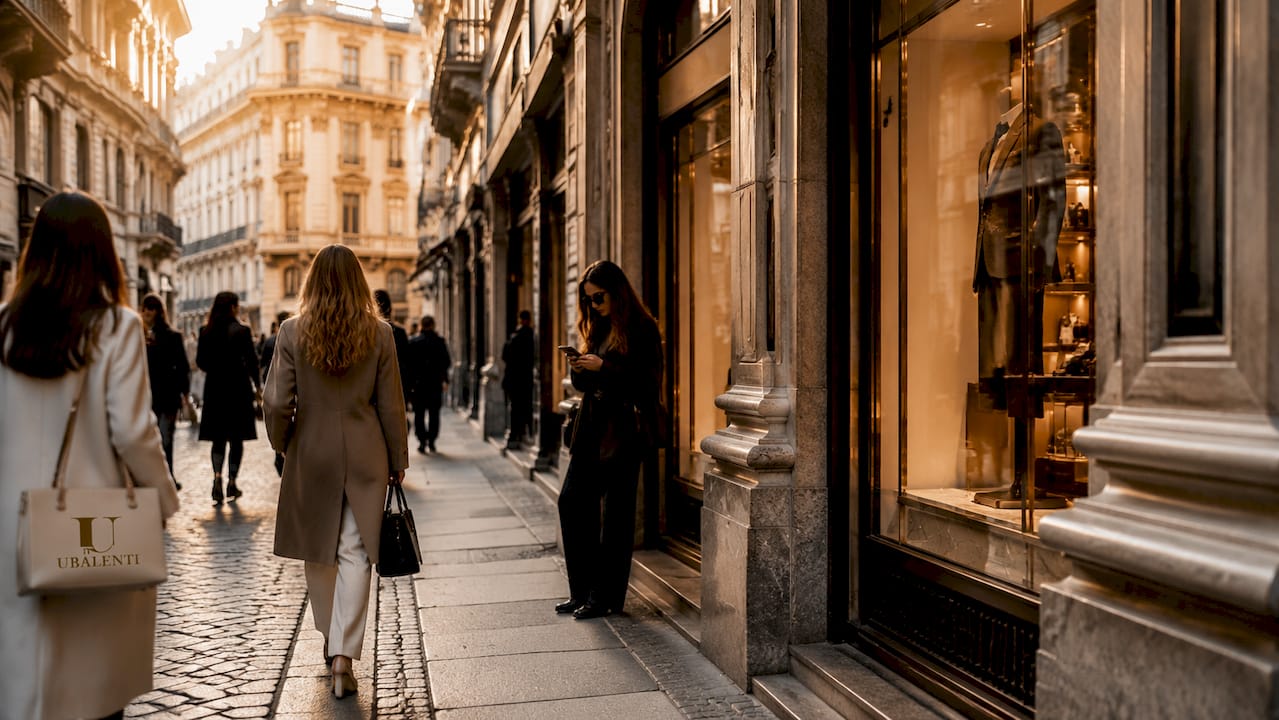
The journey begins in Milan, in the Quadrilatero della Moda — the golden rectangle of streets where the great houses show each season, and where our route through Italy's craft districts sets off.
There are two kinds of luxury: the kind that is designed in one country and made wherever production is cheapest — and the kind that is still cut, stitched, woven and finished in the same country that imagined it. "Made in Italy" belongs to the second kind. It is not a marketing slogan; it is a map of mastery. The tanneries of Santa Croce sull'Arno in Tuscany, vegetable-tanning leather the way families there have done for generations. The footwear ateliers of the Marche, where a single pair of shoes can pass through dozens of skilled hands. The textile mills around Biella, weaving some of the finest wool on earth. And the Umbrian village of Solomeo, where cashmere is treated almost as a philosophy of life.
That is why designer brands made in Italy remain the gold standard of luxury fashion. You can feel the difference before you can explain it: in the weight of a zipper pull, the evenness of a stitch line, the way a leather bag softens with the years instead of cracking. At URBALENTI, more than 1,300 pieces in our current collection are verified Made in Italy — authentic Italian designer bags, shoes and clothing whose product specifications state their Italian origin. This guide is a journey along that map — Milan to Tuscany, Rome to the Veneto, Umbria to the Marche and down to Sicily — house by house, district by district. It ends with how to shop the real thing from the United States with total confidence.
From Milan, the road runs south to Florence — and to the tanneries strung along the Arno at Santa Croce, where the hides behind the great houses have been vegetable-tanned for generations.
Gucci began in Florence in 1921 as a leather goods house, and Tuscany is still the beating heart of Italian bag making. The Tuscan leather district supplies the hides, the hardware and the hands behind generations of Gucci craftsmanship. Prada, founded in Milan in 1913, built its name on impeccably made leather goods and later on technical Italian manufacturing of a precision few houses can match. When you buy Italian designer clothing or bags from these houses, you are buying into a century of workshop knowledge that cannot be copied by a label alone.

In Santa Croce sull'Arno, Tuscan tanneries have finished leather for the great houses for generations — the world behind pieces like Gucci's beige GG shoulder bag.
South again, to Rome — a city that has worked leather since the age of the master saddlers, and never stopped.
Rome gave the world two very different expressions of Italian leather mastery. Valentino Garavani turned the Rockstud into a modern icon — each stud applied and finished with jeweller-like care on supple Italian calfskin. Fendi, founded in Rome in 1925 as a fur and leather workshop, still practises its Selleria hand-stitching, a technique passed down from Roman master saddlers. These are pieces made to be kept, repaired and handed down — the opposite of disposable fashion.

In Rome, the Rockstud is applied stud by stud onto supple Italian calfskin — jewellery-level finishing on Valentino Garavani's Rockstud pouch.
North-east now, into the Veneto — the hills behind Venice, where one house turned weaving itself into a signature.
Bottega Veneta's intrecciato is perhaps the purest argument for Made in Italy fashion. Long strips of leather are woven entirely by hand in the Veneto, with no seams and no shortcuts — a process that takes a trained artisan the better part of a day for a single bag. There is no logo because the weave is the signature. It is luxury you recognise by touch, and it can only exist where that weaving tradition lives.

In the Veneto, Bottega Veneta's intrecciato is woven entirely by hand — long strips of lamb leather, no seams, no logo. The weave is the signature.
Inland and upward, into Umbria — to a medieval village that one man rebuilt around cashmere.
In the restored medieval village of Solomeo, Brunello Cucinelli built a company around a radical idea: that the people who make beautiful things should work in a beautiful place. His cashmere is combed, spun and knitted in Umbria, producing knitwear of a softness and lightness that industrial production simply cannot imitate. This is quiet luxury in its most literal form — and one of the clearest reasons Italian luxury is worth every penny.

In Solomeo, cashmere is combed, spun and knitted a few streets from where it is designed — Brunello Cucinelli's gray cashmere cardigan carries the village in every stitch.
Back west to Florence — and then east, over the Apennines, into the Marche: the shoemaking heartland of Italy.
Salvatore Ferragamo was known as the "shoemaker to the stars," but his real legacy is engineering: the wedge, the cage heel, and a scientific study of the foot that still shapes how Italian shoes are made. Florence remains a capital of fine shoemaking, and a pair of Ferragamo shoes made in Italy carries that heritage in every step — comfort designed in, not added on.
The same footwear belt — the Marche, and the Veneto across the mountains — still produces the shoes the world queues for. Here a shoe is not assembled; it is built, one operation at a time, by dozens of pairs of hands: the sculpted evening pump, cut and stitched at the bench, and the hand-finished sneaker — Golden Goose's Ball Star, made in Italy and scuffed by hand so that no two pairs ever age the same way.

In the Marche, Italy's footwear heartland, a single pair of shoes passes through dozens of skilled hands before the red sole is ever lacquered.

Golden Goose's Ball Star sneakers are made in the Veneto's shoemaking district and distressed by hand — scuffed by an artisan, never by accident.
The last leg of the journey runs to the deep south — to Sicily, and to Reggio Calabria, where Italian glamour is cut, printed and finished.
Dolce & Gabbana channel Sicily — its lace, its prints, its impeccable tailoring — through Italian workshops that specialise in embellishment and hand-finishing. Versace, founded in Reggio Calabria and raised in Milan, produces its Medusa-icon pieces in Italy, where silk printing and metalwork of that complexity can be executed to house standard. Italian glamour is a craft discipline, not just an attitude.

In Sicily, Dolce & Gabbana draw on the island's lace, prints and tailoring — glamour executed by workshops that specialise in embellishment and hand-finishing.
Because the words carry value, they are also imitated. At the end of the journey, this is the stop that protects every other one. Here is how to verify them:
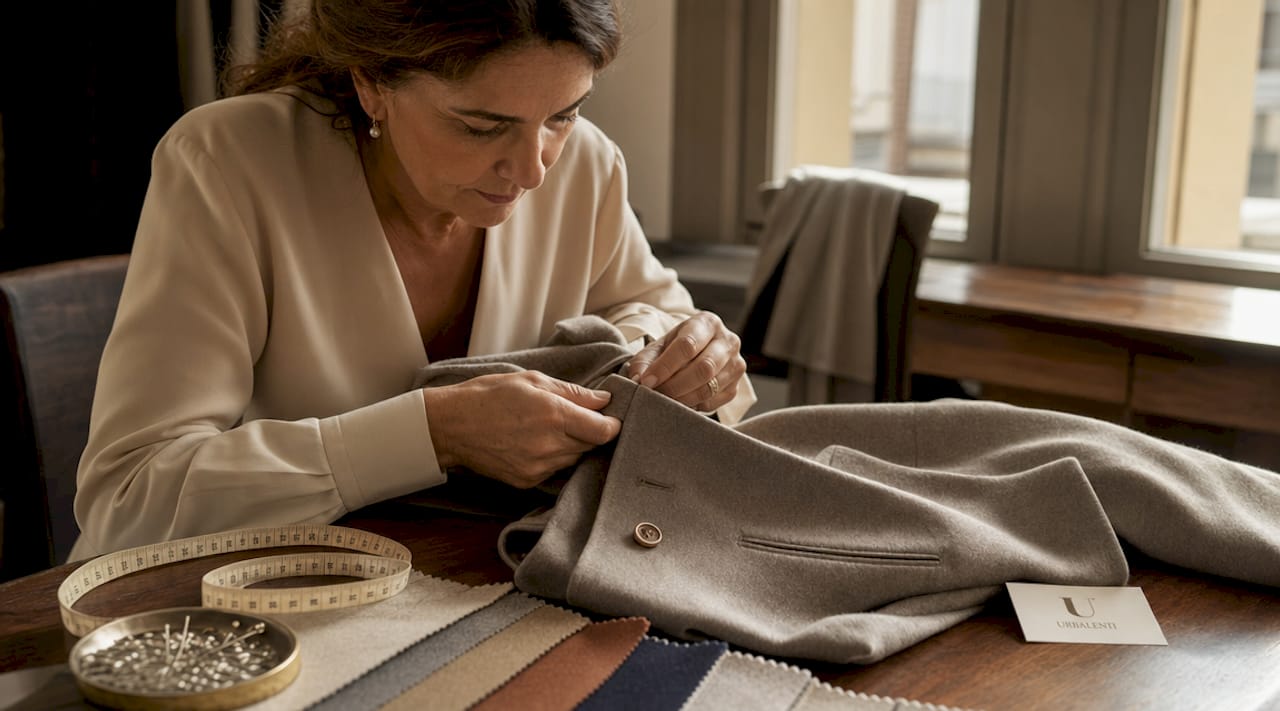
At every stop on the route, the checks are the same: the sewn-in label, the country of origin in the specifications, the weight of the hardware, the evenness of the stitch.
Until recently, buying Made in Italy fashion from the United States meant boutique markups or uncertain marketplaces. URBALENTI was built to close that gap: we specialise in authentic European designer fashion, curated in New York and shipped directly from Europe. Every piece is authentic and new with tags, the price you see includes US duties — no surprise bills on delivery — and express shipping brings your order to your door in 2–4 business days.

The last leg of the journey is the shortest: from Milan to your door — authentic, new with tags, US duties included.
If you would like to understand the value behind Italian fashion in more depth, read our guide on why buying fashion from Italy means craftsmanship, value and style.
Italian luxury is worth every penny because the pennies are visible — in the leather, the weave, the stitch, the hand of the person who made it. Explore our edit of designer brands made in Italy: more than 1,300 verified pieces from Gucci, Prada, Valentino Garavani, Fendi, Bottega Veneta, Brunello Cucinelli, Ferragamo, Dolce & Gabbana and Versace — authentic, new with tags, and shipped from Europe to your door.
URBALENTI — Real luxury, authentic luxury for real people.
Leave a comment