
MY WISHLIST
MY WISHLIST

TL;DR:
- Luxury brand heritage is a strategic asset rooted in origin stories, craft traditions, and iconic motifs that preserve brand identity over time.
- Collectors value heritage when the original purpose continues to influence current products and craft processes remain verifiable and consistent.
Luxury brand heritage is defined as a strategic intangible asset built from origin stories, craft traditions, and repeatable iconic motifs that sustain a brand’s identity across generations. The most studied luxury brand heritage examples by category span fashion, accessories, jewelry, watches, and textiles, with names like Hermès, Louis Vuitton, Cartier, Jaeger-LeCoultre, and HOSOO anchoring each discipline. Heritage in luxury brands functions as cultural capital, where price reflects not just material quality but the accumulated weight of history. Collectors and fashion enthusiasts who understand this distinction read a brand’s origin narrative as a direct indicator of long-term value. The difference between a brand with genuine heritage and one with polished marketing is measurable, and this guide shows you exactly where to look.
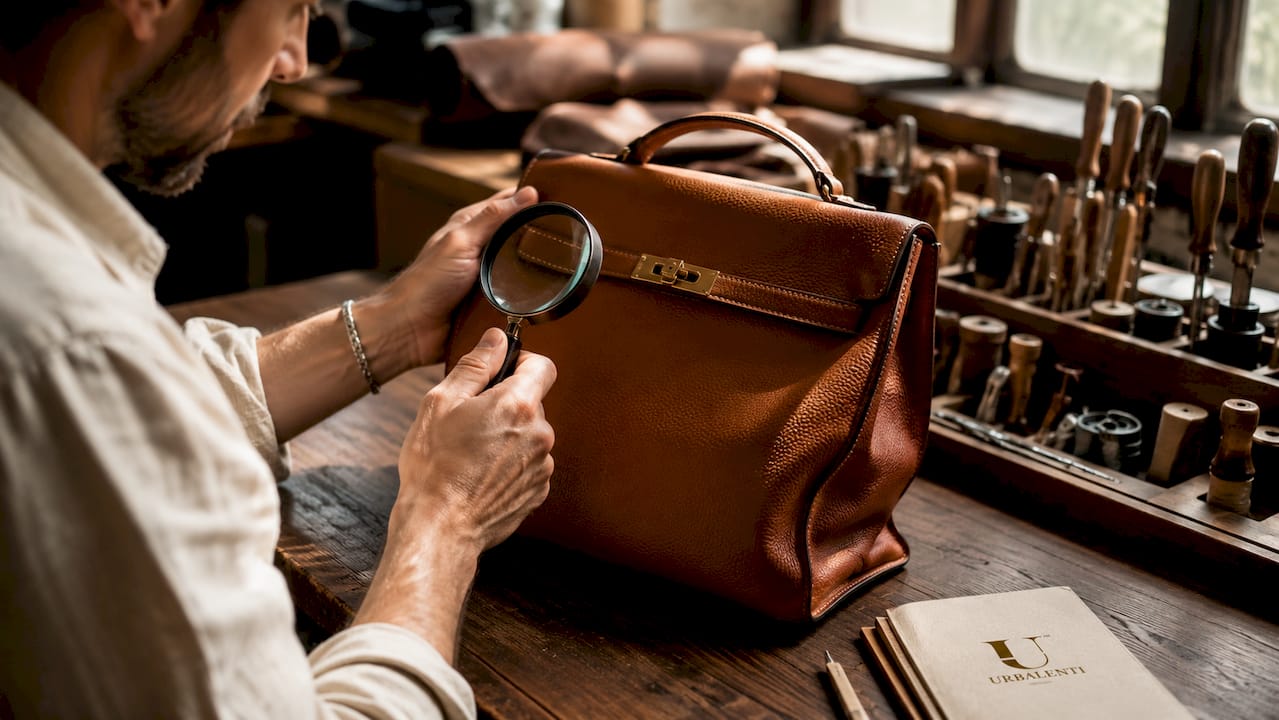
Luxury brand heritage examples by category are specific cases where a brand’s founding context, craft method, or signature motif defines its entire product identity within a recognized luxury segment. These are not simply old brands. They are brands where the original purpose of the business still shapes the design, material selection, and production method of every product made today. Heritage links craftsmanship with innovation and exclusivity in ways that generic branding cannot replicate. The categories most studied by collectors are fashion, leather goods and accessories, jewelry, fine watchmaking, and luxury textiles.
Understanding these categories separately matters because heritage manifests differently in each one. In fashion, it appears as silhouette codes and material sourcing. In accessories, it shows up as monogram systems and hardware details. In jewelry and watches, it lives in signature motifs and measurable craft processes. In textiles, it exists in weaving techniques tied to specific geographic regions. Each category rewards a different kind of attention.
Hermès is the clearest example of category-native heritage in luxury fashion. The house began as a harness maker in 1837, producing saddlery and equestrian equipment for European nobility. That founding function never disappeared. It became the structural logic behind every product category the house later entered.
The horse motif, saddle stitching, and bridle hardware are not decorative choices at Hermès. They are direct references to the original craft. The Kelly bag’s closure mechanism mirrors a saddlebag clasp. The Birkin’s proportions reflect a practical travel bag designed for function first. Silk scarves introduced in 1937 carried equestrian scenes as their primary visual language, extending the brand’s origin story into a new product category without breaking continuity.
This is what separates authentic heritage from vintage aesthetics. Vintage aesthetics reference the past visually. Authentic heritage connects the present product to the original craft logic. Hermès does not simply look old. It functions according to the same principles it was founded on.
Pro Tip: When evaluating a fashion brand’s heritage claim, ask whether the founding category still shapes the current product. If the answer is yes, the heritage is structural. If the brand only references its past visually, the heritage is decorative.
Louis Vuitton’s heritage in luxury accessories is built on a single, traceable innovation: the flat-top trunk. Founded in 1854, the house solved a specific problem for travelers. Rounded trunks could not be stacked on trains and ships. Vuitton’s flat-top design could. That functional insight became the foundation of a global accessories empire.
The canvas system evolved in direct response to travel conditions and counterfeiting pressure. The striped Trianon canvas arrived in 1872 for lightweight durability. The Damier pattern followed in 1888. The Monogram canvas, introduced in 1896, was designed specifically to identify authentic Vuitton luggage and deter imitation. The monogram’s 130-year legacy is not a branding exercise. It was a practical anti-counterfeiting system that became one of the most recognized marks in fashion history.
The key insight for collectors is that the monogram was functional before it was fashionable. That sequence matters. Heritage objects that began as solutions to real problems carry more credibility than those designed purely for visual identity. Louis Vuitton’s trunk heritage also explains why the house’s iconic handbags command consistent resale value. The design logic is traceable and repeatable.
Cartier is the defining example of heritage through signature design in fine jewelry. Founded in 1847, the house remained under family control until 1964, giving it over a century of continuous creative direction from a single lineage. That continuity produced a set of motifs so consistent that they function as a visual language collectors recognize instantly.
The Trinity ring, introduced in 1924, uses three interlocking bands in yellow, white, and rose gold. The Love bracelet, designed in 1969, requires a screwdriver to open, making it a literal commitment object. The Juste un Clou collection transforms a common nail into a luxury form. Each of these designs has a clear origin point, a documented designer, and a production history that collectors can verify. That traceability is what makes Cartier’s heritage credible rather than claimed.
Pro Tip: For jewelry collectors, the most reliable heritage signal is a design with a documented creator, a specific introduction date, and uninterrupted production. Cartier’s Trinity and Love collections meet all three criteria.
Jaeger-LeCoultre’s heritage is anchored in geography and measurable craft. The manufacture is located in the Vallée de Joux in Switzerland, a region that has been the center of fine watchmaking for centuries. 193 years of watchmaking tied to a specific valley and a specific set of technical traditions gives the brand a heritage claim that is place-based, not just narrative-based.
The most significant heritage process at Jaeger-LeCoultre is the 1,000 Hours control. Every watch undergoes 1,000 hours of testing across multiple conditions before leaving the manufacture. That benchmark is named, measurable, and independently verifiable. It is the clearest example of what separates heritage processes from heritage objects. A heritage object is a motif or design element. A heritage process is a repeatable, documented craft method that produces consistent quality.
| Dimension | Heritage objects | Heritage processes |
|---|---|---|
| Definition | Motifs, monograms, signature designs | Craft methods, testing benchmarks, production standards |
| Examples | Cartier Trinity ring, LV Monogram | Jaeger-LeCoultre 1,000 Hours control, Hermès saddle stitching |
| Collector signal | Visual recognition and design continuity | Measurable quality and documented craft lineage |
| Verification | Archive records, design history | Technical specifications, manufacture visits |
| Long-term value | Strong if design remains in production | Very strong; process validates every new piece |
Collectors who focus exclusively on heritage objects miss half the picture. The 1,000 Hours control tells a collector that every Jaeger-LeCoultre watch, regardless of model or year, passed the same standard. That consistency is what makes a heritage process more valuable than a heritage motif for long-term collecting. Brand authenticity in luxury depends on both dimensions working together.
HOSOO is the least visible and most instructive example of luxury heritage in the textiles category. Founded in 1688, the Kyoto-based house carries 327 years of Nishijin-ori weaving tradition. Nishijin-ori is a specific silk weaving method developed in the Nishijin district of Kyoto, characterized by pre-dyeing threads before weaving to create complex patterns with exceptional depth and texture.
HOSOO supplies luxury textile to Dior, Chanel, and Hermès. That client list is not incidental. It reflects the fact that the world’s most heritage-conscious fashion houses source from a textile maker whose own heritage exceeds their own. HOSOO opened a Milan showroom in 2023, signaling a deliberate move to position traditional Japanese craft within the European luxury supply chain. The move also reflects how heritage balances tradition and innovation to stay relevant across centuries.
| Textile house | Founded | Craft tradition | Key luxury clients |
|---|---|---|---|
| HOSOO | 1688 | Nishijin-ori silk weaving, Kyoto | Dior, Chanel, Hermès |
| Taroni | 1878 | Como silk weaving, Italy | Chanel, Valentino, Givenchy |
| Dormeuil | 1842 | English and Scottish wool suiting | Bespoke tailoring houses |
The HOSOO example shows that textile heritage operates as an invisible layer beneath the visible brand. Collectors who examine fabric composition and sourcing often find that the most enduring luxury pieces draw on craft traditions older than the fashion house itself. That depth is what luxury fashion means at its most precise level.
The central challenge for every heritage luxury brand is maintaining recognizable codes while remaining relevant to new collectors and consumers. Successful brands appear to stay the same while quietly adapting materials, proportions, and contexts. This is not deception. It is the deliberate management of a paradox that defines luxury brand strategy.
Saint Laurent under Anthony Vaccarello maintains the house’s 1960s silhouette codes while updating fabric weights and proportions for contemporary dressing. Gucci under Sabato De Sarno returned to quieter, more material-focused design after years of maximalist branding, signaling a recalibration toward craft heritage. Valentino’s Maison Valentino identity consistently references the founder’s Roman couture origins while producing ready-to-wear that functions in modern wardrobes. Each of these moves reflects the same principle: heritage marketing links origin stories to current product purpose.
Collectors read this balance as a signal of brand health. A house that abandons its heritage codes entirely loses the trust of long-term collectors. A house that refuses to adapt loses relevance with new audiences. The brands that sustain value across decades manage both simultaneously.
Collectors approach heritage differently from casual buyers. Collectors read heritage as continuity of craft and repeatable icons, not merely vintage aesthetics. That distinction changes what they examine when evaluating a piece.
A collector examining a Hermès Kelly bag looks at the saddle stitching tension, the hardware finish, and the leather grain before looking at the color. A collector examining a Cartier Love bracelet checks the screw-closure mechanism and the hallmark stamps before assessing the metal tone. A collector examining a Jaeger-LeCoultre Reverso looks at the case-reversal mechanism and the dial finishing before considering the strap. In each case, the process-level detail carries more weight than the surface-level aesthetic.
The practical implication is that heritage pieces hold value when the craft process behind them is documented, repeatable, and unchanged. Limited editions that reference heritage motifs without maintaining the original craft standards are marketing products, not heritage objects. Collectors with experience distinguish between the two quickly.
Luxury brand heritage is most credible when origin stories connect directly to current craft methods, not just visual references.
| Point | Details |
|---|---|
| Heritage has two forms | Heritage objects are motifs and designs; heritage processes are craft methods and testing benchmarks. |
| Category shapes heritage | Fashion, accessories, jewelry, watches, and textiles each express heritage through different signals. |
| Hermès sets the standard | Its equestrian founding in 1837 still governs leather selection, stitching, and design logic today. |
| Process beats motif for collectors | Jaeger-LeCoultre’s 1,000 Hours control is more verifiable than any logo or monogram. |
| Textiles carry invisible heritage | Suppliers like HOSOO bring craft traditions older than the fashion houses they supply. |
The most common mistake collectors make is treating heritage as a visual category. They recognize the monogram, the Trinity ring, or the equestrian motif and stop there. The motif is the entry point. The process is the proof.
I have watched collectors pay significant premiums for pieces that carry a recognizable heritage motif but were produced during a period when the house had relaxed its craft standards. The motif was intact. The process was not. The resale value reflected that gap years later. The houses that hold value across decades are the ones where the process is non-negotiable, regardless of who is designing or what the market demands.
At Urbalenti™ NYC, curation means selecting brands where both dimensions are present. Saint Laurent’s leather goods carry the house’s silhouette codes and maintain consistent material standards. Dolce & Gabbana’s embroidered pieces reference Sicilian craft traditions with documented production methods. Givenchy’s tailoring traces to Hubert de Givenchy’s couture origins in a way that shows up in construction, not just branding. These are not arbitrary selections. They reflect a specific reading of heritage that prioritizes process alongside motif.
The collector who understands this distinction does not need a brand’s marketing materials. The piece itself tells the story, if you know where to look.
— Admin Urbalenti
Urbalenti™ NYC carries pieces from brands where heritage is structural, not decorative. The selection spans fashion, leather goods, and accessories from houses with documented craft histories and recognizable design codes.

The Dolce & Gabbana Sicily handbag in embroidered leather references the house’s Sicilian craft tradition directly in its construction. The Balenciaga designer pieces carry the house’s founding silhouette logic into contemporary form. Every order ships from Milan via DHL Express, fulfilled from the same city where many of these craft traditions originated. Urbalenti™ NYC treats every client as a VIP, with personalized support from selection through delivery.
Luxury brand heritage is a strategic intangible asset built from a brand’s founding context, craft traditions, and repeatable iconic motifs. It functions as cultural capital that sustains identity and value across generations.
Heritage manifests as silhouette codes in fashion, monogram systems in accessories, signature motifs in jewelry, precision testing in watchmaking, and regional weaving traditions in textiles. Each category rewards different evaluation criteria.
Heritage objects are visible motifs and designs, such as the Cartier Trinity ring or the Louis Vuitton Monogram. Heritage processes are documented craft methods, such as Jaeger-LeCoultre’s 1,000 Hours control or Hermès’ hand saddle stitching.
Hermès, founded in 1837, Louis Vuitton, founded in 1854, Cartier, founded in 1847, and Jaeger-LeCoultre, with 193 years of Vallée de Joux watchmaking, each carry heritage that connects founding purpose to current production standards.
Collectors examine craft-level details first: stitching tension, hardware mechanisms, hallmark stamps, and material sourcing. A piece with a recognizable motif but inconsistent craft execution does not carry the same long-term value as one where both align.
Leave a comment