
MY WISHLIST
MY WISHLIST

TL;DR:
- Luxury brand legacy involves the active preservation and continuous evolution of a brand’s heritage, identity, and design codes. Leading brands like Hermès and Cartier treat their history as a living system that builds trust and instant recognition, making legacy a crucial competitive asset. Archives, design consistency, storytelling, and prestige systems help these brands maintain relevance and consumer confidence over time.
Luxury brand legacy is defined as the active cultivation and continuous evolution of a brand’s heritage, identity, and design codes to create enduring authenticity and prestige. This is distinct from brand history, which is simply a chronological record. Legacy is a living system. Houses like Hermès, Tiffany & Co., and Cartier do not merely reference their past. They operationalize it through archives, storytelling, and signature design languages that remain legible across generations. Understanding luxury brand legacy explained in full means recognizing that the most powerful designer labels treat heritage as a competitive asset, not a museum exhibit.
Legacy in luxury fashion is the ongoing preservation and evolution of a brand’s core identity over time. Heritage is culture preserved through continuity in design codes, materials, and narratives, not merely a factual timeline. That distinction matters because it explains why two brands with equally long histories can occupy entirely different positions in the market. One treats its past as a foundation for creative decisions. The other treats it as a marketing footnote.
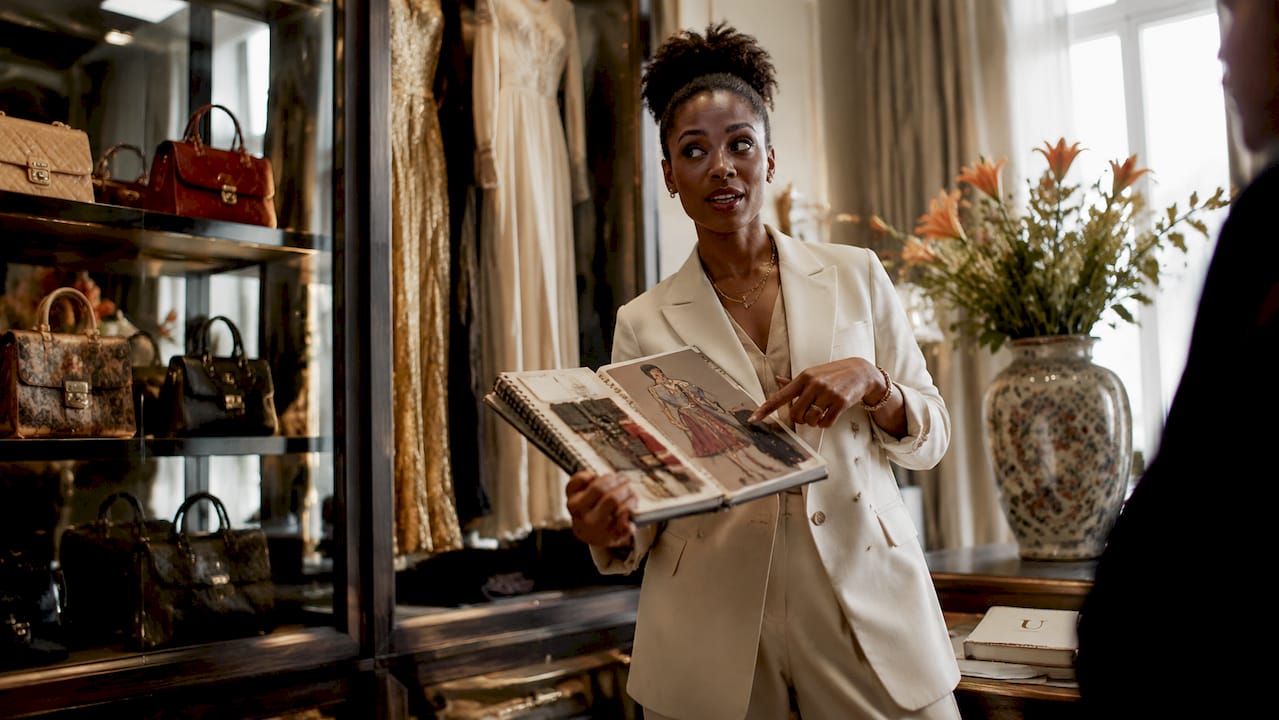
The brands that dominate luxury perception, Hermès, Cartier, Tiffany & Co., Chanel, and Patek Philippe, share one defining quality. Their identity is legible without explanation. You recognize a Hermès Birkin, a Cartier Love bracelet, or Tiffany Blue without reading a single word of copy. That instant recognition is the result of deliberate, sustained legacy management. It does not happen by accident.
Legacy also functions as a trust signal. Clients who invest in designer fashion are not only buying an object. They are buying into a system of meaning that has been validated by decades of consistent behavior. A brand that has maintained its standards, its materials, and its creative direction for over a century communicates a form of reliability that newer labels cannot replicate. That reliability is the foundation of luxury brand authenticity.
The archive is the most defensible asset in luxury fashion. Archives function as living systems where creative decisions are documented from inception and preserved for future reference, providing a competitive advantage that cannot be purchased or replicated. A competitor can hire talented designers. They cannot buy 150 years of documented creative decisions.
The shift from static archive to active resource is the key development in modern luxury brand management. Leading maisons now document creative decisions at inception with full context, so the archive grows as a queryable infrastructure for future design and strategy. This means a designer at Cartier today can search the archive not just for finished pieces, but for the reasoning behind material choices, proportion decisions, and cultural references made in 1920. That depth of context is irreplaceable.
Houses like Cartier, Chaumet, and Boucheron treat archives as creative resources driving fresh designs, not as static collections. Chaumet’s tiara archive, for example, directly informs the proportions and motifs of its contemporary high jewelry collections. Boucheron references its Place Vendôme archives to anchor new pieces in a specific Parisian aesthetic. The result is work that feels both new and deeply rooted.
Archives also serve a second function: external legitimacy. Archival references in creative workflows and external archival storytelling through exhibitions and digital campaigns turn heritage into market-facing credibility. When a house stages an archive exhibition, it is not nostalgia. It is a demonstration of depth that no emerging brand can match.
Pro Tip: When evaluating a luxury purchase as a long-term investment, research whether the brand maintains a formal archive program. Houses with active archives, like Cartier and Chaumet, demonstrate the institutional commitment that sustains value over decades.
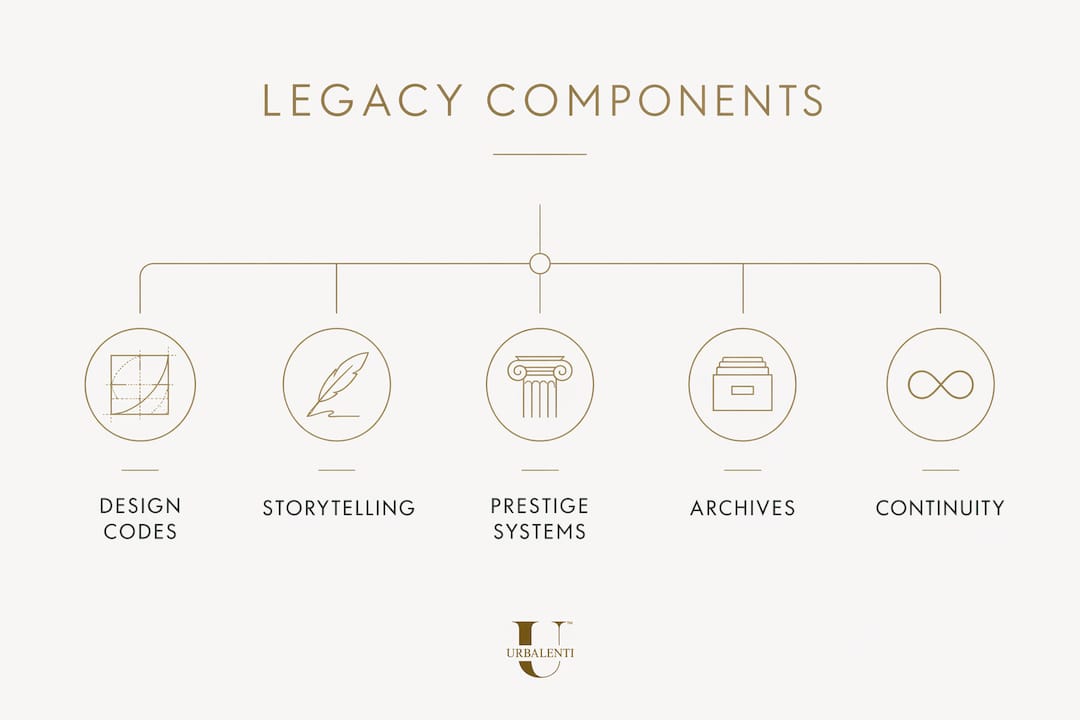
A luxury brand’s legacy rests on three interconnected components: continuity of design codes, narrative storytelling, and prestige systems. Remove any one of these and the legacy weakens. Together, they create a brand identity that is both recognizable and aspirational.
Design codes are the recurring visual and material signatures that make a brand instantly identifiable. Hermès uses specific leathers, proportions, and hardware across decades. Saint Laurent returns repeatedly to the tuxedo jacket and the Le Smoking silhouette. These are not trends. They are anchors. Continuity in design codes enables brand legibility without explanation, which is the highest form of brand recognition.
Tiffany & Co. is the clearest example of legacy storytelling done at scale. The Blue Book catalog and the signature Tiffany Blue color function as narrative anchors connecting every new collection to the brand’s 1837 founding. Tiffany Blue is not simply a color. It is a cultural reference that carries the weight of over 180 years of American luxury. That kind of storytelling cannot be manufactured quickly. It is accumulated through consistent behavior over time.
Patek Philippe demonstrates how prestige systems work at the institutional level. The brand’s legacy leverages advertising, selective distribution, and museum support to convert technical expertise into a globally recognized prestige language. Patek Philippe’s global prestige evolved not solely from internal brand assets but via institutional distribution, including retailers, museums, auction catalogs, and collectors who collectively reinforce brand meaning. The “Generations” campaign, which positions a Patek Philippe watch as something you keep for the next generation, is one of the most effective prestige narratives in luxury marketing history.
| Component | Function | Example |
|---|---|---|
| Design codes | Create instant visual recognition | Hermès Birkin proportions, Saint Laurent Le Smoking |
| Narrative storytelling | Link heritage to current collections | Tiffany Blue, Tiffany Blue Book catalog |
| Prestige systems | Build institutional legitimacy | Patek Philippe museum support, auction presence |
| Archive programs | Feed ongoing creative direction | Cartier, Chaumet, Boucheron archive collections |
Pro Tip: Pay attention to which brands reference their archives in current campaign materials. That reference is a signal of active legacy management, not just historical pride.
Legacy-driven adaptation is the practice of using historical values as strategic anchors while maintaining operational flexibility for market changes. LSE’s Caroline Carter frames this as the difference between narrative agility and strategic agility. Luxury brands have a language for uncertainty, not a fixed strategy. That distinction is critical.
The risk of treating heritage as a static museum timeline is real. Brands that over-index on nostalgia lose relevance with younger clients. Brands that abandon their heritage in pursuit of trends lose the trust of their core audience. The solution is selective embedding: identifying which elements of the heritage are non-negotiable and which can evolve.
Tiffany & Co. under LVMH ownership illustrates this balance. The brand maintained its core identity anchors, Tiffany Blue, the Blue Book, and the Fifth Avenue flagship, while introducing new creative directions and collaborations that attracted a broader audience. The heritage provided the permission to experiment. Without it, the experiments would have felt arbitrary.
The brands that manage this balance best share a common approach:
Pro Tip: When a luxury house introduces a new creative director, watch how they reference the archive in their first collection. That reference signals whether they understand the brand’s legacy or plan to override it.
Brand legacy is the primary driver of perceived authenticity in luxury fashion. Clients do not simply buy a product. They buy into a system of meaning that the brand has built over decades. Legacy creates the conditions under which a client believes the product is worth its price, not because of the materials alone, but because of what those materials represent within a larger story.
Research confirms that color saturation influences perceived brand status through associations with brand continuity and heritage. Lower color saturation in luxury products increases perceived status because it signals restraint, permanence, and heritage. This is not accidental. Houses like Bottega Veneta, Brunello Cucinelli, and Max Mara consistently use muted, low-saturation palettes that communicate exactly this kind of quiet authority.
Legacy also insulates brands from short-term trend cycles. A house with a strong heritage does not need to chase every cultural moment. Its identity is stable enough to absorb trend shifts without losing coherence. This stability is what makes legacy brands reliable as long-term investments. Clients who understand luxury fashion as an investment consistently favor houses with documented, consistent legacies over newer labels with strong but unproven identities.
The practical impact on consumer behavior is direct:
Luxury brand legacy is a living operational system built on archives, design codes, and prestige structures that creates enduring authenticity and consumer trust across generations.
| Point | Details |
|---|---|
| Legacy is not history | Heritage is culture actively preserved through design codes and narratives, not a chronological record. |
| Archives are competitive assets | Living archive systems document creative decisions at inception and feed future design direction. |
| Prestige requires institutional support | Brands like Patek Philippe build prestige through museums, selective distribution, and auction presence. |
| Balance is non-negotiable | Successful houses anchor two or three permanent design codes and allow everything else to evolve. |
| Legacy drives consumer trust | Heritage increases perceived authenticity, reduces purchase anxiety, and supports long-term investment value. |
Most conversations about luxury focus on price, exclusivity, or craftsmanship. Those are real factors. But they are symptoms of something deeper. The brands that hold their value, that clients return to decade after decade, are the ones that have built and maintained a coherent legacy. That coherence is not accidental. It is the result of deliberate decisions made at every level of the organization, from the archive team to the creative director to the retail environment.
What I find most interesting about legacy is how few brands actually manage it well. Many houses have long histories. Far fewer have converted those histories into living systems that actively inform current decisions. The difference shows up in the work. A brand with a functioning archive and a clear design code produces collections that feel inevitable. Each piece belongs to a larger story. A brand that treats its history as a marketing asset produces collections that feel assembled.
At Urbalenti™ NYC, the brands we carry are selected precisely because their legacies are coherent and verifiable. Saint Laurent’s tuxedo codes, Valentino’s couture roots, Givenchy’s architectural precision, and Golden Goose’s deliberate imperfection all represent distinct, consistent identities. When you buy from a house with a real legacy, you are not buying a trend. You are buying a position in a story that will outlast the current season.
The clients who understand this buy differently. They are less reactive to seasonal noise and more focused on pieces that carry genuine heritage weight. That is the most practical application of understanding luxury brand legacy. It changes what you look for and why.
— Admin Urbalenti
The brands with the strongest legacies produce pieces that hold their identity across seasons. Urbalenti™ NYC carries a curated selection of designer pieces from houses whose heritage is active, documented, and visible in every product.
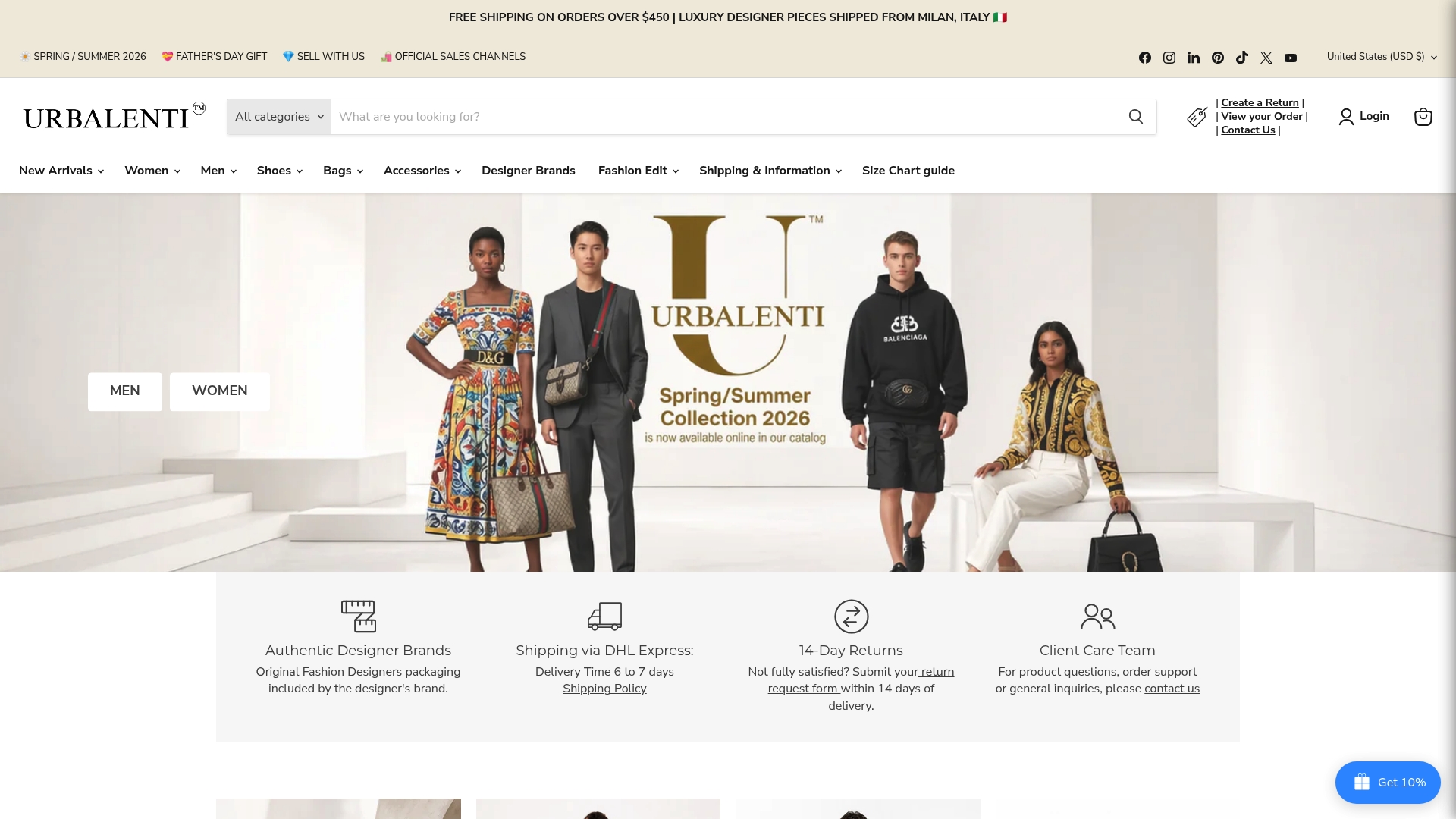
A Balenciaga designer t-shirt carries the house’s graphic authority. The Dolce & Gabbana Sicily handbag reflects decades of Italian craft and the brand’s signature regional identity. Jimmy Choo Diamond Light sneakers demonstrate how a footwear house translates its design codes into contemporary silhouettes. Every piece at Urbalenti™ NYC is sourced from Milan and shipped worldwide via DHL Express, with personalized support from selection to delivery.
Luxury brand legacy is the active preservation and evolution of a brand’s heritage, design codes, and identity over time. It is distinct from brand history because it functions as a living system that informs current creative and business decisions.
Archives serve as living resources where creative decisions are documented and preserved for future design reference. Houses like Cartier, Chaumet, and Boucheron use their archives directly to inspire contemporary collections.
Research shows that perceived heritage mediates consumer willingness to pay by increasing the perceived status and authenticity of a product. Clients assign higher value to pieces from houses with verifiable, consistent legacies.
History is a factual, chronological record of events. Heritage is culture actively preserved through design codes, materials, and narratives. Heritage requires ongoing management. History does not.
Hermès, Cartier, Tiffany & Co., and Patek Philippe are the most cited examples. Each maintains formal archives, consistent design codes, and prestige systems that collectively reinforce their brand identity across generations.
Leave a comment