
MY WISHLIST
MY WISHLIST

TL;DR:
- Luxury brands charge higher prices due to perceived exclusivity, craftsmanship, and brand reputation. Their pricing reflects controlled scarcity and long-term brand value rather than just production costs.
Luxury brands cost more because their prices reflect exclusivity, craftsmanship, and brand perception, not just production expenses. This is the foundation of luxury brand pricing, and it explains why a Gucci bag or a Saint Laurent jacket carries a price tag that a mass-market alternative never will. The cost of luxury goods is built on controlled scarcity, artisan labor, material quality, and decades of brand equity. Understanding why luxury items are expensive means looking at both the tangible and intangible factors in luxury pricing, from the ateliers of Milan to the psychology of the buyer.
Luxury pricing starts with perception, not with a cost-plus formula. A brand like Hermès does not set the price of a Birkin by calculating leather and labor and adding a margin. It sets the price to communicate a specific social position. The price itself is the product’s most powerful feature.
This is the concept of a Veblen good. Demand rises with price for certain luxury items, contrary to standard economic logic. Buyers interpret a higher price as proof of exclusivity and quality. Discounting that price sends the opposite signal and destroys the very thing buyers are paying for.
Luxury brands reinforce this perception through several deliberate mechanisms:
“Price communicates belonging and prestige faster than any explanation can.” This is why luxury pricing serves as a signaling mechanism for identity. Buyers are not just purchasing an object. They are purchasing a visible marker of status.
Behavioral economics reinforces this further. Reference pricing anchors buyers to a high baseline, making any purchase feel like a reasonable entry point into the category. Loss aversion makes buyers fear missing a limited release more than they value the money saved. These are not accidents of consumer behavior. They are features of luxury brand pricing strategy.
Perception sets the ceiling. Craftsmanship sets the floor. The physical cost of producing a genuine luxury item is substantially higher than most buyers realize, and that cost is real before any brand premium is applied.
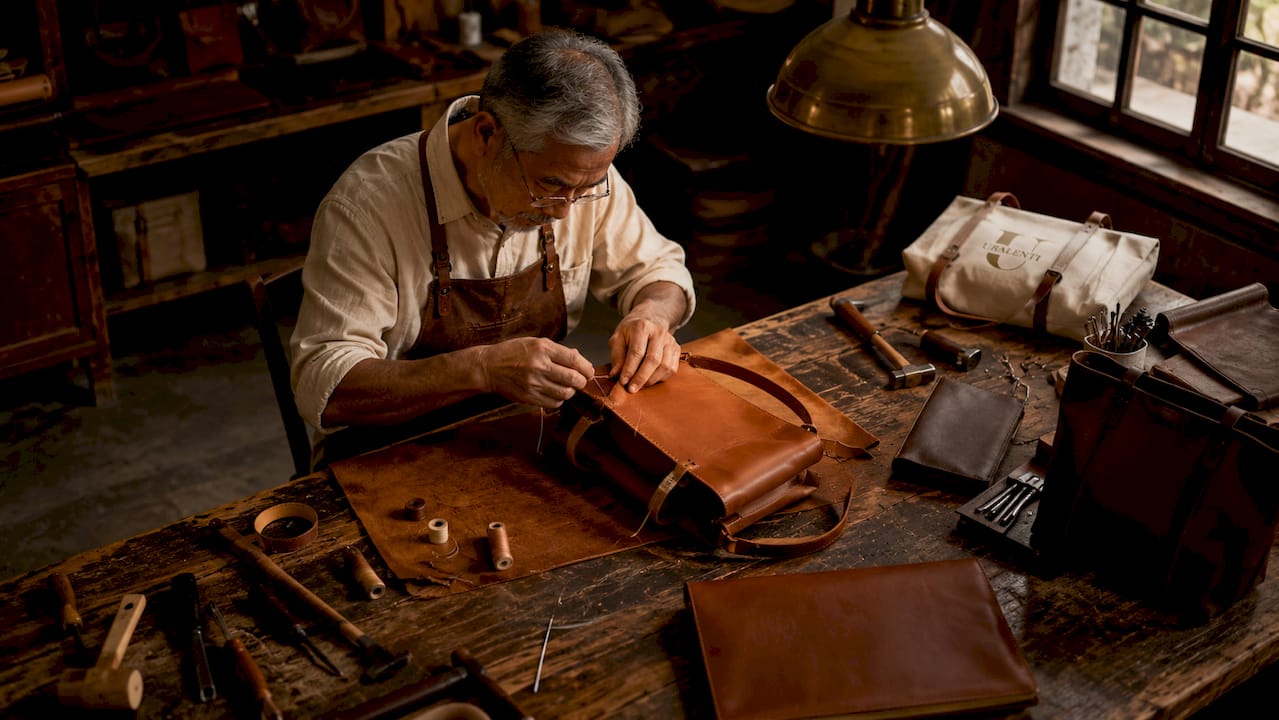
The Hermès Birkin is the clearest example. Hermès limits Birkin production to approximately 120,000 units annually despite demand that far exceeds that number. Each bag requires 18–24 hours of artisan labor. The craftspeople who build them train for five years before working on the final product. No machine replicates this. The scarcity is not manufactured for marketing purposes alone. It is a direct result of genuine capacity limits.
The materials used in luxury goods carry their own cost premium. Consider the differences:
| Cost factor | Luxury production | Mass-market production |
|---|---|---|
| Labor per unit | 10–40+ hours, skilled artisans | Minutes, automated lines |
| Material sourcing | Premium natural, traceable origin | Synthetic or low-grade natural |
| Production volume | Controlled, limited runs | Maximum volume |
| Quality control | Piece-by-piece inspection | Statistical sampling |
| Atelier location | Italy, France, Spain | Offshore, cost-optimized |
Economic conditions add further pressure to these costs. Tariffs and inflation have increased apparel and leather goods costs by approximately 35% from a first-cost perspective. That increase flows directly into retail prices, particularly for brands that refuse to compromise on sourcing or construction.
Pro Tip: When evaluating a luxury purchase, check where the item is made. Genuine luxury pieces from brands like Ferragamo, Moncler, and Emporio Armani are produced in Italy or France under strict atelier conditions. Country of origin is one of the fastest indicators of real production cost.
Brand heritage is not nostalgia. It is a financial asset. The accumulated history, cultural relevance, and reputation of a house like Gucci or Saint Laurent directly affects what buyers are willing to pay, independent of the physical product.
Luxury pricing reflects long-term brand value growth, cultural relevance, and global wealth distribution alongside inflation and exclusivity premiums. A brand that has dressed cultural icons, appeared in major films, and maintained consistent aesthetic identity for decades carries a premium that a newer brand cannot replicate regardless of product quality. This is brand equity, and it is built over generations.
Marketing investment sustains this equity. Luxury houses spend heavily on runway shows, editorial campaigns, celebrity partnerships, and flagship store environments. These investments do not lower the cost of goods. They raise the perceived value of owning them. A Dolce & Gabbana campaign shot in Sicily does not make the leather better. It makes the buyer feel connected to a specific world.
The most important pricing discipline in luxury is the refusal to discount:
This is why luxury brands destroy unsold inventory rather than discount it. Burberry famously incinerated millions of dollars in product before public pressure forced a policy change. The logic was sound from a brand-equity perspective, even if the practice was indefensible from a sustainability standpoint.
Luxury pricing is deliberate and focused on sustaining brand desirability over decades, not just quarters. This long-term orientation is what separates luxury brand pricing from premium brand pricing. A premium brand charges more for better quality. A luxury brand charges more for a specific identity, history, and cultural position that cannot be replicated.
The gap between luxury and affordable brand pricing is not simply a quality gap. It is a gap in pricing philosophy, production method, and the psychological contract between brand and buyer.
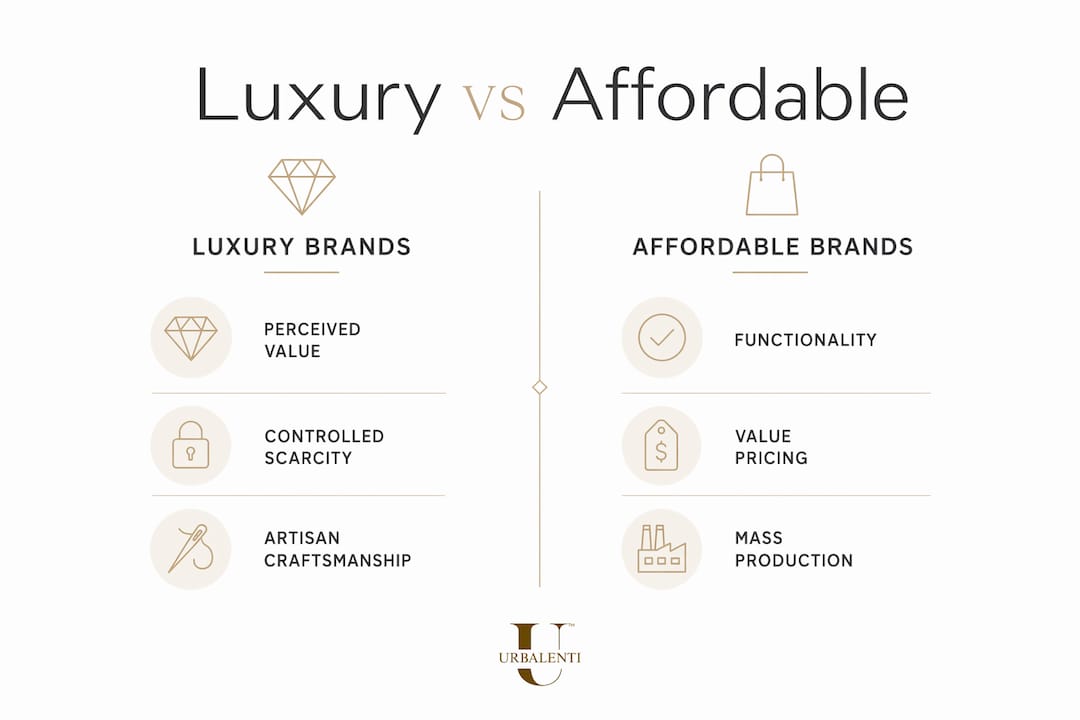
| Price driver | Luxury brands | Affordable brands |
|---|---|---|
| Pricing basis | Perceived value and exclusivity | Cost-plus margin |
| Production method | Artisan, limited volume | Automated, high volume |
| Material standard | Premium natural, traceable | Synthetic or commodity |
| Availability | Controlled, restricted | Wide distribution |
| Discounting policy | Rare to never | Frequent promotions |
| Consumer expectation | Status, identity, longevity | Function, value, trend |
| Brand investment | Heritage, culture, storytelling | Product features, price |
Affordable brands compete on function and value. A well-made coat from a mid-market brand keeps you warm and looks presentable. A Max Mara coat does the same, but it also signals a specific level of taste and financial position. The buyer pays for both the coat and the signal.
The psychological elements luxury brands use are absent from affordable brand strategy. Affordable brands do not create waiting lists. They do not restrict geographic availability. They do not retire products to protect scarcity. Their entire model depends on volume, which requires the opposite of everything luxury brands do.
Consumer behavior in each segment reflects this difference. Luxury buyers treat higher prices as marks of exclusivity and quality. Affordable buyers treat lower prices as marks of value. These are not the same buyer making the same decision at different price points. They are two different relationships between a consumer and a brand.
Pro Tip: The best way to assess whether a luxury price is justified is to examine three things: where it was made, how it was made, and whether the brand has a consistent history of quality at that price point. Brands like Golden Goose, Jacquemus, and Valentino each build their pricing on distinct combinations of these factors. Understanding what affects luxury prices in each case helps you buy with confidence.
One important caveat: not every price increase in luxury reflects genuine value growth. Between 2023 and 2025, approximately 80% of luxury market growth came from price increases rather than volume gains. That means many brands raised prices faster than they improved products. Raising prices faster than perceived quality damages the price-value equation and forces brands to rebuild consumer trust. Savvy buyers recognize this distinction.
Luxury brands cost more because their pricing is built on perception, controlled scarcity, artisan craftsmanship, and brand equity, not just production costs.
| Point | Details |
|---|---|
| Perception drives price | Luxury pricing starts with exclusivity signals, not cost-plus formulas. |
| Craftsmanship sets the floor | Artisan labor, premium materials, and limited production create real cost minimums. |
| Heritage adds intangible value | Decades of brand equity and cultural relevance justify premiums beyond physical quality. |
| Discounting destroys brand equity | Luxury brands refuse heavy discounts because price integrity protects long-term value. |
| Not all price increases are justified | Some luxury price rises outpace quality gains, requiring buyers to evaluate carefully. |
I have spent years watching buyers approach luxury purchases with the wrong question. They ask, “Is this worth the price?” when the more useful question is, “What exactly am I buying?”
A Dolce & Gabbana Sicily bag is not just leather and hardware. It is a specific construction method, a traceable supply chain, a brand with decades of cultural output, and a resale market that holds value in ways a mass-market bag never will. The price reflects all of that. When buyers understand this, the number on the tag becomes a data point, not a shock.
What concerns me more is the trend of price increases that outpace genuine quality improvements. After years of price increases without equivalent quality gains, luxury brands face a real breach of consumer trust. This is not a minor issue. It is a structural problem that forces buyers to be more discerning than ever. Knowing what is luxury fashion at its core, versus what is simply expensive, is now a practical skill.
My recommendation is to buy fewer pieces and buy them well. A single Valentino jacket or a pair of Jimmy Choo shoes bought from a trusted source, authenticated, and fulfilled from Italy, is a better investment than three mid-range purchases that depreciate immediately. Curation matters more than catalog size. The brands that hold their value, Saint Laurent, Gucci, Bottega Veneta, Givenchy, do so because they have maintained the discipline of genuine luxury: limited supply, real craftsmanship, and consistent brand identity.
— Admin Urbalenti
Urbalenti™ NYC carries authenticated pieces from Saint Laurent, Gucci, Valentino, Givenchy, Dolce & Gabbana, Emporio Armani, Golden Goose, and more. Every order is fulfilled from Milan, Italy, and shipped worldwide via DHL Express.
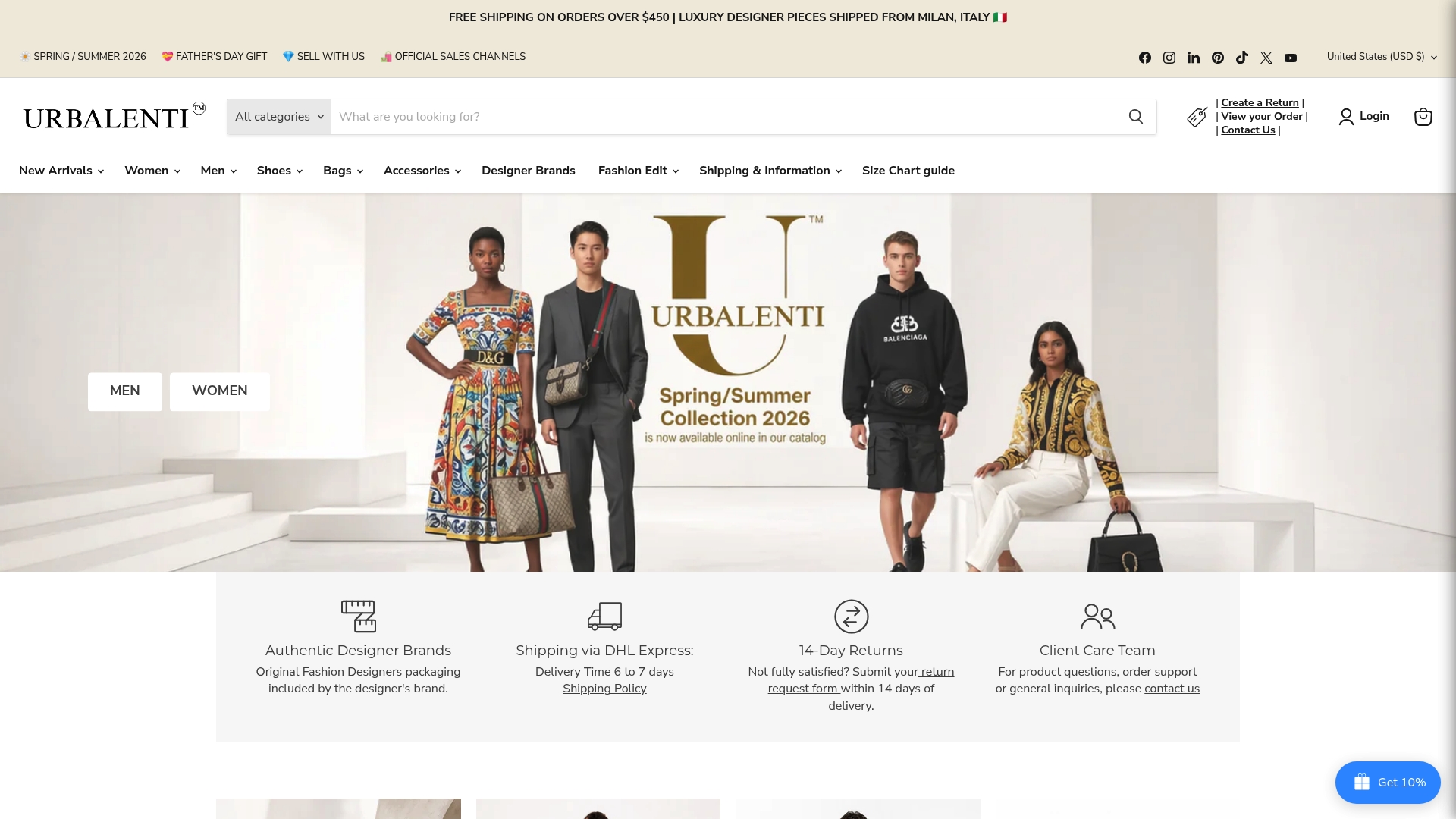
The selection at Urbalenti™ NYC is intentionally curated, not a mass catalog. Clients receive personalized support from selection through delivery, with full authenticity assurance on every piece. If you are ready to invest in genuine luxury, the Dolce & Gabbana Sicily handbag and the Jimmy Choo Diamond Light Flex sneakers are strong starting points. Both reflect the craftsmanship and brand equity that justify their price points.
Luxury brands price based on perceived value, controlled scarcity, artisan craftsmanship, and brand heritage rather than simple cost-plus formulas. The price itself functions as a signal of exclusivity and identity.
A Veblen good is a product where demand increases as price rises, because buyers interpret the higher price as proof of exclusivity and quality. Many luxury items, including Hermès Birkin bags and Saint Laurent accessories, function as Veblen goods.
Luxury brands rarely discount, and when they do, it is typically through private sales or end-of-season events rather than public promotions. Heavy discounting damages brand equity by undermining the exclusivity signal that justifies the price.
Tariffs and inflation have increased apparel and leather goods costs by approximately 35% from a first-cost perspective, according to McKinsey. These cost increases flow into retail prices, particularly for brands that maintain strict sourcing and production standards.
Check where the item was made, how it was constructed, and whether the brand has a consistent history of quality at that price point. Brands with genuine atelier production in Italy or France, traceable materials, and strong resale value offer the clearest justification for premium brand value.
Leave a comment