
MY WISHLIST
MY WISHLIST

A Prada authenticity check works best as a combination of physical inspections, not a single test. The most reliable signals are the triangle logo plaque, the interior enamel plate, a serial number that matches the authenticity card character-for-character, and uniform hardware and zippers throughout the piece. No single code lookup can confirm authenticity on its own. Run the checklist below first, then escalate to a professional authenticator if the item is high-value or any signal looks inconsistent.
TL;DR:
- Most counterfeit Prada bags fail key checks within seconds, especially at the triangle logo plaque, enamel finish, and zipper engravings, making early detection straightforward.
- Genuine Prada hardware, zippers, and metal components share the same color and finish, with authentic zippers featuring clear “PRADA” engravings from trusted manufacturers like YKK or Riri.
- The interior lining of authentic Prada nylon bags displays a specific alternating pattern, while the authenticity card’s typography and matching codes are critical for confirming legitimacy.
- Relying solely on codes or labels can be misleading, so high-value bags require professional authentication, especially when provenance or high resale value is involved.
- Buying from verified sources with inspected inventory and transparent sourcing reduces the risk of counterfeit purchases compared to private, unverified transactions.
You do not need a lab to catch the obvious fakes. Most counterfeit Prada bags fail at least two or three checks in the list below within the first few minutes of handling, whether you’re standing in front of the bag or scrolling through a seller’s photos.
If you’re buying remotely, ask the seller for close-up photos of the logo plaque, the interior patch, the authenticity card, the zipper engraving, and the lining pattern at the seam.
Pro Tip: Ask for photos taken in natural daylight, straight on rather than at an angle. Glare from indoor lighting hides texture on the enamel plaque, which is exactly the detail that separates a real bag from a convincing copy.
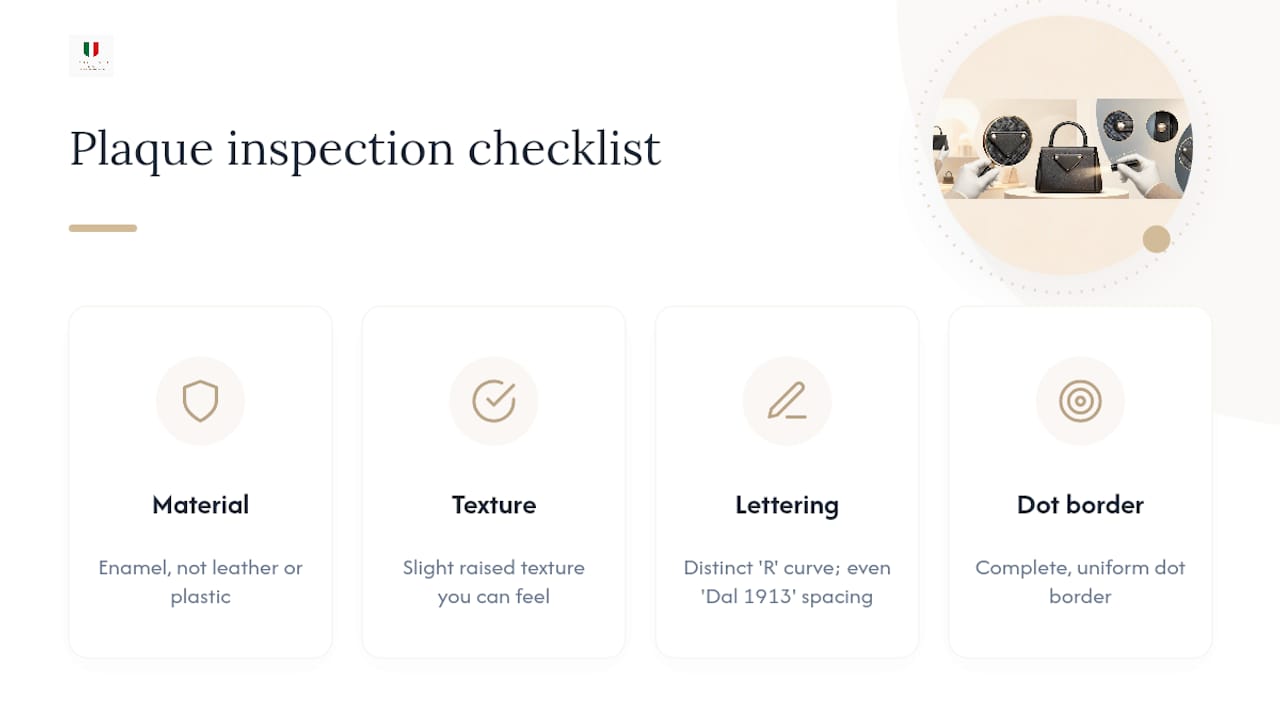
The triangle plaque is where most fakes fall apart under close inspection, and it is where you should spend the bulk of your first pass. Genuine Prada plaques use enamel, not stamped leather or plastic, and the surface has a slight raised texture you can feel with a fingertip. Look closely at the lettering: the “R” in the crest should have a distinct curve, the spacing in “Dal 1913” should be even, and the dot border ringing the crest should be uniform and fully formed, not blurred or missing dots.
Hardware consistency matters just as much as the plaque itself. Every metal component on a genuine bag, the zipper pulls, the feet, the D rings, should share the same color and finish. Mixed metal tones, one piece brushed and another shiny, is one of the most common counterfeit tells because factories producing fakes often source hardware from multiple suppliers.
Zippers deserve their own close look. Prada sources zippers from established manufacturers including Lampo, Riri, and YKK, and the pull should carry a clean, evenly spaced “PRADA” engraving rather than a shallow or crooked stamp. The zipper should also operate smoothly. Sticking, grinding, or a visible plastic slider on a bag styled after a modern Prada model is a red flag.
Nylon Prada pieces, in particular the classic Tessuto styles, are among the brand’s most frequently counterfeited materials, which is why tactile checks on weave and sheen carry real weight for anyone shopping the nylon lines specifically.
The white factory tag, typically sewn into an interior seam or pocket lining, carries a short alphanumeric code that identifies the model and material. On its own, that code only tells you the format is plausible. It does not prove the bag came off a Prada production line.
Missing a card or tag on a pre-owned bag does not automatically mean it’s fake. Secondhand pieces frequently lose their original paperwork, which simply means you lean harder on the physical checks that follow.
Flip the bag inside out and look at the jacquard lining. Genuine Prada nylon bags use a lining where the “PRADA” text and rope motif alternate in orientation from panel to panel, a detail that’s surprisingly hard for counterfeiters to replicate consistently across an entire interior.
Pro Tip: If you’re eyeing a vintage or relined bag, check the interior lining seams for uneven stitching or mismatched thread color. A professional relining job is common on well-loved vintage Prada and isn’t itself a red flag, but sloppy relining can mask a lining swap done to disguise a counterfeit shell.
Your own inspection is usually enough for a low-risk purchase from a known, reputable seller. Once the price climbs into four figures, or the seller is unfamiliar and the provenance is unclear, bring in a professional before you commit.
Professional authenticators go further than a visual pass. They cross-reference archived Prada models against current and past collections, examine materials under magnification, and, where applicable, verify NFC or Aura-linked provenance directly against manufacturer records rather than relying on a photo. That’s also the standard retailers use before listing designer inventory for resale, which is worth knowing if you’re evaluating whether a seller’s own claims of authentication hold up.
Buying from an unverified private seller means doing all of this detective work yourself and hoping you got it right. We remove that guesswork by inspecting each piece before listing it.
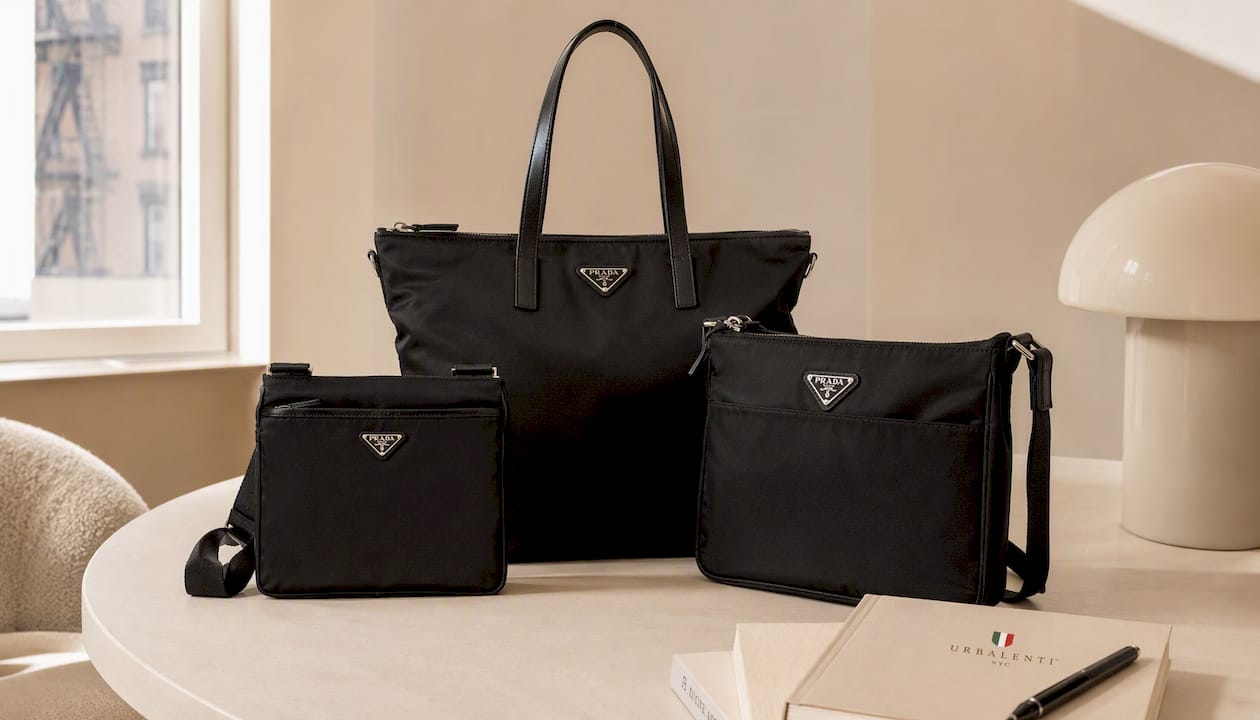
Every listing ships from Italy with full transparency on sourcing, so you’re not left cross-referencing a stranger’s photos against a checklist and hoping the lighting didn’t hide something. If you’re shopping the nylon lines specifically, Urbalenti NYC currently carries an inspected Prada Black Nylon Shoulder Bag, a Prada Black Nylon Crossbody Bag, and a Prada Black Nylon Tote Bag, each vetted before listing. Want more detail on how a piece was sourced or inspected? Reach out through the product page and ask before you check out.
Verification is not a formality. A curated model works better than a private marketplace gamble because every piece gets checked against consistent standards before reaching a customer, and that standard does not bend for a faster sale. If you take one thing from this piece, take this: for anything above casual pocket money, documented provenance and inspected inventory beat a confident seller and a blurry photo every time. Understanding what counts as genuine brand authenticity in luxury fashion is the first step toward shopping with confidence instead of crossed fingers.
— Admin Urbalenti™ NYC
Yes, but treat it as a screening step only. The format can be checked against known conventions, though a plausible code doesn’t prove the bag is genuine since counterfeiters copy realistic formats.
Find the white factory tag inside a seam or pocket, then compare its code character-for-character against the authenticity card. A mismatch is a clear warning sign.
Check the triangle logo plaque for enamel texture and correct lettering, confirm the interior enamel plate matches, inspect zippers for clean engraving, and check the jacquard lining for alternating orientation. Consistency across all of these is the strongest signal.
A genuine card uses a specific cardstock weight and clean, evenly spaced typography, with a code that must match the interior patch exactly. Any variation in font, spacing, or code between the card and the patch points to a fake.
Editorial Note: Product availability, pricing, and shipping conditions may change. All products featured by URBALENTI™ NYC are 100% authentic and original. Please refer to the applicable product page and store policies for current details.
Leave a comment