
MY WISHLIST
MY WISHLIST

TL;DR:
- Properly fitted, structured pieces with limited accessories create polished designer office outfits. Layering should follow a three-step process using tonal, lightweight fabrics to maintain a refined silhouette. Restraint in accessories, particularly metallic tones and structured bags, enhances professional credibility across various workplace dress codes.
Styling designer outfits for office settings is defined by three decisions: fit, layering, and accessory restraint. Get those three right, and a Valentino silk blouse or a Max Mara blazer reads as polished authority rather than weekend indulgence. Get them wrong, and even the most expensive piece looks out of place. The principles covered here draw on guidance from Vogue, WMN Magazine, and Perkler to give you a clear, practical framework for wearing designer fashion at work without compromising professionalism. This is not about dressing down your wardrobe. It is about controlling the silhouette through structure and intention.
The foundation of any strong designer office look is a tailored base piece with a clean silhouette. Fit takes precedence over formality. A well-cut trouser from Emporio Armani or a structured midi skirt from Givenchy communicates professionalism more clearly than an ill-fitting suit ever could. Fit and fabric quality matter more than the formality level of the garment itself, according to WMN Magazine’s 2026 styling guidance. That principle shifts the focus from dress codes to construction.
Tailored trousers are the most versatile base piece in a designer office wardrobe. Pleated trousers from Brunello Cucinelli or straight-leg cuts from Saint Laurent work across formal and business casual environments. Pencil skirts and midi-length A-line skirts in wool or ponte fabric hold their shape through a full workday. Vogue highlights an ivory silk skirt paired with a collarless blazer as a polished 9-to-5 look that reads as both fashion-forward and workplace-appropriate. The key is that the skirt’s structure does the work, not the styling around it.
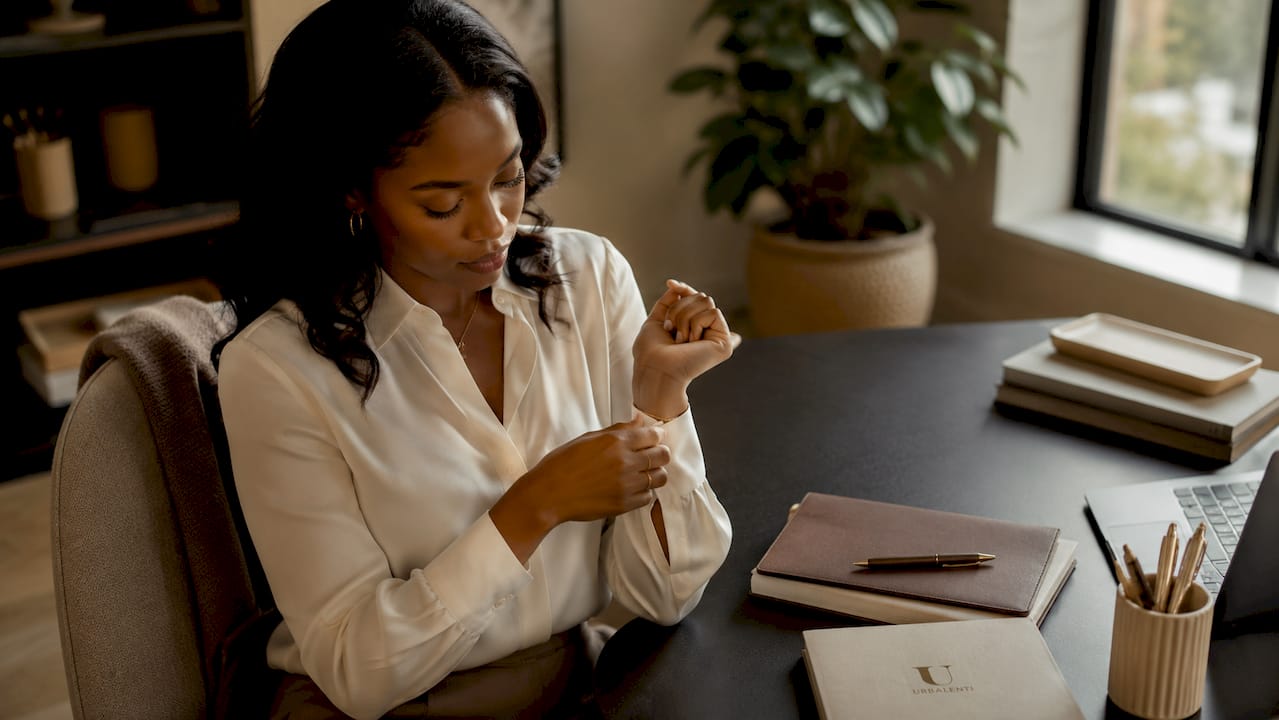
A fitted blouse in silk or a fine-gauge knit in a neutral tone anchors the top half of any office outfit. Button-up shirts in poplin or silk, like the Dolce & Gabbana poplin shirt available at Urbalenti™ NYC, offer a clean base that layers well and holds its shape. Quality knits from Max Mara, such as the Max Mara Veloce Sweater, provide texture without bulk. The fabric weight and construction of these pieces signal intentionality. That signal is what separates elevated office attire from generic business wear.
Foundational piece checklist for designer office styling:
Pro Tip: When selecting a base piece, hold it against your body and check that the shoulder seam sits exactly at the shoulder point. A misaligned shoulder seam undermines the entire silhouette, regardless of the brand.
Luxury layering is a deliberate process. The goal is depth and refinement, not volume. Effective luxury layering involves a specific order, fit harmony, and material coordination, according to Perkler’s 2026 guidance. That means starting with a fitted base, adding one structured mid-layer, and finishing with a minimal outer piece if the environment requires it.
Fabric pairing determines whether a layered look reads as polished or mismatched. Silk with wool is the most reliable combination for office settings. The contrast in texture adds visual interest without disrupting the professional tone. Lightweight fabrics like silk and cashmere are the correct choice for layering because they maintain a sleek silhouette. Avoid pairing two structured fabrics of similar weight, such as a heavy wool blazer over a thick cotton shirt. The result is bulk, not refinement.
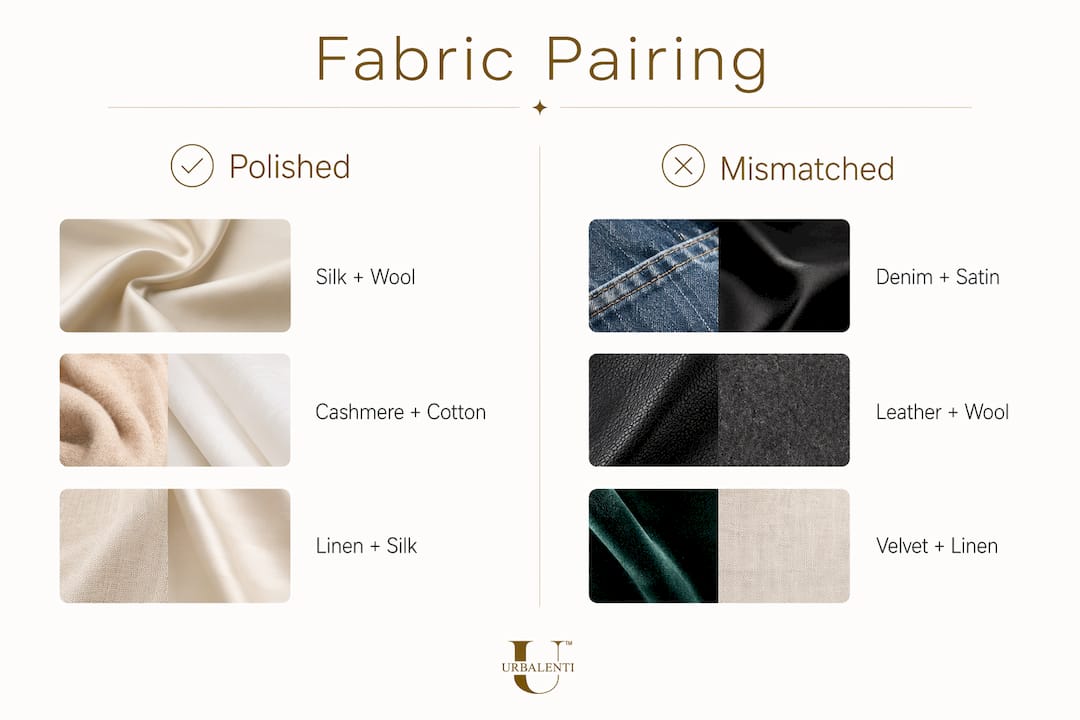
Pro Tip: Tonal dressing, where every layer sits within the same color family, is the fastest way to make a layered look appear considered. Monochrome whites and ivory tones, as seen in Vogue’s 2026 office styling, are particularly effective for summer and transitional months.
| Combination | Result |
|---|---|
| Silk blouse + wool blazer + tailored trouser | Polished, professional, textured |
| Heavy cotton shirt + structured blazer | Bulky silhouette, undermines tailoring |
| Fine-knit top + collarless jacket + crepe trouser | Clean, refined, office-appropriate |
| Oversized knit + wide-leg trouser | Too relaxed for most office environments |
| Cashmere turtleneck + longline blazer | Sophisticated, works for formal and business casual |
Accessories define the finish of a designer office outfit. The wrong choice disrupts the entire composition. The right choice makes the outfit read as complete and intentional. Structured bags and polished shoes are the two non-negotiable accessories for elevating business casual looks, according to WMN Magazine.
A structured leather tote is the most functional and visually appropriate bag for office settings. The Balenciaga Small Duty Free Tote or the Dolce & Gabbana My Sicily leather tote available at Urbalenti™ NYC both offer the clean lines and structured shape that work with tailored office outfits. Avoid crossbody bags with visible chain hardware for formal office environments. They read as casual regardless of the brand. For footwear, sleek loafers, pointed-toe flats, or low-block-heel pumps in leather or suede are the most office-appropriate choices. The Grey Journal’s office siren aesthetic framework identifies eyewear, bags, and shoes as the three accessories that carry the most visual authority in a professional setting.
Jewelry works best in office settings when it is minimal and consistent in metallic tone. Matching gold or silver tones across all jewelry and hardware, including bag clasps and belt buckles, reduces visual clutter and creates harmony across the outfit. Mixing gold and silver in the same look fragments the eye’s path and makes the outfit appear unplanned. Choose one metallic family and apply it to every metal element in the look.
Accessory reference guide for designer office styling:
| Accessory Category | Office-Appropriate Choice | What to Avoid |
|---|---|---|
| Bag | Structured leather tote or top-handle bag | Chain crossbody, logo-heavy bucket bag |
| Shoes | Leather loafers, pointed flats, low-block heels | Platform sneakers, open-toe sandals |
| Jewelry | Minimal gold or silver pieces, consistent tone | Mixed metals, oversized statement earrings |
| Eyewear | Clean acetate or thin metal frames | Oversized tinted lenses |
| Belt | Slim leather belt in matching shoe tone | Wide statement belts with large hardware |
Pro Tip: Personal style markers read as confident self-expression only when the base outfit is already cohesive. Add one distinctive piece per outfit, not three.
Office dress codes in 2026 range from formal to entirely ambiguous. Each environment requires a different calibration of the same core principles. The elevated basics formula applies across all three categories, but the execution shifts depending on the workplace culture.
Formal offices require the most structured interpretation of designer workwear. Tailored trousers with a fitted blazer and a silk blouse represent the standard formula. On client-facing days, the blazer is non-negotiable. It signals preparation and authority. Brands like Brunello Cucinelli, Max Mara, and Givenchy produce pieces specifically suited to this environment. Their cuts are precise, their fabrics are substantial, and their color palettes lean toward neutrals that photograph and present well in professional settings.
Ambiguous dress codes are where most professionals make styling errors. The instinct is to either overdress in a full suit or underdress in relaxed separates. Neither is correct. Elevated basics signal intentional professionalism more reliably than overt formality in offices with no clear dress code. The formula is tailored trousers plus a quality knit or blouse, with a blazer reserved for client days. This approach works because it reads as considered without appearing stiff.
Dress code adaptation checklist:
Creative professionals face a different challenge. The expectation is that personal style is visible, but the work environment still requires a level of professionalism. MioLook’s guidance on creative business style identifies architectural cuts and unusual fabric choices as the most effective way to balance creativity with professional credibility. A Jacquemus structured top or a Bottega Veneta knit with an interesting weave communicates design awareness without abandoning workplace appropriateness. The structure of the garment carries the professional signal. The fabric or cut carries the creative one.
Dark tailored jeans are the most practical base piece for relaxed creative offices. Pair them with a structured blazer from Saint Laurent or a quality overshirt like the Zegna Crossover Overshirt and clean leather footwear. The result is a look that fits a relaxed office culture while maintaining the visual discipline that designer pieces require.
Styling designer outfits for office settings requires fit precision, deliberate layering, and accessory restraint applied consistently across every workplace dress code.
| Point | Details |
|---|---|
| Fit over formality | A well-cut designer piece in any category reads as professional when the fit is precise. |
| Three-layer formula | Base, mid-layer, and optional outer layer in tonal, complementary fabrics create depth without bulk. |
| Accessory restraint | Consistent metallic tones and structured bags complete the look without competing with it. |
| Elevated basics formula | Tailored trousers plus a quality knit or blouse outperforms formal suits in ambiguous dress code offices. |
| Creative office calibration | Architectural cuts and textural fabric choices communicate professionalism and design awareness simultaneously. |
The most common mistake I see is treating the office as a runway. Designer pieces are chosen for their construction and material quality, not for their visibility. The professionals who wear luxury fashion most effectively at work are the ones you notice last. Their outfits register as polished and considered, not as a catalog page.
The office siren aesthetic that Grey Journal documented in 2026 is worth understanding because it codifies something that experienced dressers have always known. The formula is not about showing more. It is about showing the right things with precision. Eyewear, a structured bag, and clean footwear carry more authority in a conference room than a logo-heavy piece ever will.
My observation from working with designer fashion is that the brands most suited to office environments are the ones that invest in construction over decoration. Max Mara, Brunello Cucinelli, and Emporio Armani build garments that hold their shape under professional conditions. Saint Laurent and Givenchy offer pieces with enough structural discipline to work in formal settings while retaining a distinct point of view.
The one piece of advice I return to consistently: buy fewer pieces and wear them more deliberately. A single Max Mara blazer styled three different ways across a week communicates more sophistication than seven different outfits assembled without intention. Restraint is not a limitation. It is the defining characteristic of how designer fashion actually works in professional environments.
— Admin Urbalenti
Urbalenti™ NYC carries the tailored pieces, quality knits, and structured accessories that the styling principles in this article require. Every item is sourced from Milan and authenticated before shipping worldwide via DHL Express.
The current selection includes silk knits from Saint Laurent, structured shirts from Dolce & Gabbana, and designer tote bags suited to formal and business casual offices. For a complete office-ready look, the Dolce & Gabbana silk knit polo layers precisely over tailored trousers and pairs with structured footwear. Browse the full designer fashion edit at Urbalenti™ NYC to find pieces that fit the elevated basics formula. Every client receives personalized support from selection through delivery.
Fit, structure, and accessory restraint are the three factors that make a designer outfit appropriate for office settings. A well-cut piece in a neutral or tonal palette reads as professional regardless of the brand or price point.
Use lightweight fabrics like silk and cashmere for layering, and always tuck in the base layer to define the waist before adding a mid-layer. Thin, fitted layers in complementary fabrics create depth without adding bulk to the silhouette.
A structured leather tote or top-handle bag in a neutral tone is the most office-appropriate choice. Avoid chain crossbody bags and logo-heavy styles in formal or client-facing environments.
Creative offices allow more latitude for architectural cuts and textural fabric choices, but structure still matters. Architectural cuts and unusual fabrics communicate design awareness while maintaining professional credibility.
The elevated basics formula combines tailored trousers with a quality knit or silk blouse, reserving a blazer for client-facing days. This approach works across ambiguous dress codes because it signals intentional professionalism without requiring formal attire.
Leave a comment