
MY WISHLIST
MY WISHLIST

TL;DR:
- Limited edition luxury fashion items are produced in restricted quantities to enhance exclusivity and collectibility. The market favors pieces with authentic provenance, small production runs, and documented history, which retain long-term value. Curated collections from reputable sources, like Urbalenti™ NYC, focus on craftsmanship and authenticity to ensure investment quality.
Limited edition luxury fashion items are defined as products manufactured in deliberately restricted quantities to create exclusivity, heightened desirability, and lasting collectible value. The luxury collectibles market has seen category sales for limited editions grow 20% year over year in recent years, driven by rising collector interest and digital hype. That growth signals a structural shift: collectors and fashion enthusiasts now treat rare designer pieces as both personal style statements and long-term investment assets. Urbalenti™ NYC curates authenticated selections from this category, sourced directly from Milan, for clients who want certainty alongside exclusivity.
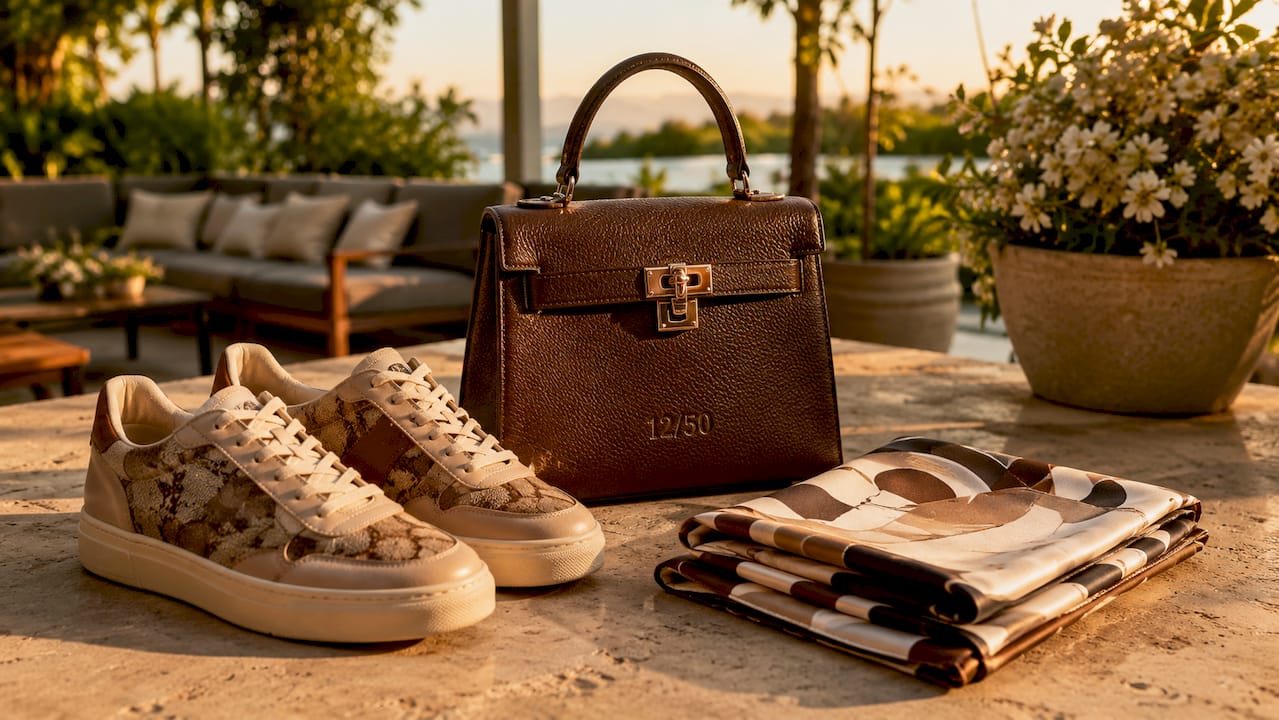
The types of limited edition luxury fashion items span several distinct categories, each defined by a specific scarcity mechanism and creative intent. Understanding these categories helps collectors make deliberate acquisitions rather than reactive purchases.
Pro Tip: When evaluating any limited edition piece, ask for the production number and the total edition size. A piece numbered 3 of 500 carries less scarcity value than one numbered 3 of 12.
Brands use limited editions as controlled experiments. The strategic tension between scarcity and scale is central to their success: a release must be rare enough to feel exclusive but visible enough to generate cultural momentum. Collectors who understand this mechanism can identify which releases are genuine cultural artifacts and which are primarily marketing vehicles.
Limited edition handbags represent the most liquid segment of the luxury fashion collectibles market. Their value rests on a combination of craftsmanship, documented rarity, and cultural provenance that few other fashion categories can match.
The Hermès Birkin is the clearest benchmark. Exotic and Himalaya Birkin variants frequently exceed $100,000 at auction, with Sotheby’s reporting record-breaking sales in 2025. That price level reflects more than material cost. It reflects the convergence of meticulous hand construction, a waiting list that functions as a scarcity signal, and decades of documented resale performance.
Several factors separate a collectible handbag from a merely expensive one:
| Factor | Impact on value |
|---|---|
| Numbered edition below 50 | Strong premium at resale |
| Documented artisan provenance | Verifiable authenticity, higher auction bids |
| Original packaging retained | Preserves 10–30% of resale value |
| Cultural association (celebrity, event) | Adds narrative premium beyond material cost |
| Organic vintage rarity | More stable long-term appreciation than manufactured scarcity |
Unique luxury handbags from houses like Dolce & Gabbana, with embroidered leather construction and named artisan records, occupy a similar collectible tier. The Dolce & Gabbana Sicily in embroidered leather is a current example of this category: a named silhouette, a specific material treatment, and a documented production run.
Pro Tip: Auction results from Sotheby’s and Christie’s are publicly searchable. Cross-referencing a bag’s model number against past auction records gives you real market data before you buy.
Luxury streetwear has moved well past logo repetition. The current collector market values artist-inspired designs produced in very small batches, often fewer than 50 pieces, where originality and emotional narrative carry more weight than brand recognition alone.
“Luxury fashion collectors increasingly approach purchases as acquiring wearable art, focusing on originality, craftsmanship, and narrative rather than just logo prestige.” — Amy Page DeBlasio
This shift changes how collectors build wardrobes. A curated wardrobe of limited release clothing is assembled with the same deliberateness as an art collection: each piece selected for its creative intent, its edition size, and its cultural moment. Impulse buying produces a closet. Intentional collecting produces a portfolio.
Three qualities separate collectible apparel from limited release clothing that simply sells out fast:
Brands like Gucci and Givenchy have produced apparel editions that function as wearable art: printed with original artwork, produced in editions under 100, and accompanied by documentation that positions the garment as a collectible object. A Balenciaga designer T-shirt from a specific seasonal drop, for example, carries a different collectible argument than a standard production piece from the same house.
The collector mindset also shifts the relationship with wear. Some collectors display pieces unworn. Others wear them deliberately, understanding that condition affects resale but that personal use is part of the object’s ongoing narrative. Neither approach is wrong. The key is intentionality.
Limited edition footwear and high-end fashion accessories occupy a distinct position in the collectibles market. They are wearable, visible, and often more accessible in price than rare handbags, which makes them a practical entry point for new collectors.
Limited edition sneakers and designer collaborations serve as status symbols and collectible items within luxury fashion. Their value rests on artisanal detail, restricted production, and the cultural weight of the collaboration behind them. Jimmy Choo’s Diamond Light series, for example, combines hand-applied crystal detailing with a numbered production run. That combination of craft and scarcity defines the collectible tier.
Pro Tip: Footwear and accessories in limited editions often retain their original boxes and dust bags. Collectors who store these items in climate-controlled conditions with original packaging consistently achieve stronger resale results.
The types of designer accessories that perform best as collectibles share one quality: they were designed with a specific creative intent, not simply produced in low numbers for commercial effect. That distinction is the difference between a piece that appreciates and one that merely sells out.
Collectors building a fashion portfolio treat footwear and accessories as complementary holdings. A rare handbag anchors the collection. Limited edition shoes and accessories fill it out with pieces that are wearable, visible, and culturally legible to other collectors.
The Knight Frank Wealth Report 2026 notes a restabilization of the luxury collectibles market, with investors now prioritizing provenance, historical market data, and long-term value retention over short-term hype. That shift reflects a maturation of the collector base. Early adopters chased drops. Experienced collectors chase documentation.
Provenance is the single most important factor in long-term value retention. A piece with a clear ownership history, original receipts, authenticity certificates, and documented production numbers is categorically more valuable than an identical piece without that paper trail. This is why brand authenticity is not a soft concept in this market. It is a measurable financial variable.
Historical market data matters equally. Collectors who cross-reference auction results, resale platform data, and brand production records before acquiring a piece make decisions grounded in evidence. The luxury fashion brands worth investing in are those with consistent auction performance, documented scarcity, and cultural relevance that extends beyond a single season.
Balancing passion with investment outlook is the practical challenge. Pieces acquired purely for financial return often sit unworn and unappreciated. Pieces acquired purely for personal enjoyment may not meet the documentation standards that support resale. The most effective collectors hold both motivations simultaneously, selecting pieces they genuinely want to own and that meet objective collectible criteria.
The most effective approach to collecting limited edition luxury fashion items combines documented provenance, genuine creative intent, and objective market data to separate lasting collectibles from short-term hype.
| Point | Details |
|---|---|
| Provenance drives value | Retain original receipts, certificates, and packaging to preserve and verify collectible status. |
| Organic rarity outperforms manufactured scarcity | Vintage pieces with authentic rarity appreciate more consistently than artificially capped new releases. |
| Edition size is measurable | Always confirm the total production number; smaller editions command stronger resale premiums. |
| Documentation is a financial variable | A piece with a clear ownership history is categorically more valuable than an identical undocumented piece. |
| Wearable art requires creative intent | Collectible apparel and accessories embed genuine artistic vision, not just restricted supply. |
The collector market has changed significantly in recent years, and not always in the direction people expect. The conversation used to center on which brand dropped what and how fast it sold out. Now the serious collectors I observe are asking different questions: Who made it? How many exist? What is the documented history?
That shift is healthy. It means the market is maturing past hype and toward genuine connoisseurship. The pieces that hold value are the ones that were designed with real creative intent, produced with craft that can be verified, and documented with the kind of paper trail that supports a resale claim years later.
What concerns me is the persistence of manufactured scarcity as a substitute for genuine rarity. A brand that caps production at 500 units for commercial effect is not producing a collectible. It is producing a marketing event. Collectors who cannot distinguish between the two will overpay for pieces that depreciate quickly.
The guidance I give consistently is this: treat authentic designer pieces as the baseline, not the aspiration. Authenticity is the floor, not the ceiling. Above that floor, you evaluate creative intent, edition size, provenance, and cultural relevance. Those four criteria, applied consistently, produce a collection that holds both personal and financial value over time.
The collectors who approach this market with patience and specificity are the ones who build portfolios worth holding. The ones who chase drops without documentation end up with closets full of pieces that are difficult to sell and impossible to verify.
— Admin Urbalenti
Urbalenti™ NYC curates authenticated limited edition designer fashion sourced directly from Milan, with worldwide DHL Express delivery and personalized client support from selection through delivery.
The current collection includes rare designer pieces across handbags, footwear, and apparel, each selected for authenticity, craftsmanship, and collectible credentials. The Dolce & Gabbana Sicily handbag in embroidered leather and the Jimmy Choo Diamond Light Flex sneakers represent the kind of documented, artisan-crafted pieces that define this category. Every order is treated as a VIP experience, with dedicated support and full authenticity assurance from Urbalenti™ NYC’s Milan-sourced inventory.
A limited edition luxury fashion item is produced in a deliberately restricted quantity, often with documented edition numbers, to create exclusivity and collectible value. The defining criteria are restricted production, verifiable authenticity, and creative intent beyond standard catalog offerings.
The Knight Frank Wealth Report 2026 confirms that investors now prioritize provenance and historical market data over hype, with the luxury collectibles market restabilizing around data-backed acquisitions. Pieces with documented rarity and strong auction histories perform most consistently.
Manufactured scarcity refers to intentionally capped new releases used as a marketing tool. Organic rarity describes authentic vintage scarcity caused by time and preservation, which typically offers more consistent long-term value appreciation.
Handbags with documented provenance, numbered footwear collaborations, and apparel produced in editions under 50 pieces with authenticity certificates hold value most consistently. Original packaging and ownership documentation are critical to maintaining resale strength.
Authenticity verification requires original receipts, brand-issued certificates, production numbers, and, for high-value pieces, third-party authentication. Purchasing from curated retailers with Milan-sourced inventory and documented authenticity guarantees, such as Urbalenti™ NYC, eliminates the primary verification risk.
Leave a comment