
MY WISHLIST
MY WISHLIST

Brand authenticity in luxury is defined as a brand’s genuine alignment between its stated heritage, production methods, and values, expressed consistently across every product and consumer interaction. This is not a marketing concept. It is a structural commitment that consumers now verify actively before spending. 85% of US and UK consumers report willingness to pay more for authentic brands, and 52% would stop purchasing after a single inauthentic experience. That data point signals a fundamental shift: authenticity is no longer assumed in luxury. It is earned, tested, and either confirmed or rejected by the buyer. Brands like Cartier have built century-long reputations on exactly this principle, and consumers increasingly hold every other luxury house to the same standard.
Perceived authenticity correlates directly with consumer behavior. Research shows authenticity drives trust with a correlation coefficient of 0.54 and loyalty at 0.47. Those numbers mean that when a consumer believes a brand is genuine, they are significantly more likely to return, recommend, and pay a premium. This is not abstract psychology. It translates directly into revenue and long-term brand equity.
Authenticity in luxury fashion operates across several layers. The first is heritage, meaning documented history of craft, origin, and design philosophy. The second is consistency, meaning the brand’s aesthetic, quality, and values do not shift based on trend cycles or commercial pressure. The third is transparency, meaning the brand communicates honestly about how and where products are made. Cartier’s consistent use of its Panther motif since 1914 is a textbook example of iconicity serving as an authenticity signal.
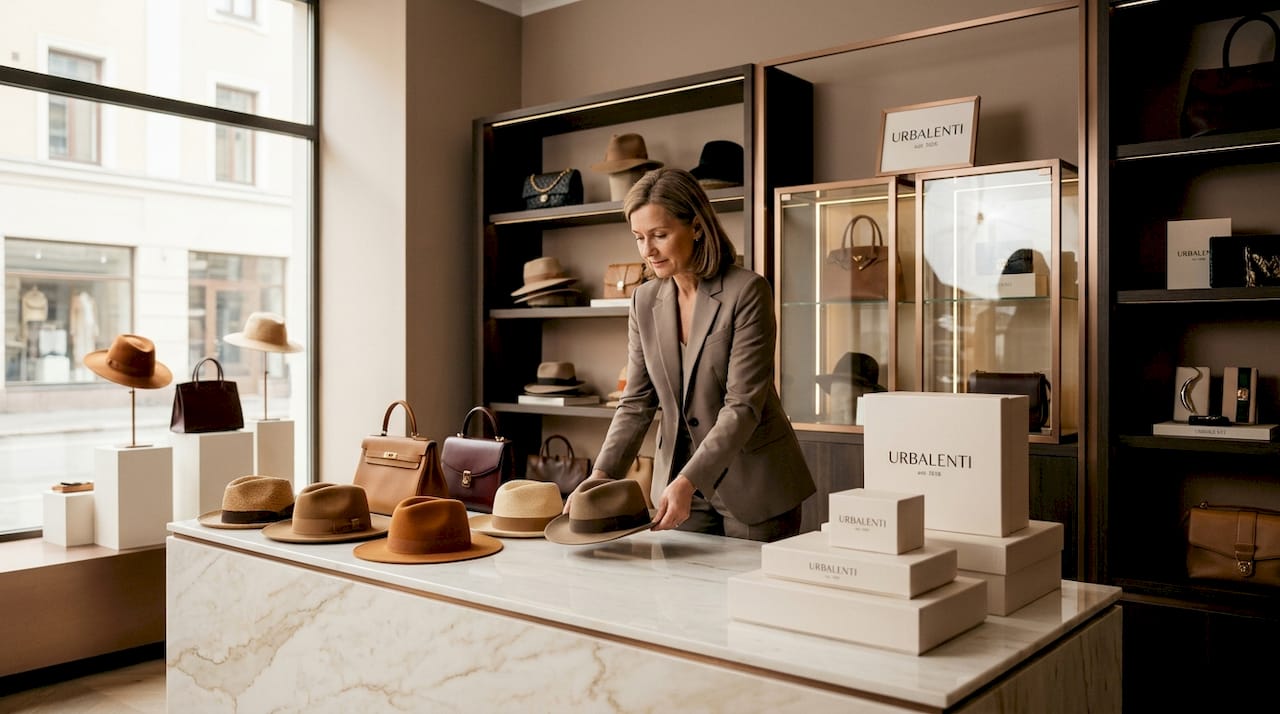
Authenticity is now a structural requirement aligning heritage, operations, and communication. It is not a tagline a brand can attach to a campaign. Consumers who spend $500 or more on a single item are researching the brand’s supply chain, reading independent reviews, and cross-referencing product details before they buy. The importance of brand authenticity has never been higher, and the consumer’s ability to detect its absence has never been sharper.
56% of consumers researching luxury items over $500 spend more than an hour verifying authenticity, up 24 points since 2023. That increase reflects a consumer base that no longer takes brand claims at face value. The verification process is now a standard part of the luxury purchase decision.
Consumers rely on a specific set of signals when evaluating whether a luxury brand or product is genuine:
Beyond these surface signals, experienced buyers also examine structural details: the weight distribution of a bag, the sound of a clasp closing, the smell of genuine leather versus synthetic alternatives. These are the details that separate a casual inspection from a genuine authentication.
Pro Tip: Most consumers focus on visible logos and packaging. The more reliable check is structural. Examine interior stitching, hardware engraving depth, and the alignment of pattern repeats across seams. Counterfeits consistently fail at these points because they require precision that is expensive to replicate.
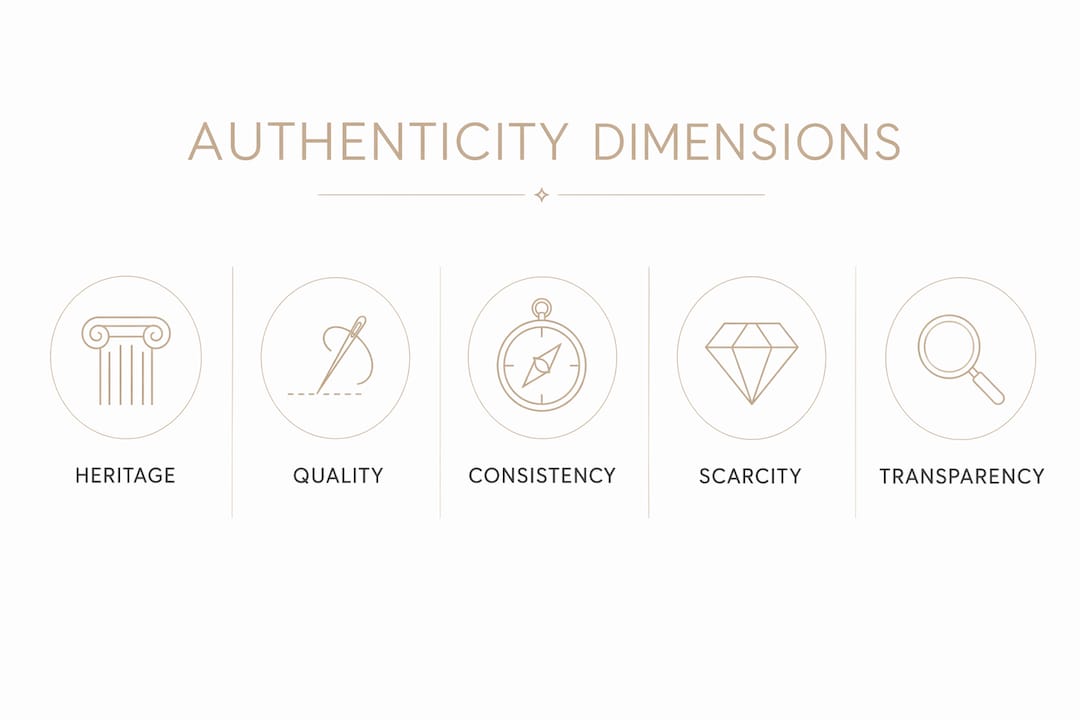
Defining authenticity in luxury goes beyond a brand’s founding story. Researchers and industry analysts identify five consistent dimensions that distinguish genuinely authentic luxury brands from those performing authenticity as a marketing strategy.
| Dimension | What it means | Example |
|---|---|---|
| Heritage | Documented history of craft and origin | Cartier, founded 1847, Paris |
| Quality commitment | Consistent material and production standards | Dolce & Gabbana’s Sicilian artisan workshops |
| Stylistic consistency | Recognizable aesthetic across decades | Saint Laurent’s Le Smoking tuxedo since 1966 |
| Controlled scarcity | Limited production to preserve exclusivity | Hermès Birkin waitlist model |
| Emotional resonance | Meaning and identity attached to ownership | Valentino’s couture as personal expression |
Heritage and quality are the foundation. Stylistic consistency and controlled scarcity are the mechanisms that protect value over time. Emotional resonance is what converts a purchase into loyalty. A brand that scores high across all five dimensions is structurally authentic. A brand that scores high on only one or two is performing authenticity selectively, and consumers increasingly recognize the difference.
Vertical integration and supply chain visibility are critical to authentic luxury. Brands that control their production from raw material sourcing to final assembly can make verifiable claims about quality and origin. Brands that outsource production beyond the first tier of their supply chain carry reputational risk that undermines authenticity claims, regardless of how strong their marketing narrative is.
Pro Tip: When evaluating a luxury brand’s authenticity, look for public information about where and how products are made. Brands with genuine craft commitments publish this information openly. Brands that are vague about production are often vague for a reason.
Growth is the primary threat to luxury brand authenticity. Scaling too fast through licensing or wholesale erodes the scarcity and operational control that are foundational to luxury’s value. This is not a theoretical risk. It is a documented pattern that has damaged multiple heritage brands over the past three decades.
The strategies that successful luxury brands use to maintain authenticity during growth follow a consistent logic:
Luxury insiders draw a clear line between the marketing “vibe” of authenticity and true structural integrity rooted in design and supply chain control. A brand can tell a compelling heritage story while simultaneously outsourcing production to facilities that compromise quality. Consumer trust in luxury depends on the brand’s ability to close that gap between narrative and reality.
Consumers now prioritize experience, sustainability, and authenticity over ostentation and tradition. This shift means that luxury brands cannot rely on prestige alone. They must demonstrate that their values are operational, not aspirational.
Professional authentication services have changed how consumers approach luxury purchases, particularly in the resale market. These services go well beyond visual inspection. Modern authentication uses multi-layer forensic tests including material analysis, hardware testing, and structural examination to confirm or deny a product’s legitimacy.
The authentication process at leading services typically works as follows:
Pro Tip: Always authenticate before purchasing a pre-owned luxury item, not after. Authentication services are inexpensive relative to the cost of a counterfeit. A $30 authentication check on a $2,000 bag is the most rational spending decision in luxury fashion.
For new purchases from authorized retailers, authentication is built into the transaction. Urbalenti sources directly from Milan and provides luxury fashion collections from verified brand partners, which removes the authentication burden from the buyer entirely.
Brand authenticity in luxury is a structural property, not a marketing claim, and consumers in 2026 verify it actively through research, peer reviews, and professional authentication services.
| Point | Details |
|---|---|
| Authenticity is structural | Genuine luxury brands align heritage, production, and communication, not just messaging. |
| Consumers verify actively | 56% of luxury buyers spend over one hour researching items above $500 before purchasing. |
| Peer reviews outrank brand claims | 79% of shoppers read three or more reviews, making community validation the top trust signal. |
| Scaling threatens authenticity | Over-licensing and wholesale expansion erode scarcity and quality control in luxury brands. |
| Professional authentication exists | Services using Intelascan™ and 7+ million reference images provide forensic-level verification. |
The conversation around brand authenticity has shifted in a way that is hard to overstate. A few years ago, most luxury buyers accepted a brand’s heritage narrative without much scrutiny. Today, the same buyers are cross-referencing serial numbers, reading independent authentication forums, and demanding supply chain transparency before committing to a purchase.
What strikes us at Urbalenti is that this shift is not skepticism. It is sophistication. Consumers who research deeply are not distrustful of luxury. They are more invested in it. They want the purchase to mean something, and they want to be certain that what they are buying genuinely represents the craftsmanship and values the brand claims.
The brands that will hold long-term value are not necessarily the ones with the longest history. They are the ones that can demonstrate their history is still operational, not just decorative. Cartier’s Panther is not valuable because it is old. It is valuable because Cartier has never stopped treating it as central to the brand’s identity. That consistency is what authenticity looks like in practice.
For consumers, the practical takeaway is this: authenticity is not binary. It exists on a spectrum across heritage, production, consistency, and transparency. Evaluating a brand across all four dimensions gives you a far more reliable picture than any single signal, including the price tag.
— URBALENTI
Urbalenti curates authentic designer handbags sourced directly from Milan and shipped worldwide via DHL Express. Every piece on the platform comes from verified brand partners, which means the authenticity question is answered before the product reaches you. The Dolce & Gabbana 3.5 Handbag is a strong example: Sicilian craftsmanship, genuine leather, and a design lineage that reflects everything discussed in this article about what real luxury brand values look like in a physical product. Browse Urbalenti’s luxury handbag edit to explore authenticated pieces from Gucci, Valentino, Givenchy, Saint Laurent, and more, with full purchase support from a team that treats every order as a priority.
Brand authenticity in luxury means a brand genuinely embodies its heritage, craftsmanship, and values across every product and consumer touchpoint, not just in its marketing. It is verified through production methods, design consistency, and supply chain transparency.
52% of consumers would stop purchasing from a brand after a single inauthentic experience, which shows that authenticity directly determines long-term consumer loyalty and willingness to pay a premium.
Submit high-resolution images to a professional authentication service that uses forensic review and reference archives. For new purchases, buy from authorized retailers who source directly from brand-verified suppliers.
Over-licensing, rapid wholesale expansion, and loss of production control are the primary causes. Fast scaling without preserving brand soul is the largest documented threat to luxury brand authenticity and long-term value.
Yes. Leading services use archives of 7+ million reference images combined with Intelascan™ technology and expert forensic review, delivering results in as little as one hour with a level of accuracy that far exceeds visual inspection alone.
Leave a comment