

Luxury Fashion Portfolio Explained: Your 2026 Guide
A luxury fashion portfolio is defined as a curated, strategically structured collection of design projects that demonstrates originality, technical mastery, and a precise understanding of the luxury market’s commercial and aesthetic demands. Unlike a general fashion portfolio, this format functions as a branded case study of your creative identity, not an archive of everything you have ever produced. For fashion professionals targeting houses like Saint Laurent, Valentino, or Max Mara, the portfolio is the primary instrument of professional credibility. Tools like Adobe Illustrator, CLO 3D, and platforms like Squarespace now shape how these portfolios are built and presented in 2026.
What is a luxury fashion portfolio and why it differs
A luxury fashion portfolio is not simply a collection of strong sketches. Luxury portfolios require originality, strong storytelling, and technical precision that reflects both craftsmanship and brand identity. This means every project included must serve a deliberate purpose, not just demonstrate skill in isolation. The distinction matters because luxury brands evaluate candidates against a very specific cultural and commercial standard.
General fashion portfolios can afford a wider range of styles, client types, and experimental work. Luxury portfolios operate under tighter constraints. The tone, color palette, typography, and editorial quality of the portfolio itself must mirror the aesthetic language of the houses you are targeting. A portfolio built for Gucci reads differently than one built for Brunello Cucinelli, even if the underlying design skills are identical.
Several features define the luxury portfolio category specifically:
- Craftsmanship documentation. Process pages showing textile experimentation, hand draping, and material sourcing signal that you understand how luxury goods are actually made.
- Brand heritage alignment. Projects must demonstrate awareness of a house’s history, codes, and customer. Referencing Givenchy’s couture archive in a concept project, for example, shows cultural literacy.
- Editorial-quality visuals. Photography, layout, and presentation must meet the visual standard of the brands you are addressing. Low-resolution images or inconsistent layouts disqualify otherwise strong work.
- Commercial and customer awareness. Hiring managers focus on portfolios that explain context, commercial awareness, target customer, and business alignment, not just artistic quality. This is the single most common gap in portfolios from candidates with strong aesthetics but weak market understanding.
- Narrative coherence. Each project should connect to a clear point of view. Mixing editorial, commercial, and sketchbook work with no explanation confuses evaluators and weakens the overall impression.
Pro Tip: Before selecting projects for a luxury portfolio, map each one against the specific brand’s customer profile and price positioning. If a project cannot be contextualized within a luxury framework, leave it out.
Luxury designers combine creativity with craftsmanship and branding, requiring portfolios that reflect this multidimensional skill set. This is not a soft requirement. It is the baseline expectation at any serious luxury house.
Essential components for creating a luxury fashion portfolio
The structure of a high-end fashion portfolio follows a recognized logic that mirrors how design projects develop in professional practice. Strong portfolios exhibit a clear narrative arc for each project: research, concept, process, realization, and reflection. This arc gives evaluators a complete picture of how you think, not just what you produce.
The recommended format for a professional luxury portfolio is as follows:
- Opening statement. A brief, precise introduction to your design philosophy and the specific luxury segment you address. This is not a biography. It is a positioning statement.
- Mood boards and research pages. Visual and conceptual research that establishes the cultural and aesthetic context for each project. References to specific designers, art movements, or heritage archives add credibility.
- Process documentation. Sketches, draping photographs, fabric swatches, and development notes. This section proves that your final outcomes are grounded in rigorous method.
- Technical flats and specifications. Precise technical drawings produced in Adobe Illustrator or equivalent tools. These demonstrate production readiness and professional-grade communication skills.
- Final visuals and editorial presentation. Finished garment photography or high-quality renders. For 2026 portfolios, CLO3D proficiency and inclusion of 3D visualization assets are increasingly expected to demonstrate technical readiness beyond illustration.
- Reflection and commercial context. A brief closing note on each project explaining the target customer, price positioning, and brand fit. This is the section most candidates omit and most hiring managers notice.
Regarding length, a professional fashion portfolio typically contains 30 to 50 physical pages or 8 to 15 digital spreads, emphasizing quality over quantity. More is not better. Many applicants treat portfolios as comprehensive archives rather than selective branded case studies of creative DNA, ideally covering 4 to 6 curated projects. Evaluators at luxury houses review dozens of portfolios. Clarity and intention are remembered. Volume is not.
Industry professionals advise updating your portfolio at least every six months to maintain relevance and incorporate new industry trends such as sustainability and digital fashion. This update cycle is not optional for luxury professionals. The market shifts, brand priorities shift, and a portfolio that does not reflect current industry conversations signals disengagement.
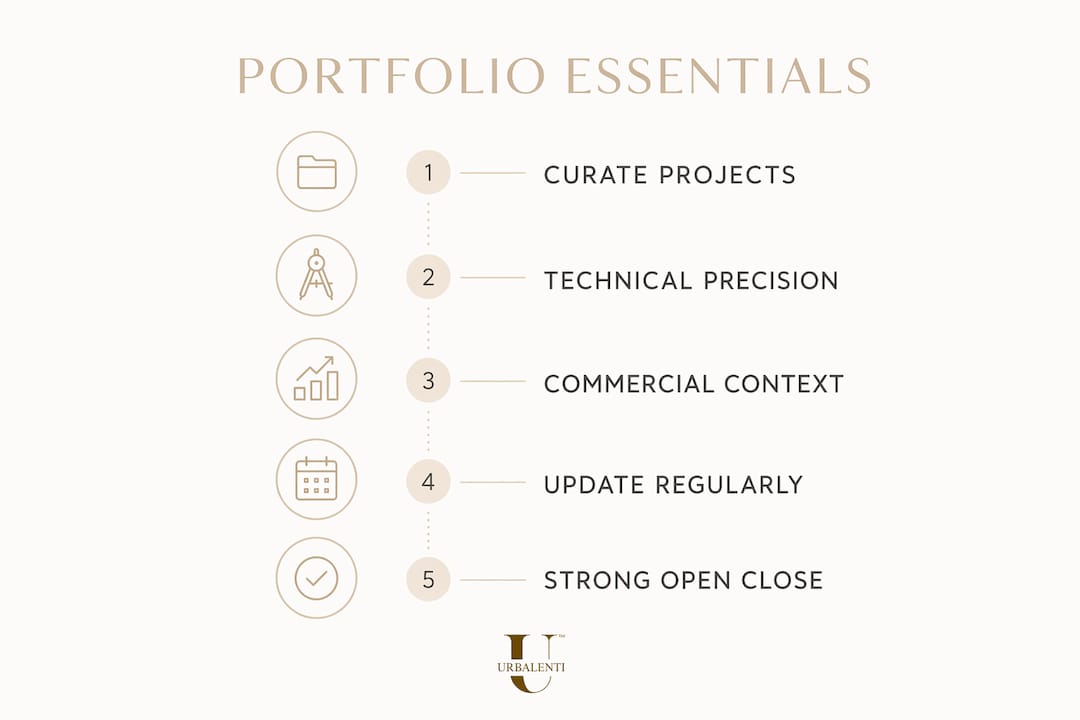
Pro Tip: Apply the bookend rule: place your two strongest projects at the opening and closing of the portfolio. Evaluators form impressions quickly and remember what they saw last. The middle carries the depth; the bookends carry the verdict.
| Component | Standard |
|---|---|
| Portfolio length | 30 to 50 physical pages or 8 to 15 digital spreads |
| Project count | 4 to 6 curated projects per portfolio |
| Update frequency | Minimum every 6 months |
| Technical tools | Adobe Illustrator, CLO 3D, video GIFs for process |
| Closing context | Target customer, price point, and brand fit per project |
Physical, digital, or PDF: which format suits luxury fashion roles?
Format selection is not a matter of preference. It is a strategic decision based on the role, the audience, and the stage of the hiring process. Each format carries distinct advantages and limitations that directly affect how your work is received.
Physical portfolios remain influential for tactile roles and senior luxury positions, with fabric swatches and printed layouts helping make strong impressions. When you are presenting to a creative director at a house like Moncler or Ferragamo, a physical portfolio communicates investment, precision, and respect for the craft. The weight of the paper, the quality of the binding, and the presence of actual fabric samples all contribute to an impression that a screen cannot replicate.
Digital portfolios have become the dominant format for most applications in 2026. They offer SEO discoverability, mobile accessibility, and the ability to track engagement through analytics. Squarespace and Cargo are recommended for professional-grade website hosting, while Behance enhances discoverability within the broader creative industry. A well-structured digital portfolio also allows you to embed video GIFs of draping processes or 3D renders, adding a dimension of technical storytelling that static pages cannot achieve.
PDF portfolios occupy a specific and practical niche. They are best suited for cold outreach and email submissions, where attaching a single file is more practical than sharing a URL. The limitation is interactivity. A PDF cannot embed video, cannot be updated after sending, and offers no analytics. Keep PDF versions under 8 to 10 MB for ease of transmission.
| Format | Best for | Limitations | Recommended tools |
|---|---|---|---|
| Physical | Senior roles, tactile luxury positions | Not scalable, costly to produce | High-quality print, fabric swatches |
| Digital website | Most applications, discoverability | Requires maintenance | Squarespace, Cargo, Behance |
| Cold email, quick submissions | No interactivity, no updates post-send | Adobe InDesign, Acrobat |
The practical recommendation for luxury fashion professionals is to maintain all three formats simultaneously. Use the physical portfolio for in-person presentations and senior-level interviews. Use the digital portfolio as your primary professional presence. Use the PDF for initial outreach. Each format serves a different moment in the professional relationship.
How to maintain authenticity and investment value in your portfolio
Authenticity in a luxury fashion portfolio is not about personal expression for its own sake. It is about demonstrating that your creative vision is grounded in a genuine understanding of the brands, customers, and market conditions you are addressing. Portfolios are valued for revealing candidate thinking and ability to integrate brand, customer, and commercial factors, not just for aesthetics. This distinction separates portfolios that open doors from portfolios that simply look impressive.
Several practices build and protect portfolio authenticity over time:
- Conduct regular portfolio audits. Review every project against current brand priorities. A project that demonstrated strong sustainability awareness two years ago may need updating to reflect current material innovation standards or circular fashion practices.
- Show brand awareness explicitly. Reference specific collections, heritage codes, or brand campaigns within your project context pages. Citing Valentino’s Pierpaolo Piccioli era or Max Mara’s relationship with Italian textile manufacturing shows depth of knowledge, not name-dropping.
- Document craftsmanship choices. Explain why you selected specific fabrics, construction techniques, or silhouettes. Luxury brands want to see that your decisions are deliberate, not decorative.
- Integrate digital and heritage practices. Portfolios that combine traditional hand techniques with AI-assisted concept development or 3D visualization tools demonstrate the range that modern luxury houses require. Neither tradition nor technology alone is sufficient.
- Align with brand authenticity principles. Understanding what makes a luxury brand’s identity genuine and consistent is foundational to presenting work that resonates with its creative leadership.
Self-directed projects replicating real industry tasks can effectively prove readiness without prior internship experience. This is a practical point for emerging professionals. A well-executed capsule collection concept for Emporio Armani, complete with customer profile, price architecture, and technical specifications, carries more weight than a generic editorial project with no commercial context.
Pro Tip: When adding a new project, write a one-paragraph brief explaining the brand, customer, season, and commercial objective before you begin designing. This brief becomes the context page in your portfolio and forces commercial clarity from the start.
The investment value of a luxury fashion portfolio compounds over time when it is treated as a living document. Each update, each new project, and each refinement of presentation quality adds to a body of work that reflects professional growth and market awareness. Explore curated luxury collections to stay current with how leading brands are presenting their seasonal narratives, which directly informs how your portfolio projects should be framed.
Key takeaways
A luxury fashion portfolio succeeds when it combines technical precision, commercial context, and a consistent creative voice across 4 to 6 carefully selected projects.
| Point | Details |
|---|---|
| Definition and scope | A luxury portfolio is a curated case study of creative identity, not a comprehensive archive of all work. |
| Core components | Include mood boards, process pages, technical flats, CLO 3D renders, and commercial context per project. |
| Format strategy | Maintain physical, digital, and PDF versions simultaneously for different stages of professional engagement. |
| Authenticity standard | Reference specific brands, customers, and price points to demonstrate commercial awareness alongside creative skill. |
| Maintenance discipline | Update the portfolio every six months minimum to reflect current industry trends and brand priorities. |
Why most luxury portfolios miss the mark
The most consistent problem I see in luxury fashion portfolios is not weak design. It is the absence of context. A beautifully rendered garment with no explanation of the customer, the brand, or the commercial rationale tells an evaluator almost nothing useful. It shows that someone can draw or construct. It does not show that they understand the business of luxury.
At Urbalenti™ NYC, we work closely with the brands we carry, from Saint Laurent to Jacquemus to Golden Goose, and the pattern is consistent. The designers and creative teams behind these houses think in terms of customer, season, and brand narrative simultaneously. A portfolio that mirrors this thinking, even at a conceptual level, reads as professionally mature in a way that purely aesthetic work does not.
The other misstep I observe frequently is fragmentation. A singular professional voice is crucial. Portfolios that mix editorial photography, commercial sketches, and personal sketchbook pages without a unifying thread force the evaluator to do interpretive work that should not be their responsibility. A unified portfolio direction builds trust quickly. Portfolios that feel clear, consistent, and intentional are easier to remember and evaluate positively.
My practical recommendation is to treat each portfolio project as a brief you received from a real brand. Define the brand, the customer, the season, and the commercial objective before you design a single piece. Then let the design respond to that brief. The result is work that feels purposeful rather than decorative, and that is precisely what luxury houses are looking for.
— Admin Urbalenti
Explore authentic luxury fashion at Urbalenti™ NYC
Urbalenti™ NYC is a curated luxury fashion destination, sourced in New York and fulfilled directly from Milan, Italy. Every piece in the catalog is authenticated and selected for its alignment with the standards of craftsmanship and brand integrity that define genuine luxury.
The collections at Urbalenti™ NYC span Saint Laurent, Valentino, Max Mara, Givenchy, Emporio Armani, and more. Each piece reflects the same principles that define a strong luxury portfolio: intentional design, clear brand identity, and uncompromising quality. The Max Mara Mxmagenzia Shirt is a precise example of how Italian craftsmanship translates into a finished product. Worldwide DHL Express shipping and personalized VIP-level support are standard for every order, regardless of purchase size.
FAQ
What is a luxury fashion portfolio?
A luxury fashion portfolio is a curated collection of design projects that demonstrates originality, technical precision, and commercial awareness specific to the luxury market. It functions as a branded case study of creative identity, typically covering 4 to 6 projects.
How many projects should a luxury portfolio include?
Industry guidance recommends 4 to 6 curated projects, presented across 30 to 50 physical pages or 8 to 15 digital spreads. Quality and context matter more than volume.
What tools are expected in a 2026 luxury fashion portfolio?
Adobe Illustrator for technical flats, CLO 3D for three-dimensional visualization, and platforms like Squarespace or Cargo for digital presentation are the current professional standard. Video GIFs demonstrating process work are increasingly common.
How often should a luxury fashion portfolio be updated?
Updating every six months is the minimum recommended frequency. Updates should reflect new industry trends, such as sustainability practices or digital fashion integration, and align with current brand priorities.
Does a luxury portfolio need commercial context, not just design work?
Yes. Hiring managers at luxury houses evaluate portfolios for brand awareness, customer understanding, and business alignment alongside aesthetic quality. Projects without commercial context are consistently rated lower regardless of their visual strength.
Leave a comment