

What Is Luxury Fashion? Defining High-End Style
TL;DR:
- Luxury fashion is characterized by superior craftsmanship, rare materials, and deep brand heritage that transcend price alone. Authenticity relies on artisanal standards, controlled distribution, and compelling cultural narratives, distinguishing it from other fashion categories. Modern trends like quiet luxury and brand universes emphasize quality, storytelling, and emotional resonance over logo visibility and seasonal trends.
Luxury fashion is clothing, footwear, and accessories defined by superior craftsmanship, rare materials, brand heritage, and a level of emotional resonance that price alone cannot manufacture. The category includes houses like Hermès, Gucci, Saint Laurent, and Valentino, each built on decades of artisanal tradition and a clearly articulated design philosophy. What separates luxury fashion from premium or designer fashion is not a certification or a price threshold. There is no official luxury label; the designation is earned through perception, process, and cultural weight. Understanding what luxury fashion actually is requires looking at the full matrix of factors that create it, from the hands that cut the leather to the story a brand has told across generations.
What is luxury fashion, and how is it defined?
Luxury fashion is built on a matrix of intangible and tangible assets: heritage narratives, artisanal craftsmanship, controlled exclusivity, and a curated aesthetic DNA that transcends seasonal trends. This definition separates it from both mass-market fashion and the broader designer category. A garment from Emporio Armani and a garment from a fast-fashion retailer may both carry a recognizable label, but only one is produced with the material standards, production oversight, and brand depth that qualify as genuine luxury.
The distinction matters because the luxury fashion market is frequently misunderstood. Many consumers equate high price with high quality, but the relationship is more specific than that. Luxury requires a convergence of factors: where the materials come from, how the piece is constructed, how many hands touched it, and what cultural meaning the brand carries. Hermès, for example, maintains a valuation of approximately $200 billion in 2026 through individual artisan-led leather goods production. That figure reflects not just commercial success but the market’s recognition that the production model itself is the product.
Luxury fashion also functions as a form of cultural currency. Owning a piece from Bottega Veneta or Brunello Cucinelli signals more than purchasing power. It signals an alignment with a specific set of values: patience, craft, restraint, and an understanding of quality that goes beyond surface appearance. This is why the category retains its appeal across economic cycles and why the resale market for luxury fashion continues to grow. Pieces hold value because the original investment was in something real.
What key features distinguish luxury fashion from other categories?
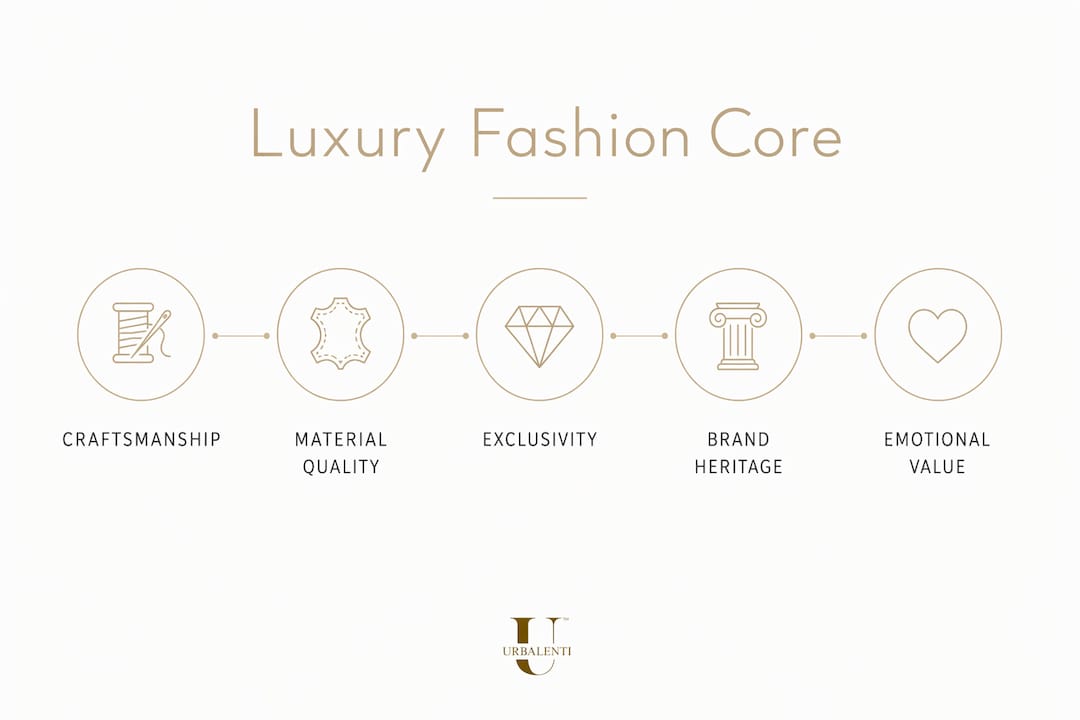
Four attributes consistently separate luxury fashion from premium or designer alternatives: craftsmanship, material quality, exclusivity, and brand heritage. Each one reinforces the others, and the absence of any one weakens the claim to true luxury status.
Craftsmanship and production standards
Luxury garments and accessories are produced with a level of attention that mass and even premium production cannot replicate. A single Hermès Birkin bag requires one artisan to complete the entire construction process, a practice that directly limits output and guarantees consistency. Stitching, finishing, hardware attachment, and quality control are handled by trained specialists, not assembly lines. This production model is slower and more expensive, but it produces a result that is measurably different in durability, fit, and finish.
Material sourcing and fabric quality
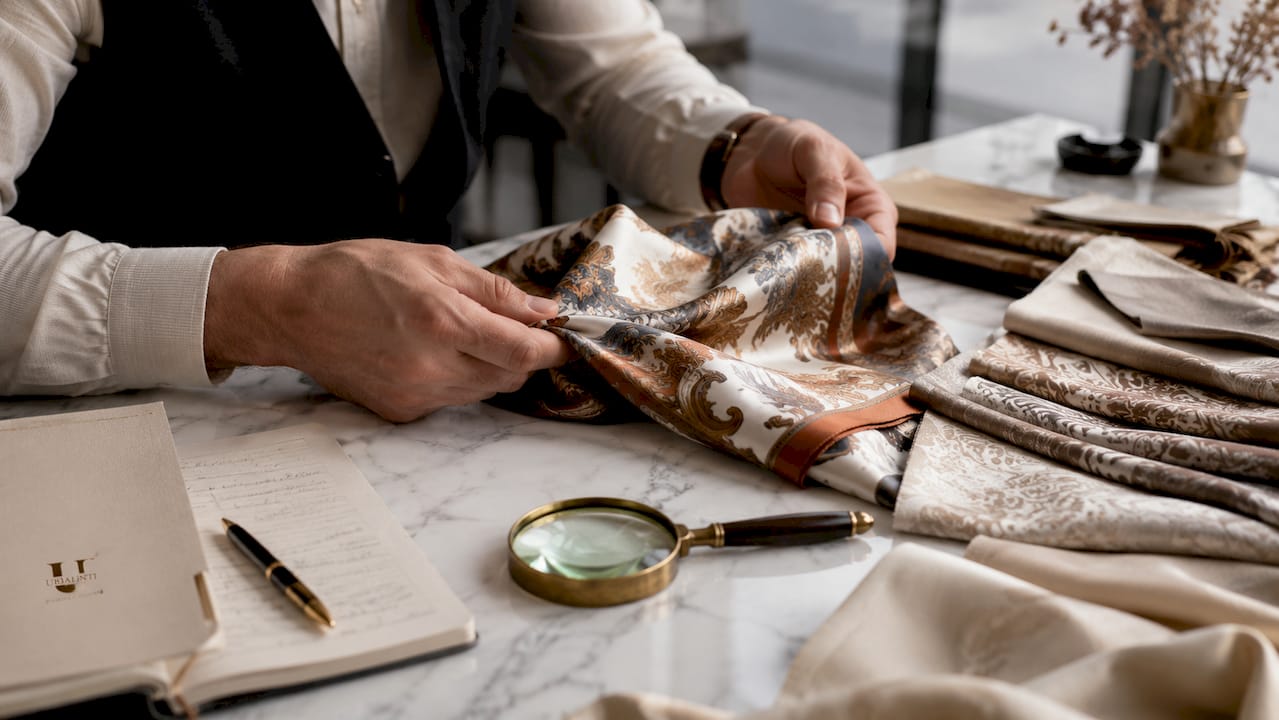
Premium fabric sourcing is foundational to luxury fashion’s appeal. Brunello Cucinelli works with cashmere sourced from specific regions of Mongolia. Valentino uses silks and wools selected for weight, drape, and color retention. The materials are not interchangeable with lower-cost alternatives because the tactile and structural properties are categorically different. When you wear a piece built from genuinely superior fabric, the difference is immediate and physical.
Exclusivity and distribution control
Luxury brands deliberately limit availability. Saint Laurent does not sell through every retailer that requests access. Gucci controls where its products appear and in what context. This scarcity is not accidental. It is a strategic decision that protects brand perception and maintains the sense that owning a piece carries meaning. Limited distribution also reduces the risk of counterfeiting diluting the brand’s cultural signal.
Brand heritage and storytelling
The following comparison clarifies how luxury fashion differs from adjacent categories:
| Category | Price range | Craftsmanship | Heritage | Exclusivity |
|---|---|---|---|---|
| Fast fashion | Low | Mass production | None | None |
| Premium fashion | Mid to high | Moderate quality control | Limited | Moderate |
| Designer fashion | High | Above average | Varies | Moderate |
| Luxury fashion | High to very high | Artisan-led | Deep, multi-generational | Tightly controlled |
Pro Tip: When evaluating whether a piece qualifies as genuine luxury, check three things: the stitching consistency under magnification, the hardware weight and finish, and whether the brand publishes information about its production process. Authentic luxury houses are transparent about how their products are made.
How has luxury fashion evolved culturally over time?
Traditional luxury fashion was defined by aristocratic patronage and geographic exclusivity. French couture houses like Balenciaga and Givenchy served a narrow clientele and produced garments that were entirely custom. Italian houses including Ferragamo and Gucci built their reputations on leather goods and footwear crafted for a similarly restricted audience. Access was limited by both price and social proximity to the brand.
The shift toward modern luxury fashion began in the late 20th century, when houses started building what designers now call brand universes. Nicolas Ghesquière at Louis Vuitton has articulated this most clearly: the goal is no longer to sell seasonal collections but to create a world that customers want to inhabit. Louis Vuitton’s approach now encompasses food, design, and art, not just apparel. This expansion reflects a broader cultural shift in how consumers relate to brands they trust.
Several key transitions define the modern era of luxury fashion:
- The move from product-centric to narrative-centric brand building
- The rise of emotional connection as a primary purchase driver
- Growing consumer interest in slow fashion principles: patience, longevity, and craft
- The emergence of quiet luxury as a counterpoint to logo-driven status signaling
- Increasing pressure on brands to demonstrate ethical production and supply chain transparency
“Luxury clothing should support the actual life of the client, focusing on foundational, versatile pieces.” — Designer Kanika Agarwal, as cited in Harper’s Bazaar India
This perspective captures the current direction of contemporary luxury fashion. The consumer is no longer buying a status symbol in isolation. They are buying a garment that performs across their actual life, travels well, ages well, and holds meaning beyond the moment of purchase. Slow fashion principles of patience, longevity, and craft now underpin how the most credible luxury houses position their collections.
What role do brand story, heritage, and customer experience play?
True luxury carries heritage, craftsmanship, scarcity, and deeply emotional narratives that transcend logos and price. This is the most frequently overlooked dimension of luxury fashion for new buyers. The product is real, but the story surrounding it is equally part of what you are acquiring.
Institutions like Comité Colbert in France and Fondazione Altagamma in Italy exist specifically to uphold luxury excellence and cultural significance at the industry level. These organizations set standards, advocate for artisan traditions, and shape global perceptions of what qualifies as genuine luxury. Their influence explains why French and Italian houses dominate the category. The infrastructure supporting their production, training, and cultural positioning has been built over centuries.
The customer experience dimension of luxury fashion operates on several levels:
- Product presentation. Packaging, tissue paper, dust bags, and boxes are not incidental. They communicate care and reinforce the value of what is inside.
- Service quality. Luxury retail, whether in-store or online, is characterized by attentive, personalized support. The transaction is not transactional in the conventional sense.
- Post-purchase relationship. Luxury brands maintain relationships with clients over time, through repairs, alterations, and ongoing communication that treats the buyer as a long-term partner.
- Symbolic ownership. Wearing a piece from Givenchy or Moncler carries a social signal that is recognized across cultures and contexts. This symbolic dimension is part of what the buyer is acquiring.
Pro Tip: When shopping for luxury fashion online, look for retailers that provide detailed product provenance, clear authenticity guarantees, and direct client support. The service model is as much a part of the luxury experience as the product itself.
Urbalenti™ NYC applies these principles directly. Every order is handled with VIP-level attention, fulfilled from Milan, and supported by a team that treats each client as an individual rather than a transaction. The brand authenticity standards Urbalenti™ NYC upholds reflect the same values that define the houses it carries.
How do quiet luxury and the “universe” model shape fashion today?
The two most significant forces reshaping luxury fashion in 2026 are the quiet luxury movement and the brand universe model. Both represent a departure from the logo-heavy, season-driven approach that characterized luxury fashion in the early 2000s.
Quiet luxury redefines high-end fashion by emphasizing fabric quality, craftsmanship, and subtlety over visible branding. The aesthetic is minimalist. The signal is internal rather than external. Brands like Max Mara and Brunello Cucinelli have built their entire identity around this approach, producing pieces that communicate quality through cut, weight, and material rather than through a prominent logo. This trend has also influenced luxury streetwear fashion, where minimal logos and functional design increasingly define what counts as premium.
The brand universe model, articulated most clearly by Nicolas Ghesquière at Louis Vuitton, takes a different approach. Rather than selling individual products, these houses build cinematic narratives and multifaceted lifestyles that deepen consumer engagement. The consumer does not just buy a bag. They buy into a world with its own visual language, cultural references, and emotional register.
| Trend | Core principle | Key brands | Consumer appeal |
|---|---|---|---|
| Quiet luxury | Craft over logos | Max Mara, Brunello Cucinelli | Understated, lasting quality |
| Brand universe | Lifestyle over product | Louis Vuitton, Gucci | Cultural immersion, identity |
| Sustainable luxury | Ethics over volume | Stella McCartney, Jacquemus | Transparency, responsibility |
| Luxury streetwear | Function meets craft | Golden Goose, Givenchy | Versatility, contemporary edge |
These trends are not mutually exclusive. A consumer can be drawn to the quiet luxury aesthetic while also being deeply engaged with a brand’s larger cultural narrative. What unites both approaches is a rejection of disposability. Luxury fashion in 2026 is defined by pieces that are worth keeping, worth repairing, and worth passing on. The designer fashion trends shaping this moment all point in the same direction: less volume, more meaning.
Key takeaways
Luxury fashion is defined by craftsmanship, heritage, exclusivity, and emotional resonance, not by price alone, and these four factors must converge for a brand or product to genuinely qualify.
| Point | Details |
|---|---|
| No official luxury label | Luxury status is earned through perception, process, and cultural weight, not certification. |
| Craftsmanship is the foundation | Artisan-led production, as practiced by Hermès, sets luxury apart from all other categories. |
| Heritage and story matter equally | Institutions like Comité Colbert and Fondazione Altagamma shape global luxury standards. |
| Quiet luxury is the dominant trend | Minimal logos and superior fabric quality now define contemporary luxury fashion direction. |
| Brand universes deepen engagement | Houses like Louis Vuitton build lifestyle worlds, not just seasonal collections. |
Why I think most people misunderstand what luxury fashion actually is
The most common misconception I encounter is that luxury fashion is primarily about price. Clients approach a purchase thinking that spending more automatically means buying better. That is not how this category works, and understanding the difference changes how you shop entirely.
What I have observed, working within this space, is that the most informed luxury buyers focus on production origin, material specification, and brand consistency over time. They are not buying a label. They are buying a decision made by a craftsman in a workshop in Milan or Paris, a decision about which leather to use, how many stitches per centimeter, and whether the lining will hold its shape after five years of use. That level of specificity is what separates a genuine luxury purchase from an expensive one.
The quiet luxury shift has made this clearer. When a piece carries no visible logo, the only thing communicating its value is the quality of the object itself. That is a more honest form of luxury, and it rewards buyers who have done the work to understand what they are looking at. I find that clients who approach luxury fashion this way, through knowledge rather than status signaling, consistently make better purchases and feel more satisfied with what they own.
The brand universe model is equally worth taking seriously. When Nicolas Ghesquière references Keith Haring in a Cruise collection or builds a show around a specific cultural moment, he is not decorating a product. He is building a context for it. The pieces mean more because the context is richer. That is the kind of depth that makes luxury fashion worth studying, not just wearing.
Urbalenti™ NYC exists precisely for clients who want to engage with luxury fashion at this level. Curated in New York, fulfilled from Milan, and supported by a team that understands the difference between expensive and genuinely excellent.
— Admin Urbalenti
Explore authentic luxury fashion at Urbalenti™ NYC
Urbalenti™ NYC carries a curated selection of authentic designer fashion sourced directly from Milan, including pieces from Saint Laurent, Gucci, Givenchy, Valentino, and Dolce & Gabbana. Every item reflects the craftsmanship, heritage, and material standards that define genuine luxury fashion.
The Dolce & Gabbana logo crossbody bag in the current collection is a precise example of what authentic luxury leather goods look like: hand-finished edges, structured hardware, and a silhouette built to last. Worldwide DHL Express shipping and VIP-level client support are included with every order. For clients who want to explore the full range of luxury fashion collections currently available, Urbalenti™ NYC is the place to start.
FAQ
What is luxury fashion in simple terms?
Luxury fashion is clothing and accessories produced with superior craftsmanship, rare materials, and deep brand heritage. Price is a factor, but the defining qualities are production quality, exclusivity, and cultural meaning.
What makes fashion truly luxury rather than just expensive?
True luxury requires artisanal production standards, premium material sourcing, controlled distribution, and a brand story built over decades. An expensive garment without these qualities is premium, not luxury.
How does quiet luxury differ from traditional luxury fashion?
Quiet luxury prioritizes fabric quality, precise construction, and minimal branding over visible logos or seasonal trends. It is the dominant direction in contemporary luxury fashion, favored by houses like Max Mara and Brunello Cucinelli.
Is luxury streetwear fashion a real category?
Luxury streetwear fashion is a recognized and growing category where functional design meets artisan-level production. Brands like Golden Goose and Givenchy operate in this space, applying luxury material and construction standards to casual silhouettes.
Where can I buy authentic luxury fashion online?
Urbalenti™ NYC offers authenticated designer fashion from brands including Gucci, Saint Laurent, Valentino, and Givenchy, fulfilled from Milan with worldwide DHL Express shipping and personalized client support. Explore the full NYC curated collections for current availability.
Leave a comment