
MY WISHLIST
MY WISHLIST

TL;DR:
- Luxury fashion seasons consist of four main collections that guide design, production, and retail cycles for high-end brands. These seasons include Spring/Summer, Autumn/Winter, Resort, and Pre-Fall, each serving specific climatic and commercial purposes. The apparel from each season arrives in stores months after runway presentations, with production timelines spanning 7 to 14 months, emphasizing the importance of shopping early for full selection and value.
Luxury fashion seasons are defined as the structured calendar of collections — Spring/Summer, Autumn/Winter, Resort (Cruise), and Pre-Fall — that coordinate design, production, runway shows, and retail cycles across the high-end fashion industry. These seasons are not arbitrary marketing windows. They are the operating system of luxury fashion, governing when houses like Chanel, Dior, and Gucci create, present, and deliver their work to the world. Understanding luxury fashion seasons explained in full means understanding how creative vision becomes a physical product on a store floor, and why the timing of that process shapes everything from runway spectacle to your buying decisions.
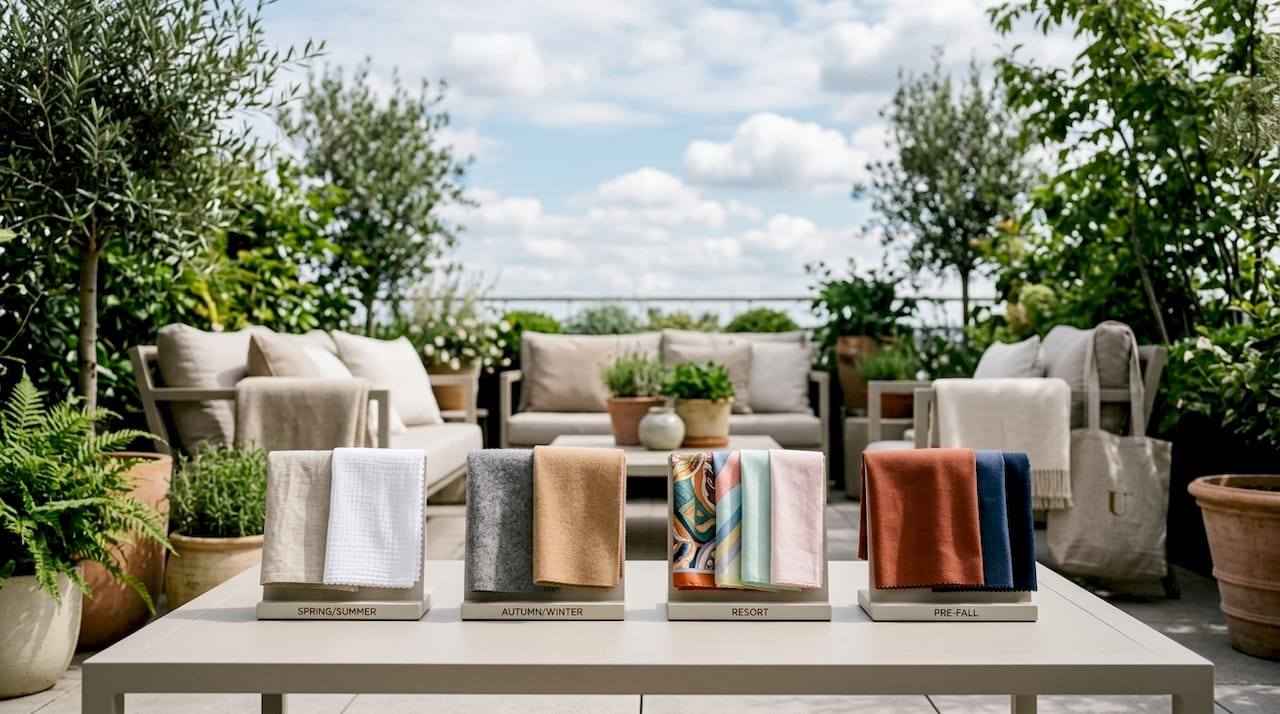
Luxury fashion operates on four primary seasonal collections. Each serves a distinct climatic, commercial, and creative function within the high-end fashion cycle.
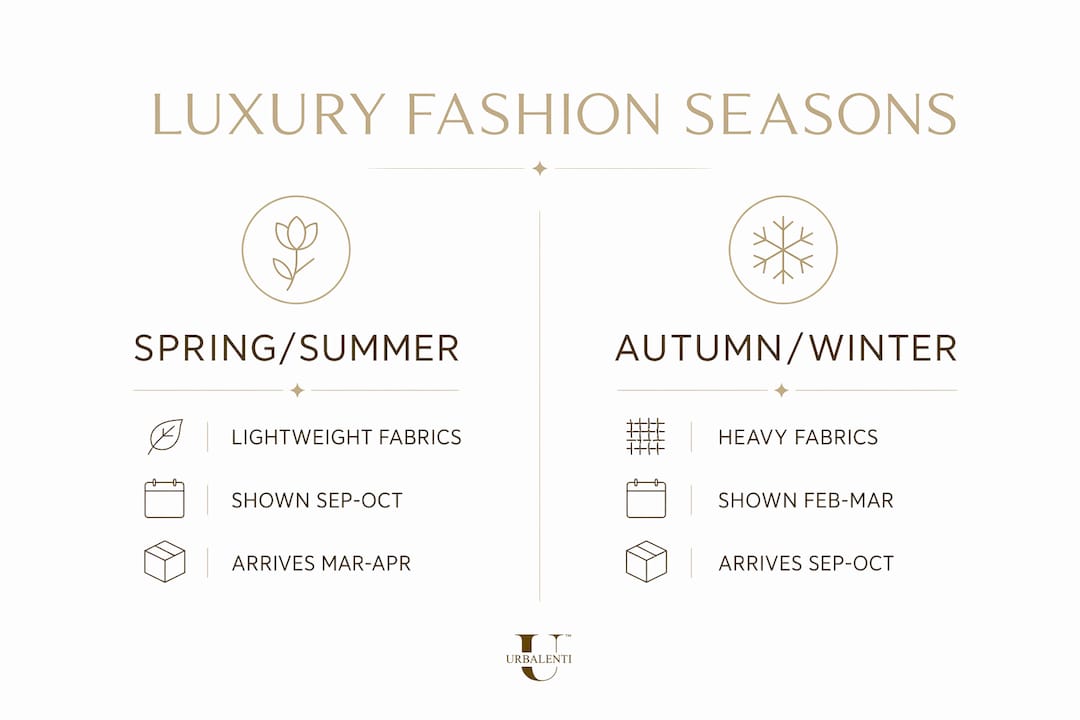
Spring/Summer (SS) is presented in september and october for the following year. It features lightweight fabrics — linen, silk, cotton — in brighter palettes. Designers use this season to set the directional tone for warm-weather dressing. Gucci, Saint Laurent, and Valentino consistently use SS collections to introduce new color stories and silhouette shifts that filter into the broader market.
Autumn/Winter (AW) is shown in february and march. It covers heavier fabrications: wool, cashmere, leather, and structured outerwear. This is the season where Brunello Cucinelli and Max Mara typically deliver their most technically complex pieces. AW collections carry the highest retail price points and the longest sell-through windows of any season.
Resort (Cruise) and Pre-Fall are the two inter-season collections that have grown from commercial necessities into creative statements in their own right. They are covered in detail in a dedicated section below.
| Season | Shown | Arrives in Stores | Key Fabrics | Thematic Focus |
|---|---|---|---|---|
| Spring/Summer | Sept–Oct | Feb–April | Linen, silk, cotton | Color, lightness, warm-weather dressing |
| Autumn/Winter | Feb–March | July–Sept | Wool, cashmere, leather | Structure, layering, outerwear |
| Resort (Cruise) | May–June | Nov–Feb | Mixed, travel-ready | Warm-weather travel, versatility |
| Pre-Fall | Dec–Jan | June–July | Transitional fabrics | Seasonal bridge, early fall dressing |
Pro Tip: If you shop Autumn/Winter pieces in july or august, you access the full range before popular sizes sell out. Waiting until october means the best pieces are gone.
The four-season structure reflects how luxury consumers actually live. A client in New York dresses differently in february than in july, and a client traveling from Paris to Miami in december needs neither a full winter coat nor a summer dress. The seasonal system accounts for all of it.
The global luxury fashion calendar is the scheduling framework that determines when each collection is presented to press, buyers, and the public. It is organized around four major fashion week clusters held in New York, London, Milan, and Paris.
Women’s ready-to-wear seasons in 2026 focus on two primary windows: february through march for AW collections, and september through october for SS collections. The SS27 season specifically runs september 11 through october 6 across all four cities. Milan Fashion Week within that window carries particular weight for luxury retail planning, pricing, and inventory decisions for the SS27 season.
Paris Haute Couture Week operates on a separate schedule. The FW 2026 couture calendar runs july 6–9, featuring 30 fashion houses and several significant creative direction changes. Couture is not retail in the traditional sense, but its presentations set the aesthetic direction that filters into ready-to-wear and accessories for the following seasons.
| Event | Window | Primary Focus |
|---|---|---|
| AW Women’s Ready-to-Wear | Feb–March 2026 | Autumn/Winter collections |
| Paris Haute Couture FW 2026 | July 6–9, 2026 | Couture, directional design |
| SS27 Women’s Ready-to-Wear | Sept 11–Oct 6, 2026 | Spring/Summer 2027 collections |
| Resort and Pre-Collections | May–June, Dec–Jan | Inter-season lines |
Fashion week calendars are best treated as flexible windows rather than fixed dates. Organizing bodies announce specific dates closer to each event, and schedules shift. For luxury consumers, this means tracking seasonal windows rather than individual show dates gives a more reliable framework for planning purchases.
The calendar also drives retail order books. Buyers from major department stores and specialty retailers place orders immediately after runway presentations. Those orders then enter a production pipeline that takes months to fulfill. The show you watch in september will not reach your wardrobe until the following spring. That gap is not a delay. It is the built-in structure of the system.
New York Fashion Week opens each cluster and sets a commercial tone. London follows with more experimental presentations. Milan delivers the core luxury ready-to-wear from houses like Gucci, Emporio Armani, and Givenchy. Paris closes with the highest concentration of heritage luxury brands. Understanding this sequence helps you read the fashion calendar as a narrative, not just a schedule. For deeper context on how New York’s fashion influence shapes seasonal luxury trends, the city’s role as the opening act of each cluster is more strategic than it appears.
Resort and Pre-Fall are the two collections most misunderstood by consumers outside the industry. Both are fully developed seasonal lines with their own runway presentations, retail windows, and commercial objectives.
Resort collections are inter-season warm-weather ready-to-wear lines that arrive in stores between november and february in the Northern Hemisphere. They were originally designed for wealthy clients who traveled to warm destinations during winter months. That origin explains the name “Cruise.” The modern version of these collections has moved far beyond that narrow brief.
Resort shows today have evolved into significant mini-seasons with elevated, conceptual runway presentations and global tour stops, including multiple US locations. Houses like Chanel and Dior have staged Resort shows in locations ranging from Cuba to California, using the format to generate press attention and cultural relevance outside the traditional fashion week calendar. These shows often feature some of a house’s most commercially successful pieces precisely because they are designed for wearability rather than runway spectacle.
The retail logic behind Resort is straightforward. By november, Autumn/Winter merchandise has been on the floor for several months. Retailers need fresh product to maintain consumer interest and sales velocity. Resort fills that gap with pieces that work for holiday travel, warm-weather destinations, and transitional dressing. Resort buying flexibility allows consumers and retailers to shop outside their local seasonal calendar as long as the collection’s retail window is active. A client in Chicago can buy Resort pieces in december for a january trip to the Caribbean without waiting for the Spring/Summer collection to arrive.
Pre-Fall operates on a similar logic but bridges Autumn/Winter into Spring/Summer. It arrives in stores in june and july, giving retailers product during the gap between the end of Spring/Summer and the arrival of full Autumn/Winter. For consumers, Pre-Fall often contains the most wearable, transitional pieces of the year. Jackets, layering pieces, and versatile knitwear from brands like Bottega Veneta and Moncler frequently appear in Pre-Fall with broader color ranges than the main AW collection.
Key reasons Resort and Pre-Fall collections matter for luxury consumers:
Pro Tip: Build your core wardrobe around Resort and Pre-Fall pieces. They are designed for real-world wearability, carry the same craftsmanship as main-season collections, and often sell through more slowly, giving you more time to choose deliberately.
The gap between a runway show and a retail arrival is not random. It reflects a production timeline that runs 7–14 months from initial concept to approved bulk production. That timeline explains why luxury fashion operates so far ahead of the consumer calendar.
The production sequence for a luxury collection follows a defined critical path:
Delays at any stage multiply across the critical path. A two-week slip in fabric approval can cascade into a six-week delay in bulk production, which then affects shipping schedules and retail floor dates. This is why official fashion calendars carry built-in flexibility, and why experienced buyers treat announced dates as targets rather than guarantees.
For luxury consumers, understanding this timeline changes how you shop. Pieces available at the start of a seasonal window represent the full range. Waiting until mid-season means popular sizes and colorways are already gone. Shopping early in the retail window is not impulsive. It is how professional buyers operate. For a broader view of how these cycles connect to luxury fashion portfolio building, the production timeline is the foundation of every investment decision.
The production cycle also explains why luxury pricing holds. A Saint Laurent cashmere piece that took 12 months to develop, source, sample, and manufacture carries a price that reflects that process. Discounting that piece six months later does not mean it was overpriced. It means the retail window has closed and the house needs to clear inventory for the next season.
Luxury fashion seasons form a structured, four-part calendar that governs design, production, and retail from concept to consumer, with each collection serving a specific commercial and creative function.
| Point | Details |
|---|---|
| Four core seasons | Spring/Summer, Autumn/Winter, Resort, and Pre-Fall each serve distinct climatic and retail functions. |
| 2026 calendar windows | SS27 runs September 11–October 6; Paris Couture FW 2026 runs July 6–9 across 30 houses. |
| Resort and Pre-Fall value | These inter-season collections offer wearability, versatility, and extended shopping windows for luxury consumers. |
| Production lead times | Luxury collections take 7–14 months from concept to retail, explaining the gap between runway and store arrival. |
| Shop early in the window | The full range is available at season launch; waiting reduces selection and increases the risk of missing key pieces. |
By Admin Urbalenti
Most articles about luxury fashion seasons focus on runway dates and trend forecasts. That framing misses the point for anyone who actually wants to build a wardrobe rather than follow a news cycle.
The most common mistake I see is treating fashion week coverage as a shopping signal. It is not. When you read about the Gucci or Givenchy runway in september, those pieces will not be available for another five to six months. Reacting to runway coverage with immediate purchasing intent puts you out of sync with the actual retail calendar. The show is a preview. The product is the point.
The second mistake is ignoring Resort and Pre-Fall entirely. These collections are where I consistently find the most wearable, investment-worthy pieces. They are designed without the pressure of major fashion week scrutiny, which often makes them more considered and more practical. A Pre-Fall jacket from Saint Laurent or a Resort dress from Valentino integrates into a real wardrobe more naturally than a directional runway piece designed to generate press attention.
The third mistake is chasing exact dates. Seasonal windows are more useful than specific show dates for planning purchases. Knowing that Resort arrives november through february tells you when to look. Knowing the exact date of a Resort runway show in may tells you very little about when to buy.
At Urbalenti™ NYC, the approach is to track seasonal windows and curate accordingly. The goal is not to carry every piece from every season. It is to identify the pieces within each season that represent genuine value, lasting design, and authentic craftsmanship. That is a different exercise than following trend coverage, and it produces a different kind of wardrobe.
The luxury fashion calendar rewards patience and knowledge in equal measure. Learn the structure, understand the timing, and shop with intention. That is the only strategy that consistently works.
— Admin Urbalenti
Urbalenti™ NYC curates authentic designer fashion from New York and fulfills every order from Milan, Italy. Each seasonal window brings new arrivals from Saint Laurent, Dolce & Gabbana, Givenchy, Valentino, and more, selected for quality, design integrity, and lasting wardrobe value.
Current seasonal pieces include the Saint Laurent cashmere sweater, the Dolce & Gabbana floral tote, and the Jimmy Choo Diamond Light sneakers — each representing the current season’s most considered designs. Every client receives VIP-level support from selection through delivery, with worldwide DHL Express shipping and full authenticity assurance on every order. Explore the current seasonal selection at Urbalenti™ NYC and shop with confidence.
The four main luxury fashion seasons are Spring/Summer, Autumn/Winter, Resort (Cruise), and Pre-Fall. Each serves a distinct climatic and retail function within the annual high-end fashion cycle.
The SS27 women’s ready-to-wear season runs september 11 through october 6, 2026, across New York, London, Milan, and Paris. Milan Fashion Week within that window has the strongest influence on luxury retail planning and inventory for the SS27 season.
A Resort collection is an inter-season warm-weather line that arrives in stores between november and february. Originally designed for traveling clients, Resort collections now function as fully developed mini-seasons with their own runway presentations and retail strategies.
Luxury fashion production runs 7–14 months from initial concept to approved bulk production. A collection shown on the runway in september will typically reach retail floors the following february through april.
Retail buyers place orders immediately after runway shows, and production quantities are fixed. The full range of sizes and colorways is available at the start of the retail window. Shopping early in the season gives you access to the complete selection before popular pieces sell through.
Leave a comment